How to Prevent Varicose Veins

Most advice about preventing varicose veins starts with an overpromise: wear compression socks, exercise, and the veins supposedly won't appear. That isn't medically honest. Varicose veins develop when superficial venous valves fail and blood pools under pressure, and inherited structure, age, pregnancy, and prolonged sitting or standing can outweigh even excellent habits. Authoritative estimates suggest … Read more


How to Treat Acl Tear

A sudden pivot, an awkward landing, or a collision can leave the knee swollen within minutes. By the next morning, many patients are dealing with pain, a feeling that the knee may give way, and a difficult question: how to treat an ACL tear without making the wrong decision. The answer isn't automatically surgery, and … Read more

What Is Facet Joint Syndrome and How Doctors Treat It

Facet joint syndrome is arthritis-like degeneration, inflammation, or injury of the small joints connecting neighboring vertebrae, and lumbar facet joints account for about 15% to 45% of chronic low back pain cases. These joints also contribute substantially to chronic neck pain, but no single symptom, examination maneuver, or scan can prove that a facet joint … Read more

Varicose Vein Surgery Recovery Timeline and Tips

Most patients return to normal activities within 1 to 2 weeks after varicose vein surgery, although the exact recovery depends heavily on the procedure performed and the demands of the job. A desk-based worker may resume routine tasks sooner than someone who stands, walks, or lifts for much of the day. Why does conventional advice … Read more

Epidural Injection vs Nerve Block: How Doctors Decide

A patient with low back pain and burning leg symptoms may leave a consultation hearing two phrases, epidural injection and nerve block, and assume they're interchangeable. They aren't. The useful question isn't which needle is better. It's which structure is producing the pain, whether the procedure is meant to diagnose that source or treat inflammation … Read more

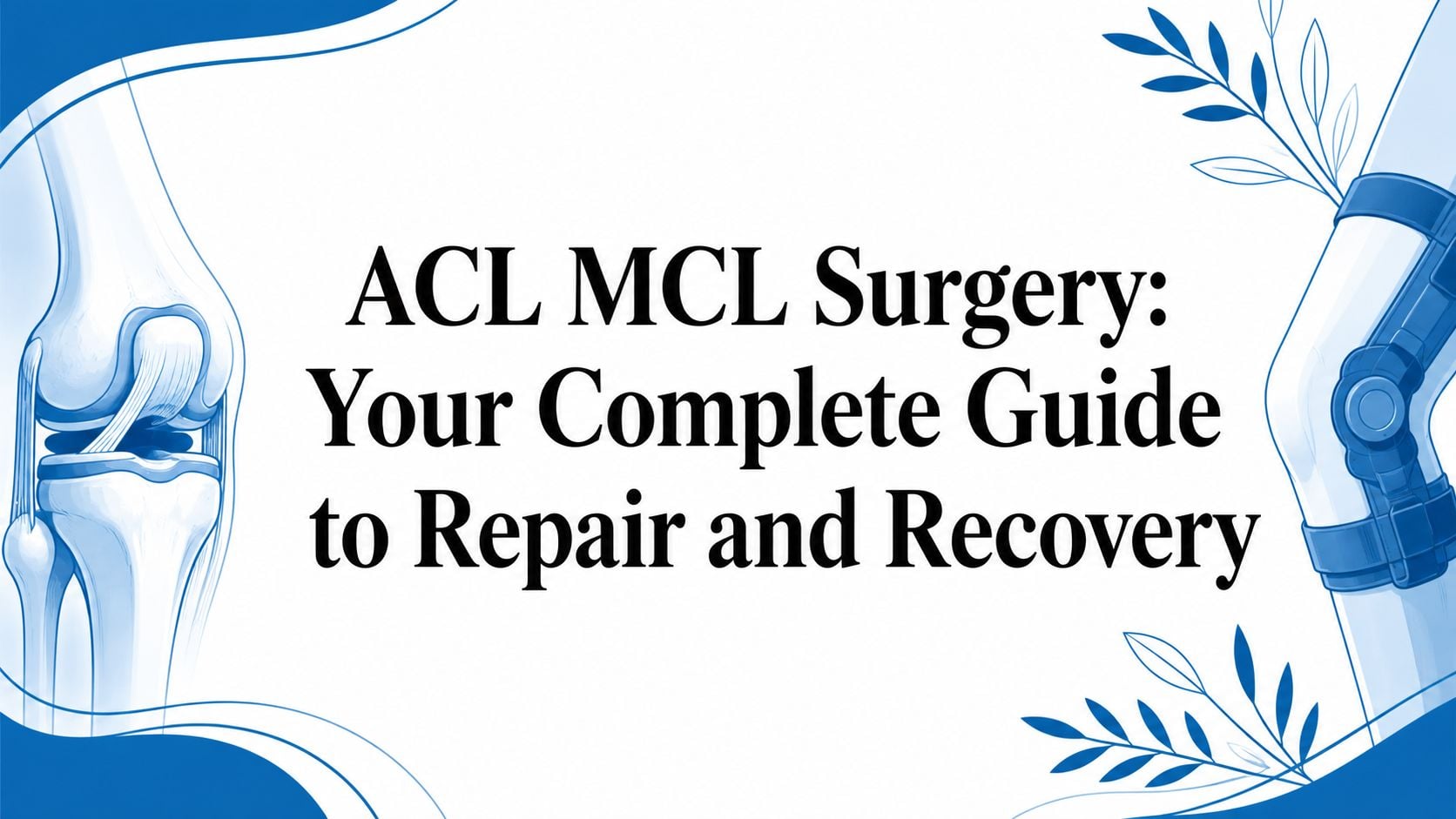
ACL MCL Surgery: Your Complete Guide to Repair and Recovery

You're on the sideline after a planted foot twisted, the knee buckled inward, and a pop was followed by swelling. Now the MRI mentions both the ACL and MCL, and the word “surgery” makes it sound as if both ligaments automatically need to be fixed. That isn't usually the decision. The ACL and MCL do … Read more

How Long Does Radiofrequency Ablation Last? a Patient Guide

Radiofrequency ablation typically provides 6 to 12 months of meaningful pain relief, although some patients maintain improvement for several years. The time until another treatment varies, and a recent real-world study found an average repeat interval of 380.6 days in lumbar facet pain. https://www.sciencedirect.com/science/article/pii/S2772594425000378 A patient usually asks this question while sitting in the consultation … Read more

Osteoarthritis Joint Replacement: A Complete Guide

A 62-year-old wakes with a stiff knee and spends the first part of the morning deciding which activities must be sacrificed. Injections helped for a while. Physical therapy improved strength, but stairs, shopping, and sleep remain difficult. The prospect of osteoarthritis joint replacement brings hope for pain relief, yet also raises harder questions: Is surgery … Read more

MCL Tear Recovery Timeline: What to Expect

Grade I MCL tears typically recover in 1–3 weeks, grade II tears in 4–6 weeks, and grade III tears in 6 weeks or longer. Full return to sport or heavy activity can take longer because the knee must regain strength, balance, and control, not just feel less painful. An active adult may plant a foot … Read more

Knee Pain After Basketball: Causes, Relief, and Prevention

The final whistle has gone at a Wednesday night pickup game. The knee felt normal while the game was moving, but two hours later on the couch it feels tight, achy, and reluctant to bend. By the next morning, stairs are uncomfortable and the thought of another run brings a familiar question: why does knee … Read more