

A patient usually starts worrying about facet injection side effects on the ride home, not in the procedure room. The questions tend to sound the same. Is this numb feeling normal? Why does the area feel sore already? Should the pain be gone right away, or is something wrong?
Those questions are reasonable. A facet injection is a precise, image-guided procedure, but it still involves a needle, local anesthetic, and often a steroid placed near a sensitive part of the spine. Most reactions after the procedure are expected and short-lived. A much smaller group of symptoms deserves closer attention.
What matters most is that the risk isn't the same for everyone. A lumbar injection doesn't carry the same concerns as a cervical one. A patient with diabetes has a different aftercare plan than someone without it. A person taking blood thinners needs a separate conversation from a person with osteoporosis. That is where many articles fall short. They list every possible complication without helping a reader sort out what applies.
This guide walks through recovery the way a calm pain specialist would explain it in clinic. It separates normal sensations from true warning signs, and it frames facet injection side effects by anatomy, steroid exposure, and medical history so the next step feels clearer.
Table of Contents
- What to Expect Right After a Facet Injection
- How Common Are Side Effects and Which Ones Count as Serious
- The First 72 Hours of Recovery
- Cervical vs Lumbar Facet Injections and Their Different Risks
- Steroid Effects and Risks for Patients With Diabetes or Other Conditions
- Aftercare Do's and Don'ts for the First Week
- Red Flags That Mean Call Your Doctor or Go to the ER
- Putting It All Together So You Recover With Confidence
What to Expect Right After a Facet Injection
The first few minutes after a facet injection are often anticlimactic. The needle is out, the procedure is over, and the patient is left wondering whether the pressure, tingling, or heaviness in the neck or low back is ordinary. In most cases, it is.
Common sensations in the recovery area
The local anesthetic often creates a temporary numb or dull feeling around the treated joint. Some patients notice a sense of fullness, mild burning, or pressure at the injection site. Others describe the area as oddly heavy, especially when standing up for the first time. Those feelings usually reflect the medicine spreading through the target area, not a complication.
A small amount of soreness where the needle entered is also expected. That soreness is usually well localized. It doesn't typically spread dramatically or come with major weakness.
Practical rule: Mild soreness at the needle site is the baseline expectation after this procedure, not a sign that something went wrong.
Why clinics observe patients before discharge
Most pain clinics keep patients for a short observation period so staff can check blood pressure, watch for lightheadedness, and make sure walking feels steady before discharge. If sedation was used, mild grogginess can linger longer than the local soreness.
Common post-procedure instructions often include:
- Have a driver available: This matters most when sedation was used or when the treated area is the neck.
- Stand up slowly: Temporary lightheadedness can happen after lying down, stress, or medication.
- Notice where the discomfort is located: A focused sore spot is more reassuring than rapidly spreading symptoms.
Patients who want a broader overview of how spine injections differ can review this explanation of types of injections used in pain management.
What should not feel surprising
A patient shouldn't expect the final result in the parking lot. The numbing medicine may briefly reduce pain, then wear off. The steroid, if used, usually doesn't announce itself immediately. What matters right after the procedure is stability. Can the patient walk safely, sit comfortably, and tolerate the expected soreness? If yes, the early recovery pattern is usually routine.
How Common Are Side Effects and Which Ones Count as Serious
Published data helps more than anecdotes here. The largest real-world study in this area looked at 11,980 intra-articular facet joint steroid injection procedures and found 101 adverse-event cases in 99 patients, for an overall adverse-event incidence of 0.84% per procedure and 1.63% per patient. In that same study, major procedure-related complications were 0.07% and systemic drug-related adverse events were 0.15%, which supports a reassuring message: serious problems are rare, but they aren't impossible in real practice (large retrospective safety study).
That headline number needs context. Older fluoroscopy-guided data shows that many minor procedural events are much more common than major complications. In a review of more than 43,000 facet joint injections, intravascular penetration occurred in 11.4%, local bleeding in 76.3%, oozing in 19.6%, and local hematoma with profuse bleeding in 1.2%. The same review also noted that the most common post-injection problems are short-lived local swelling and pain at the needle site, while serious complications such as infection, pneumothorax, dural puncture, or neural injury are uncommon (fluoroscopy-guided complication review).
What counts as a nuisance effect
A nuisance effect is uncomfortable but self-limited. Think of soreness at the needle site, a temporary numb patch, brief flushing, or feeling wiped out for the rest of the day. These symptoms usually improve with time, rest, hydration, and simple aftercare.
What counts as serious
A serious event changes function or signals a deeper problem. New weakness, spreading numbness, severe infection symptoms, or signs of significant bleeding fall into a different category because they can affect the spinal canal, nearby nerves, or overall health.
| Facet Injection Side Effects by Frequency and Severity | Approximate Frequency | Severity |
|---|---|---|
| Local soreness or swelling at the needle site | Common in clinical practice | Mild |
| Temporary numbness or heaviness from local anesthetic spread | Common in clinical practice | Mild to moderate |
| Intravascular penetration during the procedure | 11.4% in older fluoroscopy-guided data | Usually procedural and recognized at the time |
| Local bleeding | 76.3% in older fluoroscopy-guided data | Usually minor |
| Oozing | 19.6% in older fluoroscopy-guided data | Mild |
| Local hematoma with profuse bleeding | 1.2% in older fluoroscopy-guided data | Moderate and occasionally more concerning |
| Major procedure-related complications | 0.07% per procedure in the large retrospective study | Serious |
| Systemic drug-related adverse events | 0.15% per procedure in the large retrospective study | Variable |
Patients who take several medications sometimes find it helpful to compare expected medication reactions with procedure-related symptoms. A plain-language prescription side effects guide can help with that distinction.
The First 72 Hours of Recovery
Recovery usually makes more sense when it is viewed as a timeline instead of one vague period called "after the injection." The first three days often have a predictable rhythm.
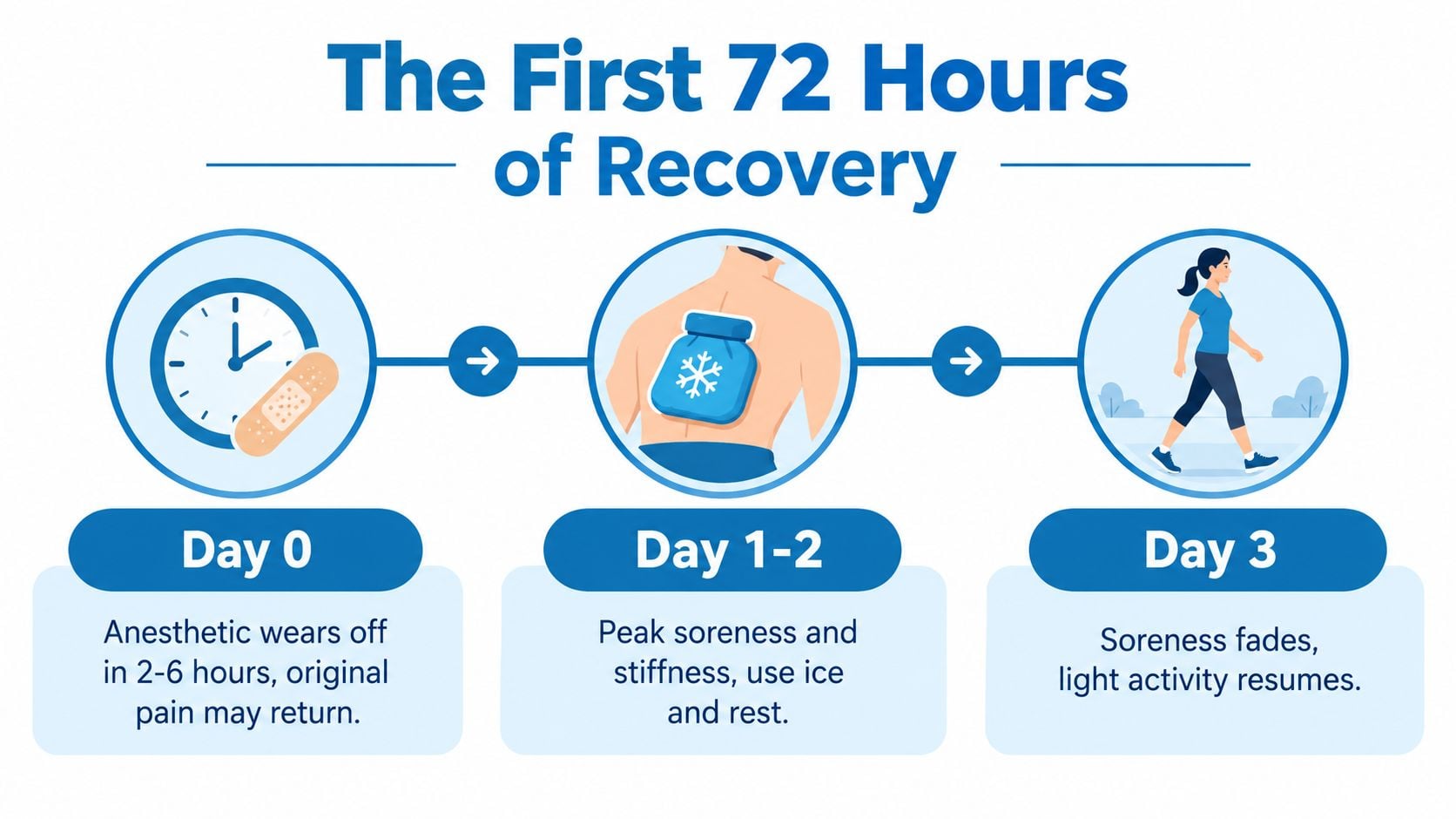
Day 0 when the numbing medicine fades
A patient may leave the office feeling deceptively good because the local anesthetic is still active. Later that day, the treated spot can feel more noticeable as the numbing medicine wears off. The original neck or back pain may briefly reappear before any steroid benefit shows up.
This is the stage where patients often misread normal recovery as treatment failure. A temporary dip after the anesthetic fades doesn't mean the procedure failed.
Day 1 when soreness is often most noticeable
The next day is commonly the least comfortable. The needle site may feel bruised, stiff, or irritated with bending, twisting, or getting out of a chair. Some patients also notice a wired feeling or restless sleep after a steroid-containing injection.
Helpful habits on this day include:
- Use ice, not heat: Ice often calms local tissue irritation better in the early phase.
- Keep moving gently: Short walks usually feel better than prolonged bed rest.
- Track the pattern: A symptom log helps separate temporary soreness from progressive worsening.
For readers recovering from spine procedures in general, this broader Thermo Recovery Wear recovery guide offers practical ideas on pacing movement and protecting the back during healing.
Most patients do better with gentle activity than with complete inactivity after an uncomplicated injection.
Day 2 and Day 3 when the pattern usually settles
By the second day, the area often starts calming down. One patient may notice the soreness is less sharp when rolling in bed. Another may say the pain feels unchanged but not worse. Both patterns can be normal.
By day three, most nuisance symptoms have started to fade. If the injection is going to provide meaningful early benefit, this is often when the patient begins to detect a change in baseline pain, movement, or morning stiffness.
Cervical vs Lumbar Facet Injections and Their Different Risks
Not every facet injection carries the same type of risk. The anatomy in the neck is tighter and less forgiving than the anatomy in the low back, so the side-effect conversation has to change with location.
Why cervical procedures deserve extra caution
The literature notes that cervical facet injections have unique hazards, including vertebral artery injury, phrenic nerve palsy, spinal cord trauma, and temporary weakness or numbness from local anesthetic spread. Those concerns are far less central in lumbar procedures because the low back doesn't place the needle next to the same vital structures (facet injection anatomy and complications overview).
That doesn't mean a cervical injection is unsafe by default. It means the margin for error is smaller, which is why image guidance and careful technique matter so much.
How lumbar injections usually differ
Lumbar facet injections are more often associated with localized soreness, temporary stiffness, and routine post-procedure discomfort. The neck can produce those same mild reactions, but it adds anatomy-specific concerns that a generic complication list often buries.
Patients who are comparing different spinal injections may also want to understand how a lumbar epidural steroid injection differs from a facet-based procedure in both target and risk profile.
| Cervical vs Lumbar Facet Injection Risk Comparison | Cervical | Lumbar |
|---|---|---|
| Nearby vascular structures | Vertebral artery risk is a meaningful concern | Less central concern |
| Nearby nerve structures | Greater concern for spinal cord and nerve spread effects | Nerve irritation can occur, but anatomy is generally less crowded |
| Temporary numbness or weakness from anesthetic spread | More clinically important | Usually more localized and less alarming |
| Breathing-related issues | Possible concern because of phrenic nerve involvement | Not a typical issue |
| Local soreness at injection site | Common expected reaction | Common expected reaction |
Key takeaway: A patient asking about facet injection side effects should first ask where the injection is being done. Neck and low-back procedures don't carry the same practical risk profile.
Steroid Effects and Risks for Patients With Diabetes or Other Conditions
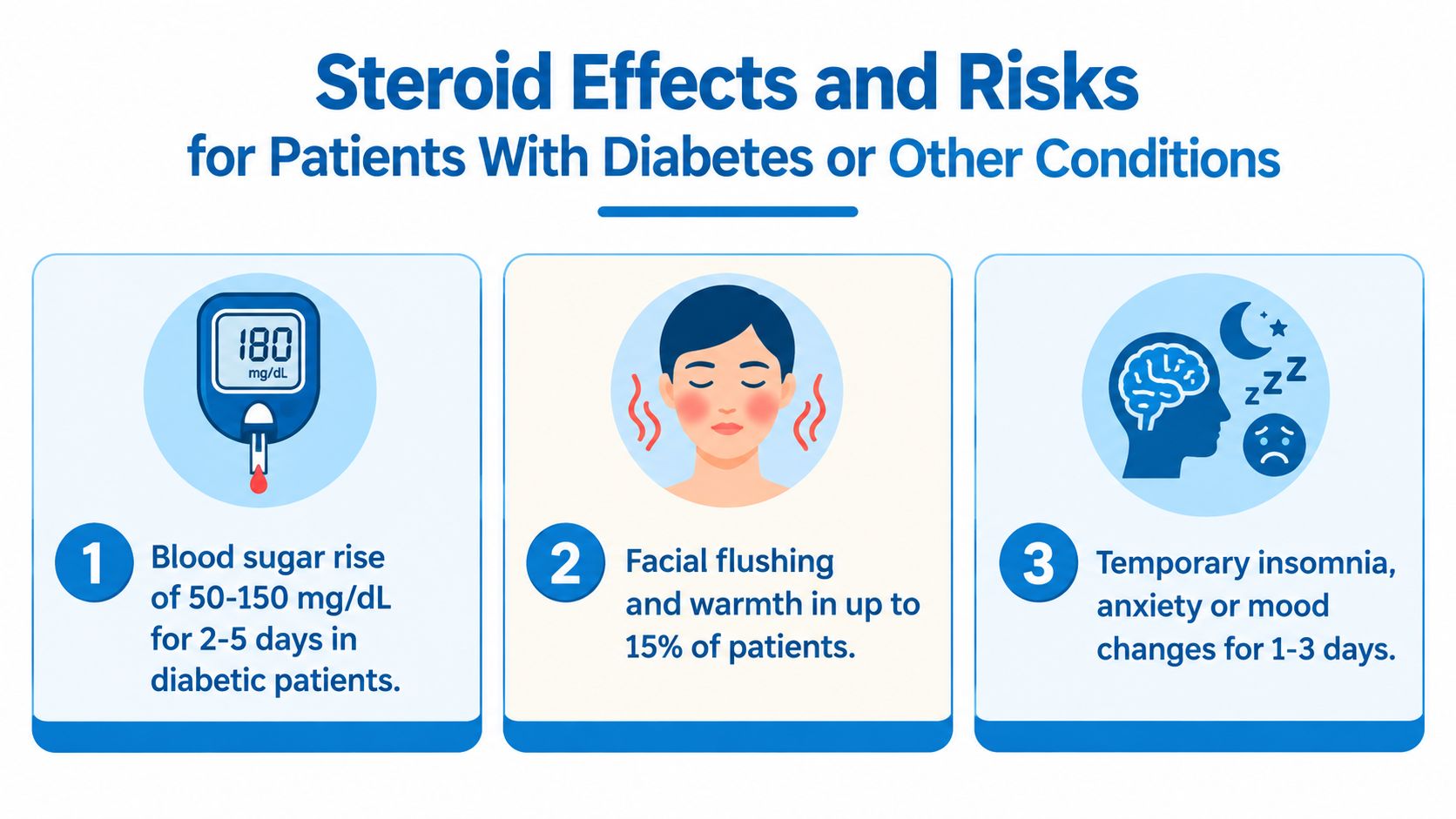
When patients talk about side effects, they often focus on the needle. For many people, the more personal question is about the steroid. That part matters most in patients with diabetes, blood-thinner use, osteoporosis, or a weakened immune system.
Why the medication mix changes the conversation
Reputable clinical references note that steroid-containing facet injections can cause temporary insomnia, flushing, jitteriness, and transient blood sugar elevation in people with diabetes, even though many patient-facing pages don't quantify how often those effects happen or exactly how to monitor them afterward. The practical point is that steroid-related symptoms are usually temporary, but they can feel dramatic if a patient wasn't warned.
Patients who want a basic review of why these medications are used can read about corticosteroid injections.
Which patients need closer monitoring
Some groups need a more personalised aftercare plan than others:
- Patients with diabetes: They should watch for temporary glucose elevation after a steroid-containing injection and follow the monitoring plan set by the clinician who manages their diabetes.
- Patients on anticoagulation: Their main concern is usually bleeding or hematoma risk, not steroid flushing or insomnia.
- Patients with osteoporosis: Repeated steroid exposure may raise concerns about bone health over time, so injection frequency should be individualized.
- Immunocompromised patients: Even a rare infection risk deserves more vigilance in this group.
A patient with diabetes doesn't need to panic over one higher reading. The useful question is whether the numbers are drifting back toward that patient's usual pattern, or whether symptoms such as unusual thirst, confusion, weakness, or persistent worsening are developing and require a call to the treating doctor.
What matters more than a generic side-effect list
A healthy younger patient receiving a lumbar injection may only need routine expectations. An older patient on blood thinners with brittle diabetes needs a more nuanced plan. That is why the answer to facet injection side effects isn't one-size-fits-all. The anatomy, the steroid choice, and the patient's medical history all shape what should be monitored.
Aftercare Do's and Don'ts for the First Week
The first week goes more smoothly when the patient follows a simple routine instead of reacting to every twinge. Aftercare doesn't need to be complicated, but it should be deliberate.
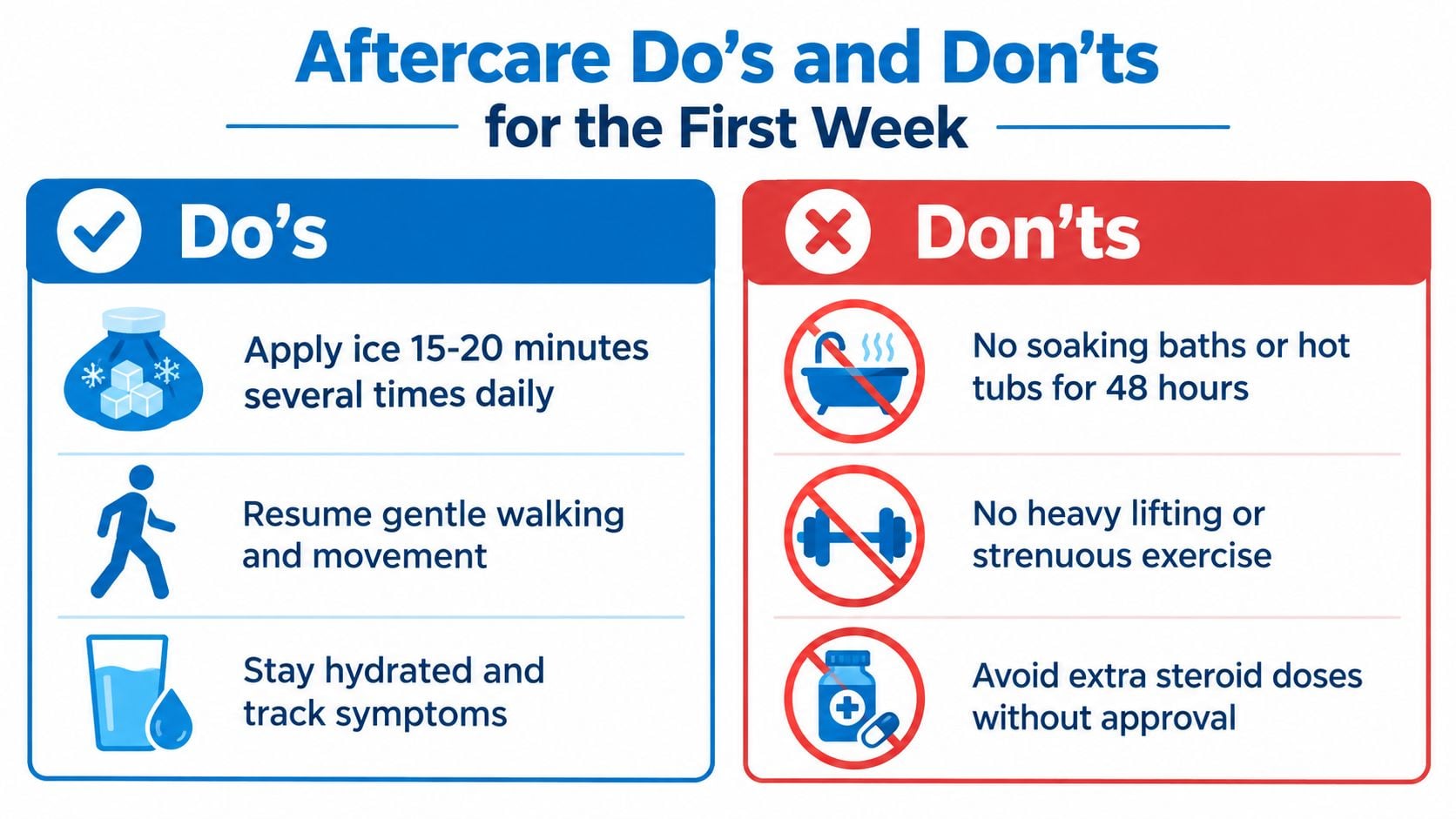
What to do
A few habits lower confusion and make recovery easier to judge:
- Ice the area: Short, repeated icing sessions often help more than one long session.
- Walk gently: Light movement helps prevent stiffness without stressing the treated joints.
- Stay hydrated: This can help patients who feel washed out or mildly lightheaded later that day.
- Keep a brief symptom log: Note pain location, intensity trend, sleep changes, and any unusual reactions.
- Report relief accurately: If the clinician asks how long the numb relief lasted versus when pain returned, those details matter.
What to avoid
Patients often overdo things because the procedure seems minor. The spine still benefits from a short protected window.
- Skip heavy lifting and twisting early on: Sudden strain can aggravate the sore tissues around the injection site.
- Don't soak the puncture site too soon: Baths, pools, and hot tubs can wait until the puncture has closed.
- Don't restart or stop blood thinners casually: Timing should be coordinated with the prescribing clinician.
- Don't judge the final result too early: A rough first day doesn't predict the final outcome.
Interventional Pain Management offers image-guided pain procedures and follow-up care for spine conditions, which can be relevant when a patient needs individualized post-injection instructions based on anatomy, medications, and overall diagnosis.
If symptoms stay mild, localized, and gradually improve, that pattern is usually reassuring even when the first couple of days feel uneven.
Red Flags That Mean Call Your Doctor or Go to the ER
A common mistake is treating every symptom as an emergency or, on the other hand, dismissing a dangerous one because "some soreness is normal." The safer approach is to sort symptoms by pattern.
Symptoms that usually call for the office
A patient should contact the treating clinic during office hours if the injection site becomes newly warm, swollen, or increasingly tender, or if a headache becomes severe and persistent instead of gradually settling. Pain that keeps intensifying after the early recovery window also deserves a call.
These problems aren't always emergencies, but they do need clinical judgment.
Symptoms that deserve emergency evaluation
Certain symptoms move out of the "watch and wait" category immediately. Sudden limb weakness, marked numbness, bowel or bladder dysfunction, severe shortness of breath, or signs that suggest stroke-like change after a cervical procedure are examples. Those symptoms point to loss of function, major neurologic change, or systemic illness.
| Red Flags After Facet Injection When to Call vs When to Go to the ER | Action Required | Why It Matters |
|---|---|---|
| Increasing warmth, redness, or swelling at the injection site | Call the doctor | Could suggest local infection or significant inflammation |
| Severe headache that doesn't improve with rest and hydration | Call the doctor | May reflect a post-procedure headache pattern that needs assessment |
| Pain that steadily worsens instead of improving over the next few days | Call the doctor | Doesn't fit the usual recovery curve |
| New weakness in an arm or leg | Go to the ER | May signal nerve injury, compressive bleeding, or another serious neurologic event |
| Loss of bowel or bladder control | Go to the ER | Raises concern for urgent spinal canal involvement |
| Sudden vision change, facial droop, or stroke-like symptoms after a cervical injection | Go to the ER | Suggests a potentially severe vascular or neurologic complication |
| Shortness of breath or chest tightness after a cervical procedure | Go to the ER | Could reflect serious spread effects or another acute complication |
A simple decision shortcut
If the symptom is progressive, involves loss of function, or comes with systemic illness, emergency care is appropriate. If the symptom is uncomfortable but stable, localized, and not clearly worsening, a phone call to the pain clinic is usually the better first step.
Putting It All Together So You Recover With Confidence
Most patients do not struggle with dangerous facet injection side effects. They deal with a short period of soreness, a temporary return of baseline pain after the numbing medicine wears off, and sometimes a few steroid-related symptoms such as flushing or restless sleep. That pattern can be unpleasant, but it is usually self-limited.
The most useful mental model is simple. Expected symptoms are local, brief, and gradually improving. Concerning symptoms are progressive, disruptive, and tied to function. That distinction keeps ordinary recovery from turning into unnecessary panic.
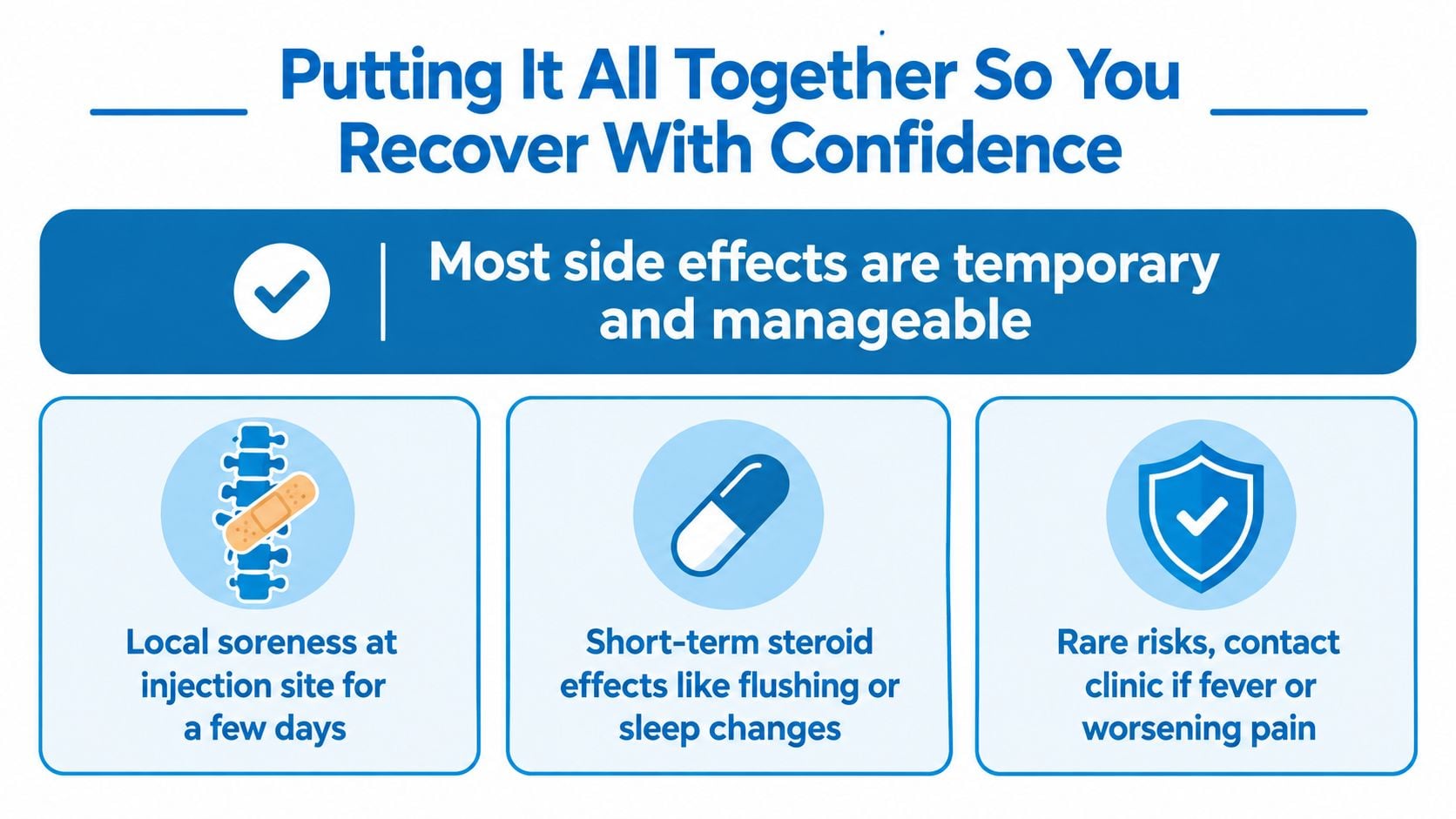
Three anchors that keep recovery on track
- Follow the short recovery window: Protect the area, use ice, and return to activity gradually.
- Match monitoring to medical history: A patient with diabetes, anticoagulant use, or cervical anatomy needs more specific follow-through than a healthy low-risk patient.
- Use the red-flag filter: Local soreness and stiffness are one category. New neurologic loss or systemic illness is another.
Normal soreness fades. Steroid effects are usually brief. Symptoms that break the expected recovery curve deserve a call.
A patient who understands those three points usually feels less anxious and more capable of telling the difference between an ordinary reaction and a meaningful warning sign.
Interventional Pain Management provides evaluation, image-guided spinal injections, and coordinated follow-up for patients dealing with neck, back, and joint pain. For someone concerned about facet injection side effects, the key value is individualized planning based on anatomy, current medications, and medical history rather than a generic complication list. Readers who want to explore care options can visit Interventional Pain Management.