

You wake up, reach for your phone or coffee mug, and your hands feel stiff, swollen, or strangely painful. Sometimes the fingers loosen after a few minutes. Sometimes they stay stubborn, numb, or weak long enough to make buttoning a shirt feel irritatingly difficult. That pattern is common, but it isn't something to brush off as just “sleeping wrong.”
Morning hand pain can come from joint inflammation, nerve compression, or the way the hands were positioned overnight. The difference matters because the pattern tells you whether this is something you can try to calm at home, or something that deserves a medical workup. A clear read on timing, duration, and associated symptoms is the fastest way to separate a simple positional issue from a condition that needs treatment.
Table of Contents
- Why Your Hands Hurt Every Morning
- The Three Main Causes of Morning Hand Pain
- How to Tell What Type of Hand Pain You Have
- What You Can Do Tonight to Reduce Morning Pain
- When Morning Hand Pain Needs Medical Attention
- How Doctors Diagnose the Source of Hand Pain
- Treatment Options from Conservative to Surgical
- Getting Back to Pain-Free Mornings
Why Your Hands Hurt Every Morning
A patient often describes the same scene. The alarm goes off, the hand feels puffy or locked up, and the first instinct is to shake it out and hope the sensation disappears before the day starts. That frustration is real, especially when the pain keeps returning and starts interfering with routine tasks.
Morning hand pain is common enough to matter clinically. In a population-based study, 13.7% of adults reported hand pain, aching, or stiffness, and 35.8% of those with hand symptoms had already been diagnosed with hand arthritis, with symptoms more common in women and adults 50 years and older pubmed.ncbi.nlm.nih.gov/20950127. Those symptoms were also linked to reduced grip strength and lower quality of life. That means a hand that hurts on waking is often a clue to a real underlying problem, not a random nuisance.
What the morning pattern is telling you
The practical question is simple. Does the hand loosen as soon as it moves, or does it stay painful, tingly, or weak? When symptoms are tied to stiffness that eases with motion, inflammation climbs higher on the list. When symptoms include numbness, tingling, or a hand that feels “asleep,” nerve compression becomes more likely.
Practical rule: pain that repeats on waking is worth pattern-matching, not ignoring. The symptom cluster usually points to a specific mechanism.
That's why the details matter more than the headline symptom. The same complaint, “hands hurt when I wake up,” can reflect arthritis, carpal tunnel syndrome, or sleep-position pressure. The next step is to sort out which pattern fits best.
The Three Main Causes of Morning Hand Pain
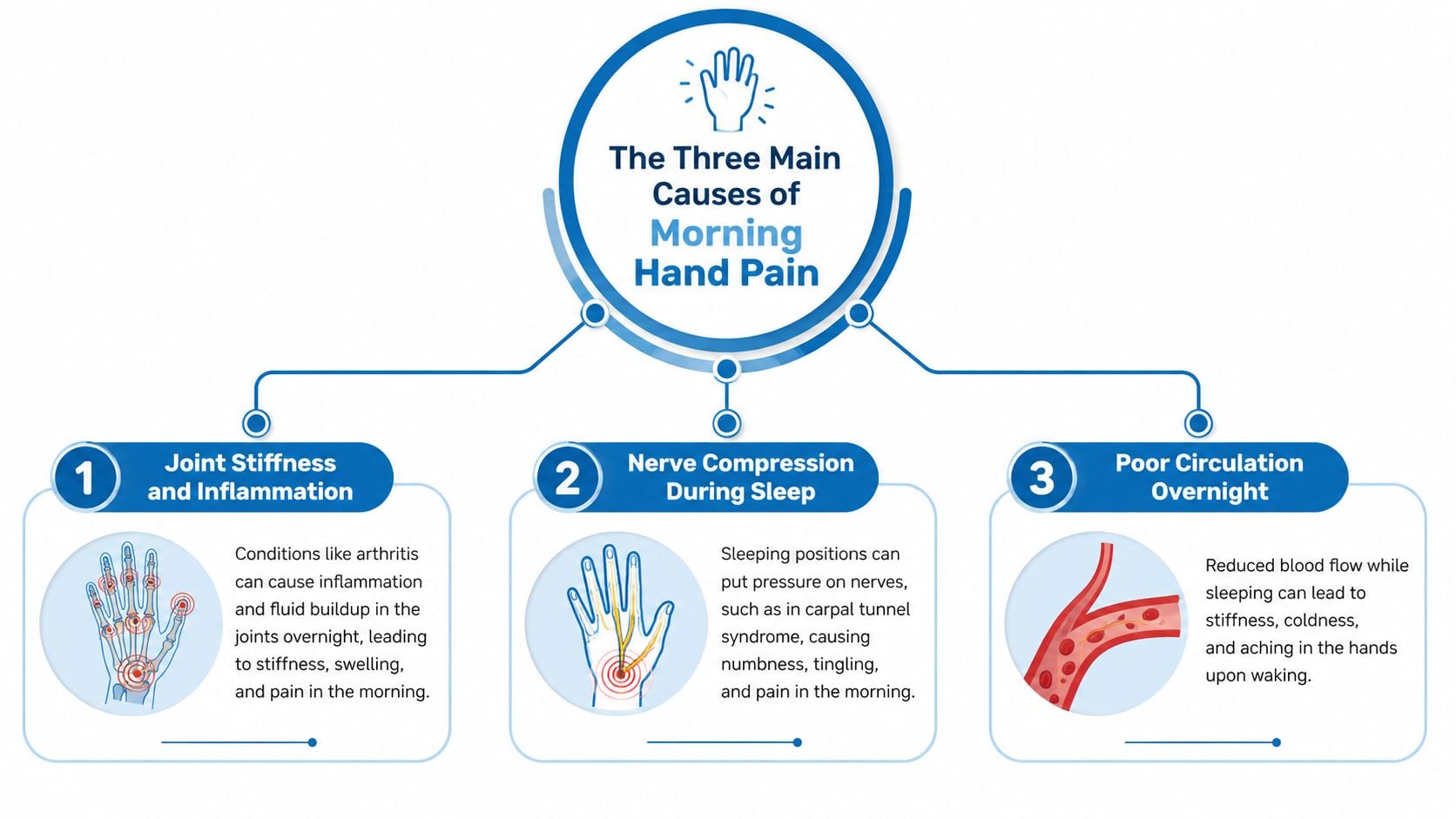
Morning hand pain usually fits one of three patterns. The hand is reacting to inflammation, to nerve compression, or to pressure from the way it was held during sleep. Those are different mechanisms, and the clues at the bedside are usually different too.
Inflammatory stiffness
Inflammatory arthritis is a common reason hands hurt on waking. In rheumatoid arthritis, immune-mediated synovitis can make morning stiffness last from 30 minutes to several hours, because overnight inactivity lets swelling and reduced joint mobility become more noticeable by morning hll.hvr.mybluehost.me. The hand feels tight, sore, and reluctant to move, then often loosens as it warms up.
That same inflammatory pattern can appear in hand osteoarthritis as well. In one community study, people with prolonged morning stiffness reported more pain and worse physical and mental quality of life. The hand feels like it needs time to get going, not just a quick shake.
Nerve compression
Carpal tunnel syndrome works differently. At night, wrist flexion can raise pressure in the carpal tunnel and compress the median nerve, which typically causes pain plus numbness or tingling that may wake a person at night or be most obvious on first waking aasem.org. The pattern often feels electrical, burning, or “asleep,” rather than purely stiff.
A practical comparison is provided in haven medical carpal tunnel info. If the hand wakes with tingling, numbness, or a need to shake it out, nerve compression deserves close attention. More detail on carpal tunnel syndrome is useful here because this diagnosis is often mistaken for a simple tendon problem.
Positional or mechanical pressure
Sometimes the problem is pressure from sleep position rather than a disease flare. Sleeping with the hand tucked under the body, bent at the wrist, or pressed against a pillow can irritate soft tissues and nerves. That can cause brief numbness, aching, or a dead-handed feeling that settles after repositioning.
The key distinction is how long it lasts. If the hand improves quickly once the position changes, mechanical pressure moves higher on the list. If the symptoms return night after night, or they keep going after you are up and moving, a medical cause is more likely.
How to Tell What Type of Hand Pain You Have
A helpful self-check starts with the clock. Inflammatory stiffness usually feels worst on first waking and improves with movement, while nerve compression often shows up as numbness, tingling, or a burning ache that can wake someone during the night. Positional pain tends to be more transient, fading after the hand is straightened or moved.
Pattern clues that matter most
Pay attention to which fingers are involved. In carpal tunnel syndrome, symptoms often center on the thumb, index, middle, and part of the ring finger, while arthritis is more likely to feel like joint pain in the fingers or wrist itself. If the pinky is the main problem, that pattern points away from classic carpal tunnel and deserves a broader evaluation.
Also notice whether grip improves with motion or gets worse with use. Arthritis often feels better after gentle movement, but prolonged use can make it ache again later. Nerve compression can temporarily improve when the hand is shaken out, then return overnight if the wrist position repeats.
| Morning Hand Pain Symptom Comparison | Inflammatory Arthritis | Carpal Tunnel Syndrome | Positional/Mechanical |
|---|---|---|---|
| Stiffness on waking | Common | Can occur, but numbness is more typical | Brief, if present |
| Numbness or tingling | Less typical | Common | Possible, usually short-lived |
| Fingers most affected | Joint-related fingers or wrist | Thumb, index, middle, part of ring | Depends on pressure point |
| Improves with movement | Often yes | Sometimes, temporarily | Usually yes |
| Wakes during the night | Sometimes | Often | Sometimes |
A common mistake is treating every morning hand problem like it belongs in the same bucket. It doesn't. Stiffness without tingling and tingling without true joint swelling often lead to very different diagnoses, which is why the symptom pattern matters more than the label.
Best clue: if the hand feels stiff and better after it warms up, think inflammation. If it feels numb, prickly, or electrically irritated, think nerve compression.
What You Can Do Tonight to Reduce Morning Pain
The best home steps are the ones that change the night itself. Reduce swelling, keep the wrist from bending for hours, and make the first few minutes after waking less abrupt. Small changes often help more than people expect, especially when the problem is positional rather than inflammatory.
A hand that feels tight and stiff may ease with gentle warmth before bed. A heating pad or warm compress can be reasonable when the hand feels rigid, but a visibly hot or puffy hand usually does better with ice because cooling can calm irritation without adding more heat. Gentle range-of-motion work before sleep can also keep the fingers from settling into one stiff position overnight.
Sleep position changes
For symptoms that point toward nerve compression or a positional problem, a neutral wrist splint worn at night can be a practical first step. Keeping the wrist straight lowers pressure in the carpal tunnel and helps prevent the common habit of curling the hands inward during sleep. Pillow placement matters too, because hands tucked under the head or body are more likely to wake someone with numbness, tingling, or a dead-arm feeling.
If the symptoms are more inflammatory, splinting alone may not solve the problem, but it can still reduce strain while you sort out the pattern. The trade-off is simple. A splint can limit motion enough to protect an irritated wrist, yet it may feel awkward at first and can be annoying if you are a light sleeper. That is still often better than waking repeatedly with a hand that is bent and compressed for hours.
Morning relief
When the alarm goes off, do not force a hard grip right away. Start with gentle finger opening and closing, then light wrist movement, then normal activity. A warm water soak can help when stiffness is the main complaint, while a slower ramp into chores is usually smarter than grabbing a heavy mug, tool, or steering wheel immediately.
If the hand wakes up numb or prickly, that pattern fits nerve irritation more than joint stiffness, and a few minutes of movement may help more than heat alone. If the hand feels swollen and stiff without tingling, inflammation is more likely, and warmth plus gradual motion is usually the better test to try first. This simple split matters because the same remedy does not fit both patterns.
For people who want an overview of topical options, this guide to CBD pain creams can help frame what topical products may and may not do for soreness. Those products may soothe surface discomfort, but they will not fix nerve compression or active joint inflammation on their own.
When Morning Hand Pain Needs Medical Attention
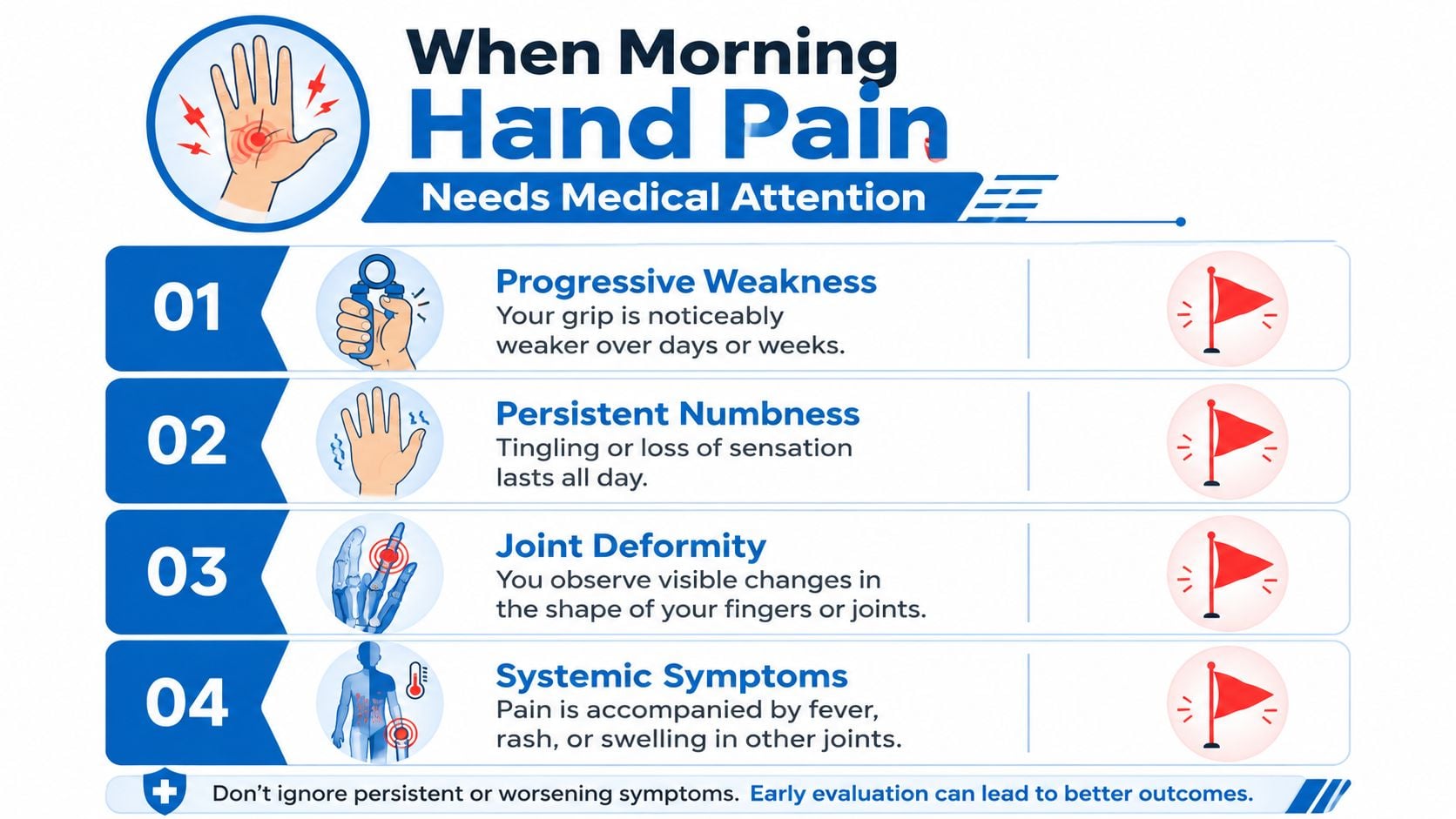
Some hand pain is manageable for a while, but some patterns should move straight to evaluation. The warning signs are not subtle when they're present. Progressive weakness, persistent numbness, visible joint deformity, and systemic symptoms such as fever, rash, or swelling in other joints should not be treated as routine sleep trouble.
Red flags that change the urgency
If grip strength is clearly fading, the problem may be affecting nerve function or joint integrity. Persistent tingling or loss of sensation that lasts all day is especially concerning because it suggests more than overnight compression. Joint shape changes, knobby swelling, or fingers that no longer align normally raise concern for inflammatory or degenerative arthritis.
The pain also deserves attention when it keeps returning despite conservative measures over a few weeks. That's especially true if the hand is waking the person at night, symptoms are spreading, or the problem is starting to affect work, driving, or dressing. Early treatment matters because untreated rheumatoid arthritis can keep damaging joints, and severe carpal tunnel syndrome can compromise nerve function.
The related article on rheumatoid arthritis is useful if the morning pattern includes stiffness plus swelling or other joint involvement. Inflammatory arthritis often needs a different plan than simple splinting.
If numbness is constant or weakness is getting worse, the hand isn't just “annoyed.” It may be signaling a nerve problem that should be documented and treated.
People often wait because the pain seems minor or because symptoms come and go. That hesitation is understandable, but recurring morning hand pain is one of those complaints where the pattern can reveal the diagnosis before major damage sets in. A timely exam is often the fastest way to stop guessing.
How Doctors Diagnose the Source of Hand Pain
The first step is a careful history. Clinicians ask when the pain starts, which fingers are involved, whether numbness is present, and whether stiffness improves with movement. Those answers usually narrow the field quickly, because inflammatory, nerve, and positional causes don't behave the same way.
What the exam usually looks for
The physical exam focuses on joint swelling, tenderness patterns, and any signs of nerve irritation. For suspected carpal tunnel syndrome, clinicians often use nerve compression maneuvers such as Tinel's and Phalen's to see whether the median nerve is being provoked. If symptoms suggest arthritis, the exam may focus more on swelling, reduced motion, and joint tenderness.
Imaging and testing are chosen based on the pattern. X-rays help evaluate joint structure and arthritis-related change. MRI is reserved for situations where soft tissue detail matters more, or when the story doesn't fit neatly into a simple joint explanation. Nerve conduction studies and EMG help show how well the nerves are functioning and whether compression is slowing or disrupting signal flow.
The point of testing isn't to order everything. It's to match the test to the suspected mechanism so treatment isn't guesswork. That diagnostic fit matters because a splint may help one problem while a different condition needs anti-inflammatory care, injection therapy, or something more targeted.
Treatment Options from Conservative to Surgical
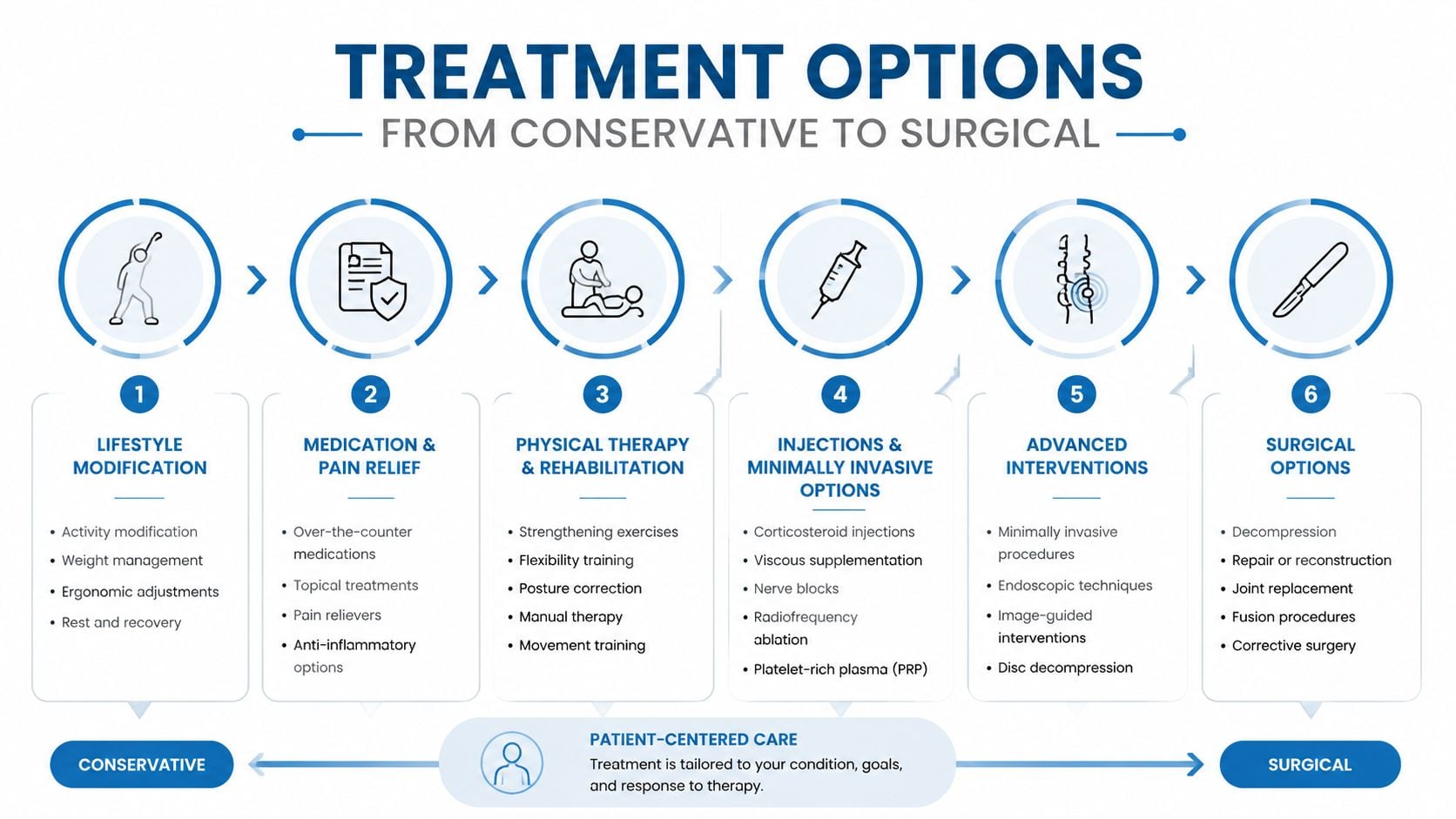
A good treatment plan starts with the cause, because morning hand pain is not one problem. An arthritic hand that feels stiff, a compressed median nerve that tingles, and a hand that wakes up sore from sleep position all need different care. The practical goal is to begin with the least invasive option that matches the pattern, then move up only if the hand keeps failing.
Non-surgical care first
For inflammatory pain, NSAIDs, activity modification, and targeted hand therapy can calm irritation and help preserve function. For nerve compression, nighttime splinting and ergonomic changes aim to keep the wrist neutral and lower pressure on the nerve. For tendon-related or soft-tissue pain, the same principle applies. Reduce irritation first, then see how the hand responds. A focused approach like the one used for tendinitis and bursitis often starts with rest, load reduction, and a careful return to activity.
When procedures enter the picture
If symptoms keep going, clinicians may consider corticosteroid injections, nerve-focused interventions, or other targeted procedures based on the source of pain. These treatments are chosen to calm the specific structure that is inflamed or compressed, rather than numbing the whole hand. That distinction matters, because a procedure that helps joint inflammation may do little for a true compression problem.
When surgery becomes the right step
Surgery is usually considered when there is persistent nerve compression, severe functional loss, or structural joint damage that does not respond to conservative care. Carpal tunnel release can relieve pressure on the median nerve. In advanced joint disease, reconstructive options may be discussed depending on which joints are involved and how much function is being lost.
For people comparing topical add-ons, a guide to CBD pain creams can help set expectations. Topicals may be useful for comfort, but they do not replace treatment for a mechanical nerve problem or active arthritis.
Getting Back to Pain-Free Mornings
Morning hand pain is common, but it isn't something a person has to live with. The most important step is noticing the pattern, stiffness versus tingling versus pressure-related pain, because that pattern points toward the right fix. From there, conservative changes, proper testing, and targeted treatment can turn a frustrating morning routine into something manageable again.
Early identification and targeted treatment often lead to better outcomes. That may mean a splint, joint-focused care, a nerve evaluation, or a step up to a procedure if the problem keeps progressing. Specialized pain practices can help connect those pieces so the plan isn't scattered.
If morning hand pain keeps interrupting sleep, grip, or dressing, Interventional Pain Management can help sort out whether the problem is inflammatory, compressive, or mechanical and guide the next step with a focused exam and treatment plan. Visit Interventional Pain Management to explore care that's built around the source of the pain, not just the symptom.