

Waking up sore is often blamed on a bad pillow, but that explanation is too simple. A pillow can irritate the neck, sure, yet neck and back pain from sleeping is sometimes the first clue that the spine itself is the problem, not the bedding. The primary task is to separate mechanical sleep-posture pain from structural spine pain, because only one of those usually improves with a different pillow.
When the pain is mild, positional, and fades after moving around, sleep setup matters a lot. When it is severe, keeps returning night after night, or starts to travel into an arm or leg, the issue deserves a medical look rather than another shopping cart full of cushions and mattress toppers.
Table of Contents
- Why Your Pillow Might Not Be the Problem
- How Sleep Becomes a Risk Factor for Spine Pain
- Sleep Positions and Ergonomics That Protect Your Spine
- When Morning Pain Signals Something More Serious
- Treatment Options Beyond Self-Care Adjustments
- What to Expect at a Spine and Pain Specialist Visit
- Your Action Plan for Better Sleep and Less Pain
Why Your Pillow Might Not Be the Problem
Morning pain gets mislabeled all the time. A pillow can absolutely create a bad night, but it is not the only explanation for waking with a stiff neck or aching back. The more important question is whether the pain behaves like a position problem or a spine problem.
Two different patterns show up in the exam room
Mechanical sleep-posture pain is usually predictable. It starts after a night in one position, feels localized, and improves once the person gets up, moves around, and changes how they sleep. Structural pain behaves differently. It can recur nightly, stay on one side, radiate into the arms or legs, or keep coming back even after the pillow, mattress, and sleeping position have already been adjusted.
That difference matters because sleep advice can't fix everything. A person with disc irritation, spinal stenosis, facet pain, or nerve compression may get only temporary relief from ergonomic tweaks. If the pain pattern keeps repeating, the body is usually saying the problem is deeper than the pillow.
Practical rule: if the same morning pain keeps returning despite real changes in sleep position, stop assuming it's only a bedding issue.
The best consumer advice often skips the triage question, which is the one that matters most. If symptoms are mild and clearly positional, conservative changes make sense. If they're persistent, asymmetric, or spreading, the right move is evaluation, not another purchase. For a broader clinical view of neck pain patterns, this neck pain resource fits the same logic, because neck symptoms that recur after sleep can come from much more than simple irritation.
How Sleep Becomes a Risk Factor for Spine Pain
Sleep is not just recovery time. Poor sleep can become a pain trigger in its own right, and the evidence supports that connection. A large Swedish prospective cohort published in 2014 found that sleep problems predicted later musculoskeletal pain, with follow-up pain developing in 11.8% of men and 14.8% of women, and baseline sleep problems linked to higher odds of later pain, OR 1.72 in men and 1.91 in women. The same study concluded that one in 15 to 20 new chronic pain cases in the population could be attributed to sleeping problems, which makes sleep an upstream risk factor, not just a symptom (study).
Why posture turns sleep into strain
The mechanics are straightforward. Prone sleeping increases lumbar strain because it twists and loads the lower back. Supine sleeping tends to support spinal alignment and is associated with lower low back pain prevalence, while supported side-lying can also help. For the neck, inadequate pillow support can hold the cervical spine in end-range positions for hours, which irritates muscles and joints by morning (sleep posture review).
The same pattern shows up in broader neck-pain research. Neck pain remains common worldwide, with an age-standardized prevalence rate of 27.0 per 1,000 population in 2019, and 2017 country-level point prevalence ranging from 2,443.9 to 6,151.2 cases per 100,000 population across countries (global neck pain review). That burden is one reason sleep gets attention in spine care. The same review noted that insufficient sleep quantity and quality are significantly associated with increased odds of neck pain, and a 3-year cohort found sleep disturbance raised neck-pain risk with adjusted odds ratios rising from 1.84 for less than 1 year of disturbance to 2.80 for 2 years or more, as noted in the same review.
Sleep posture matters most when it repeats through the night. A brief awkward position usually settles once you move. Hours in a provocative position can lead to morning stiffness, muscle guarding, and pain that is worse before the day has even started.
The practical problem is that sleep can be a mechanical trigger, but it can also expose a spine that is already irritated. A pillow can reduce strain, yet it cannot calm every pain generator. If low back pain keeps showing up despite better sleep setup, it is worth looking beyond bedding and asking whether the lower back itself needs evaluation, especially when symptoms fit a pattern of recurrent mechanical irritation. For a closer clinical overview of lower-back symptoms, this low back pain resource follows the same triage logic.
Sleep Positions and Ergonomics That Protect Your Spine
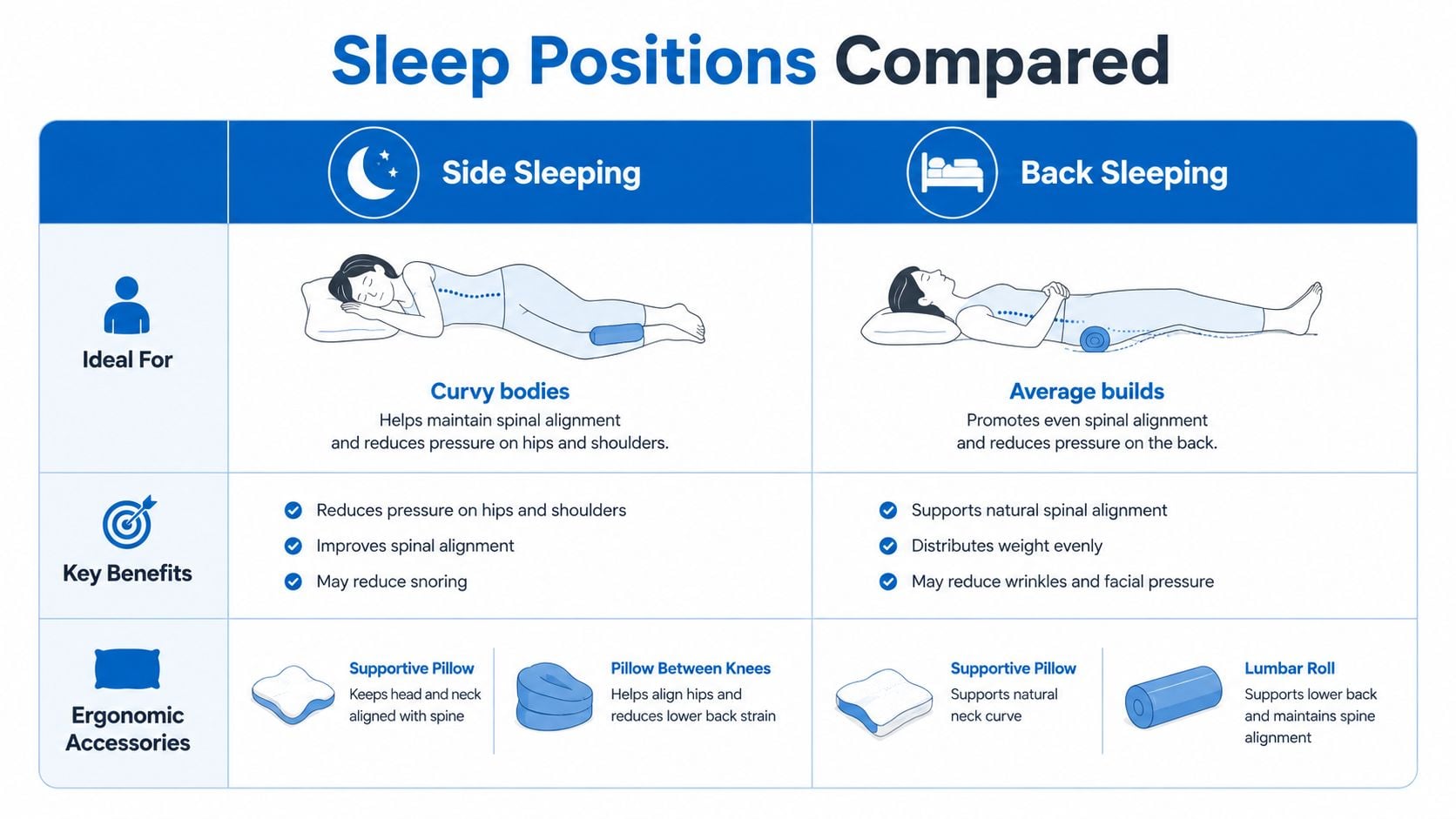
The right sleep setup depends on body shape, shoulder width, and how the spine settles in bed. That's why blanket advice like “just sleep on your back” misses part of the picture. Back sleeping often helps because it supports alignment, but side sleeping can work just as well when the neck stays neutral and the lower back isn't sagging. Prone sleeping is the position most likely to punish the lumbar spine.
Start with the position that keeps the spine neutral
A neutral setup means the neck isn't bent hard upward or downward, and the low back isn't forced into a prolonged arch or twist. Back sleepers often do well with a thinner pillow or a setup that supports the natural curve without pushing the chin toward the chest. Side sleepers usually need enough pillow height to keep the nose, sternum, and pelvis stacked. A pillow between the knees can help maintain hip and lumbar alignment, and a helpful knee pillow positioning guide explains why that support can reduce twisting through the pelvis.
Prone sleeping is different. It usually forces the neck into rotation for long periods and increases strain through the lower back. If a person cannot fully abandon stomach sleeping right away, the immediate goal is reducing how often that position is held, not pretending it's harmless.
Match support to the problem, not to marketing
Mattress firmness matters, but only in relation to the body on top of it. Too soft, and the torso sinks enough to distort alignment. Too firm, and pressure points can make the sleeper compensate by twisting or hunching. A pillow should fill the gap created by the sleep position, not force the head upward.
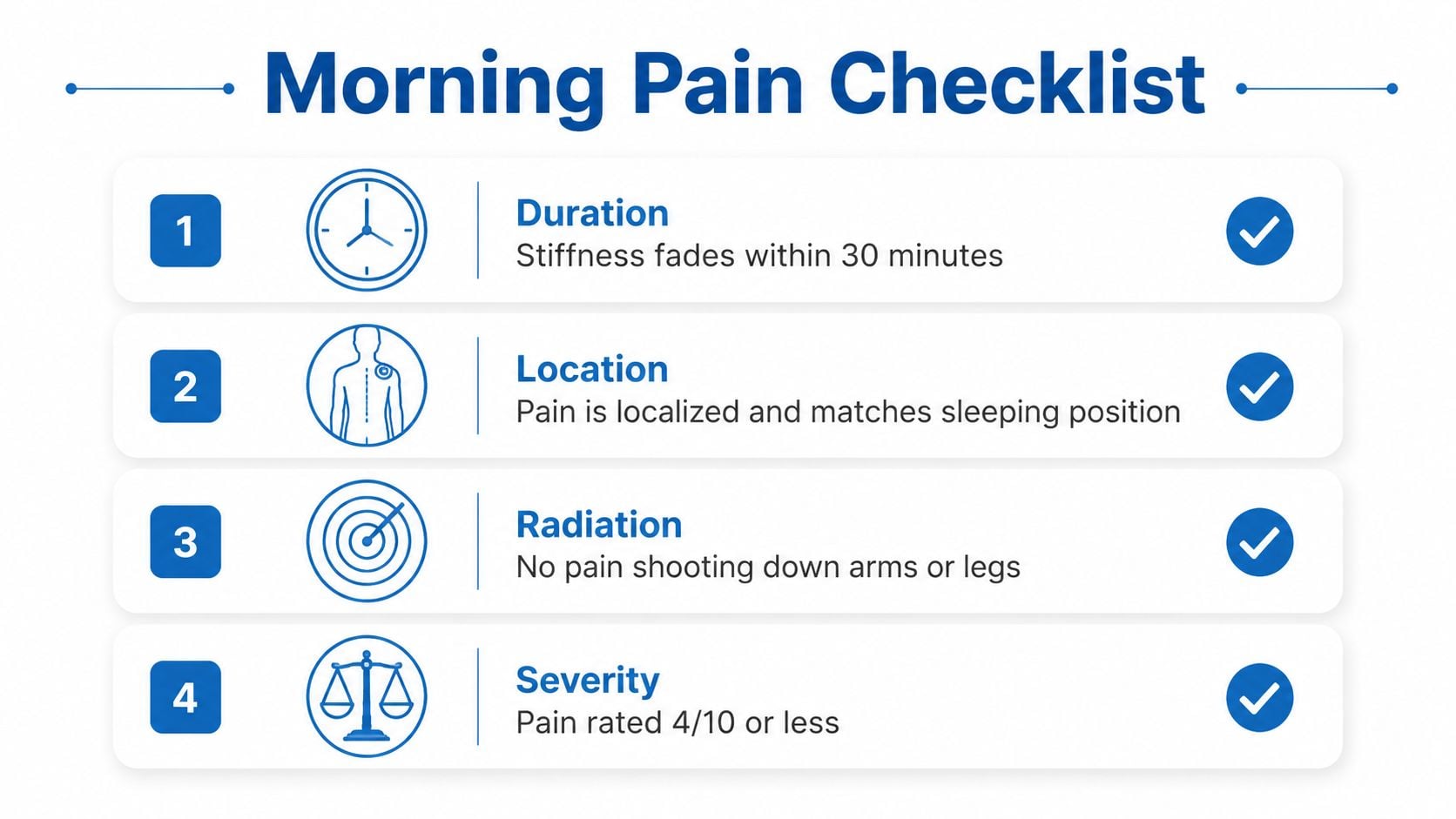
The morning check is simple. If a position and support combination still creates pain that is localized, brief, and linked to how the body was arranged overnight, the setup may need refinement. If the same adjustments do nothing, the issue may not be ergonomic at all.
For people sorting out lower-back symptoms, the same alignment principles apply to the lumbar region, and a low back pain resource can help frame how posture and persistent pain sometimes overlap but do not always mean the same thing.
When Morning Pain Signals Something More Serious
A person doesn't need to panic over every stiff morning. But some patterns deserve faster attention. The scoping review in BMJ Open found limited and inconsistent evidence linking specific sleep postures to non-specific spinal symptoms, which means persistent morning pain can reflect disc, facet, or nerve-related disease rather than a pillow issue alone (BMJ Open review).
Compare what self-care can fix and what it can't
Self-care is most reasonable when pain is mild, localized, and clearly tied to position. Professional evaluation becomes more important when the pattern doesn't fit that description.
- Pain that is severe or one-sided: this is less consistent with simple pillow strain and more concerning for a structural driver.
- Pain that progresses over time: symptoms that worsen rather than settle deserve a closer look.
- Pain with numbness, tingling, or weakness: arm or leg symptoms raise the stakes because they can suggest nerve involvement.
- Pain that returns nightly despite changes: repeated failure of sleep adjustments is a sign the problem may be deeper.
- Pain that doesn't improve after waking: stiffness that lingers instead of fading is harder to blame on posture alone.
If pain behaves the same way every night and doesn't respond to repeated sleep changes, the question shifts from “Which pillow?” to “What is irritating the spine?”
That triage approach is the part most consumer advice skips. If a person is waking up uncomfortable but better within a reasonable stretch of the morning, sleep mechanics may still be the main issue. If the pain is ongoing, spreading, or accompanied by neurologic symptoms, the answer is medical evaluation.
Treatment Options Beyond Self-Care Adjustments
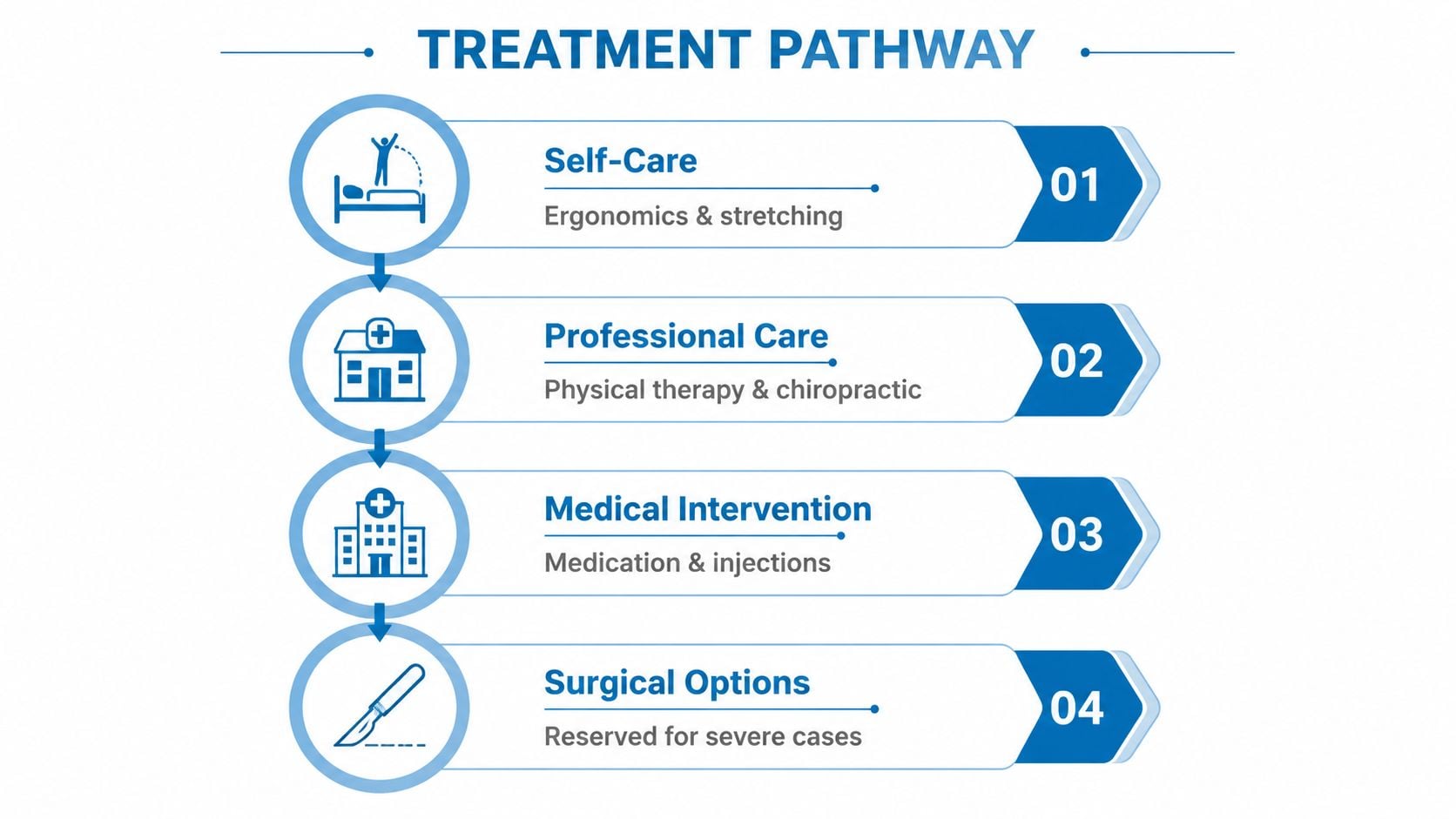
When sleep changes fail, treatment should follow the diagnosis, not the shopping list. Some pain comes from tight muscle bands or irritated soft tissue. Some comes from nerve irritation, disc pathology, or degenerative change. The next step is a clinical decision about what is generating the pain.
The care path depends on the pain generator
Conservative treatment still has a role. Heat, movement, posture correction, and guided exercise can help when the pattern is mechanical. If the pain generator is more specific, injections or nerve-targeted procedures may be used to calm inflammation or interrupt pain signals. For disc-related pain, radiculopathy, or pinched-nerve symptoms, image-guided procedures can be more relevant than more bedding changes.
The clinical ladder gets more specialized when pain persists. Spinal cord stimulation may be considered for chronic neuropathic pain and post-surgical pain syndromes. Surgical options are reserved for situations where decompression, stabilization, or structural correction is necessary. The goal is not to escalate for the sake of escalation. It is to match the intervention to the anatomy and symptom pattern.
A practical way to think about it is this. Sleep ergonomics are a test. If they help, good. If they do not, the problem may require a diagnostic workup and targeted treatment rather than another attempt to optimize the bedroom.
For readers comparing mattress and body support questions, Mattress Decoded's joint pain guide is useful because it emphasizes how support needs change when pain is driven by the body itself, not just the surface underneath it.
The appropriate next step may include epidural steroid injections, nerve blocks, or trigger point injections when the exam and imaging point toward a treatable pain source. In the right patient, these procedures can be part of a broader plan rather than a stand-alone fix. Interventional Pain Management offers those services along with surgical evaluation, but the need for any of them comes down to diagnosis, not urgency to do something.
What to Expect at a Spine and Pain Specialist Visit
A strong spine visit starts with history, not gadgets. The clinician wants to know when the pain begins, where it travels, what makes it better, and what has already been tried. That kind of detail matters because a pain pattern that only shows up after sleep can still come from a daytime injury, a degenerative issue, or a nerve problem that becomes more obvious when the body is still.
The visit usually moves from exam to decision
A standard evaluation includes a medical history review, a physical examination, and coordination of imaging when it's needed to confirm the likely source. From there, the treatment plan is customized to function, work demands, and daily life, not just the MRI report. In a multi-specialty setting, board-certified physicians across pain management, anesthesiology, orthopedics, and spine surgery can compare non-invasive, interventional, and surgical options without sending the patient in circles.
That matters for patients who've already spent weeks changing pillows and mattresses without real relief. If a person lives in New Jersey or Staten Island, access can also matter. Interventional Pain Management has multiple offices across New Jersey and Staten Island, seven-days-a-week scheduling availability, support for workers' compensation and motor vehicle accident cases, transportation assistance, and compliance with the New Jersey Out-of-Network Law with fee estimates available on request.
A typical visit is less about dramatic intervention and more about narrowing the problem. Sometimes the answer is exercise guidance and a sleep change. Sometimes it is an injection, a nerve-targeted procedure, or surgical referral. The right plan depends on whether the pain is mechanical, inflammatory, neuropathic, or structural.
Good spine care doesn't start with the most aggressive option. It starts with the right question, then uses the least invasive treatment that fits the diagnosis.
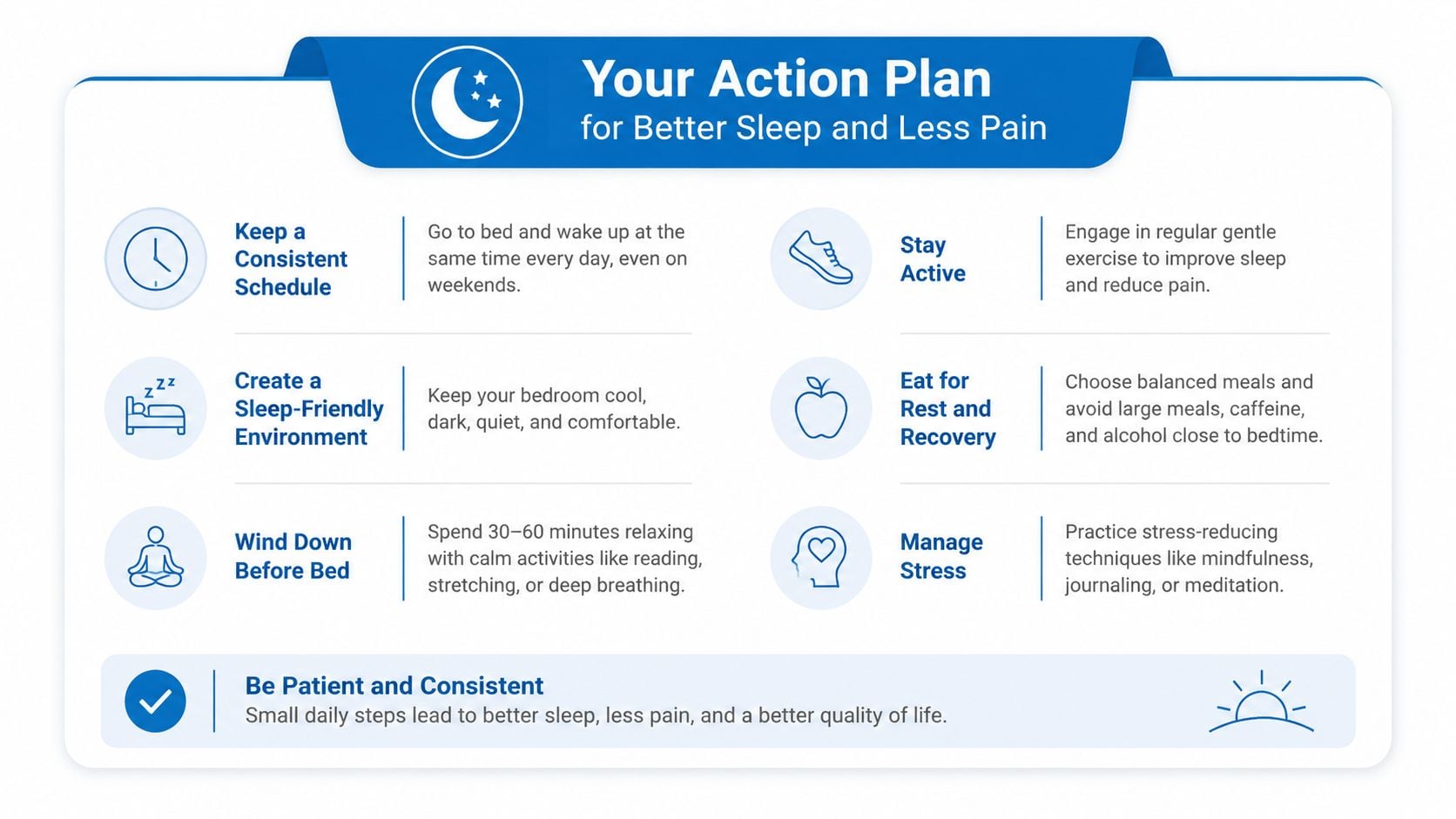
Your Action Plan for Better Sleep and Less Pain
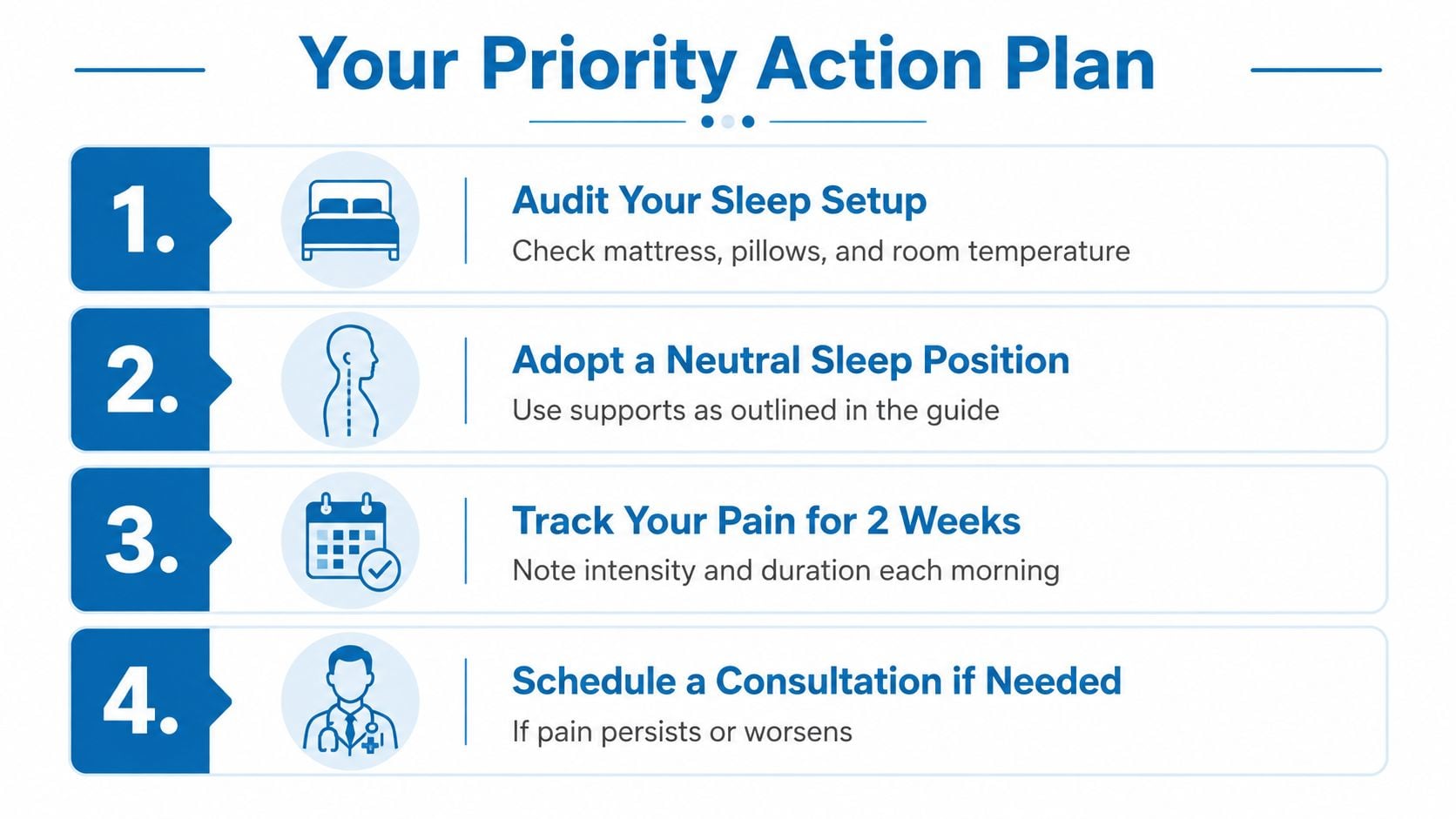
Start with the setup that gives the spine the best chance to stay neutral. That means testing back or side sleeping, adjusting pillow height to the body, and using lumbar or knee support if the lower back twists during the night. Give the change a fair trial, then pay attention to what happens in the morning, especially whether the pain fades quickly or hangs around.
If the pain pattern is mild, positional, and clearly improving, keep refining the setup. If it is severe, keeps returning, or comes with numbness, tingling, or weakness, stop treating it like a bedding problem. That's when a clinical evaluation makes more sense than another pillow purchase.
For people in New Jersey and Staten Island who are tired of guessing, Interventional Pain Management can evaluate the pain source, coordinate imaging when needed, and map out care that fits the diagnosis. Visit Interventional Pain Management to schedule an evaluation and get a plan that goes beyond trial-and-error sleep products.