
People are often told to blame typing when their hands go numb. That advice is too simple. Carpal tunnel syndrome is better understood as a pressure problem in a narrow wrist passage, and the evidence points to a mix of sex, body weight, age, work demands, anatomy, and medical conditions rather than keyboard use alone. The practical value of knowing the carpal tunnel syndrome risk factors is straightforward, people can spot what raises their odds and act on the parts that can be changed.
Table of Contents
- Why Carpal Tunnel Syndrome Is Not Just a Typing Problem
- How the Carpal Tunnel and Median Nerve Actually Work
- Workplace Risk Factors and the Typing Myth
- Medical Conditions That Quietly Drive Carpal Tunnel Syndrome
- Anatomy, Hormones, Pregnancy, and Medications
- From Risk Factors to Symptoms and Diagnosis
- Prevention and Risk Reduction Strategies That Actually Work
- When to Seek Evaluation and What Comes Next
Why Carpal Tunnel Syndrome Is Not Just a Typing Problem
Carpal tunnel syndrome gets oversimplified because keyboards are easy to notice. Hands hurt after a long workday, so people assume the cause must be the desk, the mouse, or the phone. That guess misses the bigger pattern: CTS is multifactorial, and the strongest risk signals often have nothing to do with typing.
StatPearls describes a 3:1 female-to-male ratio, says the risk roughly doubles in people with obesity, and notes that CTS is most common in adults aged 40 to 60. A population study also found that female sex, obesity, and age 40 to 49 each carried higher risk compared with other groups, which makes the condition look less like a single-use injury and more like a condition shaped by baseline susceptibility and tissue stress. The point is not that work doesn't matter. The point is that work often lands on top of a body that already has a higher starting risk.
The real risk families
The better way to think about CTS is as a stack of risk families:
- Biology, meaning sex, age, and body habitus.
- Job demands, meaning force, repetition, posture, and vibration.
- Medical conditions, meaning diabetes, inflammatory arthritis, kidney disease, and similar illnesses.
- Anatomy, meaning a smaller tunnel, prior injury, or altered wrist structure.
Practical rule: if a reader only changes how often they type but ignores weight, blood sugar, or forceful hand work, they may miss the factors that matter most.
That framework helps readers act before symptoms become constant. It also explains why two people can do similar tasks and have very different outcomes. One may tolerate the job for years, while another develops numbness quickly because several risk factors are already present.
How the Carpal Tunnel and Median Nerve Actually Work
The carpal tunnel is easy to picture as a crowded highway under a low bridge. The wrist bones form the floor and sides, a thick band of tissue forms the roof, and the median nerve plus tendons pass through the same tight space. There is not much room to spare, so even small changes in swelling or tissue thickness can create a traffic jam.
That traffic jam matters because the median nerve carries sensation to the thumb, index finger, middle finger, and part of the ring finger, and it helps control some thumb movements. When pressure rises inside the tunnel, the nerve does not work as smoothly. People notice nighttime numbness, tingling, weak pinch, clumsiness, or a shock-like sensation in the hand.
Why pressure turns into symptoms
A nerve needs space and blood flow. When the tunnel gets crowded, the nerve can be compressed and its circulation can be impaired, which helps explain why symptoms often show up at night or after repeated use. The issue is a compressed nerve in a cramped passage, not weak muscle.
That is why swelling, tendon thickening, extra fluid, or anatomic narrowing can all matter. They do not have to be dramatic to cause trouble. A small change inside a very small tunnel can produce a noticeable change outside it.
The symptom pattern makes more sense once the tunnel is viewed as a pressure system instead of a hand-strength problem.
Readers who understand this model can make better sense of every risk factor that follows. If a condition increases fluid, thickens tissue, or puts more load across the wrist, it can raise pressure in the tunnel and make the nerve more vulnerable. That is also why workday posture corrections can help when wrist position is adding to the load, even if the keyboard itself is not the main cause.
Workplace Risk Factors and the Typing Myth
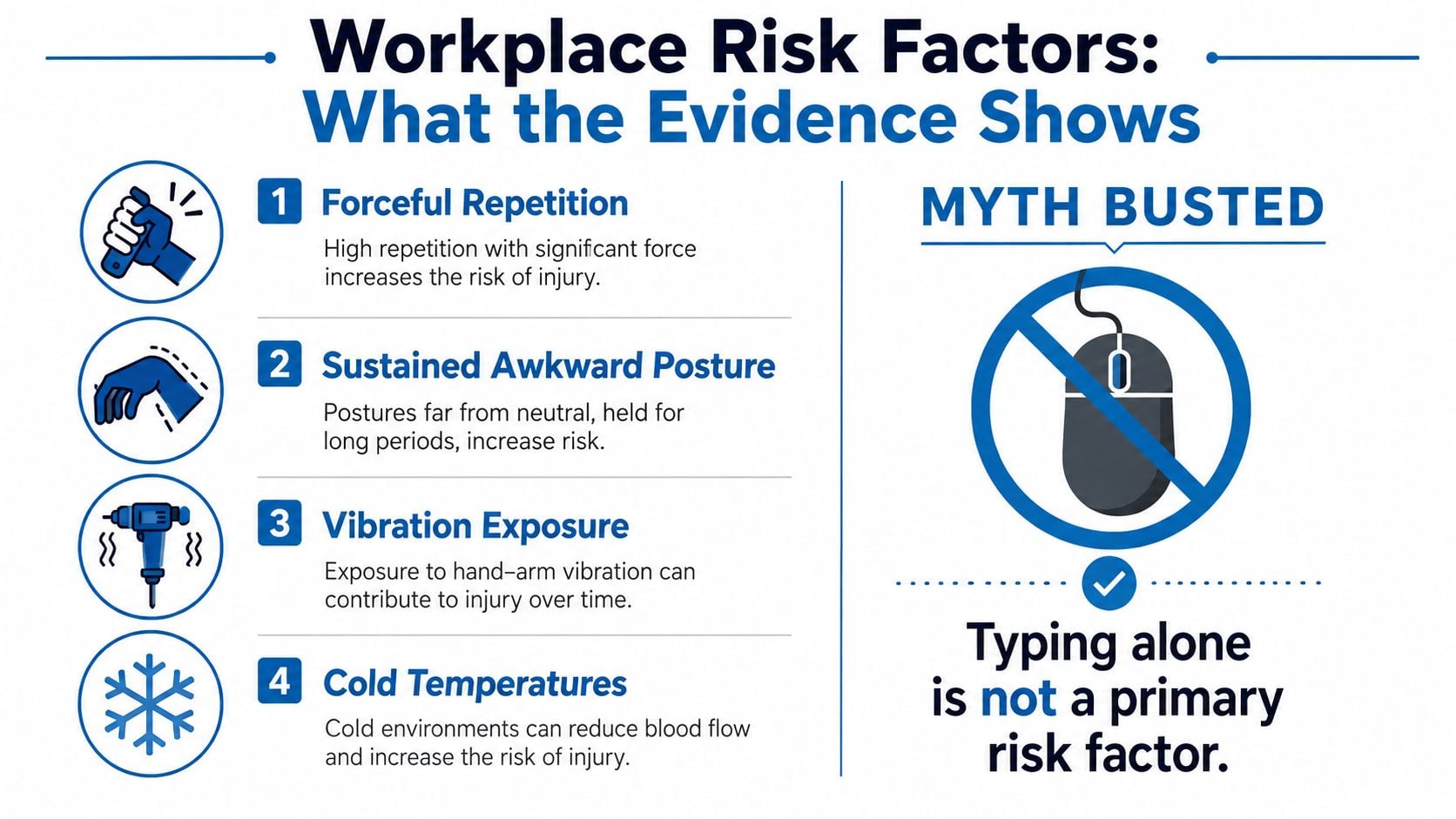
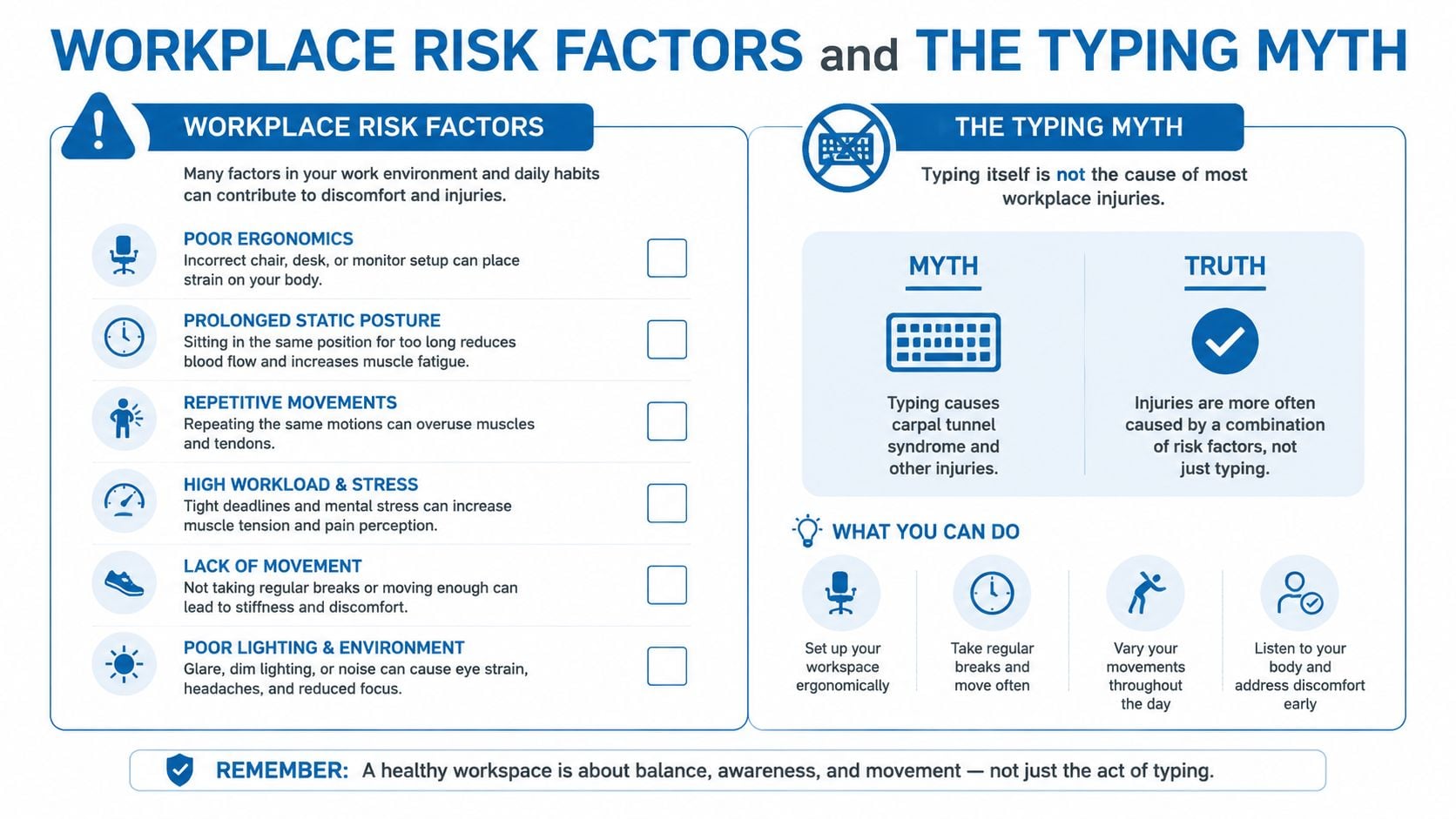
Workplace exposure matters, but it usually matters through forceful repetition, awkward wrist posture, and hand-arm vibration. A meta-analysis found that prolonged vibration more than doubles risk, and it also found strong evidence that repeated wrist flexion and extension with a forceful grip can carry similar or higher risk. That pattern shows up in tool-using, assembly, cleaning, packing, and many food-preparation jobs.
Key risk categories
A 2024 scoping review found that the most consistent work-related risks are repetition, force, awkward wrist posture, and vibration. Keyboarding by itself did not stand out as the main explanation. Desk work can still matter when it is paired with bent wrists, long stretches without breaks, or medical factors already raising susceptibility.
Key distinction: typing may aggravate symptoms, but it usually is not the main driver when the evidence is weighed carefully.
For office workers, the useful question is not “How many hours did typing take?” It is “Was the wrist held bent, the shoulder raised, or the mouse gripped tightly for long stretches?” Those positions raise load the way a bent garden hose raises pressure at a narrow point. For manual workers, the question is more direct, “How much force did the hand absorb, and how much vibration ran through the tool?”
Workday posture corrections can help when desk setup is adding strain. workday posture corrections can be a useful reference for reducing unnecessary wrist and shoulder load during seated tasks.
The practical takeaway is straightforward. Force plus repetition plus vibration is a more believable risk pattern than typing alone. Office work can contribute, but it often acts as one part of a larger picture, not the whole story.
Rheumatoid arthritis is one example of a medical condition that can raise baseline risk, and it deserves attention because inflammation around the wrist can narrow the tunnel further. You can read more about rheumatoid arthritis and related joint inflammation if you want to understand why some people have higher odds even without heavy hand labor.
Medical Conditions That Quietly Drive Carpal Tunnel Syndrome
Some of the strongest CTS risk factors are medical, not occupational. A meta-analysis reported adjusted odds ratios of 3.7 for female sex, 1.5 for overweight or obesity, and 5.3 for diabetes mellitus. A separate cohort found obesity and chronic kidney disease independently associated with CTS, with AORs of 3.080 and 3.629. Those numbers matter because they show why two patients with the same job can have very different odds.
A compact risk map
| Condition | How it may raise risk | Approximate odds |
|---|---|---|
| Female sex | Higher baseline susceptibility | 3.7 adjusted odds in one meta-analysis |
| Overweight or obesity | More tissue pressure and systemic load | 1.5 adjusted odds in one meta-analysis, obesity AOR 3.080 in one cohort |
| Diabetes mellitus | Nerve vulnerability and tissue changes | 5.3 adjusted odds in one meta-analysis |
| Chronic kidney disease | Systemic fluid and tissue effects | AOR 3.629 in one cohort |
That table is a reminder that CTS often follows the body's internal biology as much as the day's work. Diabetes and obesity can raise risk even when the person doesn't do obvious repetitive labor. Chronic kidney disease adds another layer because systemic illness can affect tissues and nerves in ways that aren't obvious from the outside.
The clinical implication is simple. Middle-aged women and patients with obesity, diabetes, inflammatory arthritis, or renal disease deserve careful attention when hand symptoms begin, especially if both hands are involved or symptoms are hard to tie to one task. An internal clinic resource on rheumatoid arthritis is relevant here because inflammatory joint disease can sit in the background while wrist symptoms develop.
If symptoms seem disproportionate to the job, the medical background deserves equal attention.
Readers often assume the workplace is the only fixable part. In reality, better blood sugar control, weight management, and treatment of chronic disease can lower the background pressure that makes the tunnel more vulnerable.
Anatomy, Hormones, Pregnancy, and Medications
A construction supervisor with a healed wrist fracture may never connect that old injury to today's numb fingers. A teacher in the third trimester may think nighttime tingling is just part of pregnancy. A patient starting a new medication may not realize that hand symptoms can reflect changes in fluid balance or tissue sensitivity. These stories are common because CTS risk isn't one-size-fits-all.
When structure and hormones matter
A smaller carpal tunnel space leaves less margin for swelling. Prior wrist fracture, deformity, rheumatoid arthritis, and wrist osteoarthritis can all alter the local anatomy or tissue behavior around the nerve. A case-control study linked several of those conditions, along with obesity and diabetes, to increased odds of CTS, which fits the idea that local structure and whole-body health often combine.
Pregnancy and menopause deserve separate attention because hormonal shifts can change fluid retention and tissue behavior. Pregnancy-related CTS often shows up late in gestation and may ease after delivery, while menopausal transition can also coincide with hand symptoms in some patients. The presence of symptoms doesn't mean permanent damage is inevitable, but it does mean the wrist is reacting to a real physiologic change.
Medication effects are usually about the body's broader chemistry rather than a direct injury to the nerve. Some diabetes-related treatments have been linked with CTS in older observational work, which is one reason clinicians look at the full medication list rather than a single culprit.
Small tunnel, larger risk. When anatomy already leaves less room, even modest swelling can produce symptoms.
A 2023 study also linked CTS with inactivity, hypertension, and wrist-to-hand ratio measures, reinforcing that body habitus and cardiovascular health may matter more than many realize. None of these factors guarantee CTS. They do explain why a 45-year-old woman with diabetes, obesity, and forceful hand work sits in a very different risk category from someone with none of those features.
From Risk Factors to Symptoms and Diagnosis
Risk factors only matter if they help a person notice the right symptoms early. CTS often starts with intermittent tingling, especially at night, then moves toward more frequent numbness, weaker grip, and trouble pinching small objects. If the hand starts to feel clumsy, or if objects are dropped without warning, the nerve may be under more persistent stress.
Patterns that deserve faster attention
- Night waking: numbness or tingling that interrupts sleep.
- Bilateral symptoms: both hands involved, especially when medical risk factors are present.
- Weak pinch: trouble buttoning, opening jars, or holding a phone securely.
- Thumb-base thinning: visible wasting near the thumb can suggest more advanced nerve involvement.
A focused exam usually starts with a symptom map. A clinician asks which fingers go numb, whether the symptoms are worse at night, and which tasks bring them on. Physical maneuvers such as Tinel's and Phalen's can help, and nerve studies are often used when the picture is unclear or when surgery is being considered. The diagnosis is a layered judgment, not a single test result.
For readers who want the clinical pathway in more detail, an internal overview of carpal tunnel syndrome can help connect symptoms with the evaluation process.
Useful rule: symptoms that follow the median nerve pattern and wake someone from sleep deserve more attention than vague whole-hand soreness.
This is also where risk factors sharpen the interpretation. A person with diabetes, obesity, or prior wrist injury and classic nighttime numbness is easier to sort clinically than someone with nonspecific aching and no risk profile. That's why mentioning the full background to a clinician matters.
Prevention and Risk Reduction Strategies That Actually Work
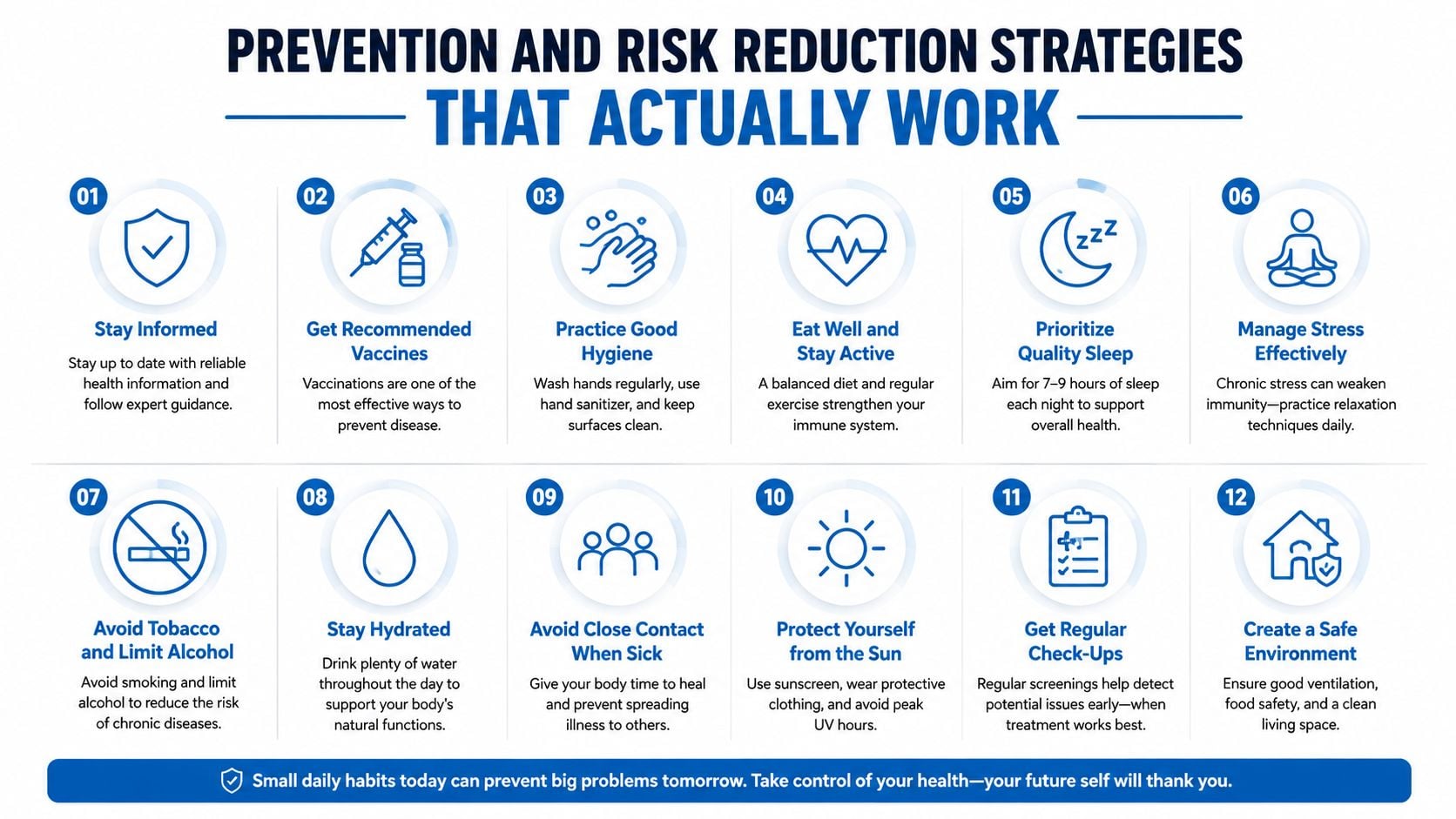
Prevention works best when it focuses on the highest-yield risks first. Reducing hand-arm vibration, lowering forceful gripping, and cutting down high-repetition wrist tasks do more than generic advice about “better ergonomics” because they attack the exposures most strongly tied to CTS. Managing blood sugar, body weight, thyroid function, and inflammatory disease matters just as much when those factors are part of the picture.
What to change first
- Lower force: choose tools and tasks that reduce pinch and squeeze.
- Reduce vibration: limit exposure to vibrating tools when possible.
- Rotate tasks: break up long runs of repetitive wrist motion.
- Keep the wrist neutral: avoid prolonged bending up, down, or sideways.
- Treat the medical drivers: control diabetes, weight, and inflammatory disease.
A resource on VoiceType on wrist health can be useful for people looking for movement-based ideas, but the biggest payoff still comes from reducing force and vibration at the source. Anti-vibration gloves, better tool design, and scheduled breaks can help, but they work best when they're matched to the actual exposure.
Pregnancy-related CTS deserves a calmer message. Night splints, short-term symptom control, and reassurance often make sense because symptoms frequently ease after delivery. The goal is comfort and function while the body's fluid balance settles back down.
Best prevention is targeted prevention. A split keyboard won't do much for someone whose main problem is diabetes and obesity, but a forceful tool grip or vibrating job absolutely deserves attention.
The right plan is layered. Fix the exposures that matter most, then support the body that has to tolerate them.
When to Seek Evaluation and What Comes Next
Mild tingling that comes and goes may settle with activity changes and splinting. Persistent numbness, frequent night waking, hand weakness, or any sign of thumb-base muscle loss deserves earlier evaluation because those patterns suggest the nerve is being stressed more consistently. Bilateral symptoms deserve special attention when the patient also has diabetes, obesity, inflammatory arthritis, kidney disease, or prior wrist trauma.
What treatment usually looks like
- Night splinting: keeps the wrist closer to neutral during sleep.
- Activity modification: reduces the hand positions and tasks that trigger symptoms.
- Targeted injections: may calm inflammation and pressure in selected cases.
- Surgical release: considered when structural nerve compromise is ongoing or symptoms persist.
An internal discussion of corticosteroid injections can help readers understand why some clinicians choose that step before surgery. The broader principle is that treatment follows severity, duration, and the patient's overall risk profile.
Earlier evaluation matters most when several risk factors stack together. A patient with obesity, diabetes, and forceful hand work is not dealing with the same baseline risk as someone with a brief spell of desk-related tingling. The stronger the risk profile, the lower the threshold for a full assessment.
Interventional Pain Management offers carpal tunnel assessment and treatment options for patients in New Jersey and Staten Island, with multidisciplinary care that can include pain management, orthopedics, and spine expertise. Their seven-day scheduling and individualized treatment planning can be helpful for people whose hand symptoms overlap with other musculoskeletal or nerve problems.
If hand numbness, weakness, or nighttime tingling is getting in the way of work or sleep, contact Interventional Pain Management to discuss a focused evaluation and a treatment plan that matches the actual cause of the symptoms. Their team can help sort out whether the problem is carpal tunnel syndrome, what's driving it, and which conservative or procedural option makes the most sense next.