
Overall complication rates for lumbar spinal stenosis surgery range from about 10% to 17% in large studies, but that spread is driven less by the diagnosis than by who is being operated on and what is being done. A single number cannot answer any individual patient's question.
A patient usually searches “spinal stenosis surgery risks” after hearing a surgeon say, “Surgery may be the next step.” The phrase can make the operation sound like one standardized event, as if every patient faces the same bleeding risk, recovery, and chance of needing another procedure. That isn't how spine surgery works.
The meaningful risk estimate comes from two sources: the patient's condition and the operation planned. Age, frailty, diabetes, prior surgery, bone quality, medications, and the number of spinal levels matter. So do the difference between decompression alone and decompression with instrumentation and fusion.
Table of Contents
- The Risk Question Most Patients Get Wrong
- What Surgeons Actually Do for Spinal Stenosis
- The Complications You Are Most Likely to Face
- How Procedure Choice Changes Everything
- The Patient Factors That Quietly Drive Risk
- How to Actually Lower Your Risk Before Surgery
- What Happens When a Complication Actually Occurs
- A Better Way to Make the Decision
The Risk Question Most Patients Get Wrong
A 72-year-old with diabetes, frailty, and a previous lumbar operation should not use the risk estimate for a healthy patient having a single-level decompression. Ask instead: What exactly will you do, and which features of my health change my risk?
Large studies show why a single percentage misleads. An analysis of elderly patients reported an overall surgical-complication rate of 10.8%, while a 2026 study reported 16.8% overall complications, including events during surgery, hospitalization, and later recovery (elderly-patient complication analysis). These figures describe different patient groups and procedure mixes, so they are not competing answers to one patient's question.
Start with the operation, not the label
“Spinal stenosis surgery” can mean limited decompression, multilevel decompression, or decompression combined with fusion. A limited operation may remove bone or ligament pressing on a nerve. A larger procedure may add screws, rods, cages, and bone graft to stabilize the spine.
The risk profile changes with that choice. Blood loss, anesthesia demands, infection, wound problems, and mechanical complications are not the same for decompression alone and multilevel instrumented fusion. Ask your surgeon:
- How many levels are you treating?
- What tissue will you remove?
- Will you use hardware or bone graft?
- Why does this operation fit my spine better than decompression alone?
Then add the patient's risk profile
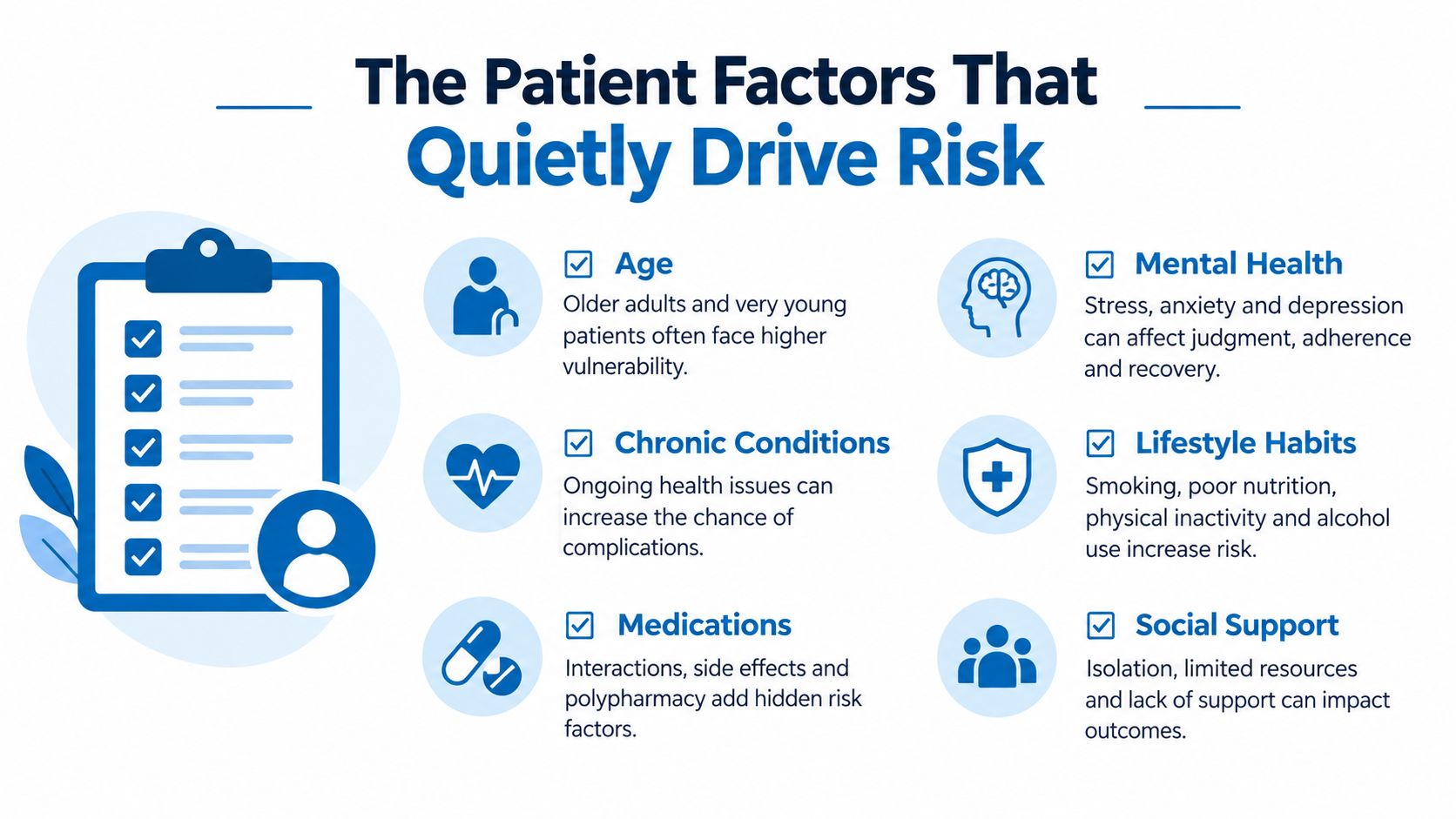
Age matters, but it is only one part of the calculation. Frailty, diabetes, smoking, prior spine surgery, anticoagulant use, anesthesia risk, and poor bone quality can change healing, infection risk, blood loss, and the chance of further surgery. Two people of the same age can therefore face very different risks from the same operation.
Practical rule: A general complication percentage is an incomplete consultation. Your surgeon should connect the estimate to the planned procedure and your specific risk factors.
The decision is whether the expected improvement in walking, standing, leg pain, or neurologic function justifies those particular risks. Insist on that comparison before consenting.
What Surgeons Actually Do for Spinal Stenosis
A surgeon does not operate on the label “spinal stenosis.” The operation targets the structure causing the compression and the stability of the spine after that tissue is removed.
Decompression creates more room for a nerve. The surgeon may remove part of the lamina, the bony roof over the spinal canal, along with thickened ligament or other tissue narrowing the passage. A laminotomy removes only part of the lamina. A laminectomy removes more of it. This lumbar laminectomy explanation offers a plain-language overview of that procedure.
Fusion stabilizes the spine by placing hardware and bone graft so two or more vertebrae heal as one segment. Surgeons consider it when decompression alone could create or worsen instability, or when deformity, slippage, prior surgery, or broader reconstruction makes stabilization necessary. Fusion addresses a structural problem, but it also adds surgical work around the spine.
The distinction changes the risk profile. Decompression alone generally involves less reconstruction than instrumented fusion. The number of levels, the amount of bone removed, and the need for hardware all affect recovery and potential complications.
Ask your surgeon four direct questions:
- What exactly is compressing the nerve?
- What tissue will you remove, and at how many levels?
- Will you use hardware or bone graft?
- What specific finding makes fusion necessary instead of decompression alone?
A minimally invasive label does not settle the risk question. As noted in the elderly cohort analysis discussed earlier, microendoscopic approaches were linked to higher dural-tear rates despite smaller incisions. Smaller access can reduce tissue disruption, but it does not guarantee fewer complications.
The Complications You Are Most Likely to Face
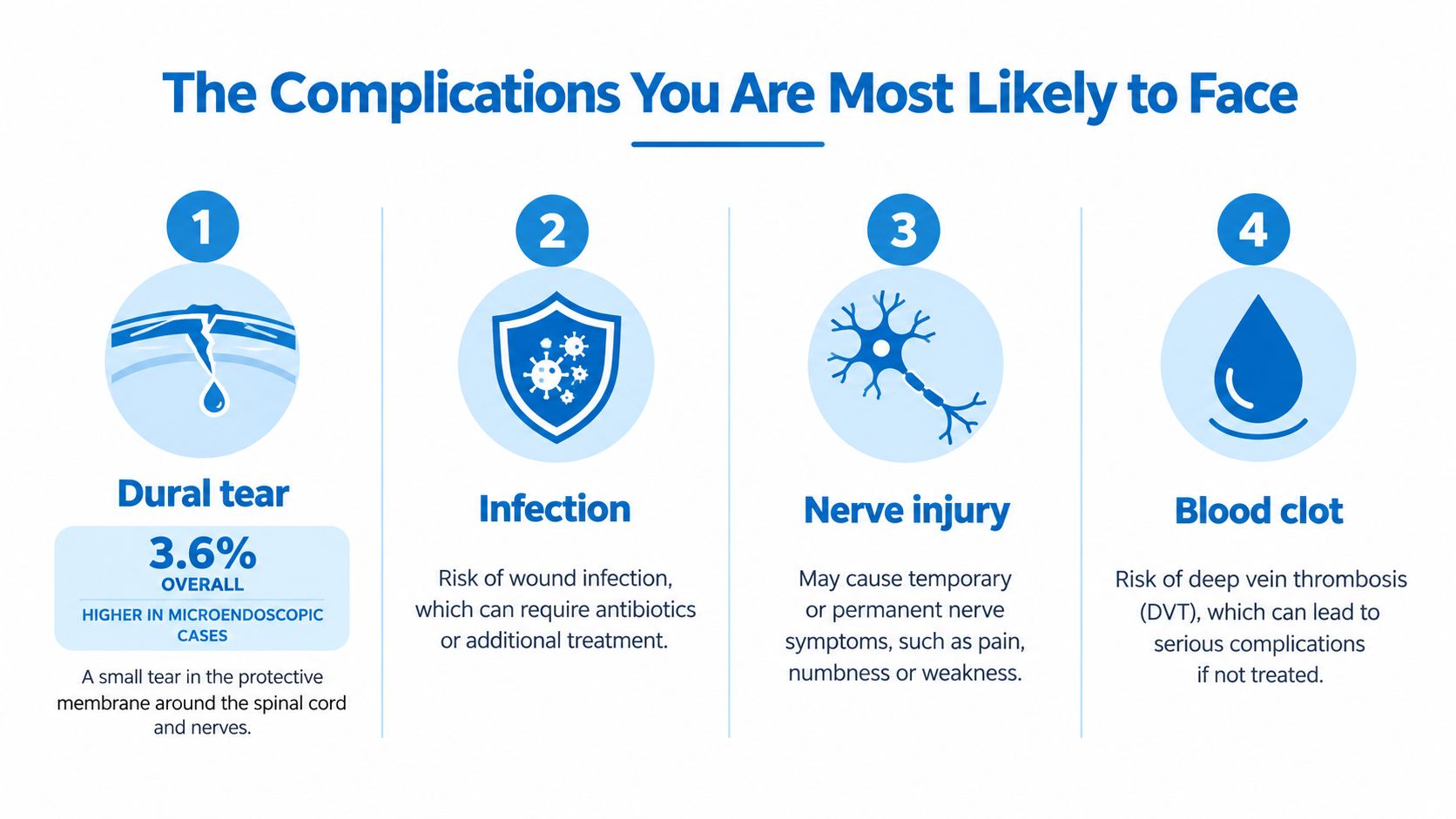
A patient may enter surgery fearing paralysis or death, yet the consent discussion usually begins with complications that occur more often. The main risks include a dural tear, wound problems, neurologic changes, bleeding, and medical complications. Their likelihood depends on the patient's condition and the operation performed.
Dural tear
A dural tear is an unintended opening in the membrane surrounding the spinal cord and nerve roots. Cerebrospinal fluid may leak through it. The surgeon may repair the opening during the operation, and recovery may require additional monitoring or restrictions.
In an analysis of elderly patients, an incidental dural tear occurred in 3.6% of cases, making it the most frequently reported individual complication in that study (elderly-patient complication analysis). The risk was higher with microendoscopic surgery. “Incidental” means the tear was an unintended finding during surgery, not that it has no consequences.
Ask whether your surgeon expects scar tissue, severe narrowing, or prior surgery to make the membrane harder to separate safely. A smaller incision does not remove this risk.
Infection, nerve problems, and hematoma
Deep wound infection, neurologic complications, and epidural hematoma each occurred in approximately 1.3% to 1.4% of the elderly cohort. Infection may require antibiotics, drainage, or another procedure. A neurologic complication can involve new or worsening numbness, weakness, or nerve pain.
An epidural hematoma is blood collecting near the spine and compressing neural structures. New weakness, numbness, or severe pain after surgery requires urgent assessment. If a hematoma is suspected, delay can increase the chance of lasting injury.
Bleeding and medical complications
The SPORT trial reported a 9% dural-tear rate, a 10% intraoperative transfusion rate, and another 5% postoperative transfusion rate among patients receiving decompressive surgery (SPORT trial report). A transfusion is not automatically a catastrophe, but these findings support a careful medication review, anemia assessment, and explicit bleeding plan before surgery.
National data involving older adults found major medical complications in 3.1%, wound complications in 1.2%, and mortality within 30 days of hospital discharge in 0.4% (national study of older adults). Death was uncommon in the SPORT trial, but it was not zero. Six deaths occurred in the surgical group during follow-up, including one within three months of surgery.
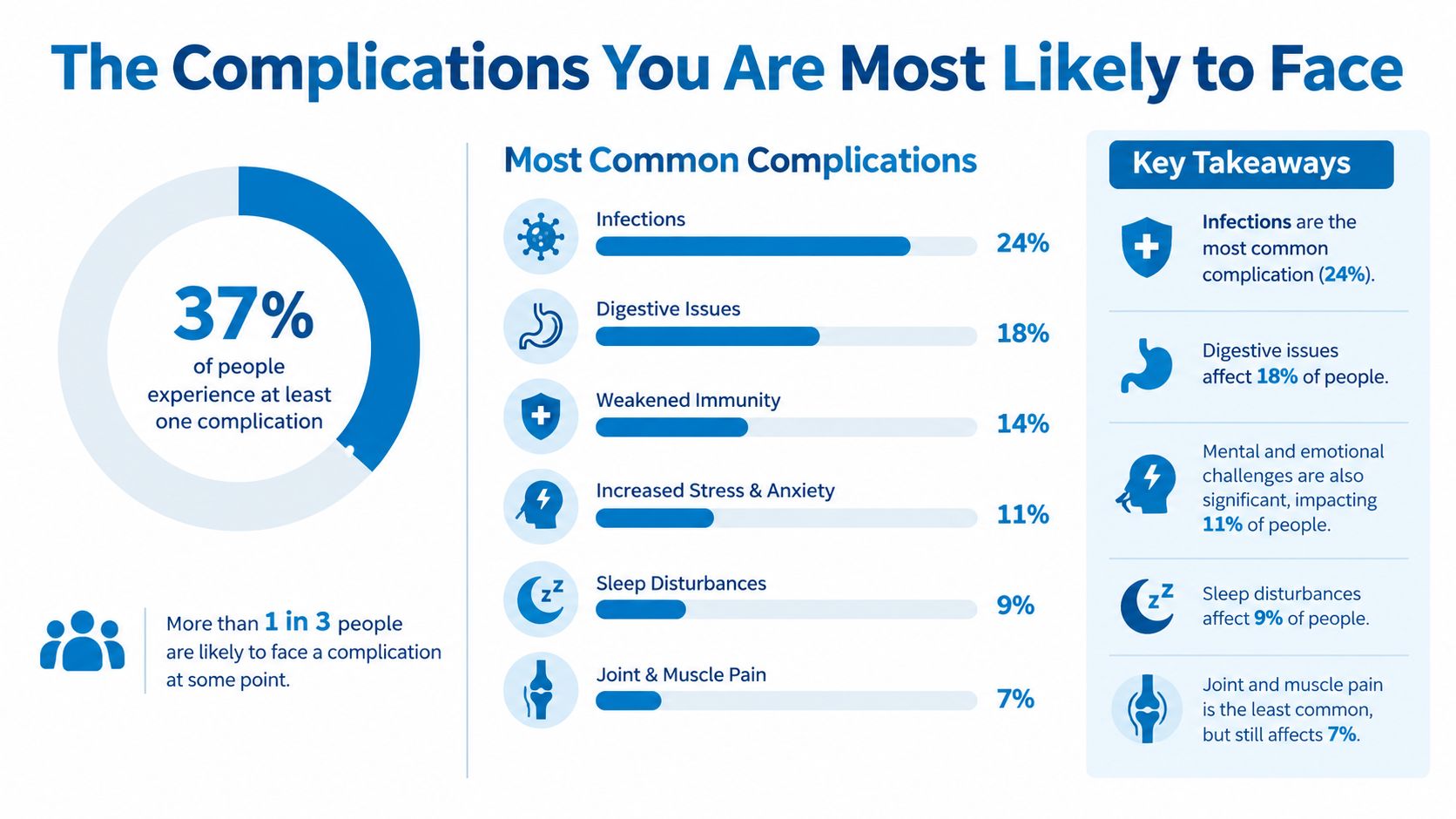
The practical message is direct: a dural tear may be the most likely named surgical event, while infection, hematoma, neurologic decline, serious medical problems, and death occur less often but can cause greater harm. Ask your surgeon for both your probability of each complication and the plan for treating it if it occurs.
How Procedure Choice Changes Everything
The operation changes your risk profile before your age or medical history is even considered. In national data, life-threatening complications occurred in 2.3% of patients who underwent decompression alone, compared with 5.6% after complex spinal fusion. After adjustment for patient characteristics, complex fusion carried 2.95 times the odds of a life-threatening complication compared with decompression alone, as reported in the national study of older adults.
A separate elderly cohort found overall complications in 8.8% of non-instrumented operations and 17.3% of instrumented procedures. The difference reflects the added reconstruction, hardware, and surgical exposure involved in fusion. It does not make fusion wrong. It means the operation must solve a problem that decompression alone cannot.
| Procedure | Overall complication rate | Life-threatening complications | Most common event |
|---|---|---|---|
| Decompression alone | 8.8% in an elderly cohort | 2.3% | Incidental dural tear |
| Instrumented surgery | 17.3% in an elderly cohort | 5.6% for complex fusion | Incidental dural tear and wound-related complications |
Long-term risk continues after discharge. By two years, 8% of surgical patients had undergone reoperation in the SPORT trial. Fewer than half of those repeat operations addressed recurrent stenosis. Adjacent disease, instability, and other postoperative problems also led to further surgery, as noted in the trial report.
Ask whether fusion solves a problem that decompression cannot
Separate two decisions: whether surgery is appropriate, and whether fusion belongs in that operation. Ask your surgeon:
- What instability or deformity requires fusion?
- What is the expected result with decompression alone?
- How many levels need instrumentation?
- What added bleeding, infection, wound, medical, and reoperation risks does fusion create?
- What finding would make decompression alone inadequate?
Your surgeon should explain the mechanical benefit and the added burden in plain terms. Review spinal fusion as a distinct procedure, not just a larger version of decompression. Fusion can be the right choice, but it should never be the automatic choice.
The Patient Factors That Quietly Drive Risk
A 2026 study of lumbar spinal stenosis surgery reported 16.8% overall complications, including 7.8% during surgery, 4.6% in hospital, and 4.4% later (2026 lumbar stenosis surgery study). Those figures describe a group, not your personal forecast. Older age, higher ASA physical-status grade, longer surgery, multilevel decompression, and fusion each shift risk upward.
Frailty is not the same as age
Chronological age is only one part of the assessment. Strength, balance, nutrition, walking capacity, and the ability to withstand physiological stress often matter more than the birthday on your chart. A 2025 meta-analysis in adult spinal deformity surgery found a 21-percentage-point higher complication risk among frail patients (frailty meta-analysis and study record).
A physically strong older adult may recover better than a younger patient with severe frailty, limited mobility, and several medical conditions. Ask your surgeon how frailty, not age alone, changes the expected recovery and complication risk.
The factors patients should bring to the appointment
- ASA grade and medical burden: A higher anesthesia-risk classification signals greater systemic vulnerability.
- Diabetes: As detailed in the elderly cohort analysis referenced earlier, diabetes increased deep-wound-infection risk in instrumented cases.
- Smoking and nutrition: Both can impair wound healing and reduce the body's ability to tolerate recovery.
- Medication exposure: Anticoagulants and antiplatelet drugs complicate bleeding management. Do not stop them without instructions from the prescribing clinician.
- Bone quality: Weak bone can compromise fixation and affect whether instrumentation is appropriate.
- Previous surgery: Scar tissue, altered anatomy, and existing hardware make revision surgery more demanding.
- Number of levels and operative duration: Longer, multilevel procedures place greater physiological demands on the patient.
Rare events still deserve a direct discussion because their consequences can be severe. In the 2026 study, reoperation followed 57.8% of cases with spinal hematoma and 53.8% of cases with wound infection. Those estimates may be unstable because both complications were uncommon.
Ask four practical questions: How does my age and frailty compare with the patients behind your estimate? How do diabetes, smoking, bone quality, or prior surgery change my risk? Does fusion add risk that decompression alone would avoid? What specific finding makes the larger operation necessary?
The useful question is “How does this patient's risk compare with the population used to produce the quoted estimate?”
How to Actually Lower Your Risk Before Surgery
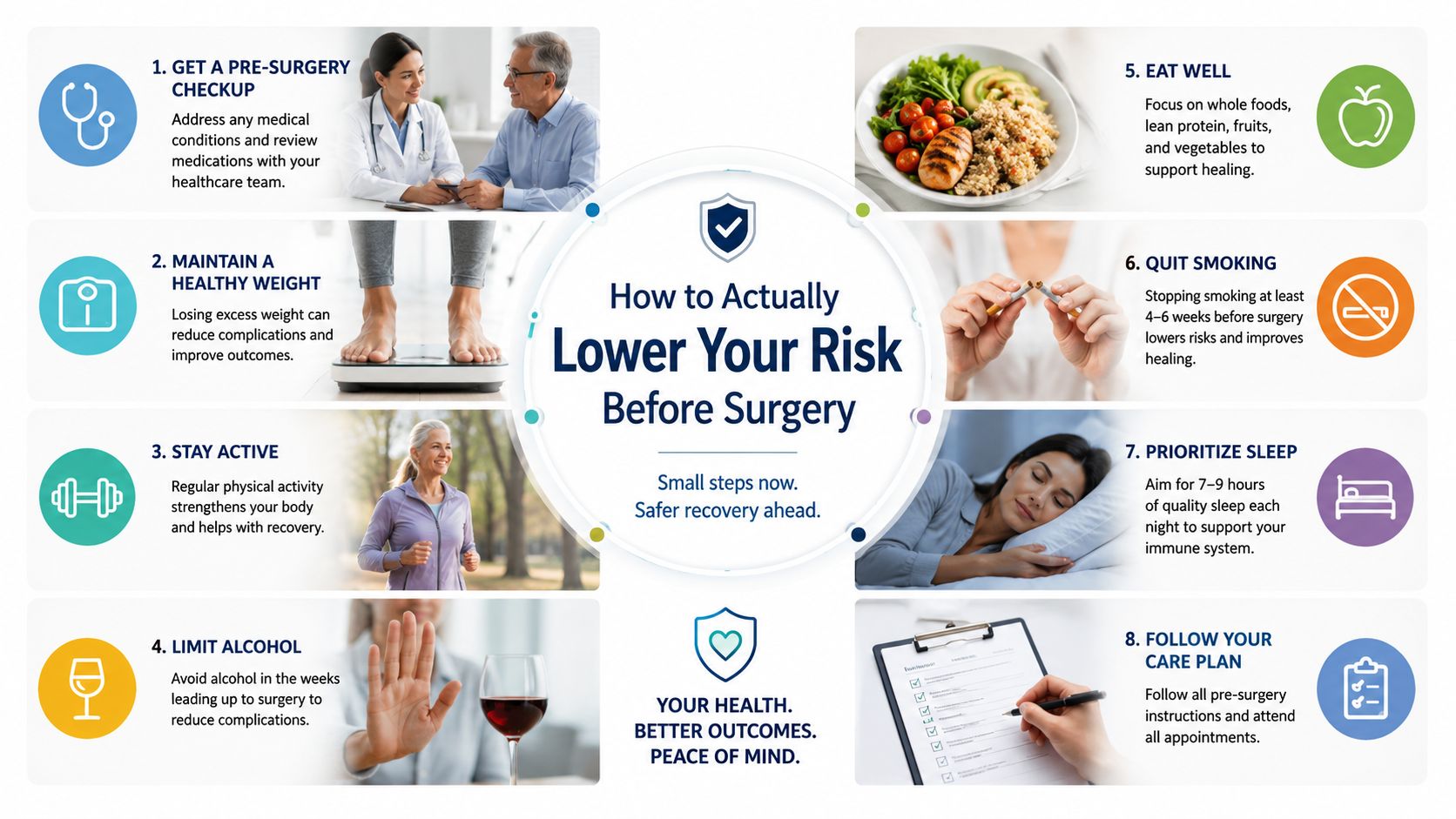
A lower-risk operation begins before admission. Your goal is to correct avoidable problems, select the least extensive procedure that addresses the structural cause, and prepare for the recovery it demands.
Put medical optimization on the surgical agenda
If you have diabetes, ask whether your glucose control is suitable for the planned operation, particularly if instrumentation is involved. Diabetes increased deep-wound-infection risk in instrumented procedures, as discussed in the complications section above, so your surgeon and primary-care clinician should agree on a clear perioperative plan.
Address smoking cessation, anemia, and nutrition early. If transfusion is a possibility, ask whether anemia can be investigated and treated before surgery rather than discovered during the operation. These steps do not remove surgical risk, but they give the team fewer preventable problems to manage.
Medication reconciliation requires precision. Your surgeon, anesthesiologist, and prescribing clinician should coordinate the plan for anticoagulants and antiplatelet drugs. Do not stop these medicines independently.
Match the operation to the problem
Before consenting, ask:
- Can decompression alone relieve the nerve compression?
- What specific finding makes fusion necessary?
- Could fewer levels be treated?
- Would an open or minimally invasive approach offer a meaningful advantage for this anatomy?
- What complication is most likely with the proposed technique?
Minimally invasive surgery is a technique, not a promise of lower risk. Earlier discussion linked microendoscopic surgery with increased dural-tear risk. Ask how that approach performs for your anatomy, the number of levels being treated, and the surgeon's reason for choosing it. A smaller incision does not automatically make the operation safer.
Nonoperative treatment may still have a role when symptoms and neurologic findings allow time. Discussing epidural steroid injections can clarify whether an interventional option is reasonable before surgery. Injections do not replace urgent decompression when progressive neurologic compromise requires prompt treatment.
What Happens When a Complication Actually Occurs
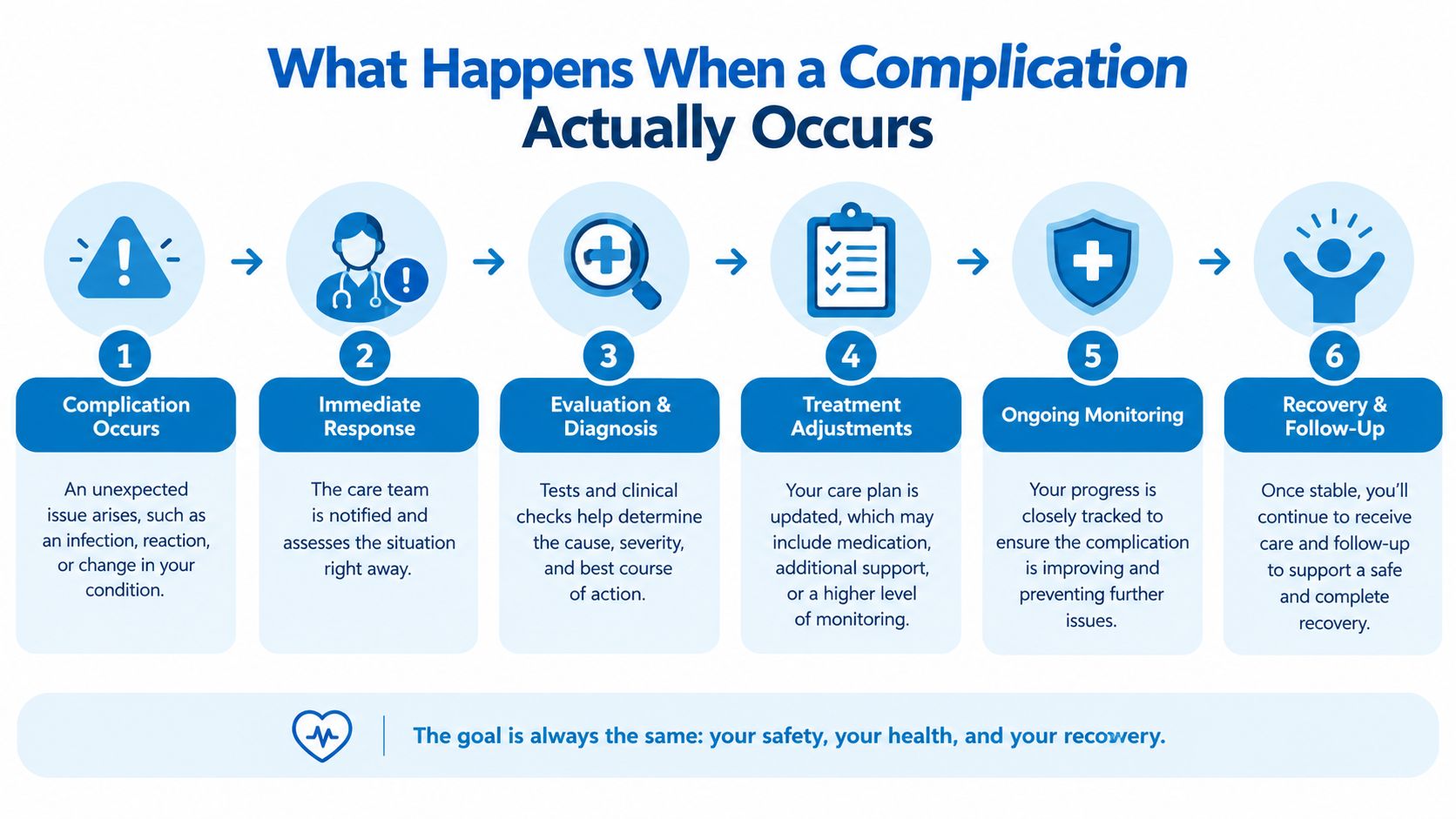
A complication starts a clinical response. The outcome depends on recognizing the problem quickly, choosing the right treatment, and monitoring recovery closely.
A dural tear found during surgery
If the surgeon identifies a dural tear, the team can close the opening directly and add closure materials when needed. Persistent cerebrospinal-fluid leakage may require closer observation, activity changes, or additional treatment.
Before consent, ask three direct questions: How will you repair a tear? Which symptoms suggest an ongoing leak? Does my planned procedure increase the likelihood of one? You are not planning for disaster. You are confirming that the team has a clear response protocol.
A neurologic change after surgery
New weakness or a rapidly worsening neurologic deficit demands immediate assessment. If examination or imaging shows an epidural hematoma compressing neural tissue, urgent return to the operating room may be necessary to evacuate it.
Infection follows a different treatment pathway. The team may collect cultures, begin antibiotics, drain or debride infected tissue, and determine whether hardware can stay in place. That decision depends on infection depth, timing, fusion stability, and the patient's clinical findings.
Persistent symptoms after adequate decompression
A technically successful decompression does not guarantee complete symptom relief. Leg pain and walking tolerance may improve while numbness, weakness, or axial back pain remains. The next step should be deliberate: rehabilitation, medication review, repeat imaging, and evaluation for another pain source before revision surgery is considered.
As noted in the SPORT trial results discussed earlier, 8% of surgical patients underwent reoperation by two years, and fewer than half of those operations treated recurrent stenosis (SPORT trial report). Repeat surgery may address adjacent disease, instability, or another postoperative problem rather than incomplete removal of the original compression. Ask your surgeon what finding would justify revision, what outcome it is intended to improve, and what happens if imaging shows no correctable cause.
A Better Way to Make the Decision
The decision shouldn't be framed as “safe surgery” versus “dangerous surgery.” It should be framed around a defined problem, a specific operation, realistic improvement, and a plan for what happens if symptoms remain.
A 2025 qualitative study of 32 adults older than 55 found that patients often viewed surgery as a final option and hoped to become pain-free. Earlier shared-decision research found that only 41% of spine-surgery patients made decisions classified as informed and patient-centered, despite discussions of treatment options and drawbacks (shared-decision research and qualitative study).
Define success before consent
Success might mean standing longer, walking farther, reducing leg pain, preventing progressive weakness, or improving sleep. It may not mean eliminating every symptom, particularly longstanding numbness or back pain.
The patient should leave the consultation with answers to four questions:
- Which symptom is the operation expected to improve?
- Which symptoms may remain even if decompression is technically successful?
- What rehabilitation, medication, and activity plan follows surgery?
- Which warning signs require urgent evaluation?
New or worsening weakness, bowel or bladder changes, escalating wound drainage, or fever should prompt urgent contact with the surgical team or emergency evaluation, depending on severity.
Frequently asked questions
How long do these risks last?
Some risks are concentrated during surgery and the early hospital period. Others, including persistent symptoms, adjacent disease, or reoperation, can emerge later, so follow-up shouldn't end when the incision looks healed.
Can surgery happen after previous spine surgery?
Yes, but revision surgery may involve scar tissue, altered anatomy, existing hardware, or a different procedure. Prior surgery should be part of the individualized risk estimate, not treated as a minor detail.
Is there an age cutoff?
There isn't a single age cutoff that answers the question. Functional reserve, frailty, medical conditions, anesthesia risk, bone quality, and the proposed operation matter more than age alone.
When should a second opinion be sought?
A second opinion is sensible when fusion is recommended without a clear explanation, multiple levels are proposed, the expected benefit is vague, or the patient feels pressured to decide before understanding alternatives. The second consultation should include the imaging, proposed levels, operative plan, and relevant medical history.
The right decision is the one that matches the patient's goals with a clearly justified operation and an honest account of residual symptoms, complications, rehabilitation, and possible future surgery.
Interventional Pain Management offers coordinated evaluation across nonoperative care, image-guided procedures, orthopedic assessment, and spine surgery for patients weighing treatment for lumbar stenosis. Patients in New Jersey and Staten Island can visit Interventional Pain Management to arrange an individualized review of symptoms, imaging, medical risk factors, and surgical alternatives.