

Sprains account for 44.4% of motor vehicle accident emergency department injuries, followed by contusions at 34.8% and superficial injuries at 11.8%. Motor vehicle accident injuries treatment therefore usually begins with soft-tissue assessment and functional recovery, not an assumption that every painful crash injury requires surgery or advanced imaging.
Those figures don't make a crash injury insignificant. A sprain can restrict neck rotation, disrupt sleep, prevent safe driving, and make work or ordinary movement difficult even when an X-ray shows no fracture. The central clinical question isn't whether an injury looks dramatic. It's whether the diagnosis explains the symptoms and whether treatment restores safe function without exposing the patient to unnecessary risk.
Road crashes create a substantial treatment burden worldwide. The World Health Organization's global road-safety plan reports nearly 1.3 million preventable deaths and about 50 million injuries each year, with many non-fatal injuries requiring emergency care, acute treatment, and rehabilitation. Recovery can also involve mental health support, legal assistance, and coordinated follow-up, rather than ending at discharge from an emergency department.
Table of Contents
- Understanding Motor Vehicle Accident Injury Patterns
- Common Injuries From Car Accidents and What They Mean
- Diagnostic Steps After a Motor Vehicle Accident
- Treatment Options Across Specialties
- Why Conservative Care Should Be the First Approach
- Navigating Insurance and Legal Support After an Accident
- Recovery Timeline and Long-Term Outcomes
Understanding Motor Vehicle Accident Injury Patterns
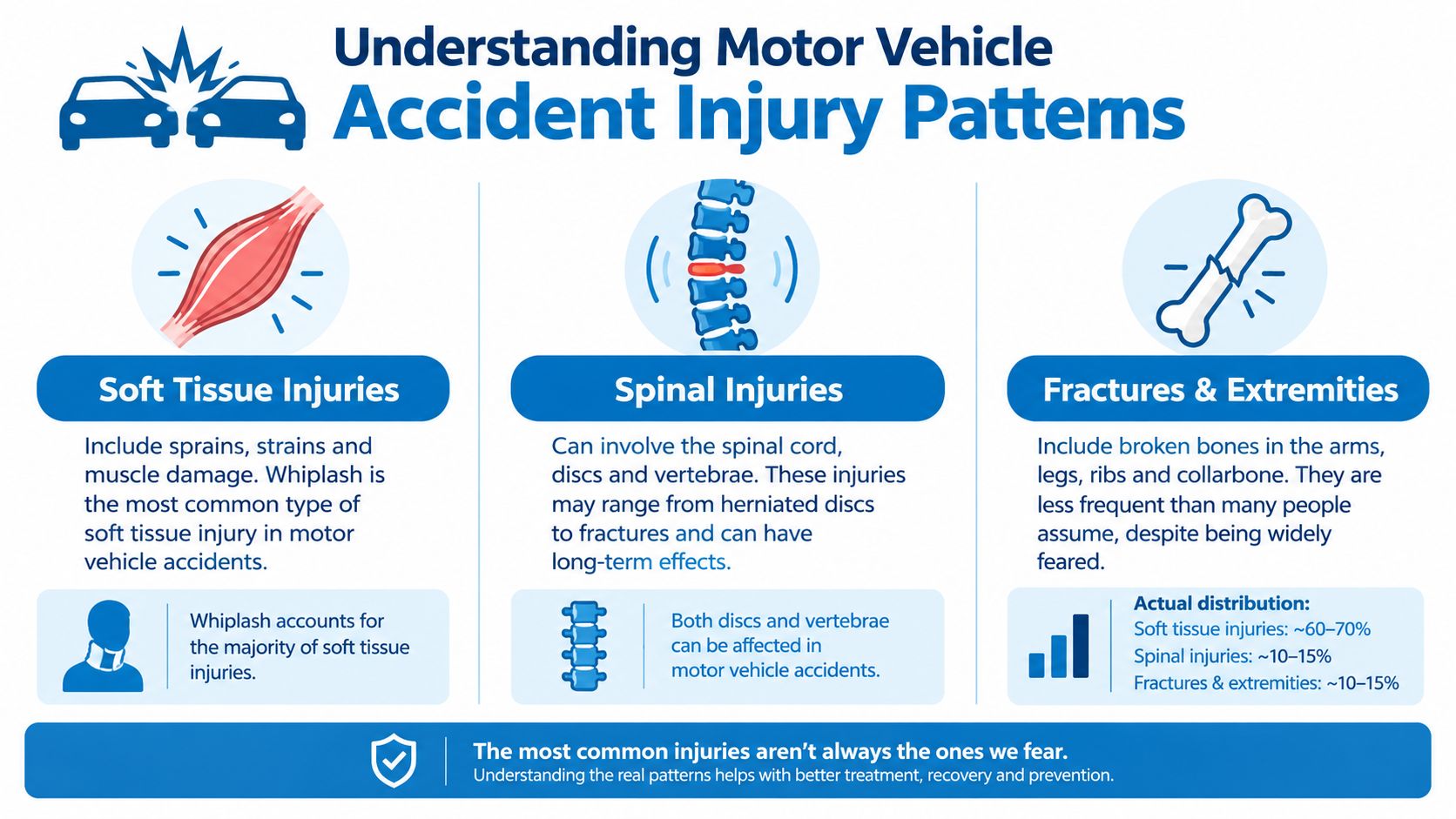
Nearly half of the motor vehicle accident injuries in earlier U.S. emergency department data were sprains, with contusions and superficial injuries also common. The figures were 44.4%, 34.8%, and 11.8%, respectively, according to the Agency for Healthcare Research and Quality data held by the CDC. Their clinical value is interpretive: emergency care must assess function and symptom behavior, not only search for a fracture.
Soft-tissue injuries can affect muscles, tendons, ligaments, fascia, and small joints. Sudden force may leave these structures painful and guarded even when plain imaging shows no major abnormality. A normal X-ray can exclude some fractures, but it cannot measure restricted movement, nerve sensitivity, muscle spasm, dizziness, or the effect of pain on work, sleep, driving, and daily activity.
Why visible damage can mislead
A patient may leave a collision without deformity and develop neck stiffness, shoulder pain, headache, or radiating symptoms later. Another patient may have a striking scan finding that does not explain the current pain because the spinal change existed before the crash. A sound diagnosis connects the collision mechanism, symptom pattern, examination, and imaging when imaging is clinically indicated.
The same AHRQ dataset showed that most patients were treated and released, while smaller groups were admitted or transferred to another acute hospital. Discharge means the patient was stable for outpatient care, not that recovery is complete. Persistent or delayed symptoms may require reassessment, rehabilitation, medication review, and coordinated follow-up.
Early mobilization and a measured treatment plan often address this gap more effectively than immediate escalation to surgery or opioids. Gentle activity should be adjusted to symptoms, with reassessment when function is not improving or neurological signs appear.
Practical rule: Judge the seriousness of a crash injury by symptoms, neurological findings, and lost function, not by vehicle damage or the first scan alone.
This principle applies across collision settings, including accidents in New Jersey and Staten Island. Local access and insurance procedures may differ, but the clinical task remains consistent: examine the patient carefully, protect useful movement, monitor evolving symptoms, and escalate care when findings justify it.
Common Injuries From Car Accidents and What They Mean
A typical patient may leave a collision feeling shaken but relatively comfortable, then notice neck stiffness or a headache later. That delay doesn't prove that the injury is minor or severe. It means the symptom timeline belongs in the medical history.
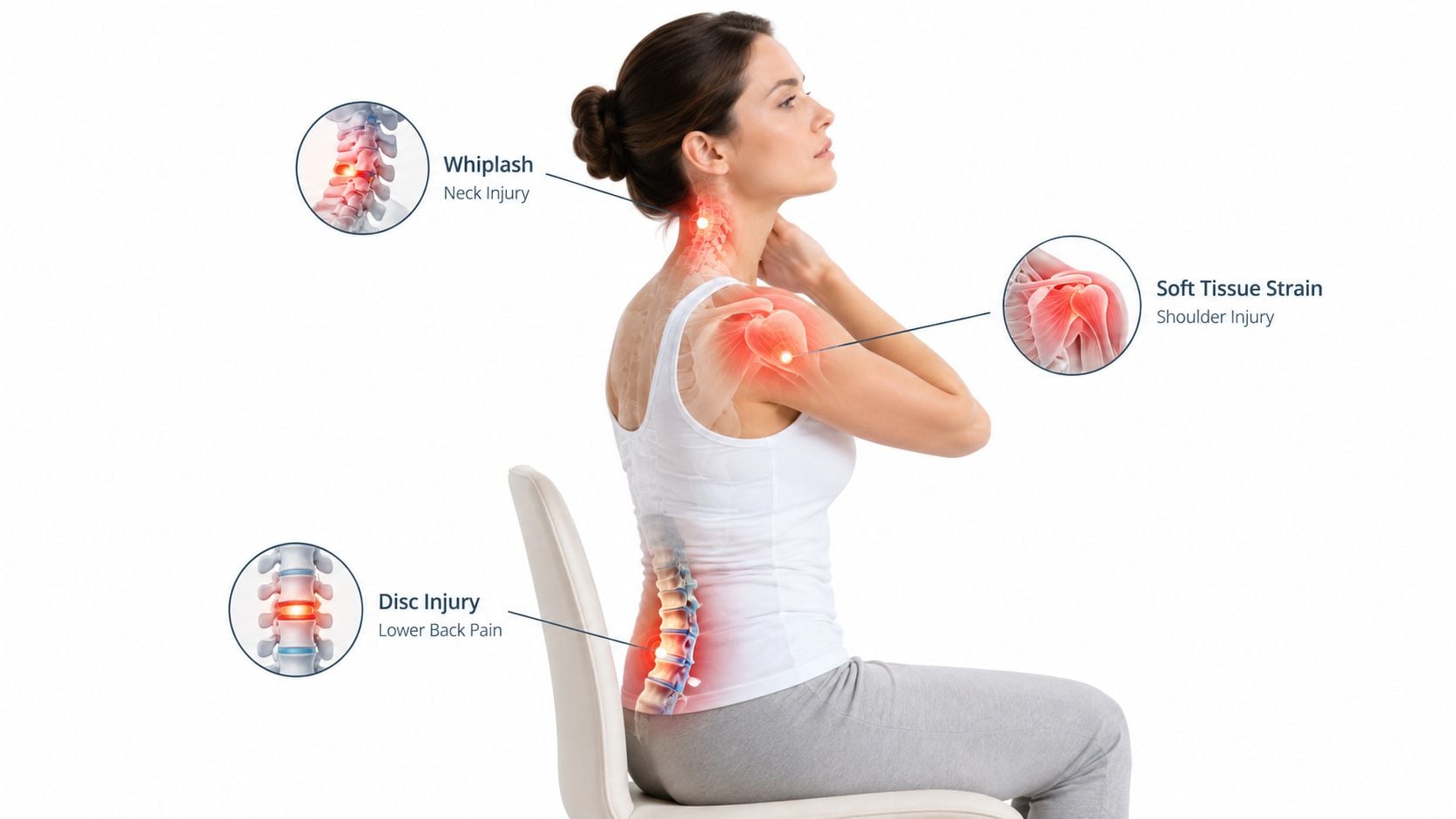
Whiplash-associated disorders can affect the neck muscles, ligaments, joints, and related nerves. Symptoms may include pain, reduced range of motion, headache, shoulder tightness, dizziness, or tingling into an arm. The Mayo Clinic's guidance on whiplash treatment emphasizes early activity and restoration of range of motion rather than prolonged immobilization. Rest may help briefly, but extended bed rest can slow recovery.
Matching symptoms to possible injury patterns
A patient with back pain may have a muscle strain, joint irritation, disc involvement, or nerve-root irritation. Pain traveling into an arm or leg, numbness, tingling, or weakness deserves a focused neurological examination rather than automatic reassurance or an automatic surgical referral. Information about fractures after an accident can help explain why fracture assessment is separate from the evaluation of soft-tissue and nerve symptoms.
A collision can also produce bruising, shoulder strain, knee or ankle injuries, and injuries to the chest or abdomen. The treatment priority changes when there is visible deformity, inability to bear weight, progressive weakness, severe breathing difficulty, or signs of internal injury. Those symptoms require urgent medical assessment.
Symptoms beyond the neck
Headache, dizziness, concentration difficulty, unusual fatigue, and sensitivity to movement may point to concussion or another head injury, even when there wasn't a direct blow to the head. A patient who initially focuses on the neck may not mention these symptoms unless specifically asked. Clinicians should document when each symptom began, what worsens it, and whether it interferes with driving, work, sleep, or balance.
Pain can also become persistent when fear of movement, muscle guarding, poor sleep, or untreated psychological distress limits rehabilitation. That doesn't mean the pain is imaginary. It means the treatment plan may need to address the nervous system, physical conditioning, and emotional response together.
A symptom that appears later still belongs to the crash evaluation, especially when it changes function or spreads into an arm or leg.
The practical lesson is to avoid self-diagnosis from a symptom label. “Whiplash” describes a pattern of force and symptoms, not a complete explanation for every headache, dizziness episode, or radiating pain after a collision.
Diagnostic Steps After a Motor Vehicle Accident
A sound evaluation starts with the history, not the scan. The clinician needs to know how the collision occurred, whether the patient struck the head or was restrained, when symptoms began, whether they spread, and which ordinary activities became difficult.
The first clinical screen
The initial examination looks for urgent structural or neurological problems. It may include neck and back movement, strength, sensation, reflexes, balance, gait, tenderness, and the ability to use an affected limb. Severe or worsening weakness, major loss of sensation, altered consciousness, breathing difficulty, or suspected spinal cord injury changes the urgency and setting of care.
The clinician should also establish a baseline for function. Can the patient turn the head to check traffic, sit through a work task, climb stairs, sleep, walk normally, or lift safely? Those answers often reveal clinically important impairment that a pain score alone misses.
Choosing the right imaging
Different tests answer different questions:
- X-rays help assess fractures and basic alignment concerns.
- CT scans provide detailed views when complex traumatic injury requires rapid structural assessment.
- MRI can evaluate discs, selected soft tissues, nerve compression, and spinal cord-related abnormalities when the clinical findings justify it.
Imaging shouldn't replace examination. A scan can show an abnormality that isn't causing the current symptoms, while a soft-tissue injury can produce substantial pain and movement restriction without a dramatic image. The timing of advanced imaging should reflect the mechanism, examination, neurological findings, and response to initial care.
When persistent pain needs a different assessment
An emergency physician is primarily looking for immediate threats. A pain specialist later asks a broader question: why hasn't function returned, and what structure or movement pattern is maintaining the symptoms? That evaluation may consider persistent radiculopathy, pain after prior spine surgery, disc-related symptoms, joint irritation, and protective movement that has become inefficient.
The assessment may also identify a need for coordinated rehabilitation, psychological support, or a specialist review. The best diagnostic pathway is therefore not “scan first, treatment later.” It is triage, examination, targeted testing, treatment, and reassessment.
Treatment Options Across Specialties
Most recovery plans begin with the least invasive treatment that matches the clinical findings. For many whiplash-associated and soft-tissue injuries, that means simple analgesia when appropriate, gradual activity, range-of-motion work, and physical therapy. The aim isn't merely to reduce pain at rest. It is to restore safe movement and tolerance for daily tasks.
Building the treatment pathway
A practical pathway has several possible stages:
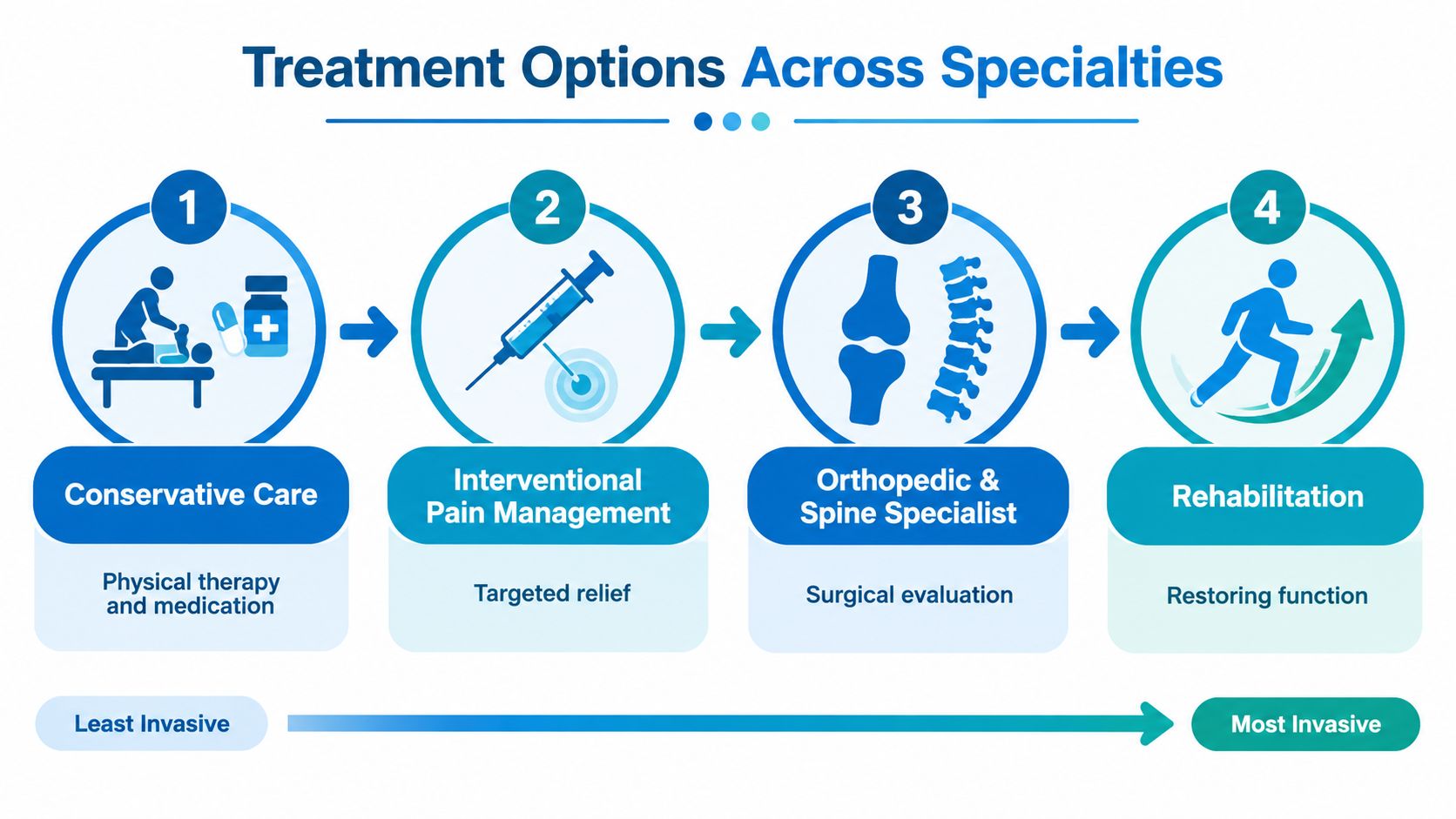
- Conservative care uses activity modification, appropriate medication, education, and progressive exercise. For whiplash, clinical guidance favors early movement over prolonged immobilization.
- Interventional pain management may be considered when a clearly identified pain generator persists despite an appropriate conservative trial. Depending on the diagnosis, options can include an epidural injection, a nerve block, or a trigger-point procedure.
- Orthopedic or spine evaluation becomes important when examination and imaging identify a fracture, instability, significant nerve compression, spinal cord involvement, or another structural problem that may require procedural or surgical treatment.
- Rehabilitation continues across the pathway. It rebuilds strength, coordination, mobility, work tolerance, and confidence rather than treating an image in isolation.
A targeted injection can sometimes help a patient participate in rehabilitation when nerve-root or localized inflammatory pain remains a barrier. It shouldn't be presented as a substitute for diagnosis or exercise. A useful overview of pain-management services can help patients understand how interventional care fits alongside rehabilitation and specialist evaluation.
When surgery has a role
Surgery is reserved for a defined structural problem, not pain alone. Possible indications depend on the injury and may include instability, a fracture requiring fixation, spinal cord compromise, or persistent nerve compression with clinically important weakness or other concerning findings. Procedures such as decompression, fusion, or minimally invasive spinal techniques must be matched to the anatomy and the patient's symptoms.
Rehabilitation remains necessary after procedures. A successful operation doesn't automatically restore conditioning, movement confidence, or work capacity. Conversely, a patient without a surgical indication may still require intensive, carefully progressed rehabilitation.
Treatment decisions should account for injury severity, neurological findings, functional demands, medication risks, sleep, work, and the patient's ability to attend therapy. The right question isn't which specialty offers the most aggressive intervention. It is which intervention addresses the confirmed problem while preserving the safest route back to function.
Why Conservative Care Should Be the First Approach
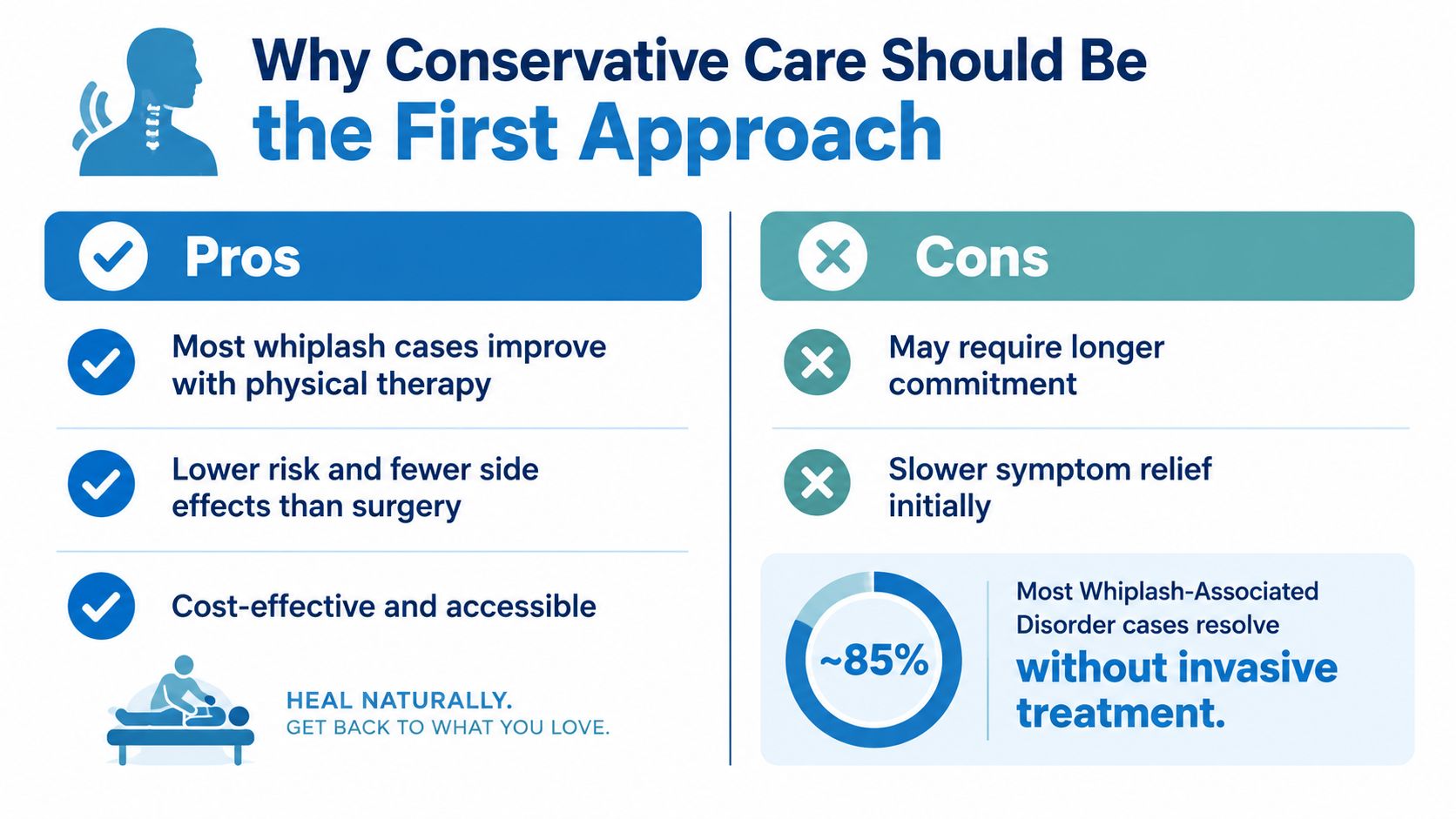
Treatment intensity should follow the confirmed problem, not the patient's level of worry or the availability of an invasive procedure. For many whiplash-associated disorders, appropriate care includes symptom-guided activity, physical therapy, and medication review. The aim is to restore function while avoiding unnecessary exposure to opioid-related harms, medication complications, and procedures that do not address the pain generator.
The clinical guidance on diagnosing and managing whiplash-associated disorders reports surgical indications in almost none of the Grade I to III cases. That finding does not dismiss persistent pain or delayed symptoms. It sets a decision threshold: surgery requires a defined structural problem supported by examination and imaging, rather than pain alone.
What conservative care gets right
A useful plan sets measurable functional goals. Progress may include turning the head far enough to check a blind spot, tolerating prescribed exercises, sleeping with fewer interruptions, or completing routine work tasks with less guarding. These milestones are more informative than pain intensity alone because they show whether treatment is improving capacity.
Medication should be selected after reviewing medical history, allergies, kidney function, gastrointestinal risk, other medicines, and the patient's work and sleep demands. Opioids require particular restraint when the injury is primarily soft tissue and recovery depends on active rehabilitation. Anti-inflammatory medicines can also cause meaningful harm with prolonged or unsupervised use. Conservative care means monitored treatment, not indefinite medication.
When escalation is reasonable
Reassessment is appropriate when function fails to improve, symptoms spread or intensify, neurological findings develop or progress, or the working diagnosis no longer fits the examination. The next step may be a repeat examination, targeted imaging, specialist assessment, or a procedure. When localized inflammatory pain remains a barrier despite appropriate care, epidural steroid injections may be considered within a coordinated treatment plan. The procedure should support rehabilitation, not replace diagnosis or exercise.
Decision point: Escalation should answer a new clinical question. It should not be used simply because discomfort persists.
The treatment gap often lies in triage and follow-up. Patients may receive too little guidance, or they may be offered invasive options without clear indications, risks, and alternatives. Coordinated review keeps treatment proportionate, identifies delayed neurological concerns, and preserves access to advanced care when examination findings justify it.
Navigating Insurance and Legal Support After an Accident
Medical recovery and administrative recovery often happen at the same time. Patients in New Jersey may need to clarify coverage, out-of-network rules, fee estimates, workers' compensation coordination, and the role of a case manager. Those questions shouldn't determine whether a worsening neurological symptom receives urgent attention, but they should be addressed early so paperwork doesn't interrupt appropriate care.
A patient should ask the insurer which policy is responsible for accident-related treatment, whether authorization is required, which clinicians are available, and how referrals or out-of-network care are handled. New Jersey's Out-of-Network Law and fee-estimate requirements may affect the financial discussion, so written explanations are preferable to assumptions made during a stressful phone call.
Documentation that helps care
A clear record supports both clinical decision-making and any later claim. Patients should keep:
- Medical records: discharge instructions, examination notes, imaging reports, and medication lists.
- Symptom changes: onset, progression, spreading pain, dizziness, weakness, sleep disruption, and functional limits.
- Treatment response: exercises tolerated, activities that worsen symptoms, and meaningful gains such as safer driving or improved walking.
- Work information: restrictions, missed duties, and tasks that remain difficult.
Medical records should remain accurate and clinical. Patients shouldn't exaggerate symptoms for legal purposes or minimize them to appear resilient. If litigation involves a deposition, the treating team and legal counsel can explain the process, but medical appointments should remain focused on diagnosis and treatment.
Multidisciplinary coordination matters when a patient needs rehabilitation, pain management, orthopedic review, psychological support, or case management. Legal counsel may be appropriate when liability, coverage, or wage loss is disputed, but legal strategy shouldn't replace timely medical assessment.
Recovery Timeline and Long-Term Outcomes
Recovery isn't judged by a calendar alone. A patient may have less pain but still struggle to turn the head, drive, sleep, work, or tolerate normal activity. Conversely, temporary soreness after a carefully increased exercise load doesn't necessarily mean the injury has worsened.
Whiplash guidance supports early activity and range-of-motion restoration, while delayed symptoms require attention rather than dismissal. The NHS guidance on whiplash notes that symptoms may appear after an initial delay and that persistent symptoms beyond 2 to 3 weeks warrant follow-up. Concussion symptoms can also appear hours or days after the collision, so headache, dizziness, confusion, concentration problems, or unusual fatigue should be reported.
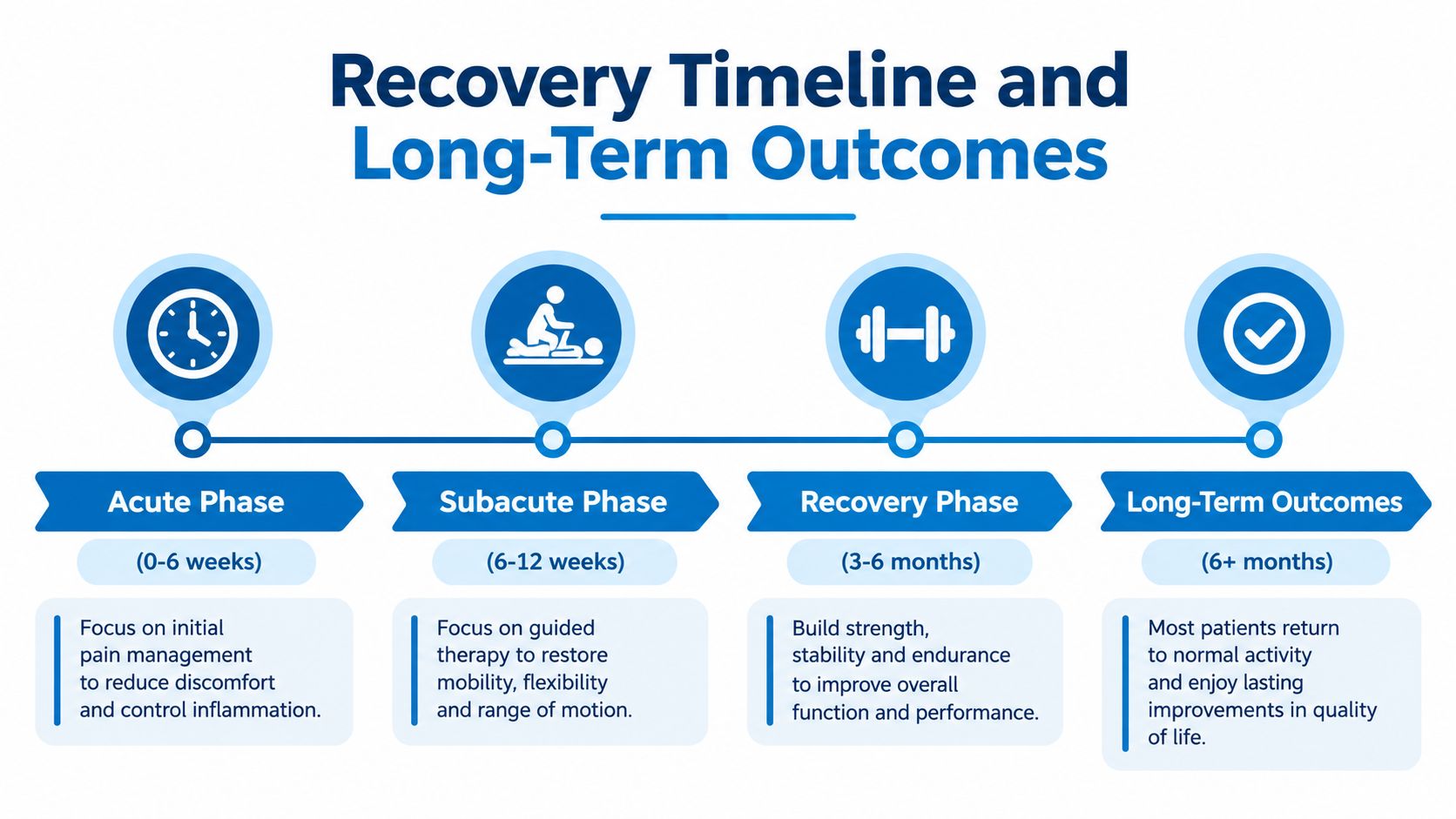
A patient should seek prompt reassessment for worsening weakness, new loss of sensation, difficulty walking, severe or escalating headache, repeated vomiting, altered awareness, breathing problems, or bowel and bladder changes associated with back symptoms. For less urgent but persistent problems, a pain specialist or physiotherapist can review the diagnosis, treatment response, and functional goals.
The next appointment should produce specific answers: what injury pattern is being treated, what activity is safe now, how progress will be measured, and what finding would justify escalation. Tracking sleep, walking, driving, work tolerance, range of motion, and symptom spread gives the clinical team more useful information than pain intensity alone.
Interventional Pain Management offers coordinated evaluation, non-invasive treatment, targeted procedures, and orthopedic or spine referral when clinically indicated for motor vehicle accident injuries. Patients seeking a structured plan for persistent neck, back, joint, or nerve-related symptoms can visit Interventional Pain Management to request an assessment and discuss the next appropriate step.