
Many patients go home the same day or within 1 to 2 days after minimally invasive back surgery, but true functional recovery can take weeks to months depending on the procedure. In a prospective study of lumbar fusion patients, first ambulation averaged 1.3 days, while the study-defined recovery point averaged 3.2 days.
The patient often reaches the surgical center carrying two very different concerns. The first is immediate: “Will the operation hurt, and will it be safe to leave the hospital so soon?” The second appears later, usually at home: “Can the patient drive, climb stairs, work, shop, or care for family without causing harm?”
Those questions deserve separate answers. Medical readiness means the incision, vital signs, pain control, and movement meet the care team's discharge criteria. Practical readiness means the home, transportation, work demands, and support system can handle the next stage. Minimally invasive back surgery recovery is usually smoother when both are planned before the procedure.
Table of Contents
- Discharge Timing and What to Expect
- Navigating the First 48 Hours at Home
- Understanding Pain Patterns and Relief Timelines
- Beyond Pain – The Hidden Logistics of Recovery
- Progressing from Bed to Activity Safely
- Warning Signs and When to Call Your Surgeon
- Frequently Asked Questions About Recovery
Discharge Timing and What to Expect
The waiting room can make discharge feel intimidating. A patient may picture leaving with a fresh incision, new medications, and a back that still feels guarded. That reaction is normal, especially if past spine surgery meant a longer stay and more disruption to muscle and soft tissue.
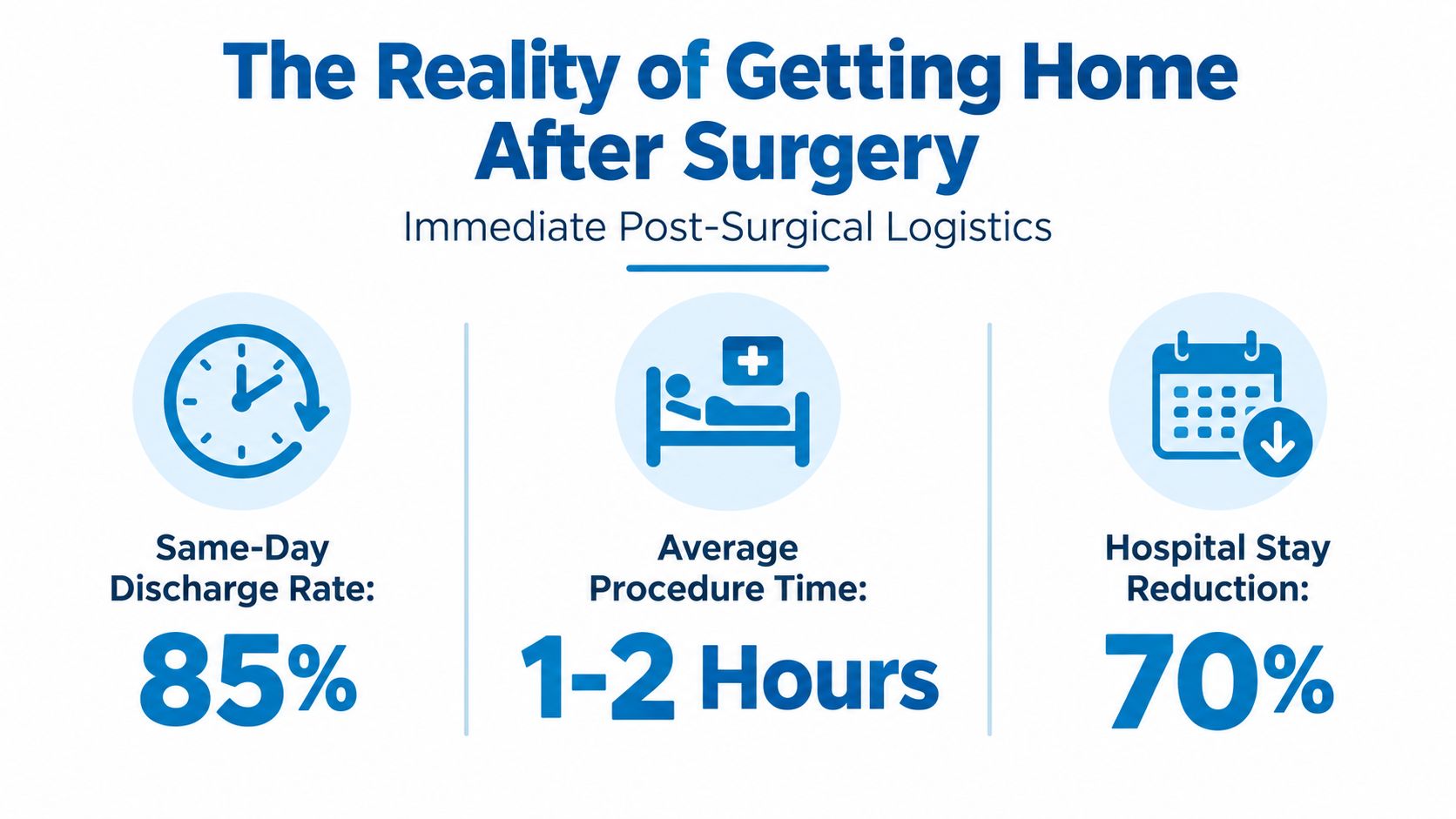
Modern minimally invasive techniques have changed that first stretch for many patients. Authoritative patient guidance notes that some people go home the same day, while others stay overnight or up to 1 to 2 days, depending on the procedure, mobility, pain control, and medical condition. A published series of 1,114 minimally invasive spine procedures reported a 73% same-day discharge rate, though that number should never be treated as a guarantee for one patient. The broader explanation of this shift appears in current guidance on minimally invasive spine surgery.
Why earlier discharge can work
Small working channels and muscle-sparing access can reduce tissue disruption compared with traditional open approaches. In practice, that often means less immediate soreness, easier transfers from bed to chair, and earlier walking. It does not mean the spine has finished healing, and it does not remove the need for careful instructions.
A patient having a decompression procedure may leave with a different plan than someone undergoing a minimally invasive fusion. The decompression plan often centers on nerve symptom relief and incision protection. Fusion adds another layer, because the bone and hardware need time to stabilize, and the surgeon's limits on lifting, bending, and twisting matter more. Patients considering a nerve decompression can review procedure-specific details in microdiscectomy and recovery planning.
Practical rule: Going home early is a milestone in safe hospital recovery, not proof that normal life can resume immediately.
Before discharge, the patient should be able to follow the mobility plan, understand medication instructions, and know who to call with concerns. A responsible adult may also be needed for transportation and early support. That practical side matters. A discharge plan works best when it matches the procedure and the home situation the patient is returning to.
Navigating the First 48 Hours at Home
The first hours at home can feel less organized than the hospital. The patient no longer has a nurse nearby, yet the body may still feel tired, stiff, or unsteady. A simple plan reduces decisions at a time when concentration and comfort are limited.
The first return home
The patient should settle into a position that keeps the back supported without forcing a painful angle. Side lying with appropriate pillow support or lying on the back with support beneath the knees may help, but the surgeon's instructions take priority. Remaining in one position for too long can increase stiffness, so short, approved changes of position are usually preferable to prolonged bed rest.
Medication works more predictably when taken exactly as prescribed rather than delayed until pain becomes difficult to control. The care team may use a combination of prescribed pain medicine and other measures. Patients should review the complete plan through postoperative pain-management guidance, especially if sedation, constipation, nausea, or medication interactions are concerns.
Incision care
The dressing and incision should be handled exactly as instructed. Patients shouldn't apply creams, powders, or household products unless the surgical team approves them. A small amount of expected drainage may be addressed in the discharge instructions, but increasing drainage, spreading redness, marked swelling, or a change in wound appearance deserves a call.
The patient should also arrange essential items before surgery. Frequently used objects belong within easy reach, and pathways should be cleared of loose rugs, cords, and clutter. A stable chair with arms can make sitting and standing easier than a low sofa.
Sleep, food, and movement
The first night may be interrupted by discomfort, medication timing, or difficulty finding a familiar position. That's common, but severe or uncontrolled pain shouldn't be ignored. Small meals, adequate fluids when permitted, and help with household tasks can conserve energy for healing.
Short, assisted walks may be recommended soon after arrival. The purpose isn't exercise training. Gentle movement supports circulation and helps the patient assess whether transfers and bathroom access are manageable. The patient should stop and contact the care team if movement produces new neurological symptoms, rapidly escalating pain, or another symptom covered in the discharge instructions.
Understanding Pain Patterns and Relief Timelines
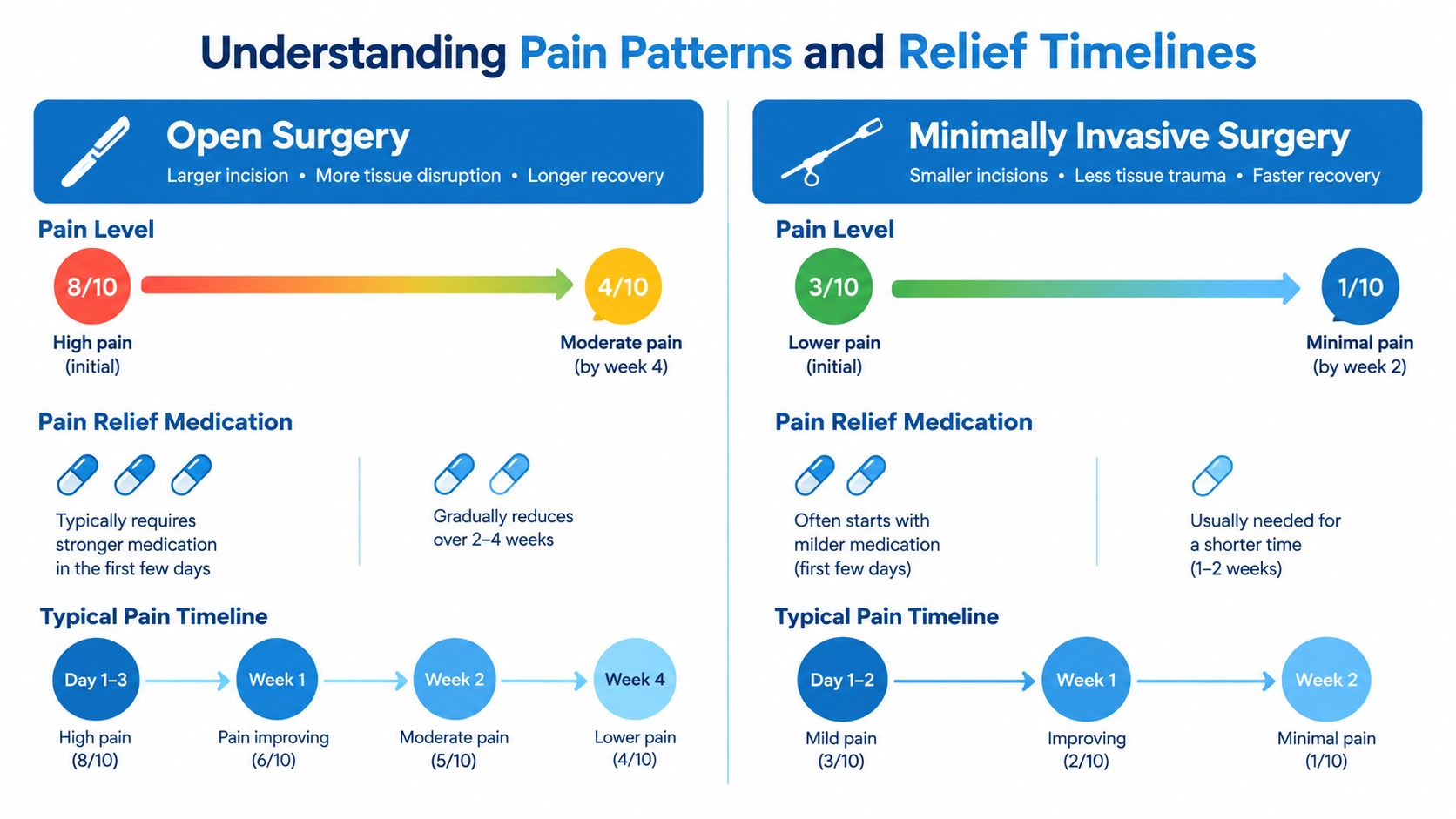
Pain after back surgery isn't a single measurement. A patient can have immediate improvement in radiating leg pain while still experiencing incision soreness, muscle aching, fatigue, or back stiffness. That uneven pattern often reflects the difference between relieving pressure on a nerve and allowing tissues to recover.
Decompression and fusion follow different curves
For decompression-type minimally invasive procedures, nerve-related symptoms may improve rapidly. A review of contemporary endoscopic spine surgery found that radicular pain can improve as early as postoperative day 0, while reductions in back and leg pain are commonly seen by postoperative day 1. The same review explains that back-pain-related disability and overall physical function may continue improving for up to 3 months. These findings are summarized in the review of contemporary endoscopic spine outcomes.
In one large outcomes study discussed in that review, 66.0% of discectomy patients reached a minimal clinically important improvement in back pain at 1 week, and 71.3% reached it for leg pain. Those figures describe a study population, not a guarantee. A patient can have early nerve relief and still need time to rebuild endurance, normalize movement, and regain confidence.
Fusion presents a different biological challenge. The operation may relieve mechanical instability or nerve compression, but the body still has to heal around the treated segment. A patient may feel substantially better during one part of the day and exhausted after a shower, meal, or short walk. That fluctuation doesn't automatically mean the operation failed.
What pain patterns can tell the care team
A gradual overall trend matters more than one difficult afternoon. The patient should track whether nerve symptoms are improving, whether walking is becoming easier, and whether medication is controlling pain without unacceptable side effects.
| Pattern | Possible interpretation | Appropriate response |
|---|---|---|
| Incisional soreness that slowly settles | Common tissue healing response | Follow the prescribed plan and protect the incision |
| Early improvement followed by fatigue | Recovery demand may exceed current endurance | Reduce activity and use shorter, more frequent efforts |
| New or worsening weakness, numbness, or severe pain | Requires clinical assessment | Contact the surgical team promptly |
Pain control isn't about eliminating every sensation. It should allow safe sleep, basic movement, and participation in the prescribed recovery plan. A patient who can't perform those tasks because of pain should report that problem rather than compensating on their own with extra medication or excessive inactivity.
Beyond Pain – The Hidden Logistics of Recovery
A patient may be medically stable and still be unable to manage the next morning. The home could have stairs, the only bathroom could be far from the bedroom, or a job could require prolonged driving, lifting, standing, or rapid decisions. These practical details can determine whether the recovery plan works outside the clinic.
Patient-reported outcome research has found that people often worry about living alone, transportation, stairs, and work demands, yet many recovery instructions emphasize wound care and medication more heavily than daily logistics. That mismatch matters because a plan can be clinically sound and still fail if the patient can't obtain medication, attend follow-up care, or complete the recommended exercises. The patient-reported research on recovery barriers and functional outcomes supports treating logistics as part of clinical preparation rather than as an afterthought.

Medical readiness versus practical readiness
These two forms of readiness should be assessed separately:
- Medical readiness: The patient can transfer, walk as instructed, tolerate food or fluids when permitted, and manage symptoms under the discharge plan.
- Home readiness: The route to the bed and bathroom is clear, frequently used items are accessible, and the patient has help with tasks that require bending or lifting.
- Transportation readiness: A reliable person can provide the required ride, and arrangements exist for follow-up visits, medication access, and unexpected calls to the surgical team.
- Work readiness: The return plan reflects job demands rather than job titles. Desk work, delivery driving, construction, caregiving, and warehouse work place different stresses on the healing body.
Exercise adherence also deserves practical planning. A patient may understand the prescribed routine but lack transportation to therapy, feel uncertain about technique, or experience pain that makes the plan difficult to follow. Medication access and understanding of instructions matter for the same reason. Evidence linking these barriers with reduced odds of functional improvement challenges the simplistic idea that minimally invasive surgery automatically produces an easy recovery.
A useful preoperative conversation asks who will help, how meals will be prepared, how stairs will be handled, and what happens if the primary caregiver must leave. The answers can lead to simple changes, such as moving sleeping arrangements, arranging rides, or asking the clinical team to clarify the exercise plan.
Recovery succeeds at home, not only on the operating table.
Progressing from Bed to Activity Safely
Early movement should be deliberate, not competitive. The patient isn't trying to prove strength by walking far or completing chores. The objective is to move safely, avoid prolonged immobility, and increase activity only as the surgeon's instructions allow.
A measured progression
Patients should use the exact transfer technique taught by the care team. For many back procedures, that means turning the body as a unit, bringing the legs toward the edge of the bed, and using the arms to assist rather than twisting sharply through the spine. A helper should remain close when balance is uncertain.
Short walks around the home can be repeated as tolerated. Stairs require a handrail, an unhurried pace, and a clear path. If the patient feels dizzy, excessively weak, or unable to control the legs, the attempt should stop and the care team should be contacted when appropriate.
A prospective multicenter observational study of 252 minimally invasive lumbar fusion patients reported an average time to first ambulation of 1.3 days and a study-defined recovery point of 3.2 days. By 4 weeks, back pain in that study fell from 6.2 to 2.9 on a VAS scale, while the Oswestry Disability Index improved from 45.5% to 34.5%. The full findings are available in the prospective lumbar fusion recovery study.
The restrictions have a purpose
Bending, lifting, and twisting can place avoidable stress on healing tissues and hardware, depending on the procedure. Patients should follow the surgeon's specific limits instead of assuming that a small incision permits unrestricted activity. A light object can still require a risky posture if it is lifted from the floor or carried while turning.
Walking is different from housework. A controlled walk may be part of the recovery plan, while vacuuming, laundry, repeated stair trips, or carrying a child may combine bending, rotation, and load. The patient should add household tasks one at a time and stop before symptoms escalate.
The appropriate pace is the one that produces gradual improvement without a pattern of worsening pain or neurological symptoms. Physical therapy, when prescribed, can help translate safe movement into stronger posture, balance, and body mechanics.
Warning Signs and When to Call Your Surgeon
Some soreness, bruising, fatigue, and stiffness can occur during normal healing. The patient shouldn't interpret every uncomfortable sensation as an emergency, but neither should a concerning change be dismissed as “just recovery.”
Symptoms that need attention
The surgical team should be contacted if pain becomes difficult to control, the incision develops increasing redness or swelling, drainage changes, or fever occurs. New or worsening weakness, numbness, trouble walking, or changes in bladder or bowel control require prompt medical advice and may require urgent evaluation.
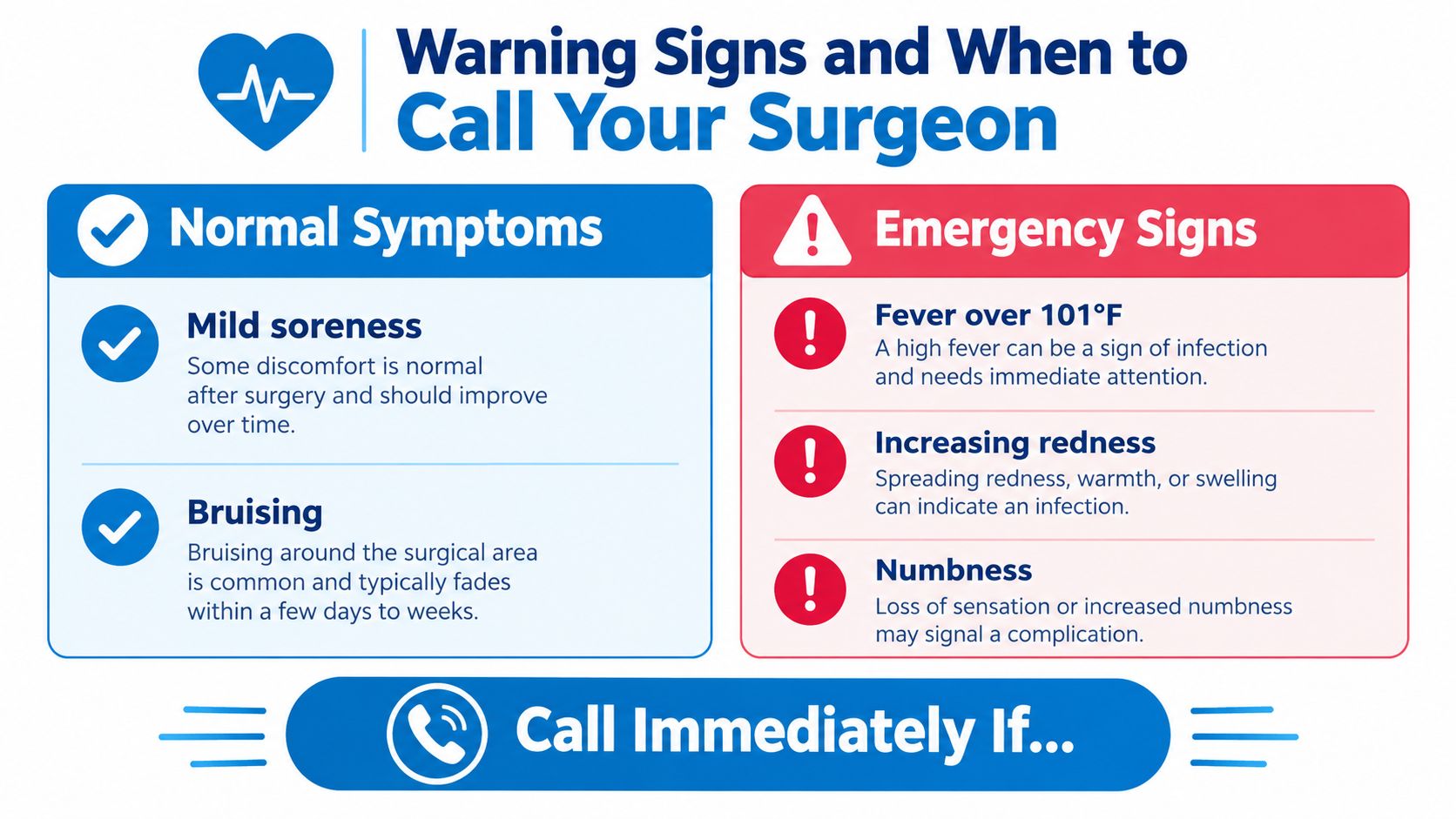
A patient who develops severe symptoms, sudden neurological change, breathing difficulty, or another emergency should use the emergency instructions provided by the surgical team rather than waiting for a routine appointment. The discharge paperwork should stay accessible, including the office number and after-hours instructions.
The operation addresses a structural problem, but daily behavior supports the result. Protecting the incision, taking medications as directed, walking safely, following restrictions, and reporting meaningful changes all form part of minimally invasive back surgery recovery.
Frequently Asked Questions About Recovery
When can a patient drive? Driving requires more than sitting in a car. The patient should be off medications that impair alertness, able to turn and check surroundings, and able to brake or react without hesitation. Clearance belongs to the surgeon.
When can desk work resume? A desk-based return may occur before a return to lifting, prolonged standing, or physical labor. The work plan should include position changes, transportation demands, and the ability to attend follow-up care.
What about labor-intensive work? Jobs involving lifting, bending, climbing, vibration, or patient transfers usually require a more individualized plan. The surgeon may coordinate restrictions with the employer rather than relying on a generic return date.
When is sexual activity safe? The patient should ask the surgical team directly. The answer depends on the operation, pain, wound status, comfort, and whether the activity requires bending or twisting.
How long can stiffness last? Stiffness often improves gradually as walking and prescribed rehabilitation increase. Persistent or worsening stiffness accompanied by new pain, weakness, or numbness should be discussed with the surgeon rather than managed through increasingly strenuous exercise.
Interventional Pain Management evaluates spine and pain conditions, offers nonoperative and interventional options, and provides spine surgical care when a minimally invasive or more complex procedure is clinically appropriate. Patients in New Jersey and Staten Island can visit Interventional Pain Management to request an evaluation and discuss a recovery plan that accounts for symptoms, procedure type, work demands, transportation, and home support.