
You're home after a nerve block, and the treated arm or leg suddenly feels heavy, numb, or almost unusable. That reaction can be frightening, especially if the pain has changed at the same time. In most cases, temporary loss of sensation or strength is the intended effect of the anesthetic, but the pattern and timing matter. The safest approach is to know what belongs to the normal recovery window and what needs prompt medical attention.
Table of Contents
- Understanding Expected Numbness and Weakness
- How Side Effect Rates Vary by Injection Type
- Managing the First 24 Hours Safely
- Evaluating Rare Neurological and Systemic Risks
- When to Seek Urgent Medical Evaluation
- How Advanced Techniques Minimize Complications
Understanding Expected Numbness and Weakness
A patient who receives a shoulder block may notice that the arm hangs heavily and that the fingers feel distant. Someone with a leg block may struggle to stand because the knee or ankle no longer responds normally. This can feel like nerve damage, but a temporary block is designed to interrupt signals traveling through the targeted nerve. Numbness, tingling, and weakness can therefore indicate that the medication has reached its target, rather than that the nerve has been injured.
The important distinction is whether symptoms follow the expected course. A limb that gradually regains sensation and control as the anesthetic wears off is generally less concerning than weakness that progresses, returns after improving, or extends beyond the treated area. The treating team should explain the expected duration for the specific medication, injection site, and procedure.

Protecting a limb that cannot feel normally
Until strength and sensation return, the affected limb lacks some of its usual protective feedback. A person can place weight on a weak leg, bump an arm against furniture, or touch a hot surface without noticing the injury immediately.
Practical precautions include:
- Arrange transportation: Someone else should drive after the procedure. Driving requires reliable sensation, strength, and reaction time.
- Prevent falls: Use assistance for walking after a lower-extremity block, and don't test the leg on stairs or uneven ground alone.
- Avoid heat: Keep numb skin away from heating pads, hot water, and hot liquids because burns may not be felt promptly.
- Support the limb: A sling may protect an arm block, while a leg may need elevation and a safe resting position.
Patients can review the procedure, expected sensations, and recovery instructions through this nerve block patient resource. Temporary weakness is expected; worsening or unexplained neurological loss isn't.
How Side Effect Rates Vary by Injection Type
Side effect rates depend on where the injection is placed and what kind of block is being performed. A neuraxial block near the spine raises different concerns from a peripheral nerve block in the shoulder, arm, or leg, and studies do not always count symptoms and complications the same way.
A large clinical review followed 10,838 patients referred to an acute pain unit. 1,093 patients, or 10.1%, experienced a reported side effect or complication. The reported rate was 11.4% after neuraxial blocks and 5.2% after peripheral nerve blocks in the clinical review.
| Side Effect Category | Neuraxial Blocks | Peripheral Nerve Blocks |
|---|---|---|
| Reported side effect or complication | 11.4% | 5.2% |
| Sensory deficits | 48.5% of recorded neuraxial side effects | Not specified in the review |
| Motor deficits | 11.8% of recorded neuraxial side effects | Not specified in the review |
| Nausea or vomiting | 17.5% of recorded neuraxial side effects | Not specified in the review |
| Itching | 8.0% of recorded neuraxial side effects | Not specified in the review |
What those figures mean for a patient
For patients, the practical point is timing and type of symptoms. After a neuraxial block, the more commonly recorded effects included sensory changes, nausea or vomiting, motor changes, and itching. Those categories describe what was reported in that study. They do not predict what any one person will feel on the day of the procedure.
Individual risk still depends on the injection site, the medication used, the technique, underlying medical problems, and whether a patient takes anticoagulants. A lower overall rate does not mean a peripheral nerve block is free of risk. It means the pattern of side effects is different.
Severe complications in the same review were uncommon. Subcutaneous hematoma and epidural abscess each occurred in 3 patients, or 0.03%, while arachnoiditis occurred in 1 patient, or 0.01%. In practice, that helps frame what to watch for. Temporary numbness, heaviness, or mild expected symptoms are handled very differently from progressive weakness, severe swelling, fever, or escalating pain.
Patients considering an epidural or another spinal procedure often ask about reports of catastrophic neurological injury. A review of FDA adverse-event reports identified 90 serious neurological events associated with epidural steroid injections between 1997 and 2014, but those reports cannot show a percentage risk because the total number of injections performed was not available in the FDA review.
If you want a practical overview of how different procedures are used, this guide to types of pain-management injections can help put the terminology in context.
Managing the First 24 Hours Safely
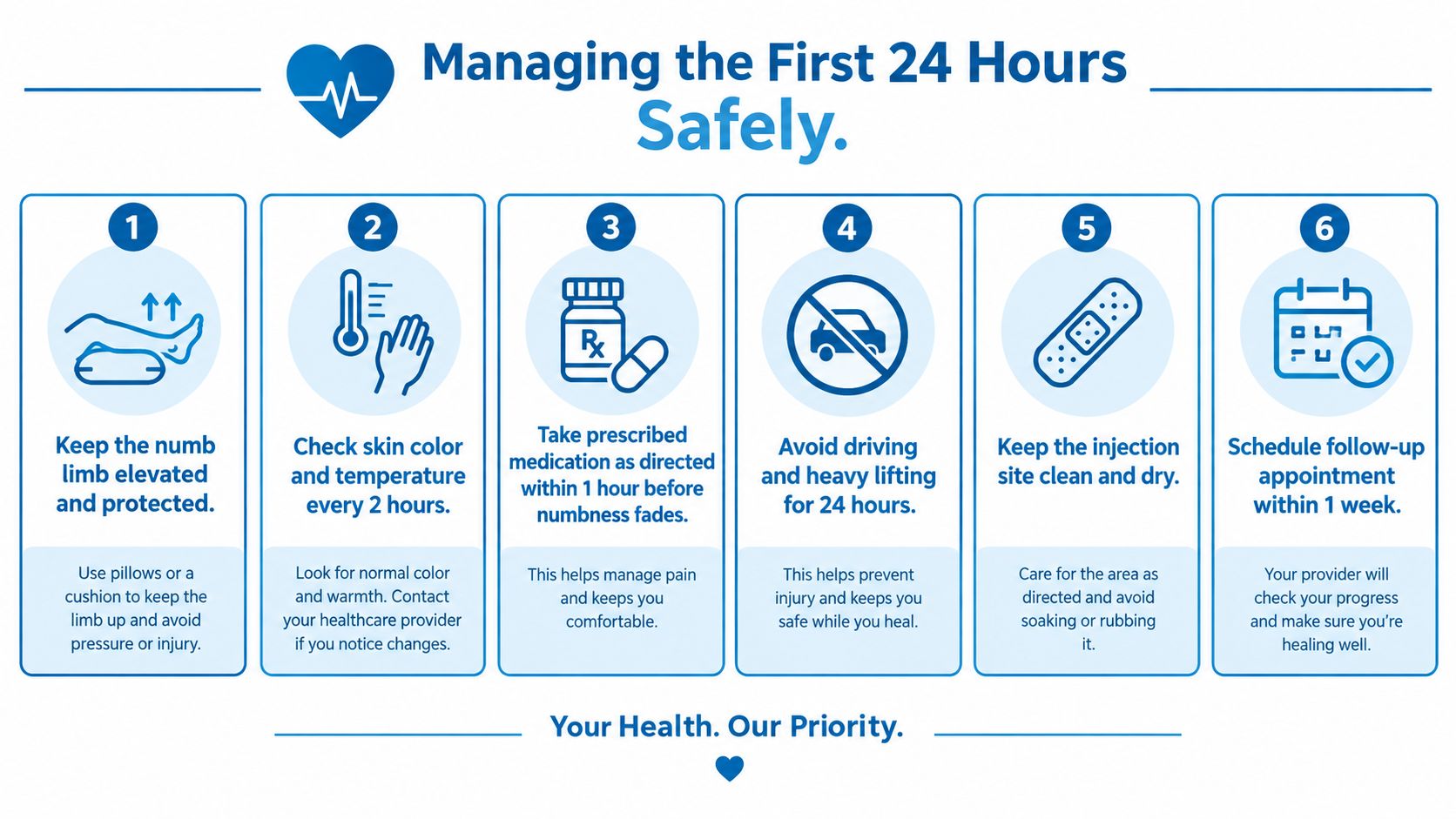
The first day is less about testing the block and more about preventing an avoidable injury. A numb limb can appear functional before it has recovered enough strength for walking, lifting, or ordinary household tasks.
A practical home routine
- Rest and position the limb. Keep an affected arm supported or a numbed leg protected and raised when instructed. Don't let pets, children, or heavy objects press against an insensate area.
- Check appearance and comfort. Look for unusual color change, swelling, or rapidly increasing pain. Don't rely on pain alone because numbness can conceal an injury.
- Plan pain medicine in advance. Follow the prescribed schedule rather than waiting until sensation has fully returned and pain becomes difficult to control. The treating clinician's instructions take priority.
- Avoid driving and strenuous activity. Don't drive, climb, lift heavily, or return to demanding exercise while strength or sensation remains impaired.
- Keep the injection site clean. Follow the dressing instructions provided by the clinic, and don't soak the site unless the care team says it's safe.
- Record the recovery. Note when numbness begins to recede, whether weakness is improving, and any new symptoms. This record gives the clinician a clearer picture if follow-up is needed.
Showering requires attention to both balance and the dressing. If standing is unsafe, assistance is sensible. The injection site should remain protected according to the discharge instructions, and hot water should be avoided over numb skin.
Practical rule: Don't use the return of pain as the only measure of recovery. Strength, sensation, balance, and the appearance of the limb matter too.
Evaluating Rare Neurological and Systemic Risks
Common temporary numbness is different from a complication that affects the whole body or causes lasting neurological loss. The distinction is especially important with local-anesthetic systemic toxicity, known as LAST. It can occur when too much anesthetic enters the bloodstream, often through inadvertent intravascular injection, rapid absorption, a high total dose, or repeated injections.
Early symptoms may include a metallic taste, ringing in the ears, numbness around the mouth, agitation, visual changes, or altered awareness. Seizures and cardiovascular problems can follow, including abnormal conduction, dangerous rhythms, low blood pressure, or cardiac arrest. Sedation can hide early neurological symptoms, so new symptoms during or soon after injection require immediate attention rather than watchful waiting as described in this clinical review of LAST.
Comparing common effects with uncommon danger
| Pattern | More consistent with an expected block | More concerning for a complication |
|---|---|---|
| Sensation | Numbness in the planned distribution | New numbness outside the expected area or worsening sensory loss |
| Strength | Temporary weakness that gradually improves | Progressive weakness or motor loss that persists beyond the expected window |
| General symptoms | Mild local soreness or limited bruising | Seizure-like activity, fainting, severe breathing difficulty, or altered consciousness |
| Injection site | Mild tenderness | Rapidly expanding swelling, severe pain, or signs of infection |
Clinically significant peripheral-nerve injury is uncommon but not negligible. Published estimates range from approximately 0.02% to 0.5%, or about 2 to 50 cases per 10,000 peripheral blocks, depending on the procedure, follow-up duration, and definition used in the ASRA practice advisory. Possible causes include direct needle trauma, injection into a nerve fascicle, compressive hematoma, ischemia, infection, or local-anesthetic neurotoxicity.
Risk is influenced by more than the drug. High injection pressure, pre-existing neuropathy, swelling, bleeding, and the location of the needle all matter. The right response to a serious warning symptom is to stop further injection when applicable, alert clinical staff, and obtain emergency assessment.

When to Seek Urgent Medical Evaluation
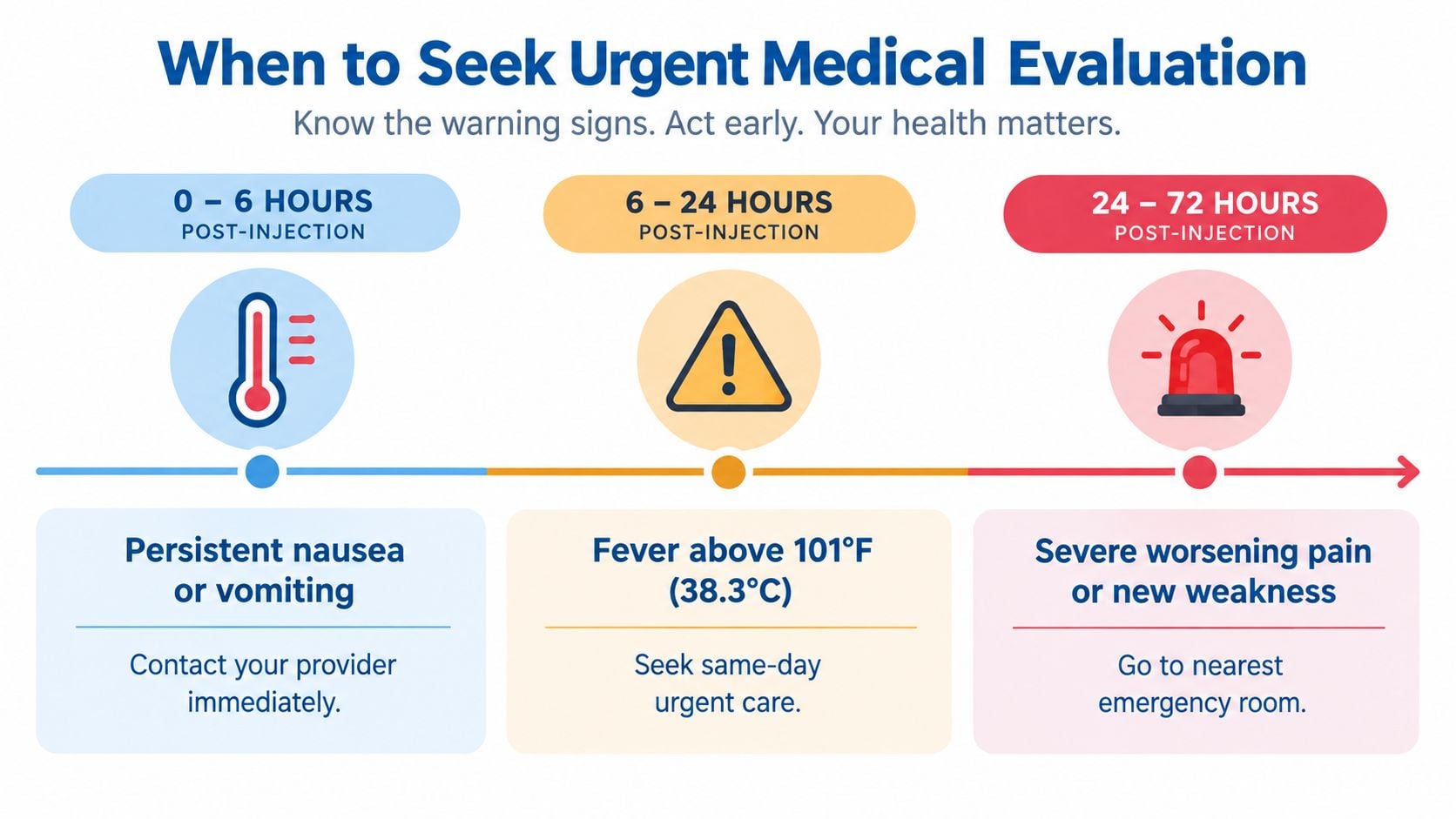
Recovery should move in the right direction. Numbness or weakness that steadily fades is different from a symptom that intensifies, spreads, or remains unchanged beyond the expected anesthetic period. Patients shouldn't wait for a routine appointment when neurological function is deteriorating.
Published estimates place neurological injury lasting more than one year at approximately 2 to 4 cases per 10,000 peripheral nerve blocks, while transient neurological disorders vary by block type from about 0.3% for femoral blocks to 2.8% for brachial-plexus blocks in this review of post-injection neurological symptoms. The same review reports that 95% of nerve-injury symptoms resolve within 4 to 6 weeks and 99% within one year, but those averages don't make an individual red flag safe to ignore.
Symptoms that require urgent action
Go to an emergency department or call emergency services for:
- Progressive weakness: The limb is becoming weaker, or the patient cannot walk safely when that wasn't expected.
- Bowel or bladder changes: New loss of control, inability to urinate, or numbness in the saddle area needs immediate evaluation.
- Severe spinal symptoms: Escalating back pain combined with weakness, sensory loss, or difficulty walking can signal a compressive problem.
- Systemic toxicity signs: Seizure-like activity, severe breathing difficulty, fainting, marked confusion, or cardiovascular symptoms are emergencies.
- Possible infection or bleeding: Fever, increasing redness, drainage, rapidly expanding swelling, or severe tenderness warrants urgent clinical assessment.
A patient contacting the treating team should document the procedure time, injection site, medications taken, the first sign of change, and whether strength or sensation is improving. A photograph of swelling or skin color change can also help, but it shouldn't delay emergency care.
Patients with symptoms related to the foot or ankle can review information about foot drop and nerve weakness, but sudden or worsening weakness still requires direct medical assessment. When symptoms progress, emergency evaluation is safer than waiting for a call back.
How Advanced Techniques Minimize Complications
Safety begins before the needle enters the skin. A careful clinician reviews the diagnosis, prior nerve problems, allergies, diabetes, anticoagulants, infection risk, and every medication that could change bleeding or neurological risk. The planned target and the patient's functional needs also influence whether a block is appropriate.
Image guidance helps the clinician see relevant anatomy and refine needle placement. Ultrasound can improve block success and reduce complications compared with landmark-based techniques, although the quality and applicability of evidence vary by procedure as summarized in this clinical reference. Ultrasound doesn't eliminate risk, and some procedures may require other forms of imaging or contrast confirmation.
What a safer process includes
- Individualized dose calculation: The clinician considers body size, medical conditions, the planned medication, and any previous injections.
- Incremental injection and aspiration: These steps help reduce the chance of delivering a large amount of anesthetic into a blood vessel.
- Monitoring during and after the procedure: Blood pressure, breathing, consciousness, pain, and neurological symptoms should be observed when appropriate.
- Emergency readiness: Airway equipment, resuscitation medication, and intravenous lipid emulsion should be available when local-anesthetic toxicity is a concern.
- Clear discharge instructions: Patients should leave knowing who to call, what symptoms are expected, and which signs require emergency care.
Interventional Pain Management evaluates spine, nerve, joint, and musculoskeletal conditions through board-certified physicians and offers image-guided procedures, diagnostic review, and coordinated non-surgical or surgical care across New Jersey and Staten Island. Patients concerned about nerve block injection side effects can discuss the proposed target, medication, alternatives, anticoagulant plan, and after-hours instructions before consenting.
Patients with new, worsening, or persistent numbness and weakness should contact the treating clinician promptly, and emergency symptoms should be assessed without delay. To discuss whether a nerve block fits the diagnosis and recovery plan, visit Interventional Pain Management and request an evaluation with the appropriate pain, spine, or orthopedic team.