
Most ALIF patients see meaningful back-pain relief within a few weeks, but full return to work typically lands around 3 months for desk jobs and longer for physical labor. The full recovery arc runs closer to a year, because symptom improvement, work capacity, and bone fusion develop at different speeds.
A patient may feel encouraged by less back pain, then become frustrated when sitting at a desk still causes fatigue or when lifting remains restricted. Another patient may walk comfortably but still need help with household tasks. Both experiences can fall within a normal anterior lumbar interbody fusion recovery time.
The useful question isn't, “When will recovery be over?” It's, “When can this patient safely drive, sit through a workday, lift at work, exercise, and show solid fusion on imaging?” Each milestone has its own timing and clearance criteria.
Table of Contents
- What Recovery After ALIF Actually Looks Like
- The First Month After Surgery
- Driving, Desk Work, and Heavy Labor
- Factors That Shape Your Recovery Timeline
- Rehabilitation and Physical Therapy Progression
- Why One Recovery Number Is Not Enough
- Warning Signs and When to Call Your Surgeon
- Your ALIF Recovery Checklist
What Recovery After ALIF Actually Looks Like
Anterior lumbar interbody fusion, or ALIF, removes a damaged disc through an approach at the front of the body and places an implant and bone graft between the vertebrae. The operation may relieve painful movement and restore support, but the body still needs time to heal the abdominal approach, calm irritated nerves, rebuild endurance, and create a solid bony bridge.
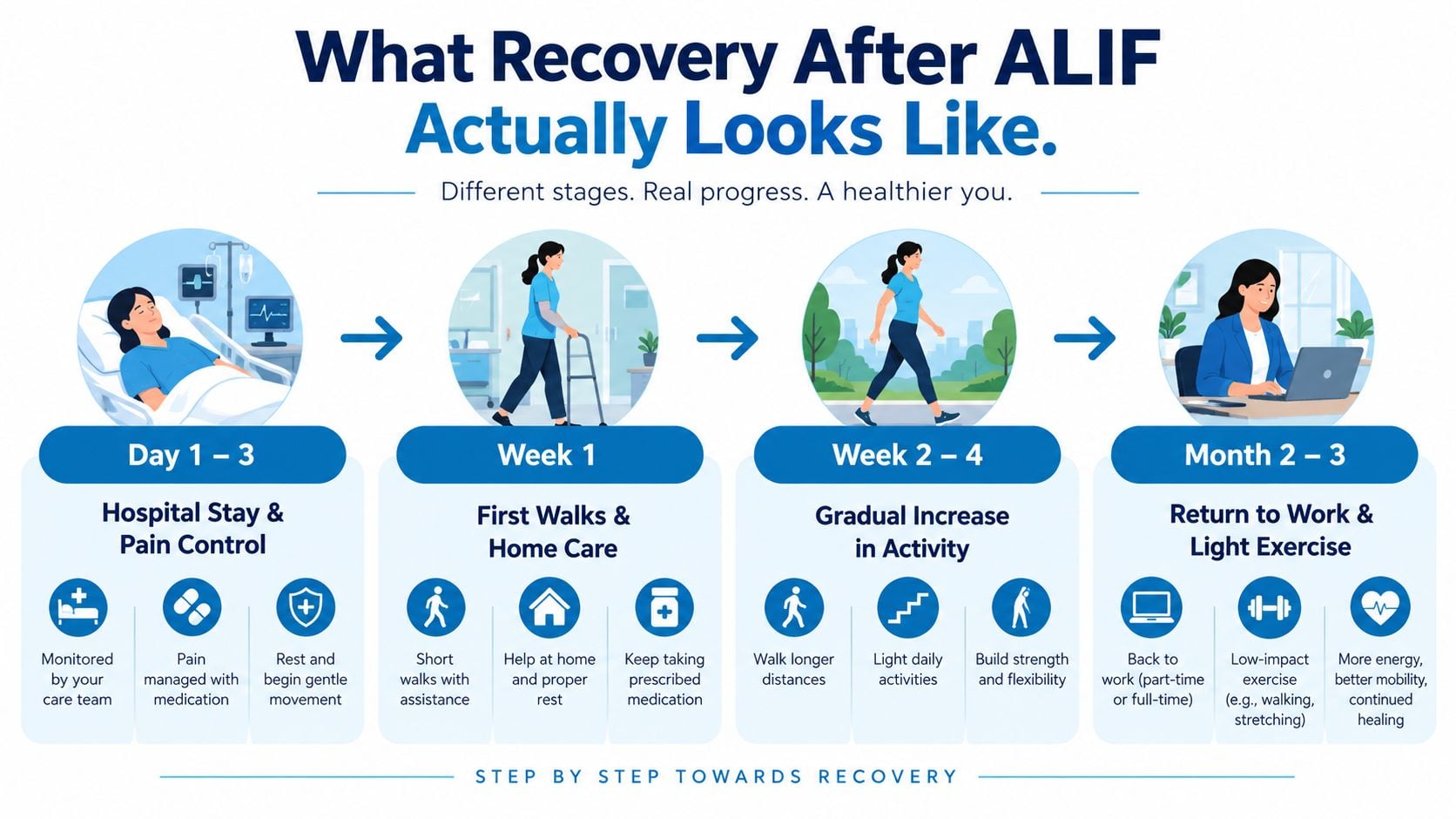
That process doesn't produce one universal return-to-normal date. A patient might reach an early pain-relief milestone within weeks, begin walking soon after surgery, return to desk work around the broader three-month work milestone, and wait considerably longer before resuming heavy lifting. Radiographic fusion is a separate checkpoint, not proof that every other part of recovery has finished.
Five milestones matter
Pain control and safe movement. Early care focuses on controlling pain, protecting the incision, and helping the patient stand and walk safely.
Walking and daily mobility. Short walks usually become the foundation of recovery. Distance and confidence increase gradually rather than all at once.
Driving and desk work. These depend on reaction time, sitting tolerance, medication use, and the ability to change position without sharp pain.
Physical work and sport. Lifting, bending, twisting, climbing, and prolonged standing place greater demands on a healing spine than computer-based work.
Radiographic fusion. The implant may provide immediate stability, but bone formation continues for months. Functional improvement can continue even after early images look reassuring.
A 2024 ALIF study found that 75% of patients returned to work, with a median return-to-work time of 3 months. Patients who returned to employment also had significantly better quality-of-life, back-pain, leg-pain, and disability outcomes, with statistical significance reported at p < 0.05 in the 2024 ALIF return-to-work study. The median describes a population, not an individual promise. A patient-focused ALIF resource can support general education, but the operating surgeon's restrictions remain specific to the procedure and patient.
The First Month After Surgery
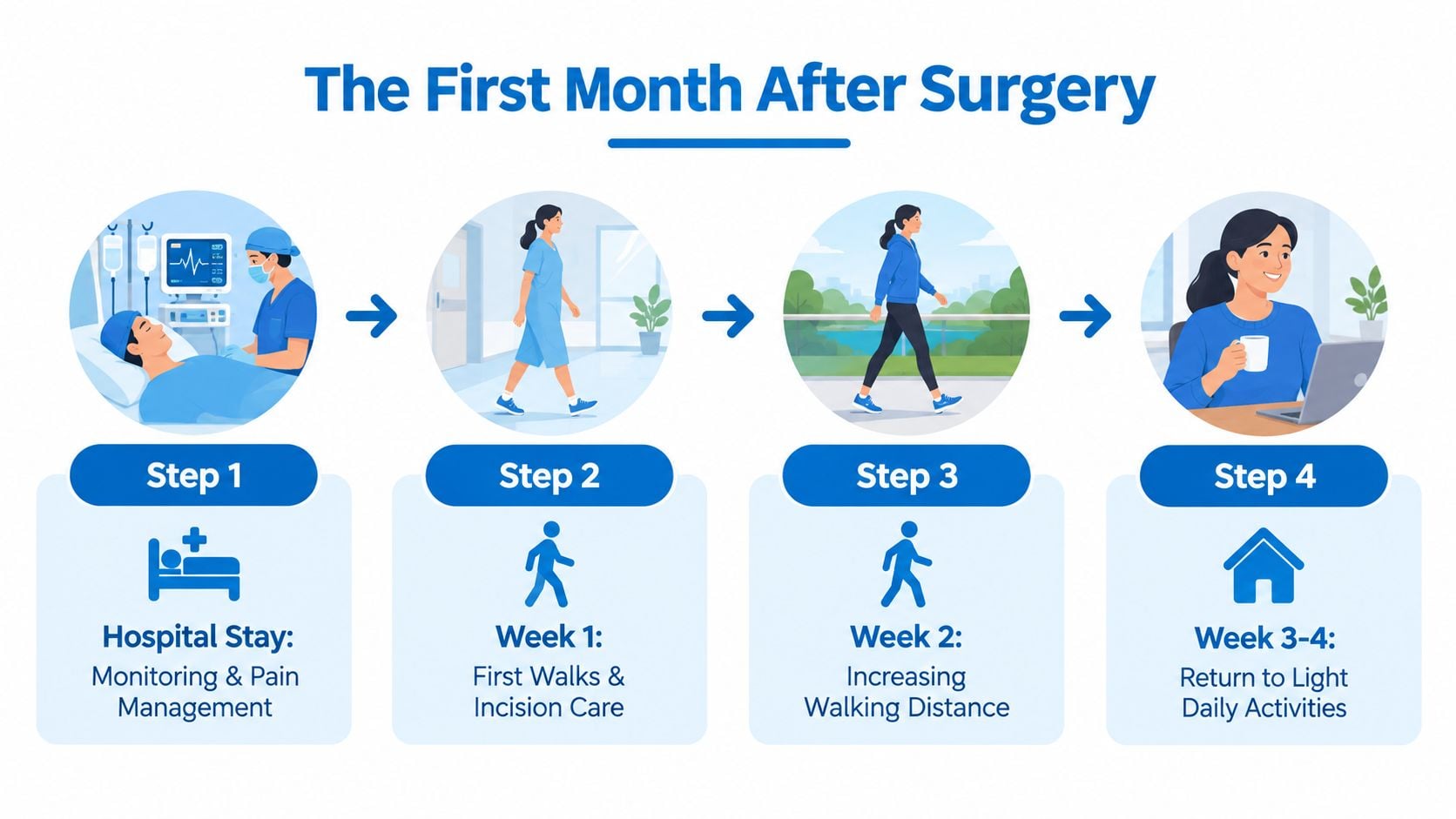
The first month often feels less like a straight line and more like alternating progress and fatigue. A patient may walk farther in the morning, then need a long rest after a shower or meal. The anterior incision can remain tender even when the original back pain has started to ease.
During the hospital phase, the care team monitors pain, neurologic function, the abdominal incision, and the ability to move safely. Standing and taking the first steps may happen early, with assistance as needed. The immediate objective isn't athletic performance. It's safe mobility, regular position changes, and a discharge plan that matches the patient's balance, strength, and home support.
The first two weeks at home
At home, short and frequent walks are usually more useful than one long outing. A patient may walk from room to room, rest, and repeat the process later. A walker or cane may help with balance or confidence, especially outdoors, but the device should be used according to the surgical team's instructions.
Bed mobility can be uncomfortable. Rolling onto the side before bringing the legs off the bed, often called log-rolling, limits sudden twisting through the lumbar spine. Bending, lifting, and twisting should remain restricted until the surgeon changes those instructions. Medication plans also change during this period, with the clinical team guiding opioid reduction and selecting appropriate non-opioid options.
The abdomen may feel sore, tight, swollen, or bruised. Constipation and reduced appetite can also interfere with comfort, particularly while taking opioid medication. Incision care instructions should be followed precisely, and a patient shouldn't apply products or soak the wound unless the surgical team has approved it.
Weeks three and four
By the end of the first month, some patients can walk several blocks, manage stairs more confidently, and complete light daily tasks. Others still experience fatigue, abdominal tenderness, stiffness, or intermittent leg symptoms. Improvement doesn't need to be perfectly steady to be meaningful.
Practical rule: A good day should not become permission for a sudden jump in walking distance, household work, or lifting. Activity is increased gradually so the spine and surrounding tissues can adapt.
A 2025 study of single-level ALIF patients found that back pain improved as early as 2 weeks, while disability and physical-function scores initially worsened and began improving after approximately 6 weeks. The study followed patients at multiple later milestones and found continued gains through 1 year, as reported in the 2025 ALIF recovery study. Early pain relief therefore doesn't mean the spine is ready for unrestricted activity.
Driving, Desk Work, and Heavy Labor
Return to activity should be treated as a series of separate gates. Driving asks whether the patient can control the vehicle and perform an emergency maneuver. Desk work asks whether the patient can tolerate sitting, concentration, and repeated position changes. Heavy labor asks whether the healing spine can withstand lifting, bending, twisting, and sustained physical load.
A patient who works from home may begin with short periods at a workstation, alternating sitting and standing. A patient with a long commute may need more time, even if the job itself is sedentary. Modified duty can make an earlier return possible, while a job requiring repetitive lifting may require a much longer restriction.
The evidence supports a broad range rather than one fixed calendar date. A systematic review reported mean return-to-work times of approximately 3.7 months after minimally invasive ALIF and 3.6 months after open instrumented circumferential fusion. Another comparison reported 6.1 months for ALIF and 10.9 months for transforaminal lumbar interbody fusion, although differences in patient selection, work status, technique, and study design limit direct comparison. The systematic review of lumbar fusion return-to-work evidence also described earlier returns in selected employed patients and longer timelines among workers' compensation patients.
Return-to-activity milestones after ALIF
| Activity | Typical earliest return | Typical routine return | Key clearance criteria |
|---|---|---|---|
| Driving | After the early postoperative phase, when cleared | When sitting, turning, braking, and entering or exiting the vehicle are comfortable | No impairing opioid use, adequate reaction time, safe emergency stop, and surgeon approval |
| Desk work | Gradual, often before full physical duty | Around the broader work-return window for many patients | Tolerable sitting, frequent position changes, manageable fatigue, and a modified schedule if needed |
| Light duty | After basic mobility and wound recovery improve | When work avoids lifting, twisting, and prolonged standing | Defined restrictions, stable symptoms, and employer cooperation |
| Heavy labor | Later than desk work and light duty | Often several months or longer, depending on imaging and job demands | Surgeon clearance for lifting, bending, twisting, climbing, and sustained loading |
| Radiographic fusion | Follow-up imaging over the healing period | Confirmation depends on the imaging findings and surgical plan | Evidence of progressing or solid bony bridging, stable hardware, and clinical progress |
The 2025 single-level ALIF study reported a median of 27 days to return to work and 29 days to resume driving, but those figures weren't universal clearance dates. During follow-up, 86% returned to work and 91% resumed driving, meaning some patients had not reached those milestones. The important distinction is between what occurred in one cohort and what a particular patient can safely do.
Factors That Shape Your Recovery Timeline
A median is a midpoint, not a deadline. The 2024 study's 3-month median return-to-work time helps with planning, but the same study emphasized that surgical complexity, physical job demands, neurologic status, complications, and preoperative disability can change an individual timeline.
Patient factors
Bone health matters because fusion requires new bone formation. Smoking, reduced bone density, diabetes, limited preoperative conditioning, and substantial medical comorbidity can complicate healing or reduce endurance. A patient who entered surgery with severe weakness or prolonged inactivity may need more rehabilitation even after nerve pressure has been relieved.
Age can influence reserves, but it doesn't determine recovery by itself. Sleep, nutrition, medication tolerance, mood, home support, and the ability to follow movement restrictions also shape daily progress. These variables often explain why two patients with similar operations feel very different during the same postoperative month.
Surgical factors
The number of treated levels affects the size of the healing task. Supplemental fixation, implant selection, bone-graft strategy, blood loss, and any additional posterior procedure can also alter pain, mobility, and restrictions. The surgeon may adjust activity based on intraoperative findings and follow-up imaging. Patients seeking a plain-language explanation of graft choices can review bone grafting in spinal fusion, then discuss how the selected material applies to the planned operation.
Work and lifestyle factors
A desk employee who can stand for meetings and work remotely has different demands from a warehouse worker, construction worker, nurse, or delivery driver. Commute length, vehicle access, stairs, lifting frequency, and the availability of modified duty can matter as much as the job title.
| Factor | May speed recovery | May lengthen recovery |
|---|---|---|
| Conditioning | Regular preoperative movement and adequate endurance | Deconditioning, weakness, or prolonged inactivity |
| Bone and metabolic health | Adequate bone quality and controlled medical conditions | Low bone density, smoking, or poorly controlled diabetes |
| Surgical scope | Fewer treated levels and uncomplicated surgery | Multiple levels, additional procedures, or complications |
| Job design | Remote work, flexible scheduling, and modified duty | Heavy lifting, bending, twisting, climbing, or long commuting |
| Home support | Help with meals, transport, and household tasks | Limited assistance or difficult home access |
Some patients may return to modified work earlier than expected, while others need many months before full duty. That spread isn't evidence of failure. It reflects the difference between symptom relief, functional endurance, job exposure, and biological fusion.
Rehabilitation and Physical Therapy Progression
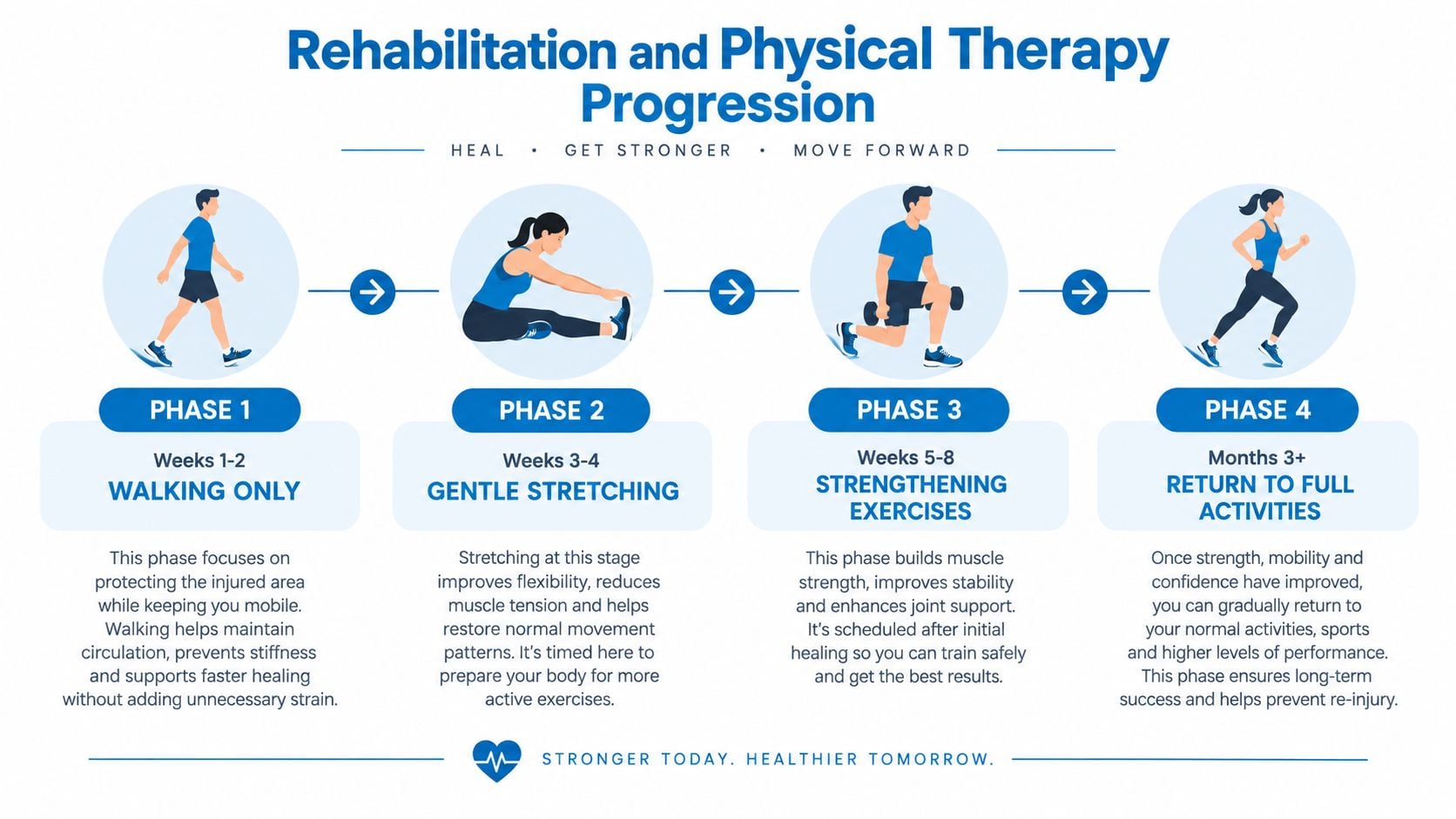
Rehabilitation after ALIF begins with movement, not aggressive strengthening. Early walking supports circulation, limits deconditioning, and gives the care team information about balance and endurance. Breathing exercises and frequent position changes may also form part of the early postoperative plan.
During the first 2 weeks, activity generally remains simple and controlled. Short walks, careful transfers, and basic self-care take priority. The patient should avoid using pain relief as a signal that the spine can tolerate lifting or twisting. Medication can reduce symptoms without changing the healing status of the fusion.
Building control before strength
Around 4 to 6 weeks, reviews support the use of structured rehabilitation for appropriate patients, although some surgeons defer formal spine-focused strengthening until 2 to 3 months to better align exercise with bony healing. Gentle movement, hip mobility, posture, and gait mechanics may be introduced when the surgeon confirms that symptoms and imaging permit progression.
The early exercises should preserve a neutral spine. Flexion, rotation, loaded forward bending, and forceful abdominal work can place stress on healing tissues and the graft. A physical therapist can modify exercises around leg symptoms, abdominal discomfort, balance limitations, and the patient's work requirements.
Progressing toward work and sport
After the early healing phase, therapy can focus on neutral-spine endurance, hip strength, controlled squatting, gait retraining, and job-specific movement. Resistance and lifting should advance only when the surgeon has reviewed symptoms and imaging. A worker who lifts boxes needs a different progression from a patient whose main goal is walking, swimming, or returning to a seated occupation.
The 2025 study found that pain could improve before physical function did. More than half of the cohort reached a clinically meaningful improvement threshold by 6 months, with additional gains through 1 year, and more than 90% had stopped narcotic medication. Those findings support patience with strengthening. A patient may be using less medication and walking well while still rebuilding strength and confidence.
Rehabilitation should answer a functional question: Can the patient perform the required movement repeatedly, with a neutral spine and without a symptom flare, rather than merely complete it once?
Why One Recovery Number Is Not Enough
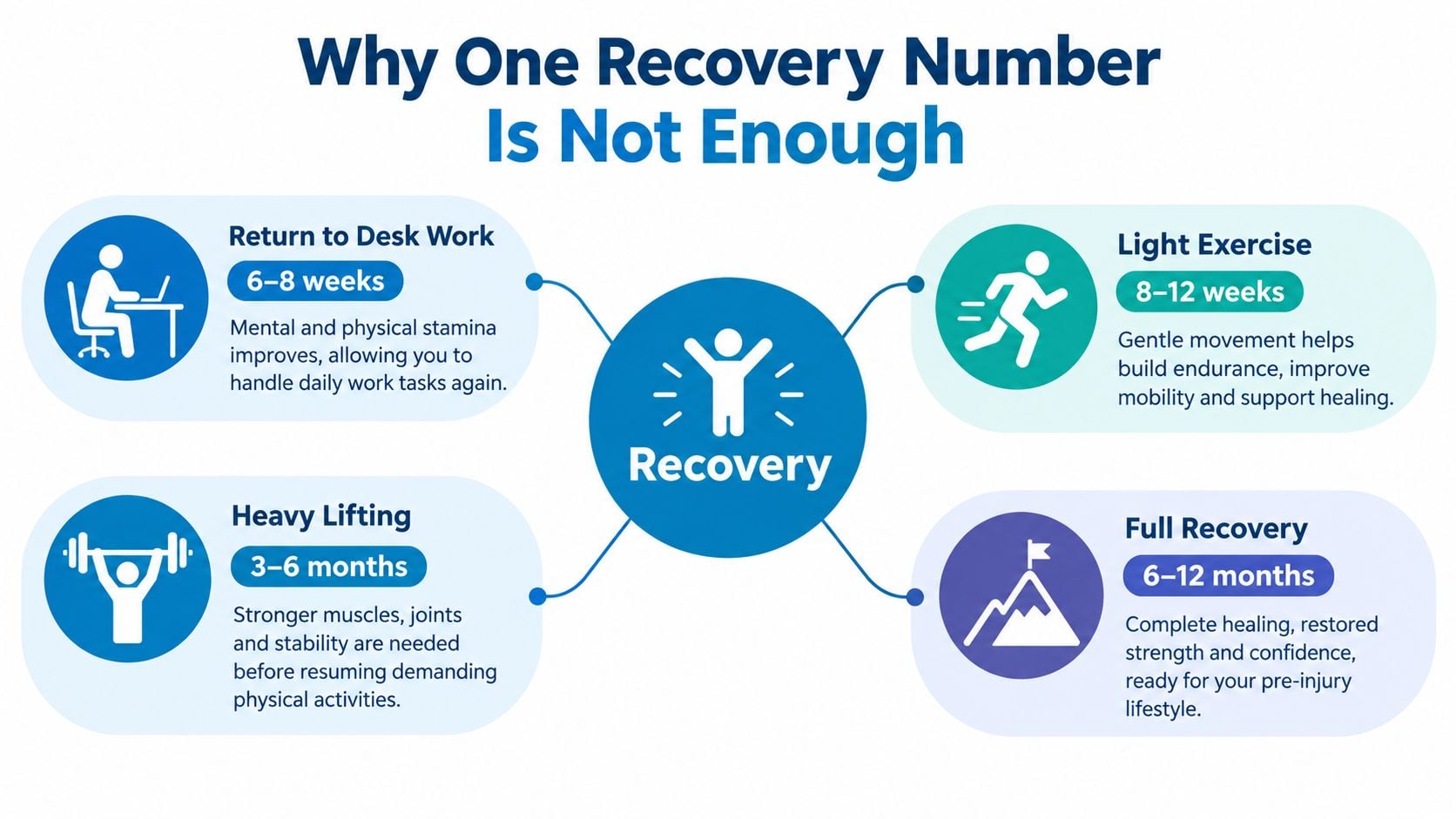
“Recovery time” can mean several different things. It might refer to the first day without severe pain, the ability to walk around the house, the return to driving, a partial work schedule, full-duty labor, or the point when imaging shows a solid fusion. Those milestones don't arrive together.
Consider two patients. A desk worker may feel ready to work after a short period but still need frequent standing breaks and a reduced schedule. A construction worker may have similar pain relief yet remain unable to lift, climb, or work on uneven surfaces safely. Treating both patients as if they share one recovery date would confuse comfort with capacity.
A 2025 single-level ALIF cohort found that more than 70% of patients reached clinically meaningful back-pain improvement by 6 weeks, while disability and overall physical health improved later and continued to gain through 1 year. The same study found that 86% returned to work during follow-up. These findings show why early improvement and complete functional recovery shouldn't be treated as interchangeable.
Subjective and objective recovery
Subjective recovery is what the patient feels. It includes pain, confidence, sleep, walking tolerance, and the ability to manage daily tasks. Objective recovery includes neurologic examination, strength, activity tolerance, hardware position, and evidence of bony bridging on follow-up imaging.
The two can disagree. A patient can feel excellent before fusion is mature, or feel stiff and weak while imaging shows appropriate progression. The correct response isn't to ignore symptoms or panic over an early image. It's to combine the clinical examination, imaging, and activity demands.
Broader prospective lumbar-fusion data found 69% returned to work by 12 months and 76% by 24 months. At 2 years, return was 86% for light work and 63% for physically demanding work, according to the prospective lumbar-fusion return-to-work study. Patients and employers should therefore ask, “When can this person safely drive, sit, lift, climb, or resume a specific sport?” That question produces a more useful plan than asking when recovery is simply “finished.”
Warning Signs and When to Call Your Surgeon
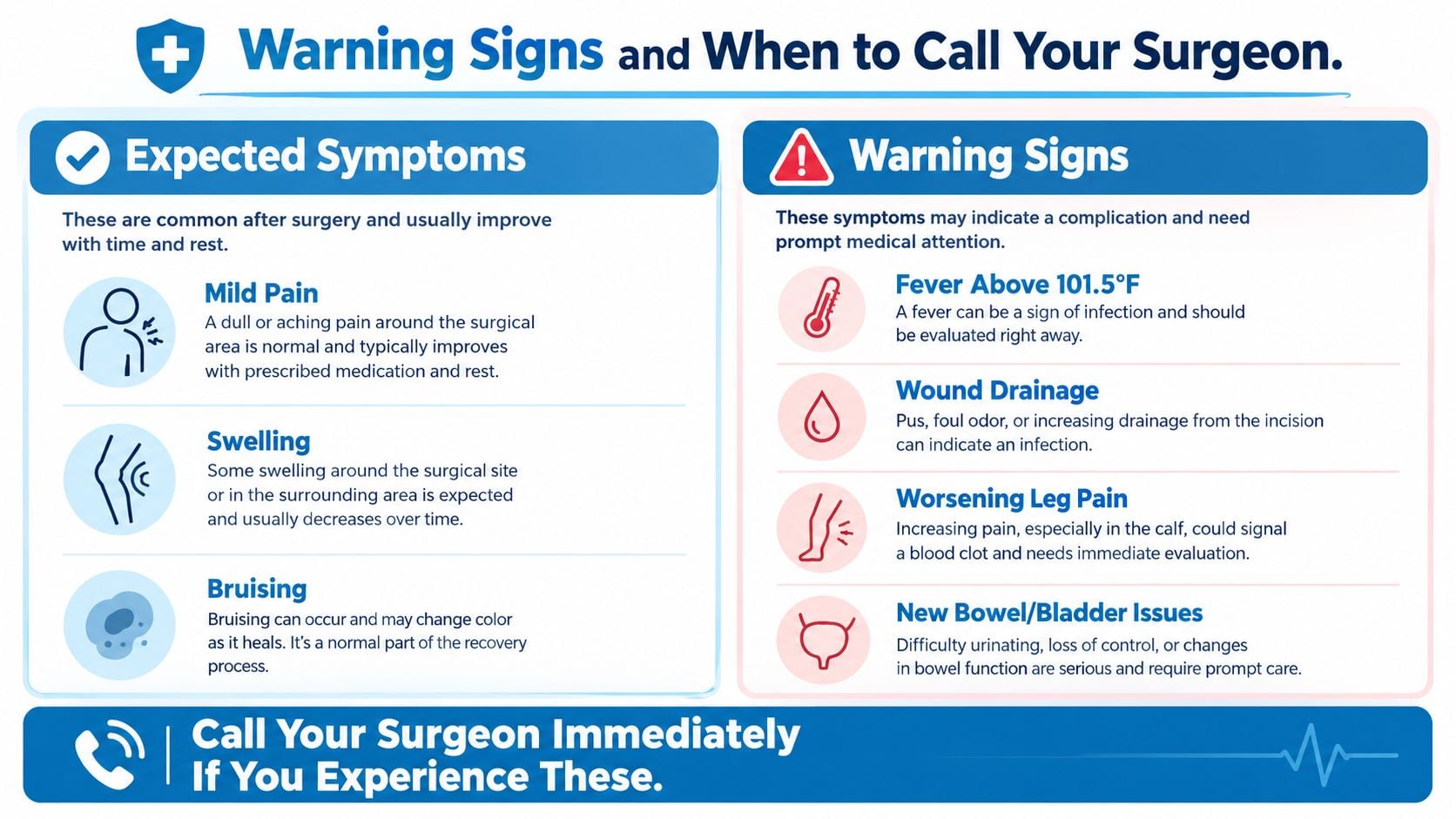
Some discomfort is expected after ALIF. Incisional soreness, bruising, swelling, stiffness, fatigue, and changing pain patterns can occur as the abdominal tissues and spine recover. Symptoms should generally trend in the right direction, even if improvement includes occasional setbacks.
A concerning symptom is not defined only by intensity. A new neurologic deficit, a wound problem, or a sudden change in function deserves attention even when the pain itself isn't severe. The surgical team should provide a patient-specific emergency plan before discharge.
Symptoms that need prompt attention
- Fever or worsening illness: Fever accompanied by increasing pain, chills, confusion, or marked weakness requires same-day clinical advice.
- Wound drainage: New drainage, spreading redness, opening of the incision, or rapidly increasing swelling should be reported promptly.
- Worsening leg symptoms: New or progressive leg pain, numbness, weakness, or difficulty walking can signal nerve irritation or another complication.
- Bowel or bladder changes: New loss of bladder or bowel control requires urgent evaluation.
- Breathing symptoms: Sudden shortness of breath, chest pain, or fainting requires emergency care rather than waiting for a routine appointment.
Protecting the healing fusion
Early lifting restrictions aren't arbitrary. Bending and twisting can increase shear across the operated level, while poorly controlled lifting can overload the implant and surrounding tissues. Patients should keep loads close to the body, hinge through the hips when permitted, and avoid combining lifting with rotation until the surgeon allows it.
Follow-up images may not show mature fusion early in the process. Bone bridging develops over time, and the surgeon may use serial radiographs or advanced imaging to assess stability. The absence of a fully solid bridge on an early study doesn't automatically indicate failure, but worsening pain, implant movement, or neurological change requires direct review.
A guide to pain after back surgery may help patients understand common postoperative discomfort, but educational material can't replace an examination when symptoms are new, progressive, or alarming. Calling the surgeon's office is safer than waiting for the next scheduled visit when a red flag appears.
Your ALIF Recovery Checklist
A checklist makes recovery easier to discuss because it connects each action with a functional milestone. Calendar dates can change, but the tasks below can be reviewed at every follow-up visit and adjusted to the surgeon's protocol.
Hospital and early home phase
- Confirm discharge instructions: Keep written guidance for wound care, medication use, walking, sleep positions, and emergency contact details.
- Use mobility support correctly: Continue with a walker or cane when balance, weakness, or outdoor terrain makes it necessary.
- Protect the incision: Check for changes in drainage, redness, separation, or swelling without applying unapproved products.
- Track medication changes: Record pain control, constipation, sedation, and opioid reduction so the clinical team can adjust treatment.
- Walk in short intervals: Frequent, manageable walks support circulation and endurance without turning one good period into an excessive workload.
Daily activity phase
- Increase walking gradually: Distance should rise only when the current level doesn't produce a significant symptom flare.
- Practice safe transfers: Use controlled log-rolling and avoid sudden twisting when getting in or out of bed.
- Confirm driving clearance: The patient should be off impairing medication, sit comfortably, control the vehicle, and perform an emergency stop before resuming driving.
- Plan desk work in stages: Start with position changes, shorter sessions, and remote or modified duties when available.
- Keep a symptom record: Note pain location, leg symptoms, walking tolerance, sleep, and the response to each activity change.
Rehabilitation and work phase
- Ask when therapy should begin: Structured rehabilitation may start around 4 to 6 weeks for appropriate patients, while some strengthening protocols wait until 2 to 3 months, as described in the earlier evidence.
- Progress the neutral spine: Build hip mobility, gait control, trunk endurance, and work-specific movement before adding heavier resistance.
- Separate light duty from full duty: A patient may be ready for sedentary tasks while remaining restricted from lifting, repetitive bending, twisting, or climbing.
- Bring job demands to follow-up: The surgeon needs the actual lifting, standing, driving, and climbing requirements rather than only the job title.
- Review imaging as scheduled: Follow-up studies help determine whether the implant remains stable and whether fusion is progressing.
The final checklist item is the most important: confirm every restriction with the operating surgeon. Surgical levels, fixation, bone quality, symptoms, imaging, and complications can change the plan, so a generic timeline should guide questions, not replace medical clearance.
Interventional Pain Management evaluates spine conditions, postoperative pain, and functional limitations through coordinated pain management, orthopedic, and spine services. Patients considering ALIF or struggling with recovery can visit Interventional Pain Management to review available evaluation and treatment options with a qualified clinical team.