

Nerve blocks aren't one interchangeable treatment. Which nerve block fits the pain pattern depends on whether the suspected source is an irritated spinal nerve root, a facet joint, a limb nerve, a sympathetic nerve pathway, or a smaller peripheral nerve. An epidural may address radiating leg or arm pain, while a medial branch block may test whether a facet joint is generating axial back or neck pain. A femoral or sciatic block may numb a limb for surgery, whereas a stellate ganglion block affects sympathetic signaling in the head, neck, arm, or hand.
A useful comparison looks at where the medication goes, why clinicians use the procedure, how relief may develop, what the patient may feel, and which limitations or safety issues deserve discussion. Some injections are mainly therapeutic. Others are diagnostic and help determine whether a later treatment, such as radiofrequency ablation, is appropriate.
The treating clinician selects a procedure after reviewing symptoms, performing an examination, considering medical history, and reviewing imaging when indicated. The eight types of nerve block injections below are organized by the pain pattern and body region they address, not by a claim that one option is universally better than another.
Table of Contents
- 1. Epidural Steroid Injection
- 2. Interscalene Nerve Block
- 3. Femoral Nerve Block
- 4. Sciatic Nerve Block
- 5. Stellate Ganglion Block
- 6. Transforaminal Epidural Steroid Injection
- 7. Medial Branch Block and Radiofrequency Ablation
- 8. Peripheral Nerve Blocks
- Comparison of 8 Nerve Block Injection Types
- Turn the Comparison Into a Safer Care Conversation
1. Epidural Steroid Injection
An epidural steroid injection places corticosteroid medication and local anesthetic into the epidural space around the spinal cord and nerve roots. Clinicians commonly consider it when inflammation around a spinal nerve contributes to radiculopathy, sciatica, or symptoms associated with spinal stenosis. The goal isn't to repair a disc or reverse narrowing. It is to reduce irritation enough to support movement, rehabilitation, and a broader treatment plan.
Pain may travel from the low back into the leg or from the neck into the arm. A patient with a disc herniation may therefore receive an epidural after an examination and imaging review connect the symptoms to a particular spinal level. Relief can be temporary, and it may last weeks to months. A clinician should explain what improvement would count as meaningful, such as better walking, sleep, or participation in physical therapy.
Learn more about corticosteroid injections and how they may fit into an individualized pain plan.
What the procedure involves
The patient is positioned so the clinician can approach the epidural space accurately. Imaging guidance helps confirm the level and needle position before medication is delivered. The approach may be selected according to the symptom pattern, anatomy, and location of the suspected nerve irritation.
The injection can cause pressure, brief discomfort, or a temporary change in sensation. Afterward, the patient may be monitored for changes in pain, strength, and sensation before leaving. The clinician should also review medication use, infection risk, bleeding concerns, diabetes management when relevant, and any history of reactions to the planned medicines.
Practical rule: An epidural should support a treatment plan, not replace the examination that identifies why the nerve is irritated.
A pain diary and functional baseline can make follow-up more useful. If pain improves enough for therapy, strengthening, or movement training, that window may be clinically valuable even when the injection doesn't provide permanent relief.
2. Interscalene Nerve Block
An interscalene nerve block targets the brachial plexus in the neck, between the scalene muscles. The brachial plexus is a network that carries signals toward the shoulder and upper limb, so one carefully placed injection can provide anesthesia or analgesia across a broad shoulder region. It is especially associated with shoulder surgery and can also be considered for selected upper-extremity pain patterns.
A patient undergoing rotator cuff repair may receive an interscalene block as part of surgical anesthesia or postoperative pain control. A patient with a painful shoulder flare may discuss a block when other measures haven't provided sufficient relief. The expected effect depends on the local anesthetic, the procedure, the patient's anatomy, and whether the block is intended for surgery, short-term recovery, or diagnostic information.

Why breathing history matters
The nerves in this area lie near structures involved in breathing. A temporary change in diaphragm function can occur, and some patients notice short-lived hoarseness or altered sensation. Those effects make a respiratory history important before the injection, particularly for patients with limited lung reserve or breathing disorders.
Ultrasound guidance allows the clinician to identify anatomy and observe the spread of local anesthetic. The clinician may consider a lower-volume technique or a different brachial plexus approach when respiratory risk makes an interscalene block less suitable. The patient should also understand that a numb arm may feel heavy and that weakness can affect dressing, transfers, and safe walking.
What recovery may require
The blocked limb needs protection until normal sensation and strength return. Patients may need assistance with daily activities and should follow the treating team's instructions about driving, supervision, and postoperative exercises. The duration of numbness varies, so the discharge plan should explain what is expected and which symptoms require urgent contact.
3. Femoral Nerve Block
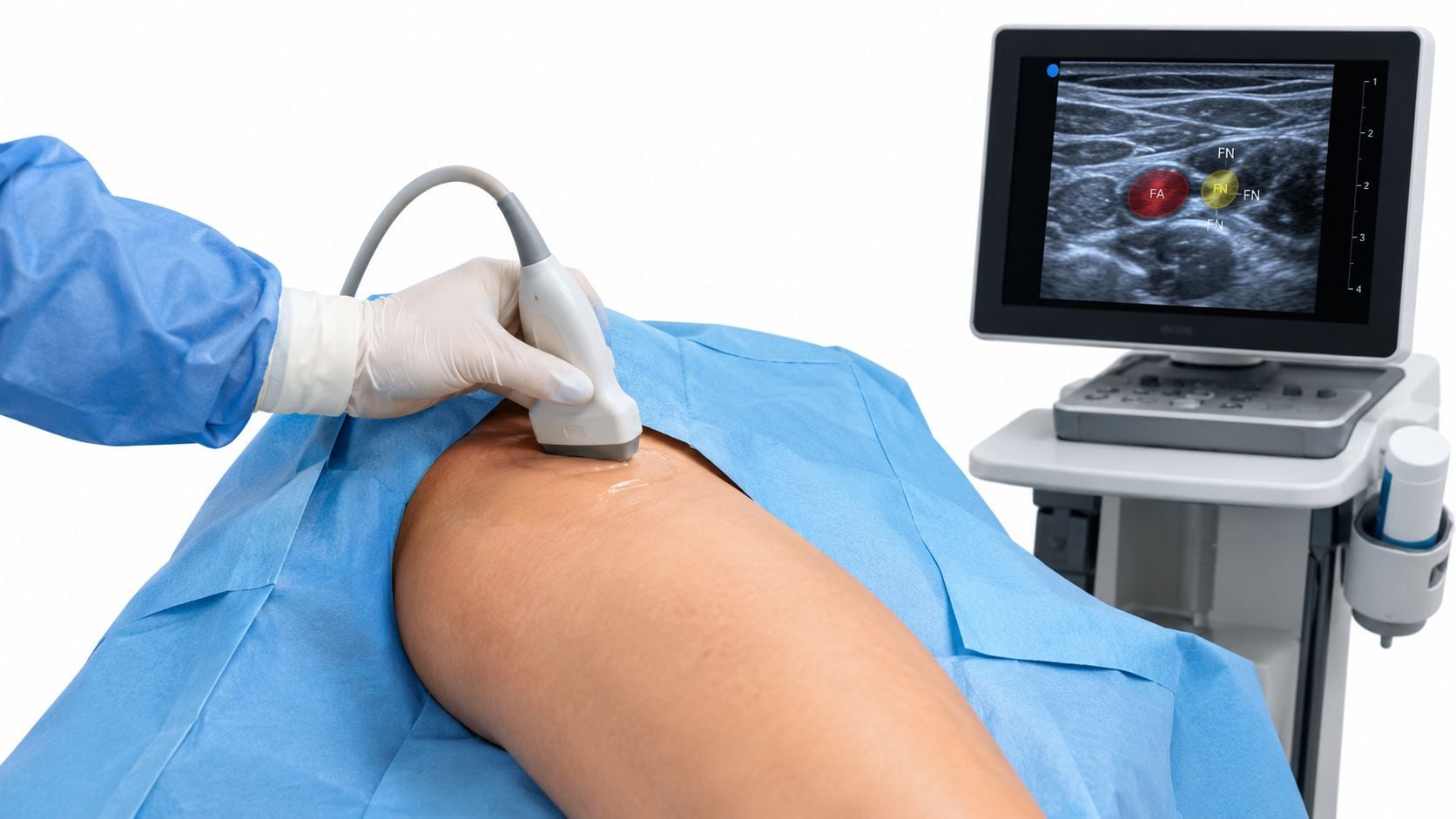
The femoral nerve block places local anesthetic near the femoral nerve in the groin region. It can reduce sensation from the front and inner thigh and contribute to anesthesia or pain control around the knee and parts of the lower limb. Clinicians may use it for knee procedures, femur-related injuries, or selected anterior knee pain patterns.
The procedure is not a complete solution for every knee operation. The knee receives input from several nerves, and a femoral block may need to be combined with another regional technique when broader surgical coverage is required. A patient having knee surgery should therefore ask which parts of the knee and leg the planned block will affect and whether another anesthetic method will be used.
The main practical limitation
Femoral nerve blockade can weaken the quadriceps temporarily. That matters because the quadriceps helps stabilize the knee during standing and walking. A patient may have less pain but still be unsafe on stairs or while transferring without support. Fall precautions are therefore part of the treatment, not an optional extra.
Ultrasound helps the clinician identify the femoral nerve and nearby vessels before advancing the needle. The injection is placed beside the nerve rather than into it, and the patient's motor and sensory status should be assessed before discharge when the block is used for surgical anesthesia.
Matching relief to rehabilitation
The useful period isn't only the time when pain is absent. If a patient can begin prescribed exercises, participate in therapy, or rest more comfortably, the block may support recovery. However, reduced pain can also hide strain or injury, so the rehabilitation plan must account for temporary numbness and weakness rather than treating the blocked limb as fully normal.
4. Sciatic Nerve Block
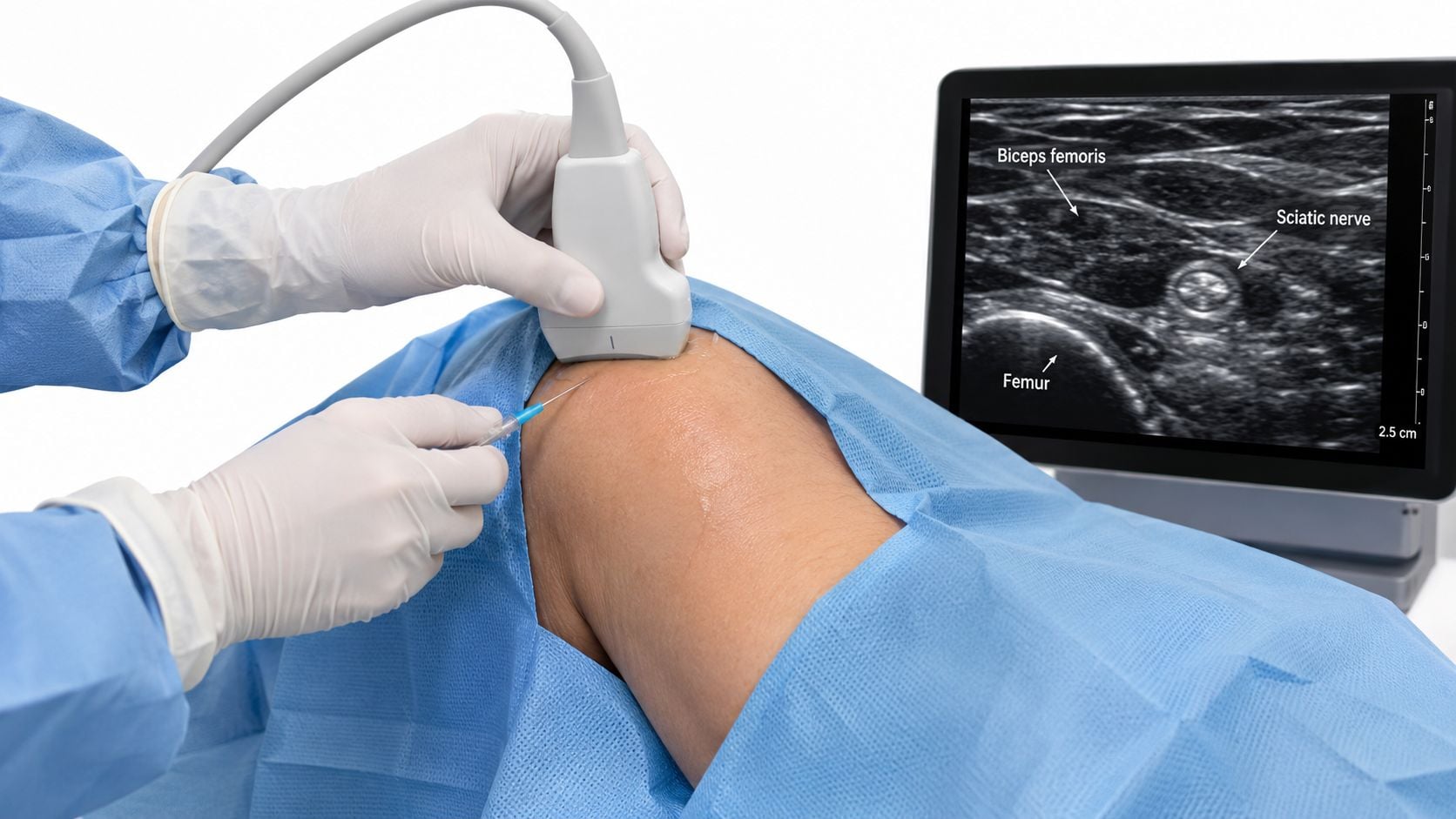
A sciatic nerve block targets the large nerve that supplies much of the back and outer part of the lower limb. Depending on the approach, the block may provide anesthesia or analgesia for the posterior thigh, calf, ankle, and foot. Clinicians use it for lower-leg and foot surgery and may combine it with a femoral block when the planned procedure requires broader lower-extremity coverage.
The injection site changes according to the surgical or pain location. A popliteal approach may suit procedures involving the ankle or foot, while a more proximal approach may be considered for pain or surgery higher in the leg. This distinction matters because “sciatic block” describes a nerve target, not one identical injection technique.
A block with a wide sensory territory
A blocked foot may feel numb, heavy, or difficult to move until the anesthetic wears off. That can provide valuable surgical pain control, but it also increases the need for protection from heat, pressure, falls, and accidental injury. The patient should receive clear instructions about walking, weight-bearing, and assistance.
Ultrasound guidance helps the clinician see the nerve and the medication's spread. Baseline strength and sensation should be documented before the block when postoperative comparison will matter. A careful technique aims to place the needle near the nerve without penetrating it or injecting into a blood vessel.
Where it fits in decision-making
A foot fracture, Achilles repair, or another lower-limb procedure may involve more than one source of pain. The clinician may select the approach based on the incision, the expected surgical field, and the areas that need postoperative coverage. If the block is being discussed for chronic pain rather than surgery, the clinician should explain whether it is intended as a therapeutic trial, a diagnostic step, or a temporary aid to rehabilitation.
The National Anesthesia Clinical Outcomes Registry data provide context for how these blocks are used in practice. Among 12,911,056 outpatient surgeries, 3,297,372 cases, or 25.5%, were considered amenable to a peripheral nerve block, while the overall PNB frequency was 3.3% of possible cases. The same study reported utilization rates of 6.1% for brachial plexus blocks, 1.5% for sciatic blocks, and 1.9% for femoral blocks, with increases in single-injection and continuous PNB use over time. The registry findings are available through PubMed.
5. Stellate Ganglion Block
A stellate ganglion block targets a sympathetic nerve cluster in the lower neck. Unlike a femoral or sciatic block, it isn't designed primarily to numb a limb for surgery. It is considered for pain involving the upper extremity, hand, head, face, or neck when sympathetic signaling may contribute to the symptoms. Clinicians may discuss it in selected cases of complex regional pain syndrome, neuropathic pain, or vascular symptoms.
A patient who develops persistent hand pain and sensitivity after a wrist injury may receive an evaluation for complex regional pain syndrome. A stellate ganglion block may then be considered alongside physical therapy and other treatments. The procedure can also be discussed when altered sympathetic activity appears connected with changes in blood flow, temperature, or sweating.

Recognizing expected effects
A temporary drooping eyelid, smaller pupil, or change in facial warmth can occur when the sympathetic pathway is affected. These findings may help confirm that the intended pathway was reached, but the clinician should explain them before the injection so they don't cause unnecessary alarm. New or severe symptoms still require medical assessment.
Ultrasound or fluoroscopy can help identify the target and nearby structures. The neck contains blood vessels and structures close to the chest, so careful needle advancement and observation after the procedure matter. Breathing symptoms or chest discomfort should be reported promptly.
Relief isn't the whole measure
The relevant outcome may include improved hand use, better tolerance of touch, or greater participation in therapy, not only a lower pain score. A clinician should document the baseline appearance, temperature, sensation, movement, and function of the affected area so later changes can be interpreted accurately. The block may be one component of a broader plan rather than a stand-alone cure.
6. Transforaminal Epidural Steroid Injection
A transforaminal epidural steroid injection, or TFESI, delivers medication into the epidural space through the opening where a spinal nerve exits. This route can focus treatment near a particular nerve root, making it distinct from an epidural approach that spreads medication more broadly in the epidural space. Clinicians may consider it for unilateral radiculopathy, especially when imaging and symptoms point to a specific compressed or irritated nerve.
A patient with right-sided leg pain from a disc herniation may be evaluated for a targeted injection at the corresponding nerve level. Another patient may have several abnormal findings on imaging but symptoms that clearly follow only one nerve pathway. In that situation, the examination and symptom pattern help determine whether a targeted approach is reasonable.
Read about lumbar epidural steroid injections as part of a discussion with a qualified clinician.
Why imaging correlation is essential
A scan can show disc changes that aren't causing the patient's symptoms. The clinician therefore compares imaging with the neurological examination, pain distribution, strength, reflexes, and sensory findings. The injection should not be selected from an imaging report alone.
Fluoroscopy helps visualize the bony landmarks and the foramen. The clinician may use contrast or another confirmation step to check the medication's path and avoid an unintended vascular injection. Patients should ask which nerve root is being targeted and what result would support continuing conservative care, physical therapy, or another treatment.
A targeted injection is most useful when the target is clinically justified, not merely visible on a scan.
Relief and limitations
Some patients experience rapid improvement, while others notice little change. Relief may be temporary, and a successful response doesn't mean that the disc or narrowing has disappeared. The injection may create a rehabilitation opportunity, help clarify the pain generator, or delay a more invasive decision, but its role depends on the patient's neurological status and overall plan.
7. Medial Branch Block and Radiofrequency Ablation
Facet joints connect the bones of the spine and can contribute to axial neck or back pain. A medial branch block places local anesthetic near the small nerves that carry signals from those joints. The immediate response is used diagnostically. If the pain improves in a way that matches the expected anesthetic period, the clinician may consider radiofrequency ablation, which uses controlled heat to interrupt those nerve signals for a longer period.
This sequence is different from an injection intended only to reduce inflammation. A patient with suspected facet-related lumbar pain may first undergo a diagnostic block. A patient with neck pain related to cervical facet arthritis may follow the same general logic. The block tests a pain source, while ablation is a separate treatment decision.
Diagnostic relief has a specific meaning
The patient should record pain during activities that normally provoke symptoms, such as standing, turning, or extending the neck. A lower pain score at rest alone may not answer whether the facet joint is responsible. The clinician interprets the response with the examination, imaging, and functional changes.
Fluoroscopy guides needle placement near the medial branches. Sensory and motor testing may help confirm the location before ablation. The procedure requires careful attention to nearby nerves and structures, and the patient should receive instructions about temporary soreness, activity, and follow-up.
Why expectations need precision
Radiofrequency ablation doesn't restore a damaged facet joint. It interrupts selected pain signaling pathways, and relief can change as the nerves recover. Some patients may obtain meaningful functional improvement, while others may not respond because the facet joints weren't the primary pain source or because several pain generators are present.
The clinician should explain whether the proposed block is diagnostic, therapeutic, or both. That distinction keeps a short-term anesthetic response from being mistaken for a permanent result.
8. Peripheral Nerve Blocks
Peripheral nerve blocks target individual nerves or small nerve fields outside the central nervous system. Examples include the suprascapular nerve for selected shoulder pain, the saphenous nerve for part of the knee region, genicular nerves for knee pain, and occipital nerves for some headache patterns. Because the target is more localized, the procedure may focus relief on a specific area rather than an entire limb or spinal region.
A patient recovering from shoulder surgery may discuss a suprascapular block to support rehabilitation. A patient with knee pain may be evaluated for a genicular nerve block when the clinician believes those nerves contribute to symptoms. A patient with pain at the back of the head may discuss an occipital nerve block after other causes have been assessed.
Explore nerve block injections and the questions a patient can bring to a pain consultation.
Local targeting brings local limitations
The blocked area may become numb or develop temporary tingling. That can make movement easier, but it can also reduce protective sensation. The patient should avoid pressure, heat, or unprotected activity until normal sensation returns and should follow the clinician's instructions about driving and exercise.
Ultrasound can help identify a small nerve and show the spread of medication. The clinician considers anatomy, the patient's symptoms, prior treatment, bleeding risk, infection risk, and the intended goal before choosing an anesthetic or adding a steroid. A baseline record of pain, range of motion, and function makes the result easier to assess.
A peripheral block may be therapeutic, diagnostic, or part of planning for another intervention. Its value depends on whether the change in symptoms supports the suspected nerve as a meaningful pain source. It shouldn't be presented as proof that every pain complaint in the same body region comes from that nerve.
The broader history of peripheral nerve blockade shows how these procedures developed. In the 1880s, Halsted and Hall used cocaine injections to produce sensory block in several regions. In 1903, Braun added epinephrine and called it a “chemical tourniquet.” In 1920, Labat published Regional Anesthesia, technique and application, a milestone text describing peripheral nerve blockade techniques and approaches. A historical review of regional anesthesia describes the progression from early experiments to more structured clinical methods.
Comparison of 8 Nerve Block Injection Types
| Procedure | 🔄 Implementation Complexity | ⚡ Resource Requirements | ⭐ Expected Outcomes | 📊 Ideal Use Cases | 💡 Key Advantages |
|---|---|---|---|---|---|
| Epidural Steroid Injection (ESI) | Moderate, image‑guided; multiple approaches | Fluoroscopy/US, corticosteroid, trained interventionalist | ⭐⭐⭐⭐, High for radiculopathy; temporary (weeks–months) | Sciatica, lumbar radiculopathy, spinal stenosis | Reduces inflammation at source; diagnostic value; can delay surgery |
| Transforaminal Epidural Steroid Injection (TFESI) | High, precise foraminal needle placement under fluoroscopy | Fluoroscopy, targeted steroid, experienced operator | ⭐⭐⭐⭐, Superior for unilateral radiculopathy; rapid onset (24–48h) | Single‑level nerve root compression, unilateral disc herniation | Higher local steroid concentration; rapid relief; diagnostic confirmation |
| Interscalene Nerve Block | Moderate–High, cervical anatomy, risk management | Ultrasound, local anesthetic, anesthesia team, monitoring | ⭐⭐⭐⭐, Excellent for shoulder/upper arm anesthesia (hours) | Shoulder surgery, post‑op analgesia, chronic shoulder pain | Superior analgesia, reduces opioids, enables faster recovery |
| Femoral Nerve Block | Moderate, ultrasound‑guided, straightforward anatomy | Ultrasound, local anesthetic, trained provider | ⭐⭐⭐, Excellent for anterior knee; may cause quadriceps weakness | Knee arthroplasty, ACL/MCL repair, anterior thigh pain | Strong knee pain control; opioid sparing; supports early rehab |
| Sciatic Nerve Block | Moderate–High, multiple approaches; anatomic expertise | Ultrasound, local anesthetic, experienced operator | ⭐⭐⭐⭐, Excellent for foot/ankle; full lower leg when combined | Foot/ankle surgery, posterior leg procedures, combined lower‑limb blocks | Comprehensive distal limb anesthesia; multiple approach options |
| Stellate Ganglion Block (SGB) | High, cervical sympathetic anatomy; higher complication risk | Ultrasound/fluoroscopy, local anesthetic, skilled operator, monitoring | ⭐⭐⭐, Effective for CRPS/neuropathic upper‑extremity pain; transient effects | CRPS, post‑herpetic neuralgia, vascular insufficiency of upper limb | Sympathetic blockade reduces pain and improves blood flow; aids rehab |
| Medial Branch Block + RFA | High, diagnostic block then RF ablation; technical workflow | Fluoroscopy, RF generator/electrodes, trained interventionalist | ⭐⭐⭐⭐, Sustained relief (≈6–12 months) for facet‑mediated pain | Degenerative facet arthropathy, axial neck/back pain unresponsive to conservative care | Diagnostic clarity; longer‑lasting relief than injections; repeatable |
| Peripheral Nerve Blocks (targeted fields) | Low–Moderate, many specific nerve targets; operator dependent | Ultrasound, local anesthetic ± steroid; office or clinic setting | ⭐⭐⭐, Good short‑term regional relief (1–4 weeks typical) | Suprascapular for shoulder, occipital for headaches, genicular for knee OA | Minimal systemic effects, office‑based, repeatable and cost‑effective |
Turn the Comparison Into a Safer Care Conversation
The right question isn't just which of the types of nerve block injections sounds strongest. The more useful question is which structure most plausibly explains the pain pattern and whether a temporary interruption of signaling can support diagnosis, treatment, surgery, or rehabilitation. A radiating leg symptom may lead to discussion of an epidural or transforaminal approach. Anterior knee pain may prompt consideration of a femoral or more localized peripheral target. Axial neck or back pain may require a diagnostic discussion about the medial branches rather than an assumption that every spinal symptom comes from a disc.
Patients should ask what structure the clinician intends to target and why. They should also ask whether the procedure is primarily diagnostic, therapeutic, or part of treatment planning. A diagnostic block can provide useful information without guaranteeing that a later procedure will work. A therapeutic injection may reduce symptoms without correcting the underlying structural problem.
Image guidance deserves a direct question as well. Fluoroscopy and ultrasound serve different practical purposes, and the selected method should match the anatomy and procedure. Patients can ask how the clinician will confirm needle position, how nearby vessels or organs will be protected, and what symptoms should be reported during or after the injection.
Relief and numbness don't follow one universal timetable. A local anesthetic may change sensation quickly, while an anti-inflammatory effect may develop differently. The patient should ask how long numbness or weakness may last, what degree of improvement is expected, and how the team will judge whether the procedure helped. The strongest measure may be improved walking, sleep, range of motion, or therapy participation rather than pain reduction alone.
A safer plan explains both the intended benefit and the limits of the injection.
Weakness affects practical safety. A femoral or sciatic block can change walking and balance. An interscalene block can raise specific breathing considerations. A neck procedure can cause temporary changes that need explanation before they occur. Patients should ask whether someone must provide transportation, whether driving should be avoided, how the blocked area should be protected, and when normal activity can resume.
Medication and medical history also matter. The treating clinician needs to know about blood-thinning medicines, allergies, infection, diabetes, breathing conditions, prior surgery, neurological symptoms, and previous reactions to anesthesia or injections. Patients shouldn't stop prescribed medication without instructions from the appropriate clinician.
Follow-up completes the comparison. A block may work best when its relief creates time for physical therapy, strengthening, movement retraining, or another evidence-informed treatment. A pain diary that records symptoms and function can help the clinical team distinguish short-lived numbness from meaningful improvement.
Interventional Pain Management and Ortho-Spine Center evaluates back, neck, joint, and nerve-related conditions through an individualized, multidisciplinary plan. Its board-certified physicians work across pain management, anesthesiology, orthopedics, and spine surgery, with options that may include non-invasive care, image-guided injections, orthopedic treatment, spine procedures, and rehabilitation coordination. That range doesn't mean every patient needs an injection or surgery. A qualified clinician must determine whether a block is appropriate after reviewing the person's symptoms, examination, medical history, and imaging when indicated.
Interventional Pain Management offers targeted nerve blocks, epidural injections, medial branch procedures, and coordinated orthopedic and spine evaluations for patients in New Jersey and Staten Island. Readers can discuss the pain pattern, likely target, safety considerations, and next treatment step by visiting Interventional Pain Management.