
A patient may leave the hospital feeling relieved that the operation is over, then become anxious when the back remains stiff, sleep is difficult, and ordinary movements feel unfamiliar. Another patient may notice leg pain improving within weeks but still wonder why the surgeon continues to restrict lifting and twisting. Both experiences can be part of a normal lumbar fusion surgery recovery.
The confusion usually comes from treating recovery as one countdown. Lumbar fusion involves several overlapping processes, and each follows a different schedule. Pain relief, walking ability, return to work, and bone healing can improve at separate speeds. Understanding those differences helps patients interpret progress more accurately and avoid pushing the spine before the fusion is ready.
Table of Contents
- Understanding the Stages of Spinal Healing
- Tracking Your Mobility and Functional Milestones
- Protecting the Fusion Construct in Early Weeks
- Progressing Through Physical Therapy and Rehabilitation
- Managing Pain and Exploring Interventional Options
- Recognizing Complications and Non-Linear Healing
- Partnering with a Multidisciplinary Spine Care Team
Understanding the Stages of Spinal Healing
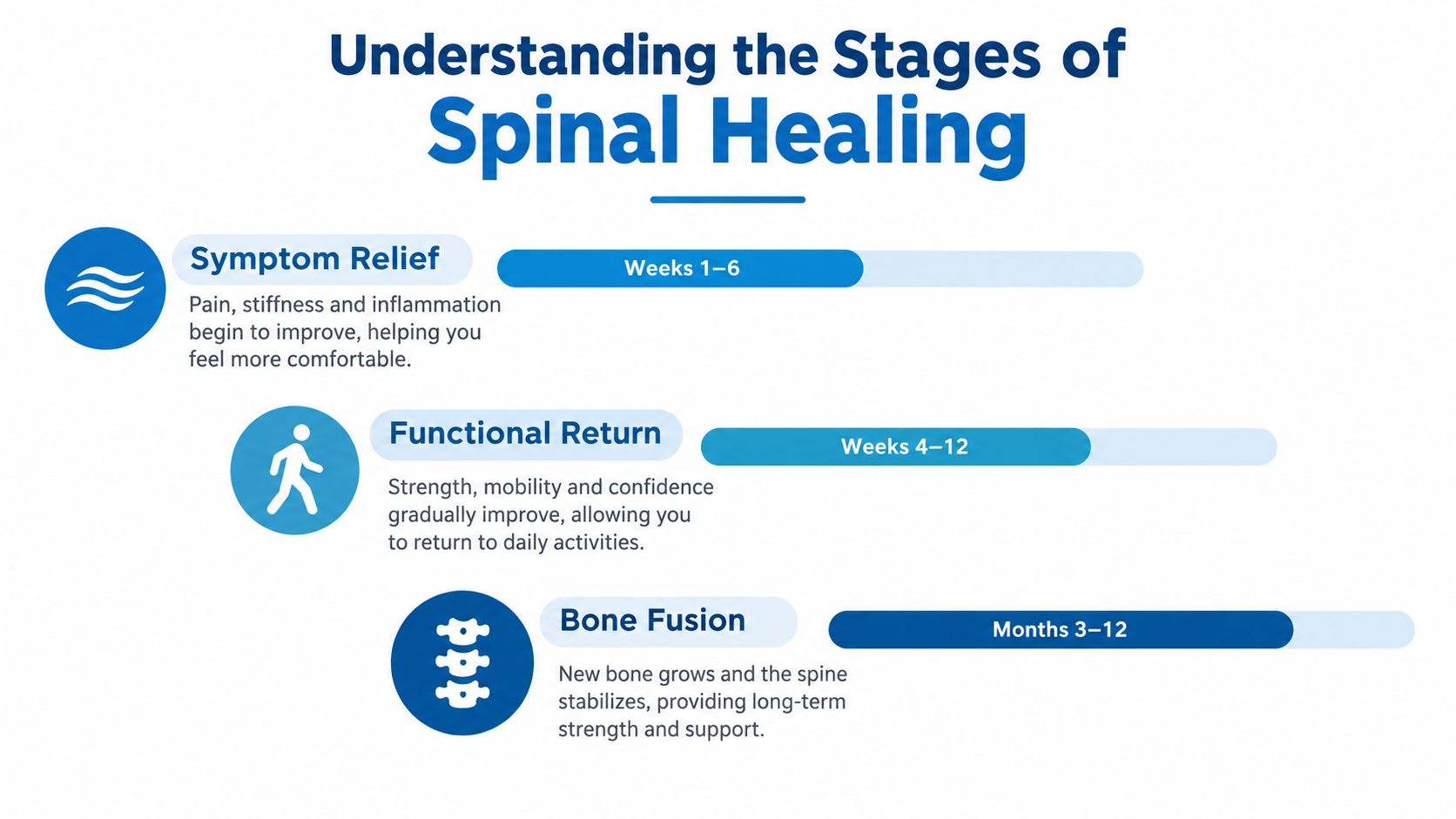
A patient named Daniel might describe recovery this way: the sharp pain traveling down his leg eased early, walking became easier over the following weeks, but follow-up imaging still showed that the fusion was maturing. He felt better before the vertebrae had biologically joined into one stable segment. That sequence isn't contradictory. It reflects the difference between symptom relief, functional recovery, and arthrodesis, the medical term for bone fusion.
A 2025 review explains that complete recovery after spinal fusion usually takes 6 to 9 months, while the fusion itself continues to mature for 12 to 18 months. The same review of lumbar fusion recovery milestones reports that pain and disability often improve markedly during the first 3 months, even though structural healing continues much longer.
Why feeling better doesn't mean the fusion is complete
The operation stabilizes a painful spinal segment with hardware and bone graft material. The hardware provides early support, while the graft and surrounding bone gradually develop a solid bridge. Information about the role of graft material is available in this guide to bone grafting in spinal procedures.
During the early phase, tissues around the incision are healing, irritated nerves may be settling, and muscles are adapting to changed spinal mechanics. Pain can decline while the bone bridge remains immature. That's why a patient may be allowed to walk but still be told to avoid bending, lifting, and twisting.
Three timelines, not one
Symptom relief concerns pain, numbness, tingling, and the disability caused by the original condition. Functional return concerns walking, sitting, personal care, work, and other daily activities. Bone fusion concerns the biological union visible through clinical follow-up and imaging.
These milestones overlap, but they aren't interchangeable. A patient who can walk farther has achieved a meaningful functional gain, but that improvement alone can't confirm that the vertebrae have fused. Conversely, a patient whose imaging is progressing may still experience muscular soreness or fatigue while strength and endurance return.
Clinical perspective: Feeling improved is encouraging, but only the treating surgical team can determine whether structural healing is progressing appropriately.
Tracking Your Mobility and Functional Milestones
Mobility gives patients a practical way to observe recovery without demanding that every day feel better than the last. A short walk, a safer transfer from bed to chair, or the ability to stand long enough to prepare a meal can represent genuine progress, even when stiffness remains. The useful question isn't whether a patient feels completely normal. It's whether function is gradually expanding without a sustained worsening trend.
Objective recovery data help explain why fusion patients shouldn't compare themselves with someone who underwent a less extensive decompression procedure. In a 2025 observational study, patients who had fusion reached their preoperative daily step-count level at an average of 6.5 weeks, compared with 4.5 weeks for decompression patients. The study of postoperative recovery kinetics indicates that fusion generally involves a slower functional rebound.
Measuring progress without creating pressure
A simple recovery log can record walking tolerance, sitting tolerance, sleep quality, medication changes, and symptoms in the legs. The record should focus on patterns across several days rather than one difficult afternoon after an unusually active morning.
Useful milestones include:
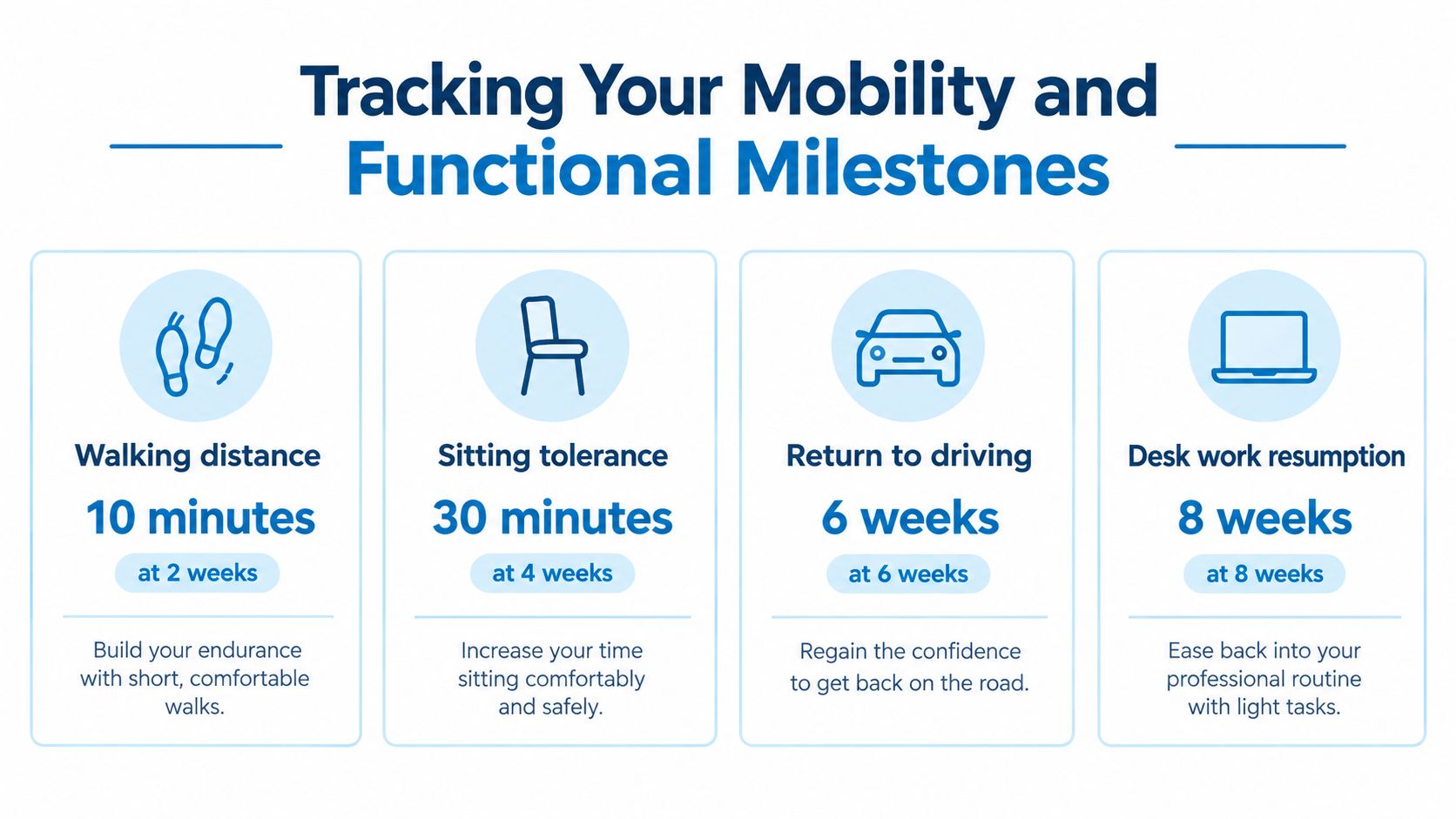
- Walking quality: The patient can walk with a steadier pattern, fewer pauses, and less protective guarding.
- Position changes: Bed transfers and standing from a chair require less assistance while neutral-spine mechanics are maintained.
- Daily endurance: Light self-care becomes possible without a prolonged symptom flare afterward.
- Functional confidence: The patient can plan necessary activities around rest periods instead of avoiding movement altogether.
A 2025 study of patients undergoing 1- to 3-level lumbar fusion for degenerative conditions found that about 59% achieved clinically significant functional improvement by 3 months, rising to approximately 69% by 1 year. Those findings show why an early plateau doesn't necessarily represent failure. A substantial portion of measurable improvement may continue over many months.
Returning to work requires more than a calendar date
Work capacity depends on the physical demands of the job, the ability to change positions, medication effects, and the surgeon's restrictions. A desk-based role may require sitting tolerance and frequent movement breaks, while manual work requires additional strength, control, and clearance.
The review cited above places the median return-to-work time after lumbar fusion at about 10 weeks. That figure describes a population-level midpoint, not a promise for an individual patient. A safe return plan should be based on demonstrated function and medical clearance, not pressure to match someone else's timeline.
Protecting the Fusion Construct in Early Weeks
The first postoperative weeks can feel deceptively confusing. A patient may be mobile enough to walk around the home but not ready to lift a laundry basket, twist into a car seat, or repeatedly bend over. The ability to perform one movement doesn't mean the healing tissues can tolerate repeated loading.
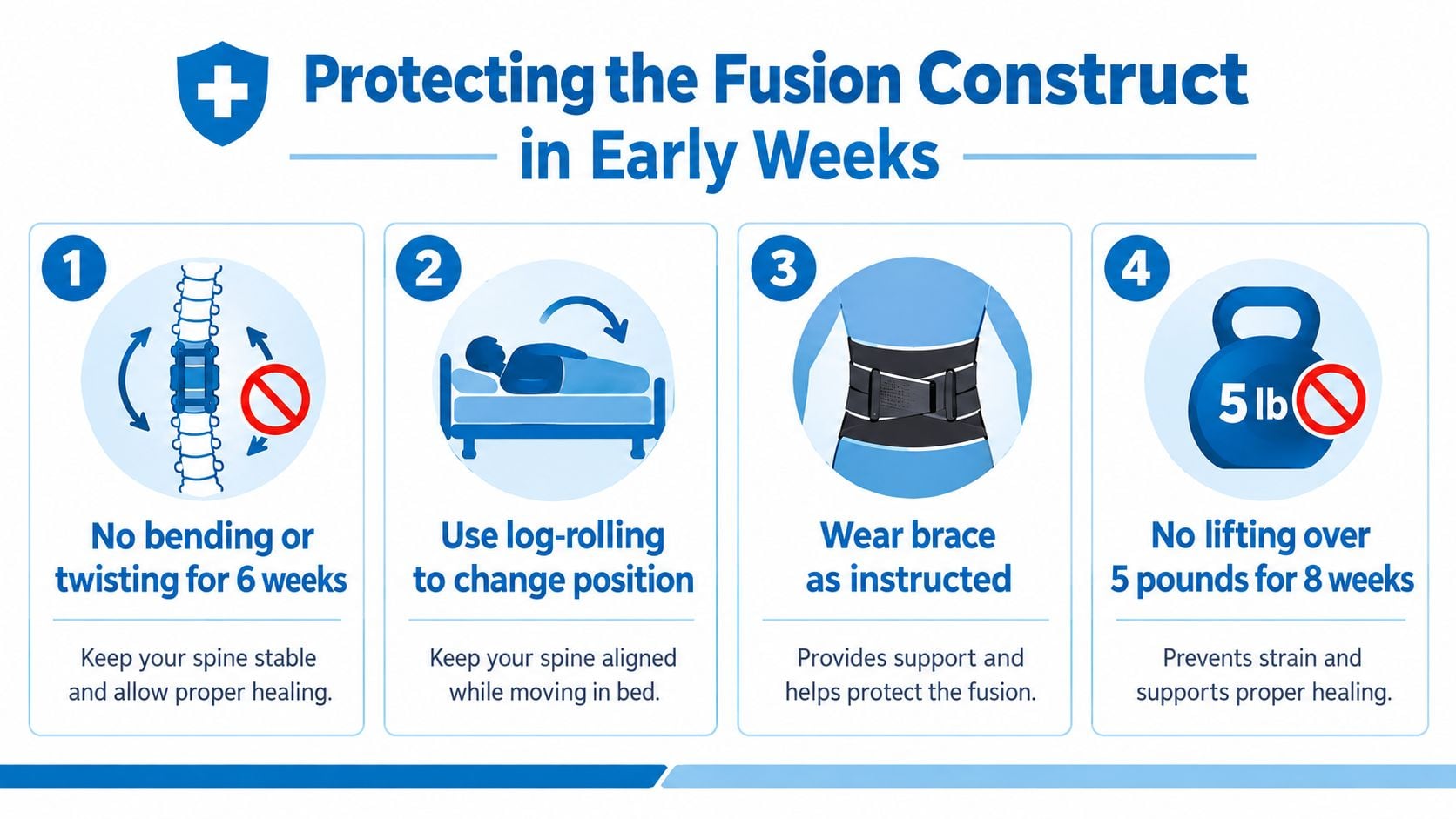
Clinicians commonly use a 12-week motion restriction window while the fusion develops early biological stability. The exact rules differ by procedure and patient, so the surgeon's instructions remain decisive. The purpose isn't to keep a patient motionless. It's to prevent avoidable stress on the construct while encouraging safe, controlled activity.
Applying the BLT rule
Bending at the waist increases pressure through the lumbar spine. Lifting adds load before the back and hips have regained coordinated support. Twisting creates rotational stress that can be especially difficult to control during transfers, reaching, and dressing.
Patients can reduce these movements by:
- Using the hips and knees: Squatting with the chest controlled and the spine neutral is safer than folding forward from the waist.
- Turning the whole body: Feet should pivot toward an object instead of allowing the trunk to rotate independently.
- Keeping essentials close: Frequently used items can be placed between waist and shoulder height to limit reaching.
- Using assistance: Family members or caregivers can handle heavier household tasks during the restricted period.
The lumbar fusion construct includes the healing bone, graft material, and implanted hardware. Patients can learn more about the stabilizing role of spinal instrumentation, but individual restrictions still come from the operating team.
Making daily movements safer
Log-rolling helps a patient get out of bed by moving the shoulders, trunk, and hips together rather than twisting through the waist. Short, frequent walks may support circulation and reduce stiffness when approved by the care team. Sitting should be broken up according to the surgeon's guidance, particularly when prolonged sitting increases pain.
Incision care also matters. The surgical site should be observed for changes described in the discharge instructions, and new drainage, spreading redness, or concerning swelling should prompt a call to the surgical office. A patient shouldn't treat wound concerns as a test of endurance.
Practical rule: Early movement should be frequent, gentle, and controlled. It shouldn't become a competition to prove recovery speed.
Progressing Through Physical Therapy and Rehabilitation
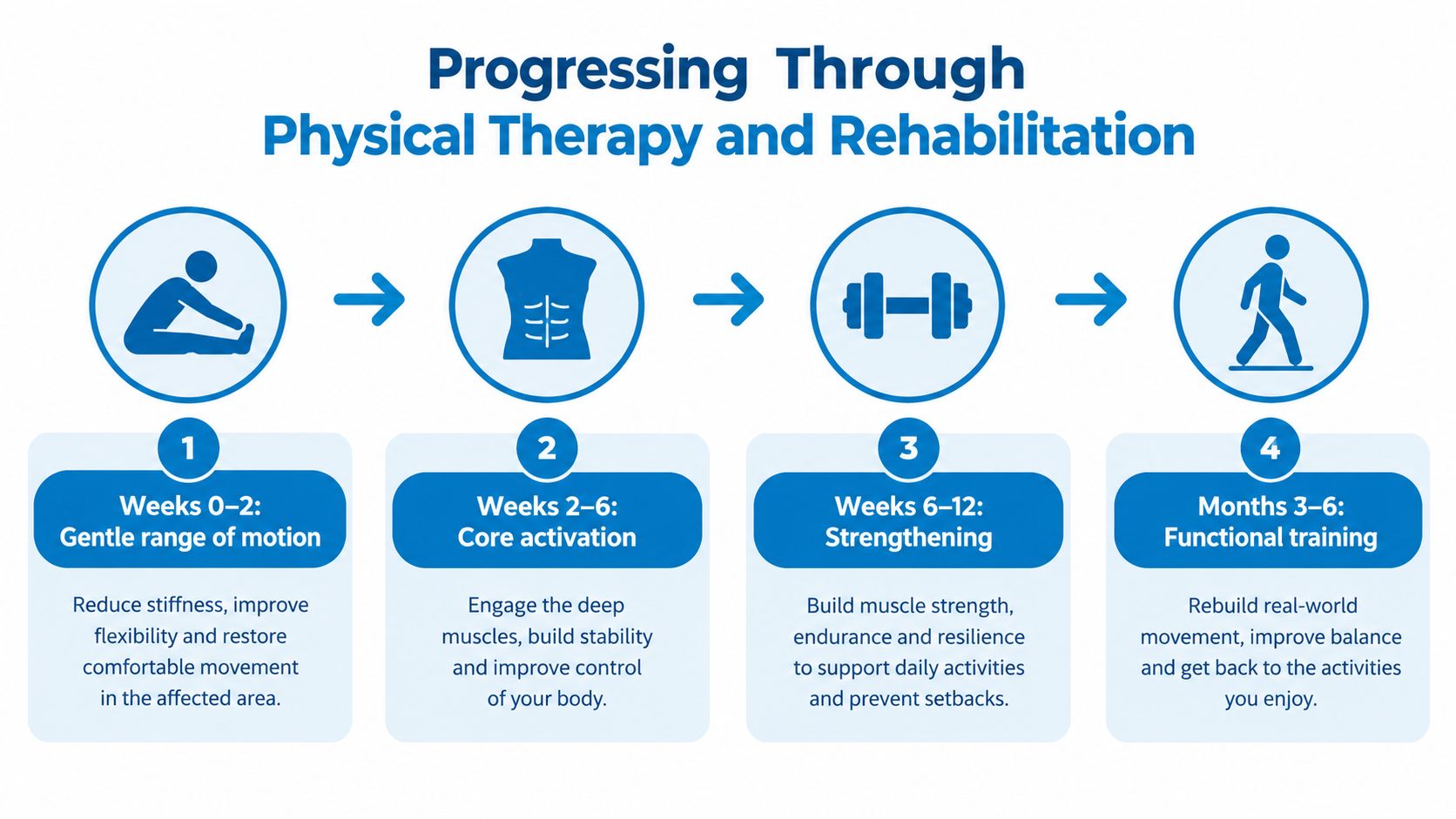
Rehabilitation after fusion starts with movement that protects the spine, not with aggressive strengthening. In the earliest phase, the clinical team may emphasize safe transfers, walking, breathing exercises, ankle movement, and basic control of neutral-spine positions. These activities help a patient regain confidence without asking a healing segment to tolerate unnecessary bending or rotation.
Independent home activity usually comes before formal outpatient therapy. Walking can gradually become more consistent as symptoms allow, but progression should follow the surgeon's restrictions and the patient's actual response. A flare that lasts well beyond the activity suggests that the workload may have advanced too quickly.
When structured therapy can begin
Formal outpatient rehabilitation is often delayed until approximately 7 to 12 weeks after surgery, according to a postoperative lumbar fusion rehabilitation protocol. Progression depends on clinical tolerance, independent performance of home exercises, and safe spinal mechanics.
The same protocol describes functional benchmarks that may support advancement, including tolerating about 15 minutes of exercise plus 15 to 30 minutes of cardiovascular activity while maintaining a neutral spine. These are benchmarks for clinical decision-making, not a universal assignment for every patient.
What rehabilitation develops
A therapist may assess gait, hip strength, trunk control, nerve mobility, posture, and the movement patterns used for work or household tasks. Treatment can then progress from low-load activation toward controlled strengthening.
- Core stabilization teaches the trunk muscles to support the spine during transfers and walking.
- Nerve gliding may be considered when appropriate for residual nerve sensitivity, always within the treating clinician's plan.
- Hip and leg conditioning reduces the tendency to overload the lower back during standing and lifting.
- Functional training rehearses job-specific or lifestyle-specific movements without rushing into high-impact activity.
Return to sports, physically demanding work, or recreational lifting requires more than reduced pain. It requires adequate strength, coordination, endurance, and medical clearance. A structured therapist-led program can identify those gaps before they become setbacks.
Managing Pain and Exploring Interventional Options
Pain after lumbar fusion has more than one possible source. Incisional soreness, muscle guarding, nerve irritation, altered movement, and the original pain condition can overlap. A patient whose pain persists shouldn't assume that surgery has automatically failed, but persistent or changing symptoms deserve a careful clinical assessment.
Medication plans commonly change as healing advances. The treating team may adjust analgesics, address sleep disruption, and review whether a medication is causing dizziness or limiting safe activity. Patients shouldn't restart or stop medication without guidance, particularly when bone healing or other medical conditions affect the decision.

When pain needs a broader evaluation
A pain specialist may review the operative report, imaging, neurological findings, medication history, and the exact pattern of pain. This distinction matters because mechanical back pain, recurrent nerve pain, muscle pain, and pain related to another spinal level may require different approaches.
Interventional Pain Management provides evaluation and treatment for persistent or recurrent pain after spine procedures, including medication management and image-guided procedures when clinically appropriate. An interventional lumbar epidural steroid injection may be considered in selected cases involving ongoing nerve inflammation, but suitability depends on the patient's anatomy, healing status, symptoms, and surgical team's recommendations.
Options are part of a sequence
A coordinated plan may begin with examination and imaging review, then move toward targeted rehabilitation, medication adjustment, or an injection when the clinical findings support it. Nerve blocks can help with selected pain patterns and may provide diagnostic information. For chronic neuropathic or postsurgical pain that remains difficult to control, neuromodulation such as spinal cord stimulation may be discussed after appropriate evaluation.
No intervention should be treated as a substitute for identifying the cause. The safest path combines symptom control with attention to fusion progression, neurological status, function, and red flags.
Recognizing Complications and Non-Linear Healing
Recovery doesn't move upward in a perfectly straight line. A patient may have several improving days, overdo an activity, and then experience increased soreness or stiffness. That temporary setback can be different from a pattern of worsening neurological symptoms or a wound problem.
A 2025 study of transforaminal lumbar interbody fusion described four recovery phases: an immediate postoperative disability phase from day 0 to 13, early improvement from day 13 to 28, late improvement from day 28 to 110, and a plateau phase after day 110. The study of TLIF recovery phases also found that the minimally invasive group reached a back-pain plateau earlier than the open-surgery group, at about 26.7 days versus 51.7 days.
Normal fluctuation versus a warning pattern
A difficult day after increased activity may settle with rest and the prescribed plan. The broader trend should gradually become more manageable, even if symptoms vary. A patient should contact the surgical team when pain keeps escalating, new weakness appears, sensation changes significantly, or function declines rather than stabilizes.
Urgent evaluation is appropriate for severe or rapidly changing symptoms, including new loss of bladder or bowel control, new saddle-area numbness, sudden chest pain, or shortness of breath. Wound drainage, spreading redness, fever, chills, or marked calf swelling and pain also require prompt medical attention.
Why persistent symptoms deserve a serious answer
Persistent pain isn't always explained by a single cause. In a 2025 TLIF study, 16.3% of patients had postoperative complications, and symptom recurrence was the most common complication at 13.3%. The reported TLIF complication findings show why recurrent symptoms should be evaluated rather than dismissed as ordinary healing.
The same source describes research linking lower discharge hemoglobin with worse recovery, including 90-day readmission rates up to 14% in the most anemic group. This doesn't mean anemia explains every difficult recovery. It does show why clinicians may review blood counts, medical conditions, pain patterns, and imaging together when progress is unexpectedly hard.
A plateau calls for interpretation, not panic. A clear deterioration calls for contact with the clinical team.
Partnering with a Multidisciplinary Spine Care Team
Lumbar fusion surgery recovery extends beyond the operating room. The patient may need surgical follow-up, imaging review, medication decisions, physical rehabilitation, neurological assessment, and guidance about work or daily activities. When those elements remain disconnected, an unresolved problem can be mistaken for a routine delay.
A multidisciplinary spine team can coordinate the different questions that arise during healing. A surgeon can assess the construct and structural progress. A pain physician can evaluate persistent nerve or postsurgical pain. A rehabilitation professional can measure gait, trunk control, endurance, and the ability to perform job-specific tasks.
Personalized planning matters
The same recovery calendar won't fit every patient. The plan may change according to the number of fused levels, surgical approach, bone quality, preexisting nerve damage, general health, work demands, and the patient's response to activity. Someone returning to desk work needs a different progression from someone whose job requires repetitive lifting, climbing, or prolonged driving.
Good follow-up also gives patients a place to ask specific questions:
- Is the current pain pattern expected?
- Which restrictions remain active?
- What activity can safely increase now?
- Does the rehabilitation plan match the job or household demands?
- Do new symptoms require examination or imaging?
Access supports consistency
Patients may need care at different stages and locations, including surgical review, interventional treatment, rehabilitation, and help understanding insurance or work-related documentation. A practice with multiple specialties, multiple offices, seven-days-a-week scheduling, and insurance navigation can reduce practical barriers to follow-up. Those services don't replace clinical judgment, but they can make it easier for patients to remain connected to the team.
Long-term progress depends on communicating changes early, following restrictions until they are revised, and treating rehabilitation as a gradual skill-building process. A patient who understands the difference between feeling better and being structurally healed can make safer decisions throughout the recovery year.
Interventional Pain Management offers coordinated evaluation for persistent or recurrent pain after spine surgery, including interventional pain care, spine assessment, and rehabilitation planning when indicated. Patients seeking individualized guidance for lumbar fusion surgery recovery can visit Interventional Pain Management to request an evaluation and discuss the next appropriate step.