
If lower back pain has settled into daily life, it can start to shape everything, from how long someone can sit at work to whether tying a shoe feels manageable. Many people reach a point where physical therapy, medication, rest, and activity changes have helped only a little, or only for a short time. At that stage, radiofrequency ablation of the lower back often enters the conversation as a targeted option, not because it fixes every kind of back pain, but because it can interrupt pain coming from specific spinal nerves.
The key question is never just whether the procedure exists. It's whether the pain is really coming from the nerves that RFA can treat, which is why diagnostic blocks matter so much. That selection process is the difference between a thoughtful treatment plan and a procedure that misses the actual pain source.
Table of Contents
- When Chronic Lower Back Pain Won't Go Away
- How Radiofrequency Ablation Works on Lower Back Pain
- Who Is a Good Candidate for Lumbar RFA
- What to Expect Before During and After the Procedure
- Success Rates and How Long Pain Relief Lasts
- Comparing RFA to Other Lower Back Pain Treatments
- Recovery Tips and When to Call Your Doctor
- Take the Next Step Toward Lasting Pain Relief
When Chronic Lower Back Pain Won't Go Away
A patient often comes in after months of doing everything “right.” They've stretched, walked when they could, taken anti-inflammatory medicine, maybe completed physical therapy, and still wake up stiff or feel a sharp ache when standing from a chair. The frustration usually isn't only the pain itself, it's the uncertainty, because the back keeps reminding them that something is still unresolved. For people in that situation, the next step is often not another generic treatment, but a closer look at which structure is sending the pain signal.
That's where radiofrequency ablation starts to make sense. It doesn't treat every type of lower back pain, and it isn't meant as the first stop after symptoms begin. Instead, it targets the small nerves that carry pain from specific joints in the spine, which is why a proper evaluation matters more than the procedure's name alone.
For someone who wants a broader overview of lower back pain causes and treatment pathways, this lower back pain resource can help frame the discussion before a consultation. But the main takeaway is simpler than most patients expect, RFA is a precision treatment for the right pain generator, not a blanket fix for “bad backs.”
Practical rule: when pain has stayed stubborn despite conservative care, the next question should be, “Where is the pain coming from?” not “What procedure sounds strongest?”
A board-certified pain specialist usually starts by matching symptoms, exam findings, and imaging with the likely pain source. If the pattern looks facet-mediated, then diagnostic blocks may come next, because those blocks help confirm whether the nerves that RFA would target are involved. That step is what turns a guess into a plan.
How Radiofrequency Ablation Works on Lower Back Pain
The procedure works by focusing on the medial branches of the dorsal rami, the small nerves that supply the facet joints in the lower spine. In plain language, those nerves behave like part of a wiring system, and high-frequency alternating current in the 300–500 kHz range is used to create a controlled thermal lesion at the needle tip, which interrupts pain signaling from the facet joint rather than treating disc-related pain supporting clinical explanation. That's why the source of pain matters so much, because a strong procedure aimed at the wrong structure won't help much.
Why anatomy matters
The target area sits where the superior articular and transverse processes meet. Under fluoroscopy, that anatomy is consistent enough to locate accurately, which is one reason lumbar facet RFA has become a repeatable outpatient procedure rather than a surgical operation. The goal is not to numb the whole back. The goal is to stop a specific pain pathway from sending repeated distress signals to the brain.
A simple way to think about it is like turning off one switch in a crowded electrical panel. The rest of the system still works, but the signal coming from that one line can't keep lighting up pain. That is also why RFA is generally discussed after conservative care has failed and after diagnostic work suggests a facet source.
Why disc pain is different
Facet-mediated pain and discogenic pain are not the same problem. The evidence base has been stronger for facet-related pain, while the literature for discogenic pain has been mixed, which is one reason a careful diagnosis is so important systematic and review evidence. When people hear about radiofrequency ablation lower back, they sometimes assume it treats any chronic spinal pain. It doesn't.
The procedure is only as good as the pain map used to guide it.
That's the clinical logic behind lumbar RFA. The technique is precise, but the diagnosis has to be precise first. Without that, the needle can be placed correctly and still miss the true problem.
Who Is a Good Candidate for Lumbar RFA
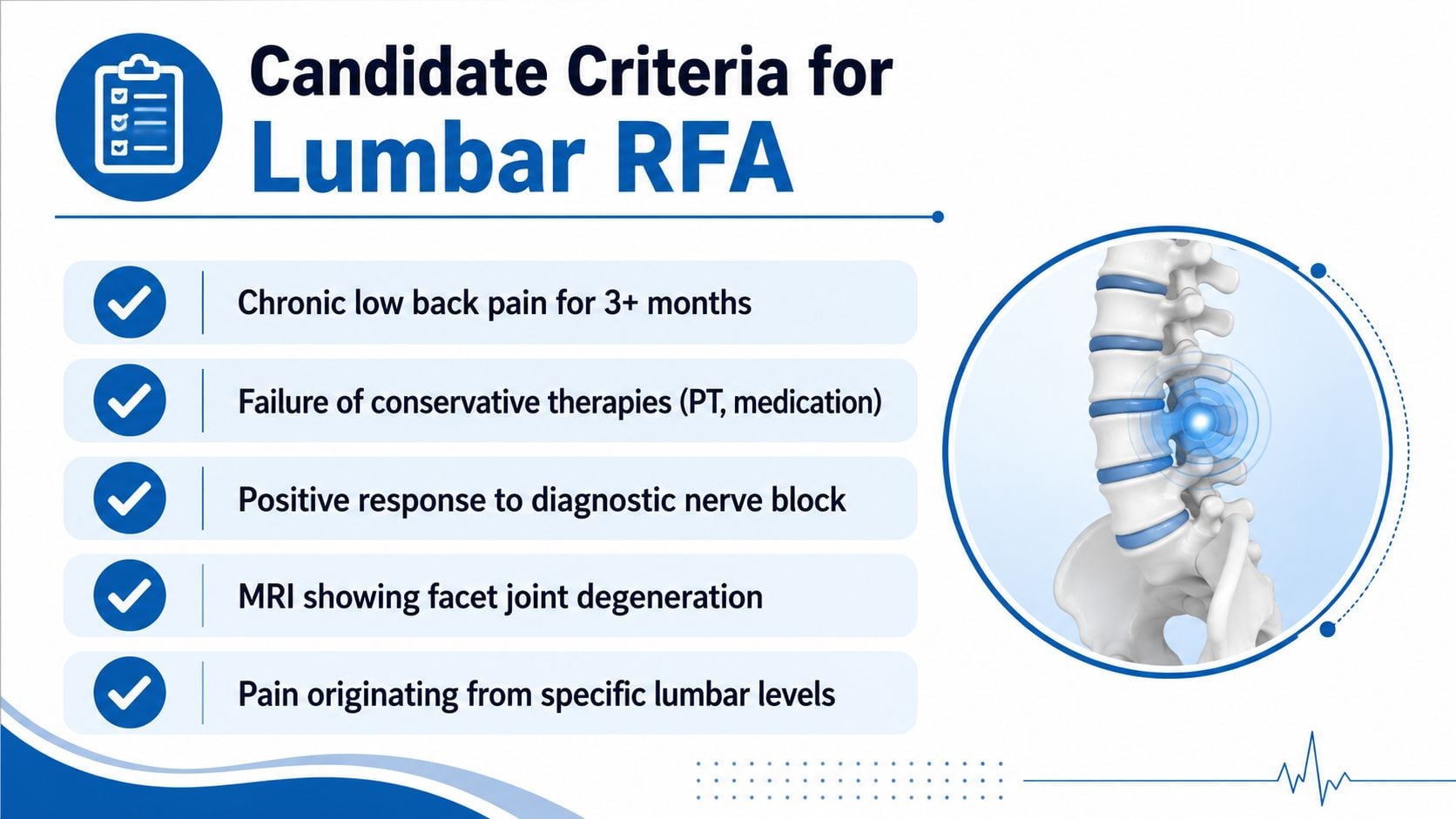
The strongest candidates are usually people with facet-mediated pain who have already tried conservative care for at least 3 months without enough relief clinical workflow explanation. The next step is often a diagnostic medial branch block, which is a temporary numbing injection aimed at the exact nerves that RFA would later treat. If the pain drops in a way that matches the expected nerve pattern, that gives the clinician a much better reason to proceed.
Why the block matters more than the label
A diagnostic block is not a treatment trial in the casual sense. It is a test of whether the suspected pain pathway is real. If a person gets meaningful temporary relief from the block, that suggests the medial branches are involved. If the block does little, RFA is less likely to help, because the pain generator may be somewhere else.
That selection principle is supported by the evidence. A 2020 systematic review found the strongest evidence for RFA in lumbar facet joint pain and sacroiliac joint pain, with five of six randomized controlled trials showing statistically significant pain reduction for lumbar facet pain, and both RCTs for sacroiliac pain positive systematic review. A 2014 review also described the literature as mixed for discogenic pain and stronger for facet-mediated pain, which matches the way many specialists now think about patient selection review.
For patients sorting through broader treatment options, this epidural steroid injection overview can help distinguish an anti-inflammatory injection from a nerve-targeting procedure. The difference matters, because a treatment that calms inflammation is not the same as one that denervates a pain pathway.
What specialists look for
- Pain location and pattern, especially pain that behaves like a posterior spinal pain source.
- Failure of conservative therapy, which helps show the issue isn't settling on its own.
- A positive response to diagnostic blocks, which is the clearest predictor that RFA may help.
- Imaging correlation, used as supporting context, not as the only deciding factor.
That's the heart of patient selection. RFA is not usually chosen because pain is severe. It's chosen because the pain source has been identified with enough confidence to justify targeting those nerves.
What to Expect Before During and After the Procedure
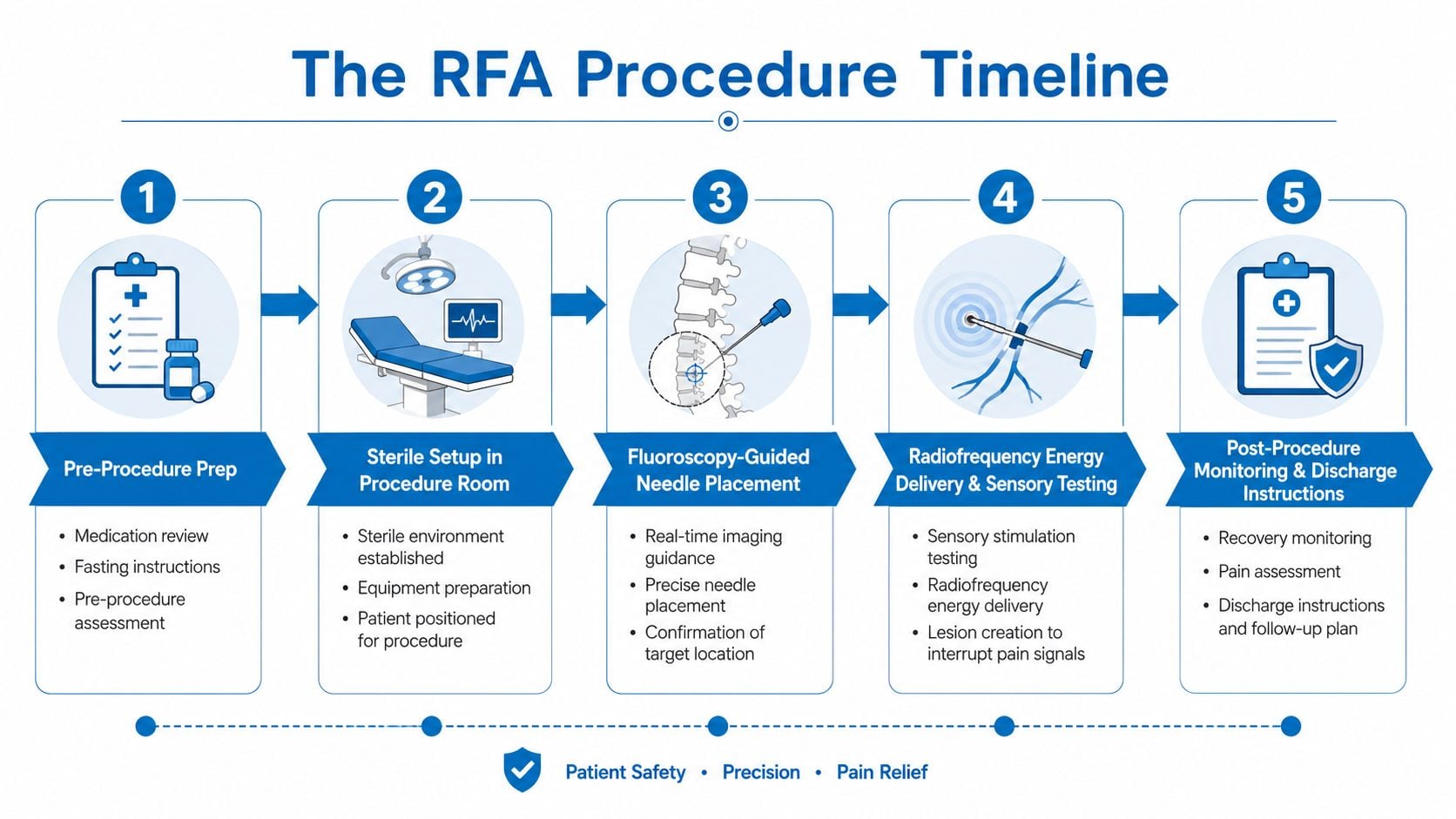
Before the procedure, the care team usually reviews medications, especially blood thinners or other drugs that can affect procedural planning. Patients may also receive instructions about fasting and transportation, since even a minimally invasive outpatient visit still requires a clear safety plan. The purpose is simple, fewer surprises on procedure day.
During the procedure, the patient lies on a table while the team uses fluoroscopic guidance to position the needle with precision. Local anesthetic is used at the skin and deeper tissues, and some practices add mild sedation when appropriate. A helpful explainer on local anesthetics, including what is bupivacaine anesthetic, can give patients a better sense of why the numbing portion of the visit feels different from the nerve lesioning step.
The procedure itself is usually measured in minutes rather than hours, but the exact experience varies based on anatomy and how many levels are being treated. The key point is that the patient stays awake enough for communication, because sensory testing and needle positioning help confirm the target before energy is delivered.
Afterward, the care team monitors the patient briefly, then gives discharge instructions for home. Some soreness at the treatment site is normal, and that soreness doesn't mean the procedure failed. Relief can be immediate, delayed by up to 10 days, or take up to 3 weeks, so early discomfort shouldn't be treated like a verdict.
Pain relief after RFA does not always arrive on the same day as the procedure. Patience matters because the nerve response can lag behind the technical success of the treatment.
That variability is why patients are told not to judge the outcome too quickly. The body needs time to settle, and the nerve needs time to stop transmitting the pain pattern that brought the patient to the office in the first place.
Success Rates and How Long Pain Relief Lasts
A large academic study in Pain Medicine reported that among patients selected by guideline-concordant dual medial branch blocks, 63.2% had at least 50% pain reduction at 6 to 12 months, 65.6% still had that level of relief at 12 to 24 months, and 44.1% maintained it beyond 24 months study. The same study found that at a minimum of six months, 70.6% of patients had a clinically meaningful improvement of 2 or more pain points, and 54.1% rated themselves as “much improved” or better study. Those numbers matter because they show durability, not cure.
RFA Pain Relief Durability Timeline
| Time After Procedure | Patients with 50%+ Pain Reduction | Key Notes |
|---|---|---|
| 6 to 12 months | 63.2% | Measured in patients selected by guideline-concordant dual medial branch blocks study |
| 12 to 24 months | 65.6% | Relief can remain durable beyond the first year in selected patients study |
| Beyond 24 months | 44.1% | A meaningful subset keeps benefit well past two years study |
The broader clinical picture fits that study. Cleveland Clinic notes that pain relief often lasts 6 to 12 months, with some patients getting relief for a few years, and that the treated nerve typically regrows in about 6 to 12 months clinical guidance. That regrowth is why repeat treatment sometimes becomes part of long-term care.
A practical way to read the data is this. RFA can work well when the diagnosis is right, and the benefit can outlast the early recovery period by a wide margin. In expert clinical sources, effectiveness is often described as 70 to 80% in patients who had successful diagnostic nerve blocks clinical guidance. That doesn't guarantee success for any individual, but it does explain why selection changes the odds so much.
Comparing RFA to Other Lower Back Pain Treatments
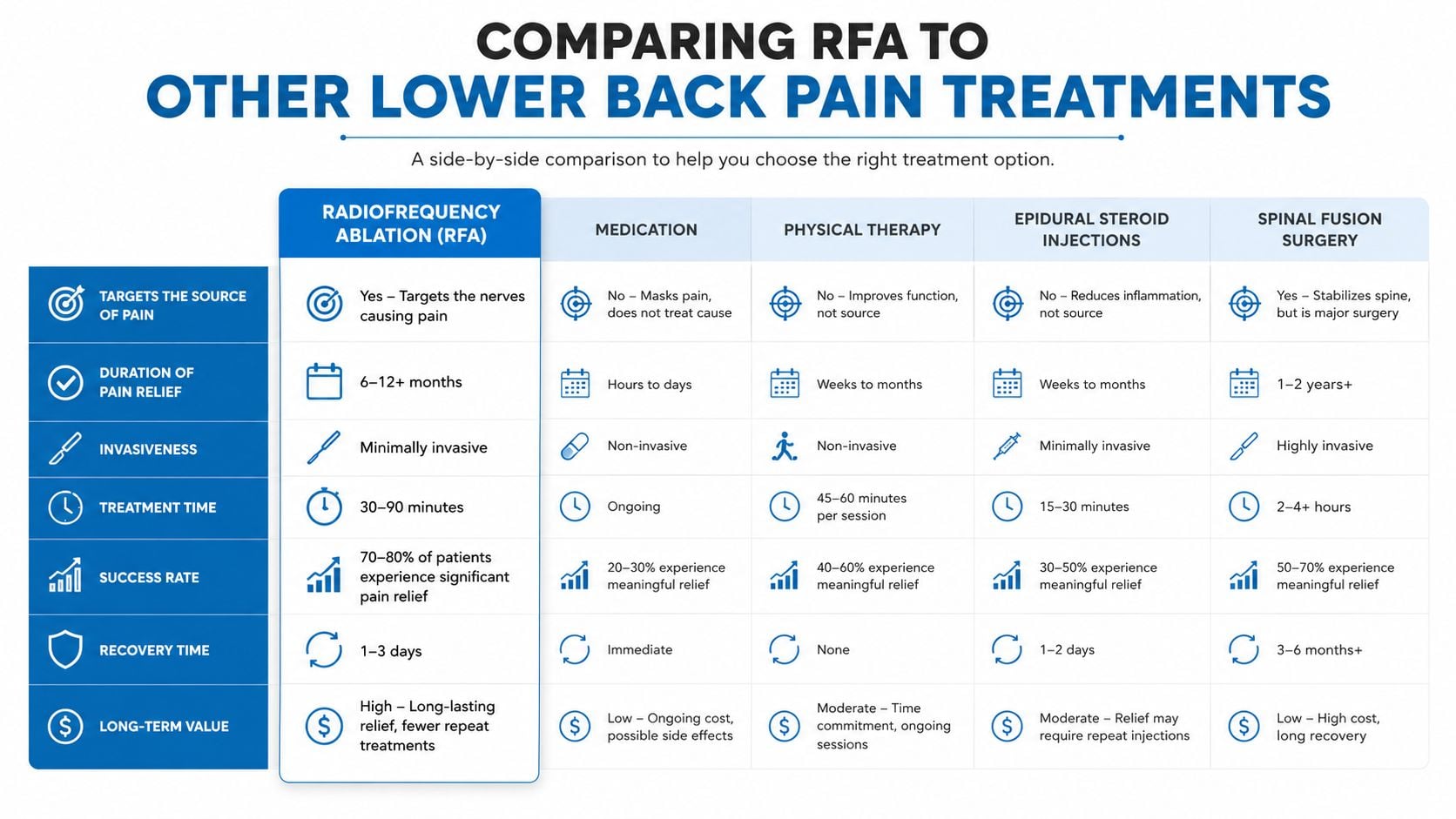
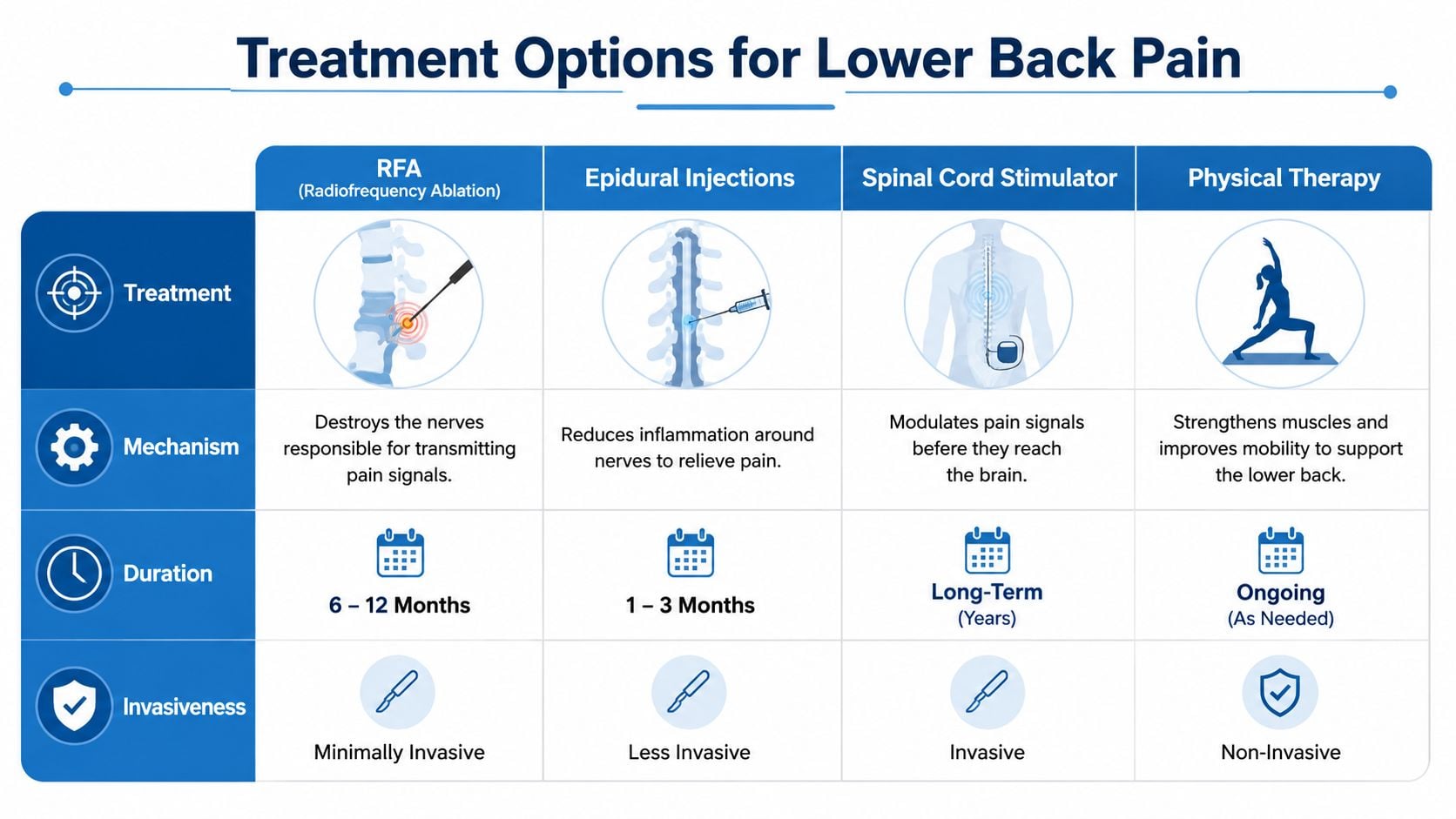
RFA sits in the middle of the lower back pain treatment spectrum. It is more targeted than broad medication strategies and less invasive than surgery, which makes it useful when a specific pain source has been identified but the patient does not need, or does not want, an operation. It also differs from spinal cord stimulation, which is aimed at different pain patterns and is usually reserved for other chronic pain situations.
For patients comparing procedures, this spinal cord stimulation overview helps separate a nerve-modulation strategy from a nerve-ablation strategy. Those are not interchangeable. One changes how pain is processed, the other interrupts a defined pain pathway.
Epidural steroid injections, by contrast, are typically used to reduce inflammation around irritated nerves. They can fit a different clinical picture, especially when pain is driven by nerve root irritation rather than facet joints. Physical therapy remains foundational for many people, because it addresses strength, motion, and movement habits, but it won't substitute for a procedure when a specific joint nerve is the confirmed pain generator.
A simple decision frame is useful:
- RFA, for confirmed facet-mediated pain, when diagnostic blocks point to the medial branch nerves.
- Epidural injections, when inflammation around nerve tissue is part of the problem.
- Spinal cord stimulation, when chronic neuropathic or post-surgical pain needs a different neuromodulation strategy.
- Physical therapy, when function, stability, or movement patterns still need active rehabilitation.
The right choice depends on the pain source, not the procedure title. That's why a board-certified pain specialist often compares the symptom pattern, the exam, and the response to blocks before recommending one path over another. In practice, these options are often complementary, not competing.
Recovery Tips and When to Call Your Doctor
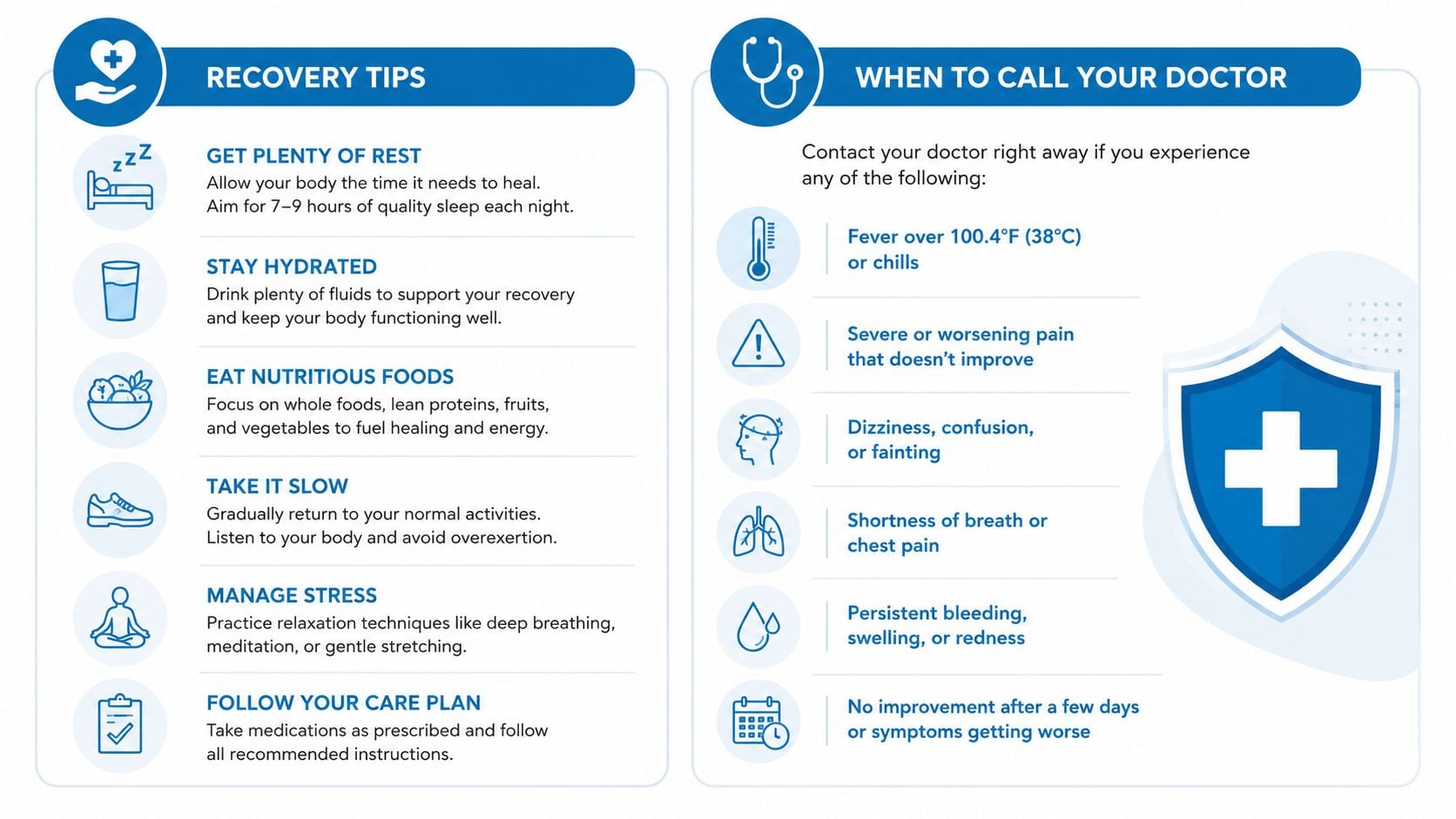
The first day or two after RFA is usually about calm movement and reasonable caution. Light activity is generally preferred over bed rest, and many patients do better with short walks, gentle position changes, and ice for local soreness. If a clinician recommends an over-the-counter pain reliever, that can help with the procedure-site discomfort while the nerves settle.
The bigger challenge is patience. Because relief can be delayed, early soreness doesn't mean the treatment has failed. Patients often feel most reassured when they know the pain pattern may shift over days instead of hours.
Call the doctor promptly if fever develops, pain worsens after the first week, leg numbness or weakness appears, or the injection site becomes red, warm, or draining.
A few practical guardrails help:
- First 24 to 48 hours: keep activity light and avoid overloading the treated area.
- As soreness fades: return gradually to normal movement rather than waiting for a perfect pain score.
- If relief is delayed: remember that the response window can stretch out, so don't judge the outcome too soon.
- If warning signs appear: reach the care team instead of trying to “push through” them.
Coverage questions can come up during recovery, too. For patients in New Jersey, Interventional Pain Management can help with insurance benefit navigation and fee estimates upon request in compliance with the New Jersey Out-of-Network Law. That support can reduce some of the stress that follows any procedure.
Take the Next Step Toward Lasting Pain Relief
Radiofrequency ablation lower back pain care works best when the diagnosis is right, the nerve blocks are positive, and the pain source matches the treatment. For properly selected patients with facet-mediated pain, it can provide relief that lasts well beyond the first few weeks, and in many cases beyond a year. The procedure itself matters, but the selection process matters more.
Interventional Pain Management and Ortho-Spine Center serves New Jersey and Staten Island with board-certified physicians across pain management, anesthesiology, orthopedics, and spine surgery. The practice offers diagnostic evaluation, image-guided procedures, transportation assistance, insurance benefit navigation, and seven-days-a-week scheduling across multiple locations.
If lower back pain has kept coming back despite conservative care, a consultation can clarify whether diagnostic nerve blocks and RFA fit the clinical picture. Visit Interventional Pain Management to schedule an evaluation and discuss whether this targeted treatment makes sense for the pain pattern.