

A person can wake after cervical surgery expecting the original pain to be gone, only to notice a stiff neck, aching shoulders, burning near the incision, or discomfort when swallowing. That experience can feel alarming, especially when the new pain seems different from the symptoms that led to surgery.
Some soreness is part of healing. Persistent or returning pain, however, deserves more than automatic reassurance. Its location, quality, timing, neurological symptoms, and recovery pattern can help clinicians distinguish normal postoperative discomfort from residual nerve irritation, muscle pain, altered joint loading, or a problem that needs prompt attention.
Table of Contents
- Waking Up After Neck Surgery and Still Feeling Pain
- What Persistent Pain in the Neck After Surgery Actually Means
- Why the Pain Lingers or Returns After Cervical Surgery
- Normal Healing Discomfort Versus Red-Flag Symptoms
- How Doctors Evaluate Neck Pain That Will Not Go Away
- Treatment Options From Conservative Care to Advanced Interventions
- Typical Recovery Timelines and What Each Phase Looks Like
- Your Practical Next Steps After Surgery
Waking Up After Neck Surgery and Still Feeling Pain
The first sensation may be less like relief and more like pressure. A patient who expected a clear improvement might instead feel a heavy head, tight muscles across the trapezius, limited neck rotation, or tenderness around the incision. After an anterior procedure, swallowing can feel sore or unfamiliar. After a posterior procedure, the muscles behind the neck and across the shoulders may feel particularly strained.
That early discomfort doesn't automatically mean the surgery failed. The tissues have been handled, retracted, or dissected, and the neck muscles may be guarding movement. Position changes in bed can create aching, while coughing, standing, or turning the head may briefly intensify symptoms.
The quality of pain matters
Patients often describe postoperative pain in different ways:
- Incisional pain tends to feel tender, pulling, bruised, or sore near the surgical site.
- Muscular pain often produces a deep ache, tightness, or soreness across the neck and shoulders.
- Nerve pain may feel burning, electric, shooting, tingling, or radiating into an arm or hand.
- Mechanical pain may appear with a particular position or movement and remain concentrated in the neck.
The first 24 to 72 hours are useful for observing the direction of symptoms, not for judging the final surgical result. A person can have substantial early soreness and still improve well. Conversely, severe pain that keeps escalating, especially when paired with weakness or other neurological changes, warrants contact with the surgical team.
Sleep positioning can influence muscle strain during this period. Once the surgeon permits side sleeping or other positioning changes, a properly supportive cervical support pillow for neck pain may help maintain a more neutral position. It shouldn't replace postoperative instructions, and it shouldn't be used to push through pain that is worsening or neurologically concerning.
The useful question isn't, “Does the neck hurt?” It's, “What does the pain feel like, where does it travel, and is the overall pattern becoming easier to manage?”
What Persistent Pain in the Neck After Surgery Actually Means
Postoperative neck pain can include discomfort at the incision, pain in the cervical spine, aching across the trapezius muscles, or symptoms extending into the shoulders and arms. The term becomes more clinically important when pain persists beyond the acute healing period, stops improving, interferes with function, or returns after an initial improvement.
A formal diagnosis of chronic postoperative pain doesn't capture every patient who still hurts. A review of ACDF outcomes cited a large cohort in which 1% of patients received a new diagnosis of chronic pain after surgery, while a separate prospective study found 35.6% had persistent neck pain after the procedure (2018 review of ACDF outcomes). The difference likely reflects how the studies defined and measured pain. A formal diagnosis produces a narrower count than a patient questionnaire asking whether neck pain remains.
Broader cervical post-surgery literature has reported 15% to 40% of patients with persistent disabling neck pain or radicular pain (review of cervical post-surgery syndrome). That range shouldn't be used to predict an individual outcome. It does show that persistent symptoms are a recognized clinical problem, not an unusual personal failure.
A practical spectrum
| Category | Duration | Typical features | Approximate prevalence |
|---|---|---|---|
| Acute healing discomfort | Early recovery | Incision tenderness, muscular stiffness, aching with movement | Common after surgery, with frequency varying by procedure and patient |
| Persistent postoperative pain | Beyond the expected acute recovery period | Pain that plateaus, remains function-limiting, or includes arm symptoms | Studies have reported wide variation, including 15% to 40% for persistent disabling neck or radicular pain (cervical post-surgery review) |
| Chronic cervical post-surgery syndrome | Ongoing symptoms requiring clinical assessment | Persistent neck or radicular pain after structural treatment | Definitions and reported rates vary substantially between studies (ACDF outcomes review) |
Pain in the neck after surgery should be judged by trajectory and function, not by a single calendar cutoff. A gradually easing ache is different from pain that improves and then returns, or pain that remains sharply radiating into an arm. A patient whose symptoms resemble myofascial pain syndrome may need a different evaluation from someone with numbness, weakness, or electric arm pain.
Why the Pain Lingers or Returns After Cervical Surgery
Persistent pain has more than one possible source. A spine surgeon or pain physician usually builds a differential diagnosis rather than assuming that every symptom comes from the incision or from “normal healing.”
The main diagnostic branches
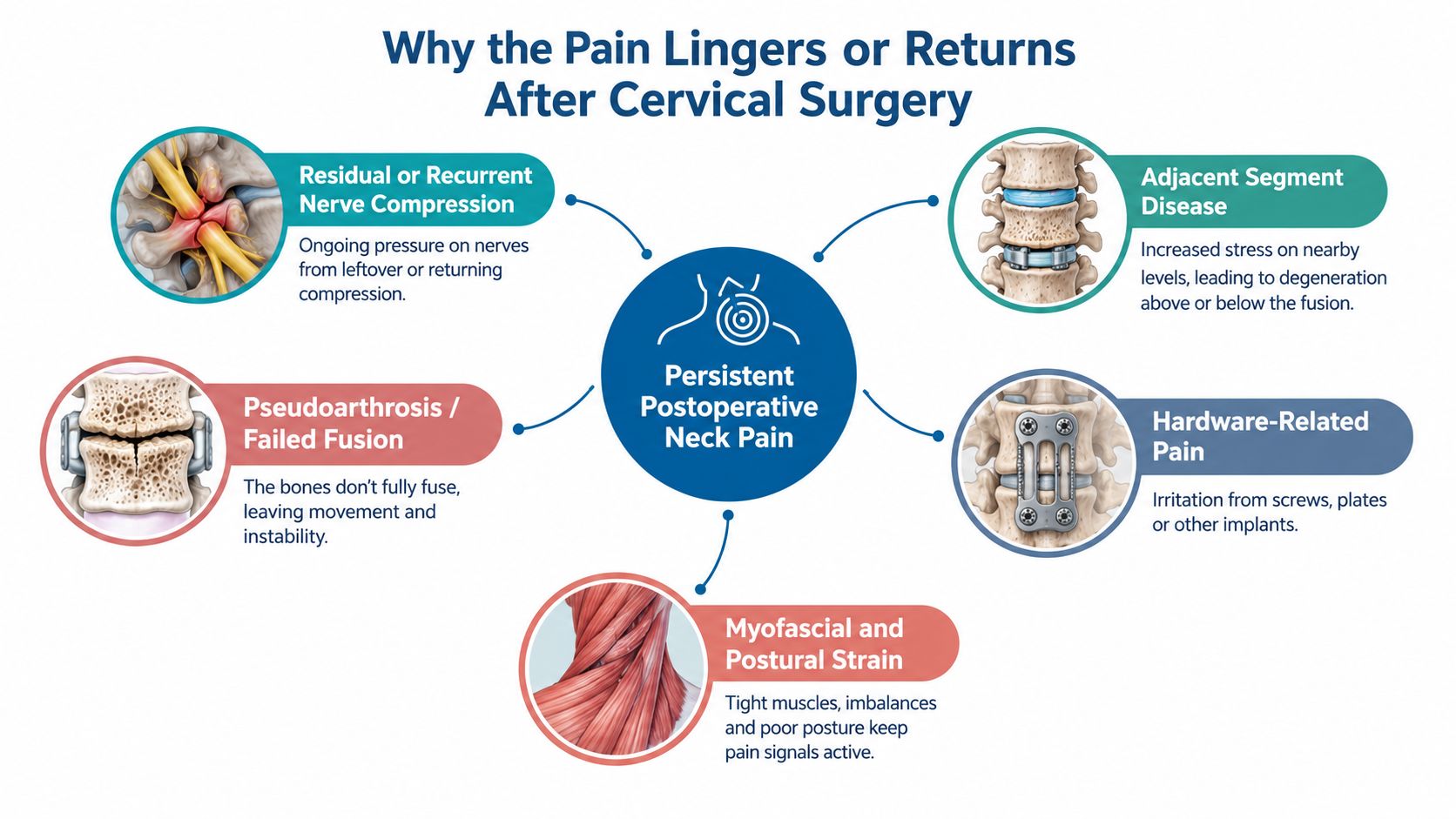
Residual or recurrent nerve compression can cause burning, shooting arm pain, numbness, or weakness. The original compression may not have fully resolved, or a new narrowing may affect the nerve. Symptoms that closely resemble the preoperative pattern deserve particular attention.
Adjacent segment pathology develops above or below a treated level when nearby discs or joints become symptomatic. The pain may appear after an initially successful recovery and can resemble the original neck or arm problem.
Myofascial pain comes from muscles and their surrounding connective tissues. Guarding, reduced activity, altered posture, and muscle deconditioning can produce tender bands in the neck, shoulder, or upper back. This pain is often aching and position-sensitive rather than electric.
Facet-mediated pain originates in the small joints at the back of the cervical spine. Changes in movement and load distribution can make these joints painful. A person may report localized pain that worsens with extension, rotation, or sustained posture.
Neuropathic pain may persist after a nerve has been compressed or irritated. Nerves can recover slowly, and pain may continue even when the original structural problem has been addressed.
The surgical route also matters. Posterior procedures can involve more disruption to the neck extensor muscles, while anterior procedures can produce approach-related swallowing discomfort or local scar sensitivity. A 2025 meta-analysis identified predictors of postoperative axial neck pain including anterolisthesis, reduced cervical muscle volume, malalignment, smoking, diabetes, age, and worse disc degeneration (2025 meta-analysis of postoperative axial neck pain). These factors don't identify one cause by themselves, but they help clinicians decide how broadly to investigate.
Multilevel surgery and the surgical approach can influence the pain trajectory, as can the severity of pain before surgery. A patient recovering from anterior cervical discectomy may therefore have a different expected pain pattern from someone who had a posterior decompression. The operative levels, the original diagnosis, and the current symptom pattern all matter.
Normal Healing Discomfort Versus Red-Flag Symptoms
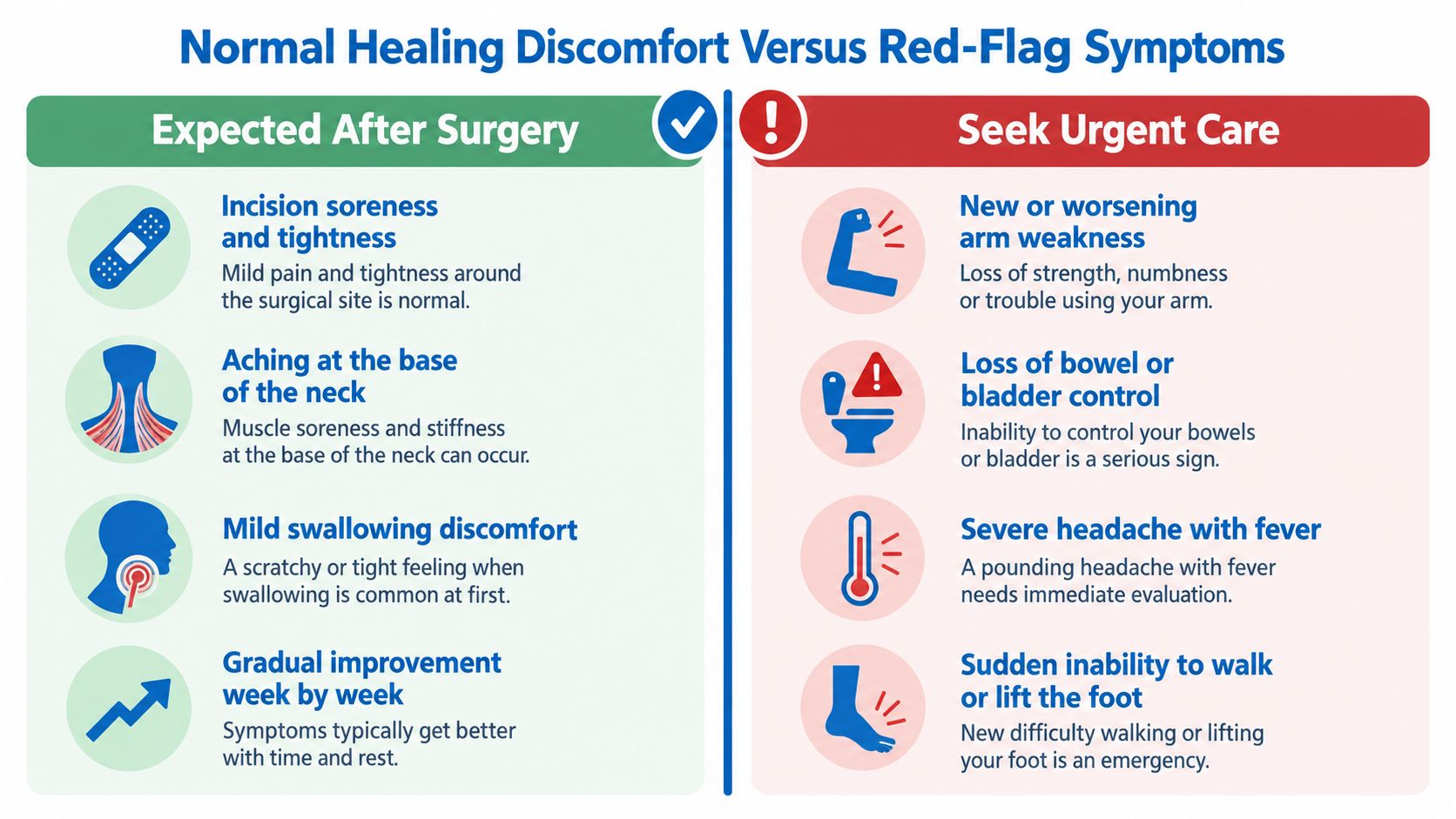
Normal postoperative pain usually has a recognizable direction. Incision tenderness, muscular stiffness, mild swallowing discomfort after an anterior approach, and aching with position changes can occur as tissues settle. The key feature is gradual improvement, even if progress is uneven.
A person may have a better morning and a more painful evening after increased activity. That fluctuation doesn't necessarily signal harm. The care team's restrictions, medication instructions, wound-care guidance, and physical therapy plan should determine what activity is appropriate.
Symptoms that need prompt action
- Fever or wound drainage: Contact the surgical team the same day, particularly if the incision is increasingly red, warm, swollen, or painful.
- New or worsening weakness: New arm weakness, hand clumsiness, difficulty lifting the foot, or worsening numbness needs urgent assessment.
- Walking or balance changes: New gait imbalance can indicate neurological compromise and shouldn't be monitored casually at home.
- Bowel or bladder changes: Loss of control or new retention requires immediate medical evaluation.
- Severe headache or rigid neck: Sudden severe headache, marked neck rigidity, or a significant change in overall condition should prompt urgent contact or emergency assessment.
- Breathing or swallowing difficulty: Sudden or progressive difficulty breathing or swallowing requires urgent evaluation.
- Escalating pain: Pain that keeps intensifying rather than easing, particularly after the early recovery period, should be reported.
Practical rule: A painful day after extra activity can be part of recovery. New neurological loss, fever, wound changes, or rapidly worsening symptoms is a different category.
Patients don't need to diagnose the cause before calling. The useful information is what changed, when it changed, and whether weakness, sensation, walking, swallowing, breathing, or wound symptoms changed with it.
How Doctors Evaluate Neck Pain That Will Not Go Away
A thorough evaluation starts with the story, not the scan. The clinician asks when the pain began, whether it matches the original symptoms, where it travels, what positions provoke it, and whether it improves with rest or medication. Timing relative to surgery can separate immediate tissue pain from a later recurrence or a new pain pattern.
The physical examination then tests several systems. Inspection may reveal guarded posture or limited movement. Palpation can identify tender muscles or localized joint pain. Range-of-motion testing shows which movements reproduce symptoms, while neurological screening checks strength, sensation, reflexes, coordination, and walking.
A maneuver such as Spurling's test may reproduce nerve-root symptoms in selected patients, but no single examination finding proves the diagnosis. The clinician combines the examination with the symptom history and the surgical records.
Imaging answers different questions
- Plain radiographs can assess alignment, implant position, and changes that may suggest a fusion problem.
- MRI is useful for soft tissues, the spinal cord, nerve roots, recurrent narrowing, and other neural structures.
- CT provides detailed views of bone, hardware, and fusion development when those questions remain unresolved.
Imaging findings must match the patient's symptoms. A visible degenerative change doesn't necessarily explain pain, and a reassuring hardware image doesn't rule out muscle, facet, or nerve-related pain.
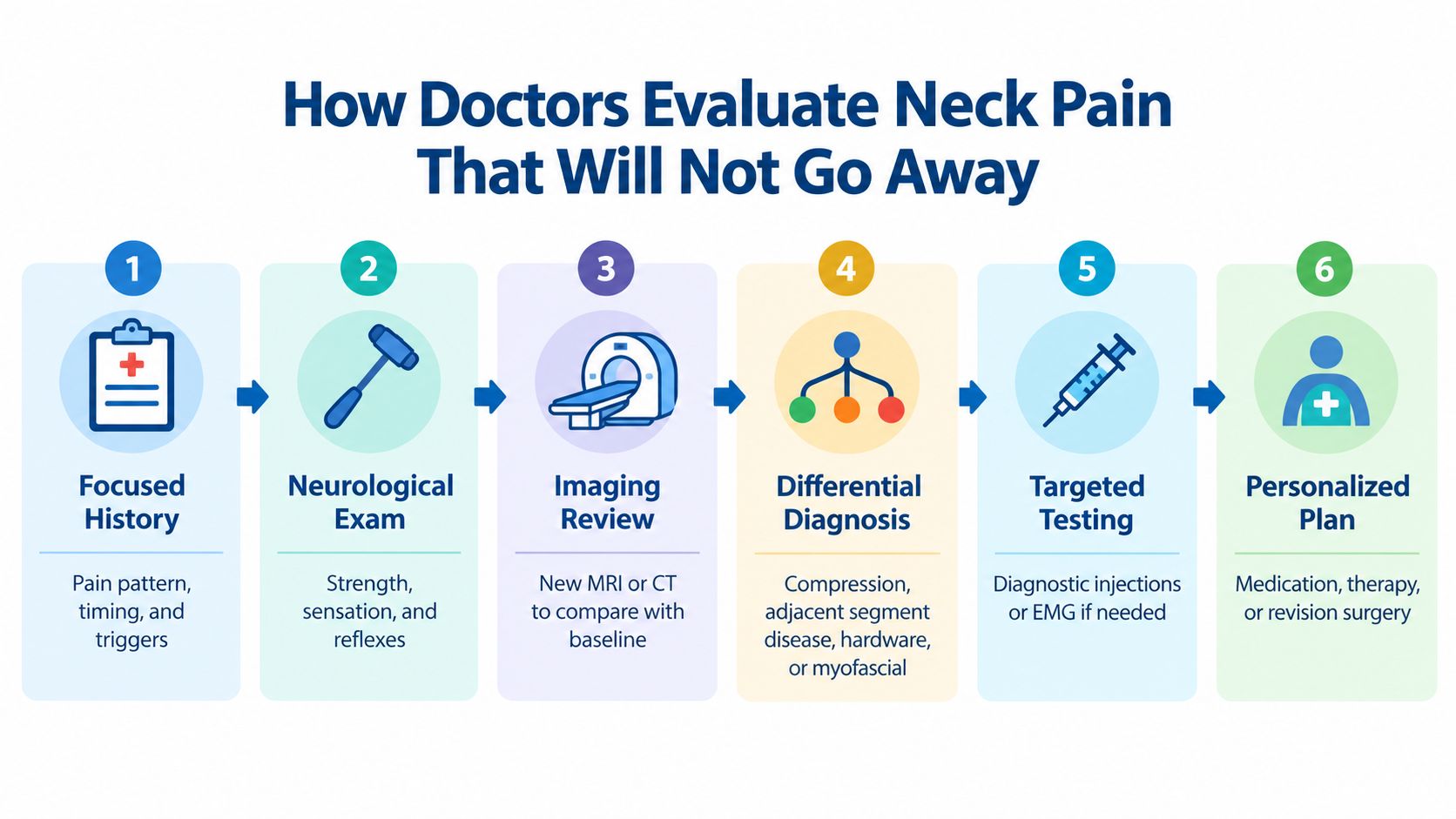
When the likely source remains unclear, diagnostic procedures can help. A medial branch block temporarily numbs nerves that carry sensation from selected facet joints. If the familiar pain changes in a controlled way, the result supports a facet contribution. Targeted injections and, when appropriate, nerve testing can help distinguish joint, nerve-root, and muscle sources before treatment is escalated.
Treatment Options From Conservative Care to Advanced Interventions
Treatment should follow the suspected pain generator. A stiff, deconditioned neck needs a different plan from persistent radicular pain, and neither should automatically lead to another operation.
Begin with targeted conservative care
Supervised physical therapy can address cervical stabilization, scapular mechanics, posture, and gradual return to activity. Exercises should follow the surgeon's restrictions and should be adjusted if they consistently provoke sharper or radiating symptoms. Ergonomic changes, pacing, sleep positioning, and medication review can support participation in rehabilitation.
Medication choices depend on the patient's medical history. Short courses of anti-inflammatory medication or acetaminophen may help selected patients, while neuropathic agents such as gabapentin or duloxetine may be considered when burning, tingling, or electric pain dominates. Prescribers need to account for kidney, liver, gastrointestinal, cardiovascular, psychiatric, and medication-interaction risks.
Match procedures to the suspected source
| Treatment | Best suited for | Typical benefit |
|---|---|---|
| Supervised physical therapy | Muscular weakness, guarded movement, postural strain | Builds controlled movement and functional tolerance |
| Medication adjustment | Inflammatory, mechanical, or neuropathic symptoms | Reduces symptom intensity enough to support activity |
| Cervical epidural injection | Selected radicular pain linked to nerve irritation | May reduce inflammation around an irritated nerve |
| Medial branch block | Suspected facet-mediated pain | Helps test whether facet joints contribute to symptoms |
| Radiofrequency ablation | Confirmed facet-mediated pain in appropriate patients | Can reduce pain signaling from targeted medial branch nerves |
| Trigger point injection | Focal myofascial pain | May reduce a localized muscle pain component |
| Spinal cord stimulation | Refractory neuropathic postoperative neck and arm pain after structural review | Neuromodulates pain signaling when other options haven't provided adequate relief |
Information about cervical epidural steroid injections can help patients prepare questions, but the procedure still requires an individualized assessment. In a cervical failed-neck-surgery series, spinal cord stimulation was associated with average pain reductions of 65.2% at 3 months, 62.4% at 6 months, and 71.9% at 12 months, while disability scores decreased from 51.21 to 23.70 by 12 months (cervical spinal cord stimulation outcomes). Those findings describe a selected treatment group, not a guarantee for every patient.
The safest sequence is diagnosis, targeted treatment, and reassessment. Repeating injections or escalating medication without revisiting the pain source can delay the care that fits the symptoms.
Typical Recovery Timelines and What Each Phase Looks Like
Recovery isn't a single straight line, and the earliest pain pattern can provide information beyond immediate comfort. Earlier ACDF data found that high pain on postoperative day one predicted higher neck-pain scores at later follow-up, making the first day a potentially useful prognostic window (2018 review of ACDF outcomes). That doesn't mean a painful first day determines the final result. It means unusually intense early pain should be documented and discussed rather than dismissed.
Four overlapping phases
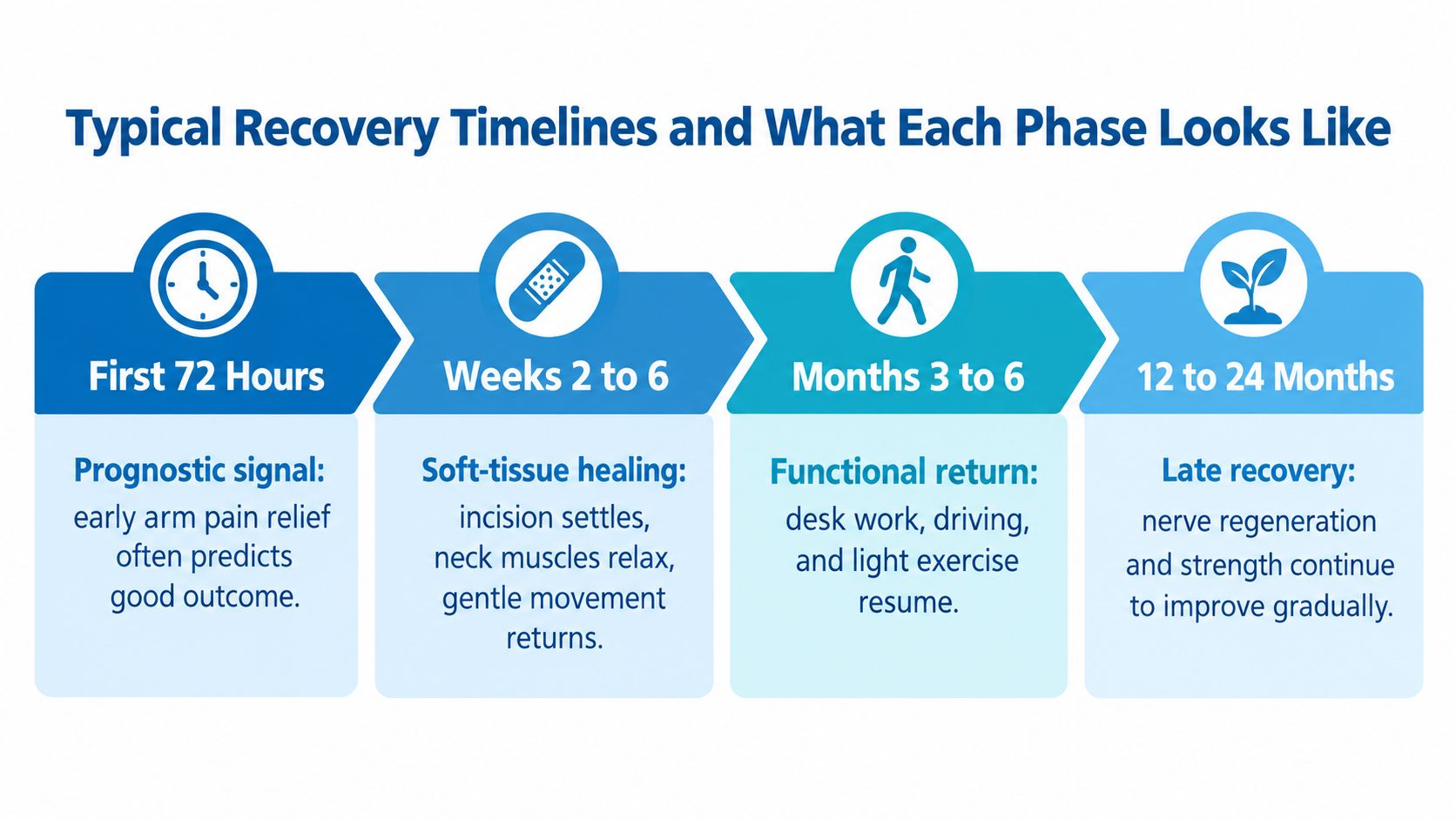
First 72 hours: Incision soreness, muscle guarding, limited rotation, and swallowing discomfort may dominate. Clinicians watch whether arm symptoms improve, whether strength and sensation remain stable, and whether pain responds to the prescribed plan.
Weeks 2 to 6: Soft tissues continue settling. Gentle movement and rehabilitation may begin according to the surgeon's instructions. A plateau, worsening neurological symptom, or pain that becomes increasingly radiating deserves review.
Months 3 to 6: Function often becomes the main measure of progress. Sitting, walking, driving, desk work, and prescribed exercise may gradually become easier, depending on the operation and restrictions.
Twelve to 24 months: Some patients continue to gain strength and neurological function, while others develop new symptoms related to adjacent levels or persistent nerve sensitivity. Long-term follow-up is therefore relevant even after early healing appears satisfactory.
Studies illustrate why later follow-up matters. After surgery for cervical spondylotic myelopathy, neck-pain deterioration occurred in 11.6% at 6 months and 17.4% at 2 years in one study, while a Quality Outcomes Database study reported new neck pain in 27.1% at 12 months and 28.8% at 24 months (long-term cervical surgery outcomes). These measures aren't interchangeable, but they show that new or worsening pain can appear months after surgery.
A 2025 retrospective cohort also found that the postoperative pain trajectory predicted later neck pain, with a stronger association in women than men (postoperative pain trajectory study). That finding doesn't prove surgical failure or explain every individual difference. Sex-specific recovery may involve interacting biological, biomechanical, and reporting factors, so clinicians should avoid treating the same recovery curve as appropriate for every patient.
Your Practical Next Steps After Surgery
A simple record can make a follow-up visit more useful. Each day, note the pain location, whether it stays in the neck or travels into an arm, what activity or position changes it, and whether strength, sensation, balance, swallowing, breathing, or the wound has changed.
A focused checklist
- Track the pattern: A trend is more informative than one difficult afternoon. Note improvement, a plateau, or a return of symptoms after they had eased.
- Follow the prescribed plan: Take medications as directed and follow activity, collar, wound, and exercise instructions from the surgical team.
- Report urgent changes: New weakness, bowel or bladder changes, fever, wound drainage, breathing difficulty, or escalating radicular pain should prompt same-day contact or emergency evaluation according to severity.
- Schedule a non-urgent review: Pain that stops improving, limits function, or worsens after initial improvement deserves a structured assessment rather than indefinite observation.
- Bring three questions: Ask whether updated imaging is indicated, whether a diagnostic injection could localize the pain generator, and which rehabilitation milestones should be reached before advanced treatment is considered.
The surgical team should receive specific descriptions instead of a general report that “the neck still hurts.” Burning arm pain, focal muscle tenderness, pain with rotation, and pain associated with weakness point clinicians toward different next questions.
Persistent pain in the neck after surgery is a recognized syndrome with structured diagnostic and treatment options. It isn't evidence that a patient has failed to recover, and it shouldn't be reduced to either panic or passive waiting.
Interventional Pain Management evaluates persistent neck and arm symptoms through clinical examination, imaging review, and targeted options such as injections, nerve blocks, and spinal cord stimulation when appropriate. Patients can visit Interventional Pain Management to request an evaluation and discuss the next step with a multidisciplinary spine and pain team.