
A minor injury should gradually become easier to tolerate. Instead, a person may find that a hand or foot remains swollen, changes color or temperature, burns intensely, and hurts when clothing or bedsheets touch it. The pain can feel far greater than the original injury seems to justify, leaving the person unsure whether to rest, move, ask for medication, or seek a specialist.
That pattern can occur with complex regional pain syndrome, or CRPS. Treatment usually isn't a search for one curative procedure. It works better as a staged plan that begins with restoring movement and function, adds medication when needed, and escalates to blocks or neuromodulation when progress stalls. The sequence matters because each treatment should support the next one rather than replace it.
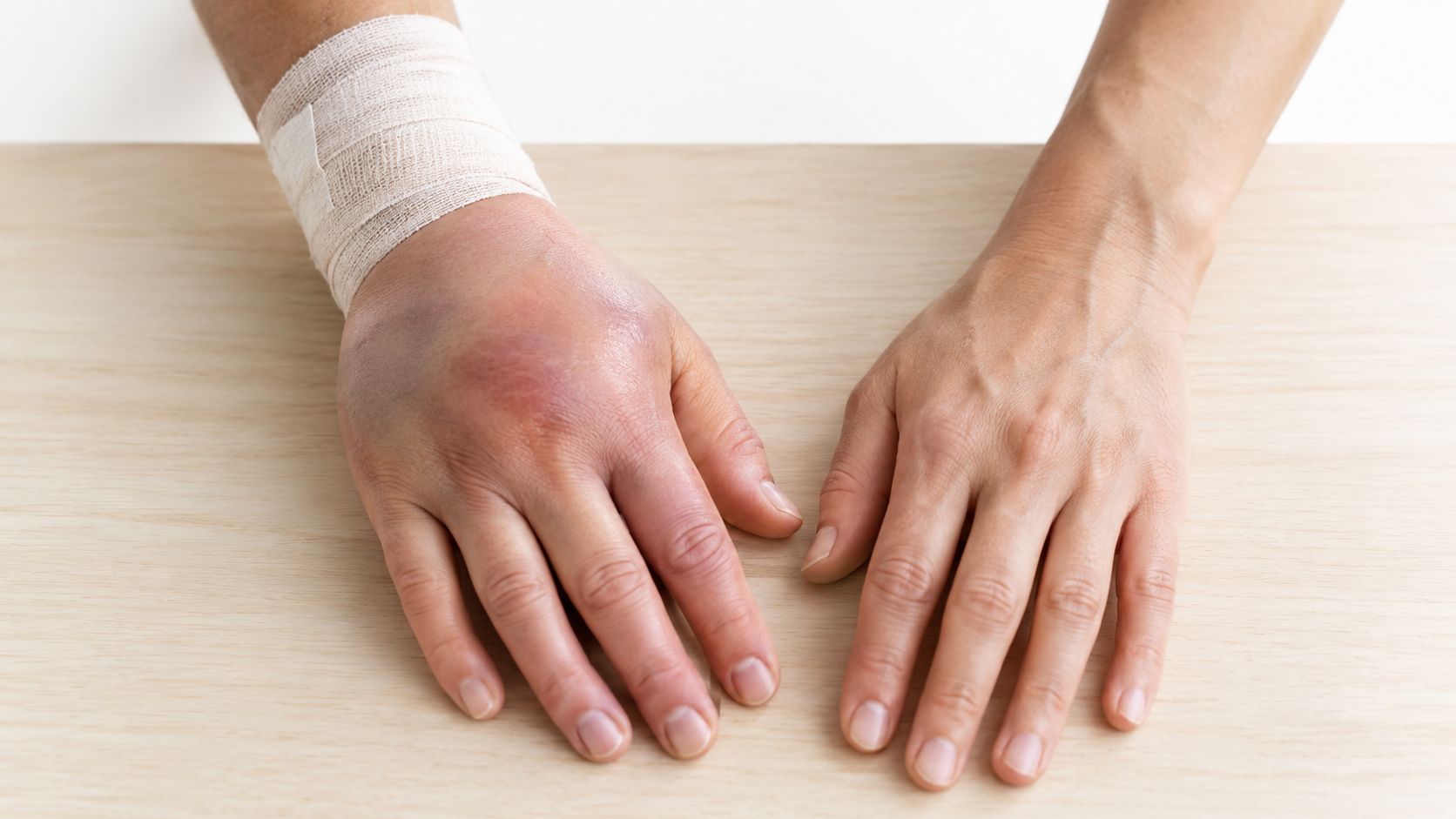
Table of Contents
- Introduction to Complex Regional Pain Syndrome and Why Early Treatment Matters
- Understanding How Complex Regional Pain Syndrome Develops
- Foundation of Care Through Physical Rehabilitation and Conservative Support
- Pharmacologic Approaches for Complex Regional Pain Syndrome
- Interventional Procedures Including Nerve Blocks and Neuromodulation
- Multidisciplinary Management and Creating a Personalized Treatment Plan
- Taking the Next Step Toward Relief and Restored Function
Introduction to Complex Regional Pain Syndrome and Why Early Treatment Matters
After an injury or operation to an arm or leg, healing may seem to stall. The original wound can close while the limb remains painful, difficult to use, or unusually sensitive. A person may stop moving a hand because movement hurts, then lose strength and flexibility because it has been protected. Dressing, cooking, walking, and sleeping can gradually require more effort.
This pattern can point to complex regional pain syndrome, or CRPS, although other conditions may look similar. Diagnosis starts with the history and physical examination. Testing may be added when needed to investigate other explanations. Pain intensity by itself does not confirm CRPS. Clinicians look for a broader pattern involving sensation, circulation, sweating, swelling, movement, and tissue changes.
Early assessment matters because treatment choices work best when they match the person's current stage. The aim is not to suppress pain, but to help the limb become usable again while the care team watches for progress and barriers.
Why treatment is sequenced
The 2022 CRPS guideline update places physical therapy and occupational therapy at the foundation of care. These approaches use carefully paced activity to rebuild movement and function without treating every increase in symptoms as a sign of new damage. Medication, sympathetic blocks, and psychological support may be added when rehabilitation alone is not producing enough progress. Their role is usually to make participation and recovery more achievable.
Practical rule: Judge a treatment partly by whether it helps the affected limb become more usable, not only by whether it briefly lowers the pain score.
This creates an escalation ladder. Foundation rehabilitation and supportive care come first. Medication may then address nerve irritability, localized sensitivity, or amplified pain processing. Blocks can offer temporary relief or diagnostic information. For carefully selected people whose symptoms remain refractory, spinal cord stimulation or dorsal root ganglion stimulation may be considered.
The next step depends on the affected limb, symptom duration, medical history, sleep, emotional strain, work demands, and response to earlier care. Before a pain consultation, record symptoms, functional limits, and treatments already tried. Ask what improvement the proposed option is meant to support and what would show that it is time to adjust the plan.
Understanding How Complex Regional Pain Syndrome Develops
Normal pain is a protective alarm. After an injury, nerves send warnings that encourage a person to guard the area. As healing progresses, the alarm should become quieter and respond mainly to meaningful threats.
CRPS can resemble an alarm system that remains too sensitive. A harmless stimulus, such as light touch, may trigger severe pain. At the same time, immune and autonomic processes can contribute to swelling, skin-color changes, temperature differences, sweating changes, and altered movement.
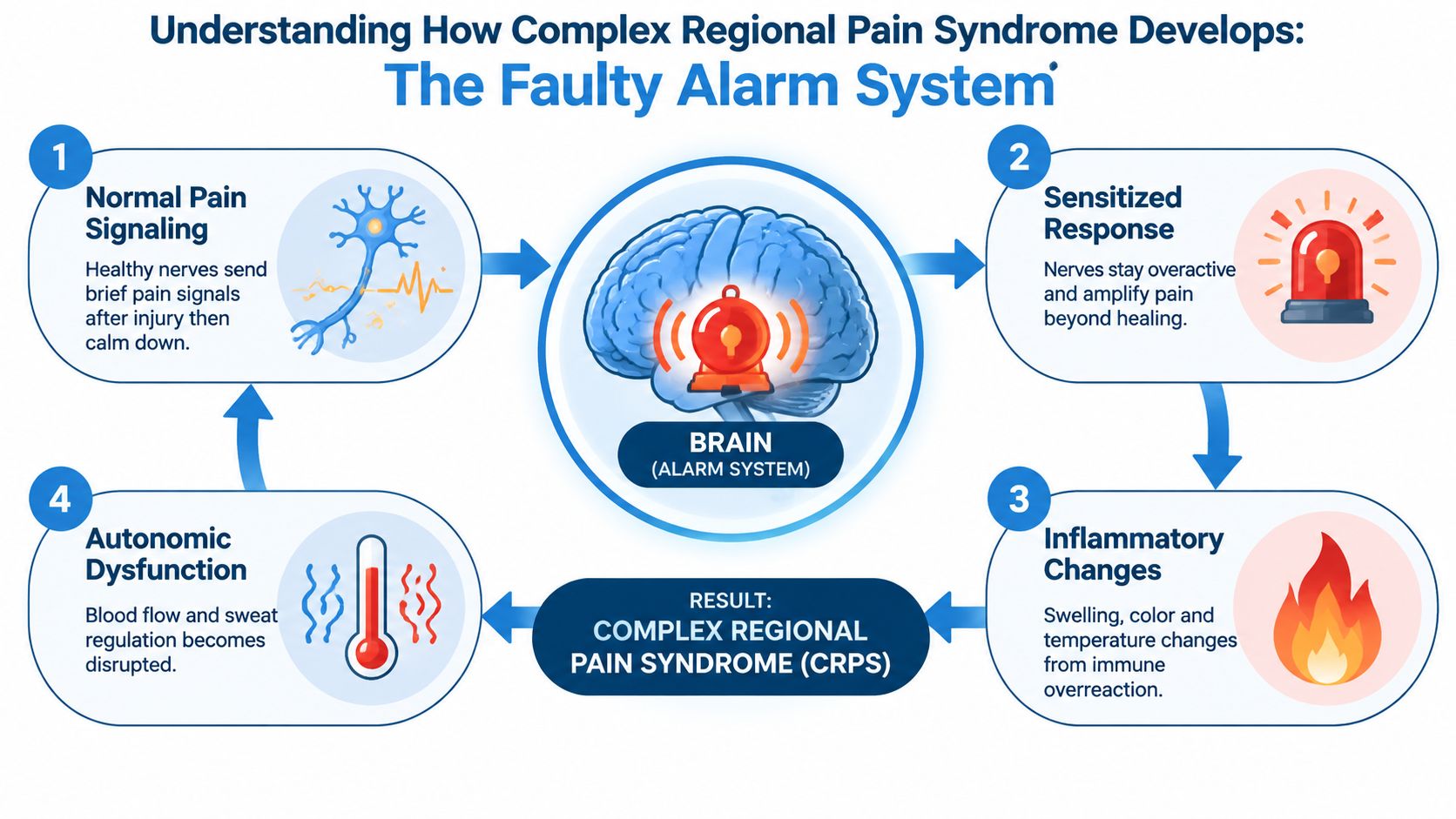
Four interacting parts of the alarm system
Nerve overactivity can produce burning, electric, stabbing, or unusually intense pain. The nervous system may treat ordinary contact as threatening, a phenomenon often called allodynia.
Inflammatory changes can produce swelling and visible differences in the limb. These findings don't necessarily mean that a new injury has occurred every time symptoms flare.
Autonomic disruption affects automatic functions such as blood flow, sweating, and temperature regulation. This helps explain why the affected limb may look or feel different from the other side.
Central sensitization describes amplification within the nervous system itself. In simple terms, the processing system turns the volume up. This concept helps explain why treatments aimed only at damaged tissue may not address the entire pain experience.
CRPS type I and type II
CRPS is commonly divided into type I and type II. Type I occurs without a confirmed distinct nerve injury, while type II is associated with an identifiable nerve injury. The distinction can influence diagnostic reasoning and the selection of treatments, but both types can involve pain, sensory sensitivity, swelling, autonomic changes, and impaired function.
The biology also explains why CRPS treatment options are diverse. A rehabilitation program addresses movement, protection, sensitivity, and function. Neuropathic-pain medication addresses abnormal nerve signaling. NMDA-receptor antagonists, such as ketamine, are considered because NMDA activity is involved in amplified pain processing. Neuromodulation approaches attempt to alter how pain signals travel and are interpreted.
That doesn't mean every mechanism needs a separate treatment. A pain specialist uses the pattern of symptoms and the patient's response to earlier care to decide which part of the alarm system needs the most attention.
Foundation of Care Through Physical Rehabilitation and Conservative Support
A hand may hurt when a sleeve touches it, or a leg may resist weight even after the original injury has healed. Physical rehabilitation is the first-line foundation of CRPS care because repeated, tolerable practice can teach an overprotective nervous system that movement and contact are not automatically threats. Current guidance places rehabilitation before escalation when a patient can still progress with conservative care.
The therapist does not force the limb through severe flares. Treatment begins at a manageable level, then increases gradually according to the person's response. Someone with hand CRPS might start with soft fabric, small movements, and brief use during a daily task. Someone with leg symptoms may practice accepting weight, walking, balance, and safe transfers.
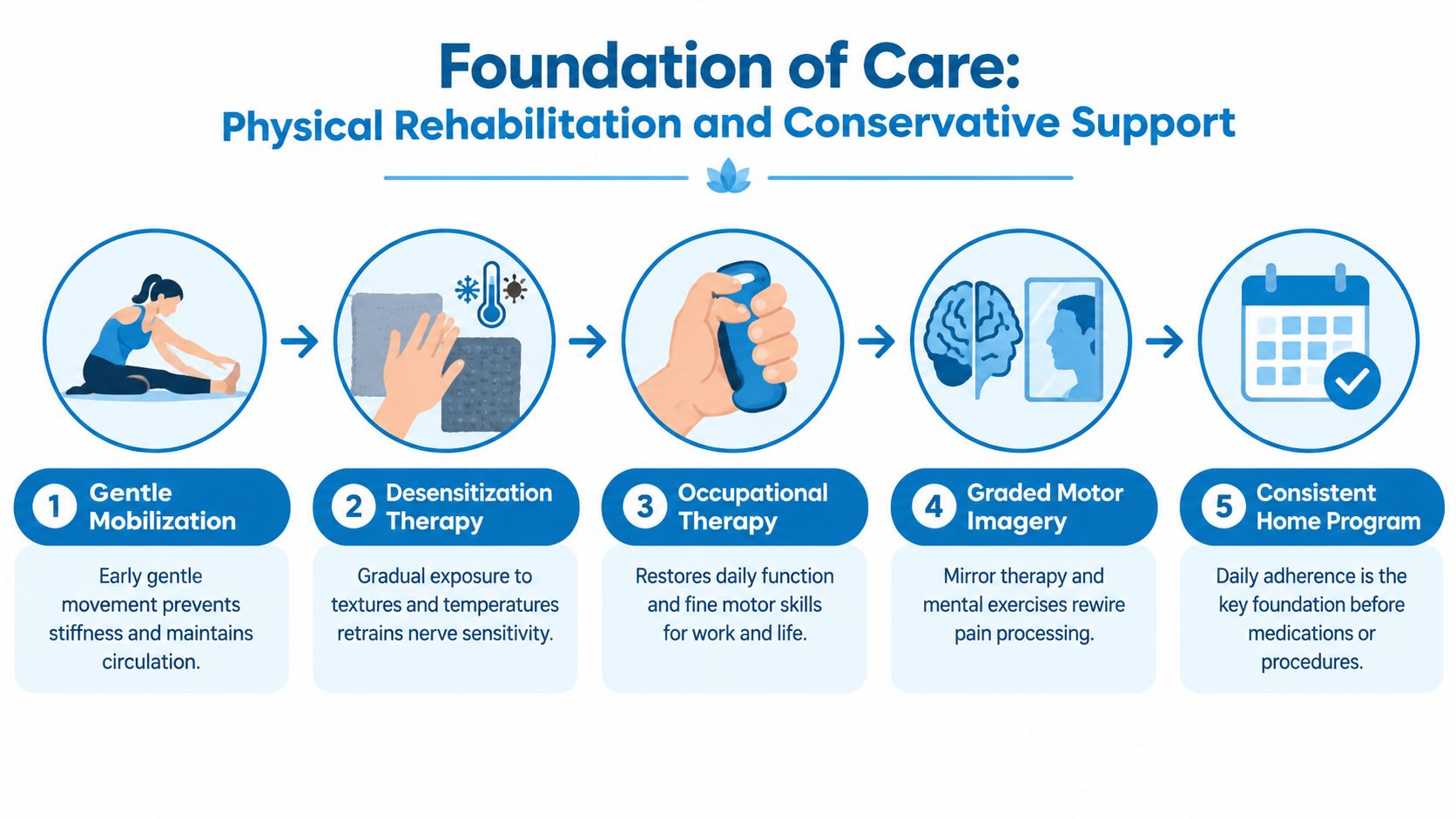
What rehabilitation may include
- Gentle mobilization: Preserves available motion and reduces fear of using the limb. The therapist adjusts range and repetitions to the person's response.
- Desensitization: Progressively introduces textures, pressure, vibration, or temperature. The goal is to lower the nervous system's high-alert response to ordinary contact.
- Edema management: Elevation, movement, compression when appropriate, and other clinician-directed methods can help control swelling.
- Occupational therapy: Rebuilds hand use, fine motor control, self-care, work tasks, and other meaningful activities.
- Graded motor imagery: Uses mental movement practice and mirror-based exercises to change how the brain represents the affected limb.
Home practice reinforces these lessons. The nervous system learns through repeated, manageable experiences, so short, consistent sessions may be easier to sustain than occasional efforts that trigger a major flare. Activity pacing helps alternate effort with recovery, rather than shifting between complete inactivity and overexertion.
Support beyond the limb
Sleep disruption, fear of movement, anxiety, and frustration can all make rehabilitation harder. Psychological support does not suggest that pain is imagined. It gives patients strategies for threat responses, sleep problems, stress, and the emotional strain of reduced independence.
Medication and procedures can serve as adjuncts, making movement more tolerable while rehabilitation continues. Their role is to support function, not replace practice. Coordinated education also helps patients find appropriate care, and healthcare organizations refining patient access may consult resources such as Helbling Digital Media's chiropractic SEO guide for practices.
A sustainable pace still counts as progress. A flare does not automatically show that rehabilitation is harmful, but repeated severe flares indicate that the program needs adjustment before considering a higher rung of treatment.
Pharmacologic Approaches for Complex Regional Pain Syndrome
Medication choices make more sense when organized by the pain feature being targeted. CRPS can involve burning nerve pain, touch sensitivity, inflammation, and amplified central processing, so one drug class may help one dimension while doing little for another.
The 2022 guideline update discusses anticonvulsants, sodium-channel blockers, NMDA-receptor antagonists, tricyclic antidepressants, gabapentin, pregabalin, clonidine, lidocaine patches, and topical capsaicin among the medication options with the strongest discussion base. Earlier guidance also placed medication within a broader strategy that used the WHO analgesic ladder while excluding strong opioids from that approach. Medication selection still requires review of sedation, interactions, mood, heart health, kidney function, skin tolerance, and other individual factors.
Comparing medication roles
| Medication class | Primary target | Typical role |
|---|---|---|
| Anticonvulsants, including gabapentin or pregabalin | Burning, shooting, and other neuropathic pain | Ongoing symptom management when nerve pain limits activity |
| Tricyclic antidepressants | Neuropathic pain, with possible relevance to sleep | Selected patients who need a broader nerve-pain strategy |
| Sodium-channel blockers | Abnormal nerve excitability | Specialist-guided treatment for particular neuropathic patterns |
| Topical lidocaine or capsaicin | Localized sensitivity and touch-evoked pain | Local treatment when symptoms are concentrated in an accessible area |
| Clonidine and selected sympathetic-oriented options | Autonomic or sympathetically maintained features | Case-by-case use under medical supervision |
| NMDA-receptor antagonists, including ketamine | Central sensitization and amplified pain processing | Rescue-style treatment for treatment-resistant CRPS, not routine first-line care |
A corticosteroid injection is different from a neuropathic-pain medicine. It may be considered for a separate inflammatory or structural pain generator when a clinician identifies one, but it doesn't automatically treat the full CRPS mechanism. Patients seeking background on injection-based care can review this corticosteroid injection guide and then discuss whether an injection fits the actual diagnosis.
Why ketamine requires careful selection
Intravenous ketamine is best understood as a short-term rescue option for treatment-resistant CRPS. A meta-analysis reported immediate pain relief in 69% of patients and relief lasting one to three months in 58%, while noting that the evidence is heterogeneous in its analysis of ketamine for CRPS. A later pharmacologic meta-analysis found statistically significant longer-term pain reduction, but rated the certainty of that evidence low.
Ketamine's NMDA-receptor activity provides a rationale for targeting central sensitization. The evidence supports monitored, individualized use rather than indefinite infusions or automatic escalation. A specialist should explain expected duration, monitoring, side effects, and how any temporary improvement will be used to support rehabilitation.
Interventional Procedures Including Nerve Blocks and Neuromodulation
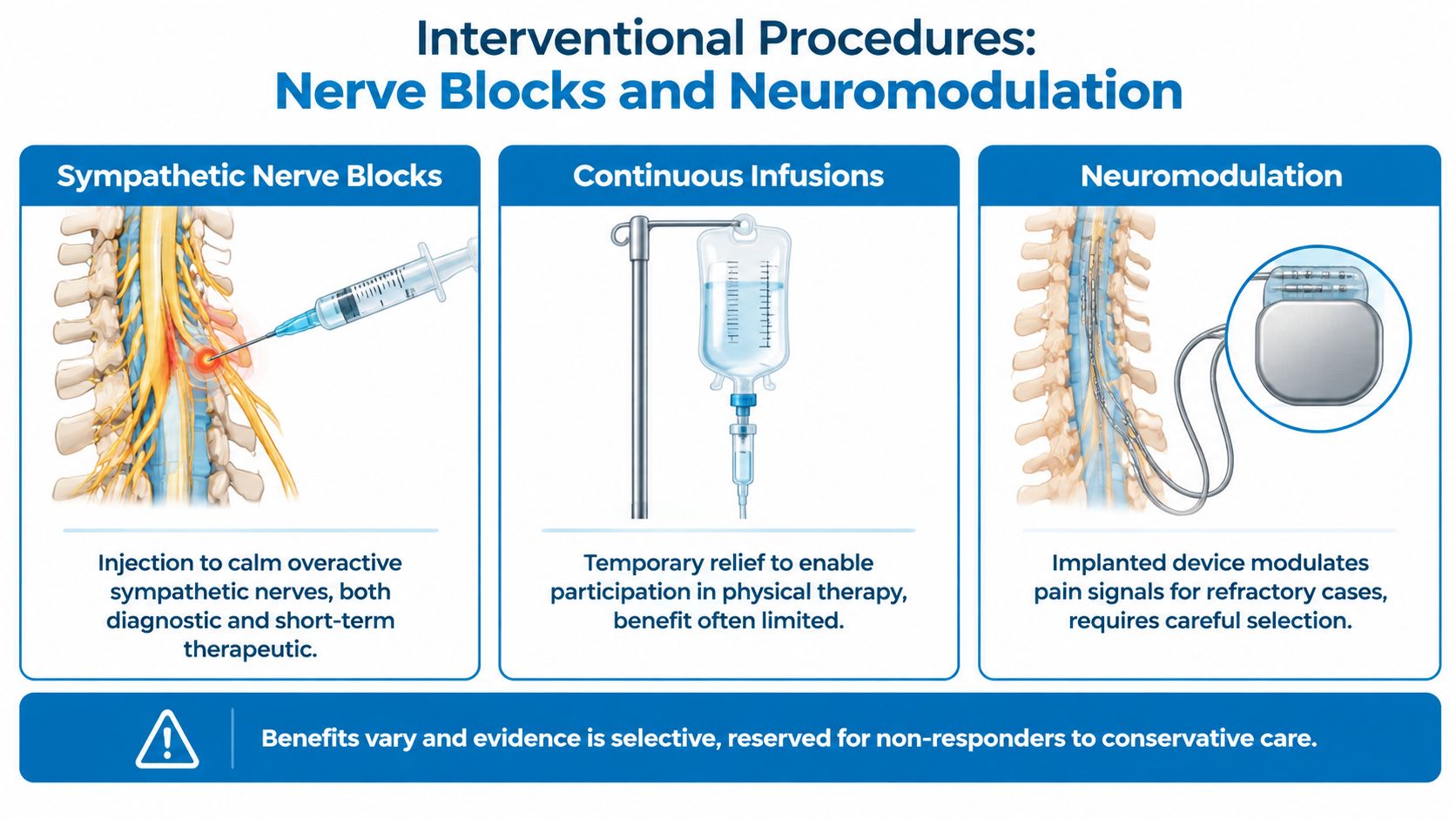
Procedures generally enter the plan when rehabilitation and medication haven't produced adequate progress, or when pain prevents meaningful participation in therapy. The least invasive option isn't always the most effective, but the purpose of each intervention should be clear before it is performed.
A sympathetic nerve block places medication near sympathetic nerves associated with the affected region. It may have both diagnostic and therapeutic purposes. If pain or limb symptoms change after the block, that response can help the clinician understand whether sympathetic activity contributes to the presentation. Relief may be temporary, so a short-lived response doesn't necessarily establish a long-term solution.
Patients should receive a clear explanation of preparation, monitoring, possible risks, expected duration, and the rehabilitation plan that follows. More information about the general role of these procedures is available in this nerve block overview.
When neuromodulation becomes reasonable
Spinal cord stimulation, or SCS, is an escalation option for refractory CRPS after rehabilitation and medication have failed to provide sufficient control. Earlier systematic evidence concluded that SCS had Level A evidence for CRPS type I and was cost-effective in that subgroup, as described in the historical literature on spinal cord stimulation for CRPS.
SCS uses an implanted system to modulate pain signaling. Dorsal root ganglion stimulation, or DRG stimulation, targets nerve-root structures linked more specifically to the painful region. Comparative research has reported a higher treatment-success rate with DRG stimulation than with SCS in a randomized trial. A 2024 review also found significant pain reduction among CRPS patients treated with SCS and DRG stimulation in its review of neuromodulation evidence.
These findings don't mean DRG stimulation is automatically preferable. Pain distribution, anatomy, prior procedures, medical risks, goals, and technical suitability all matter. A specialist should also distinguish pain reduction from restored function, because both outcomes deserve separate attention.
Durability and realistic expectations
Early improvement can diminish. A randomized trial with five-year follow-up reported that SCS plus physical therapy didn't outperform physical therapy alone at that later point, even though earlier results had shown benefit. That finding doesn't make SCS irrelevant. It shows why long-term follow-up, continued rehabilitation, device review, and honest discussion of durability belong in the decision.
A neuromodulation trial is a decision tool, not a promise. The patient and care team need agreed goals before implantation, such as improved walking, sleep, hand use, or tolerance of therapy.
Multidisciplinary Management and Creating a Personalized Treatment Plan
CRPS care becomes clearer when each clinician has a defined role. The pain physician evaluates medication and procedural choices, while the physical therapist leads movement and functional restoration. A psychologist can address fear, sleep, distress, and coping, and an orthopedic or spine specialist can review structural contributors when the history suggests another problem may be present.
The patient-centered plan should begin with practical goals. “Less pain” matters, but it may be too broad to guide decisions. A more useful goal could be tolerating clothing, walking to a mailbox, using a keyboard, returning to a household task, or sleeping with fewer interruptions. The team can then ask whether each intervention moves the person toward that goal.
How the team decides what comes next
A plan may stay at the rehabilitation stage when range of motion, tolerance, and daily function are improving. A clinician may adjust the pace when therapy repeatedly causes severe flares, or review the diagnosis when the symptom pattern changes. Escalation becomes more reasonable when symptoms remain disabling despite a documented, appropriately delivered conservative program.
Useful information to bring to an appointment includes:
- Symptom changes: Record burning, touch sensitivity, swelling, color, temperature, and sweating changes.
- Functional limits: Note what the affected limb can't do and what has become easier.
- Treatment response: Include medication effects, therapy tolerance, procedure duration, and unwanted reactions.
- Personal priorities: Identify work duties, caregiving tasks, sleep concerns, and movement goals.
Diagnostic review and imaging, when clinically indicated, can help the team distinguish CRPS from nerve entrapment, ongoing injury, joint disease, or spine-related pain. No single test replaces clinical judgment.
Care access also shapes a realistic plan. Patients may need coordination among offices, therapy schedules, procedure authorization, transportation, and follow-up. Practice operations, including efforts to optimize pain practice reimbursements, can affect how smoothly care is organized, but administrative efficiency doesn't replace clinical selection.
For patients who reach the neuromodulation stage, a specialist can explain candidacy and expectations through spinal cord stimulation evaluation. The central question remains functional: what should improve, how will progress be measured, and what happens if the trial or procedure doesn't meet the agreed goal?
Taking the Next Step Toward Relief and Restored Function
CRPS treatment is staged because the condition has several interacting features. Rehabilitation builds use and tolerance. Medication can reduce specific pain signals. Procedures may provide diagnostic information, temporary support, or neuromodulation for refractory symptoms. The appropriate sequence depends on the person's examination and response, not on a universal checklist.
Before an appointment, a patient can prepare a concise record:
- When symptoms began and what event preceded them.
- Which areas hurt and whether pain spreads.
- Changes in swelling, color, temperature, sweating, or sensitivity.
- What daily activities have become difficult.
- Which therapies have been tried, for how long, and what each changed.
- The main functional outcome the patient wants to regain.
Questions should be direct. Which findings support CRPS? What alternative diagnoses have been considered? How will therapy be paced? Is medication intended for ongoing management or short-term support? If a block or neuromodulation is proposed, what result would justify moving forward, and what would count as insufficient benefit?
A plan is working when the patient can do more safely and consistently, even if pain doesn't disappear immediately. A plateau isn't a personal failure. It signals the need for reassessment, a change in pacing, an added treatment, or a different place on the escalation ladder.
Interventional Pain Management evaluates complex pain conditions through coordinated medical, rehabilitation, orthopedic, and spine-focused care, including appropriate nerve procedures and spinal cord stimulation assessment. Adults seeking individualized guidance can visit Interventional Pain Management to request an evaluation and discuss the next practical step toward restored function.