
A lot of adults first notice thoracic back pain in an ordinary moment. They stand up from a desk after a long day and feel a sharp pull between the shoulder blades. They finish gardening, carrying groceries, or lifting a grandchild and notice a stubborn ache in the mid-back that wasn't there that morning. Because it sits between the neck and the low back, this pain is easy to dismiss or mislabel.
Thoracic back pain means pain in the middle back, roughly from the base of the neck down to the lower ribs. That region behaves differently from the neck and low back. It includes the spine, ribs, muscles between the shoulder blades, and the joints where those structures meet. That's why the causes of thoracic back pain can range from a simple muscle strain to rib-joint irritation, facet joint pain, arthritis, fracture, inflammation, infection, or pain referred from nearby organs.
Most cases are mechanical and improve with sensible care. Thoracic pain is also not rare. A major epidemiology review reported wide prevalence estimates by population and timeframe, including 1-year prevalence ranging from 3.8% to 35.3%, with a 6-month prevalence of 10.3% in studied populations, while another population-based summary described lifetime thoracic pain in roughly 15% to 35% of adults thoracic pain epidemiology review. That matters because persistent or recurring mid-back pain deserves a closer look, not automatic dismissal.
Table of Contents
- Understanding Thoracic Back Pain in Everyday Life
- The Thoracic Spine and Why It Matters
- Common Mechanical and Degenerative Causes
- Serious and Non-Spinal Causes You Should Not Ignore
- Red Flags and When to Seek Urgent Care
- How Doctors Diagnose the Cause of Thoracic Pain
- Treatment Pathways From Conservative Care to Interventional Procedures
- Taking the Next Step Toward Relief
Understanding Thoracic Back Pain in Everyday Life
Thoracic pain often worries people because it sits near the chest, lungs, and ribs. That worry is understandable. But location alone doesn't mean danger. In everyday practice, many patients with mid-back pain turn out to have irritated muscles, stiff rib-spine joints, overloaded facet joints, or postural strain from long hours in one position.
A common source of confusion is the word thoracic itself. It doesn't mean the pain must come from the spinal cord or a disc. It refers to the mid-back region. The pain can come from muscle, joint, rib attachment, bone, nerve, or sometimes from a non-spinal problem that the body feels in the back.
What the pain may feel like
Thoracic pain doesn't show up the same way in every person. Some feel a dull ache between the shoulder blades. Others notice a sharp pain when twisting, reaching, coughing, or taking a deep breath. A few describe a tight band wrapping around the chest wall.
Common descriptions include:
- Aching after sitting that builds through the day and eases after changing position
- Sharp pain with rotation such as backing up a car, reaching into the back seat, or swinging a golf club
- Stiffness first thing in the morning that improves after moving around
- Tender spots near the shoulder blade that feel knotted or sore to touch
- Pain along the ribs that's worse with deep breathing, lifting, or repeated overhead activity
Most mid-back pain is mechanical, but thoracic pain has a broader list of possible causes than many people realize.
Why people overlook it
People often blame posture alone. Posture can matter, but it's usually only part of the story. Mid-back pain may reflect how someone sits, how often they rotate, whether they carry load unevenly, whether nearby joints move well, and whether another condition is changing how the spine handles stress.
That's especially important because studies have linked thoracic spine pain with factors such as concurrent musculoskeletal disorders, high workload, high work intensity, ergonomic problems, manual physiotherapy tasks, climbing stairs, perceived injury risk, and high mental pressure. Another study found specific physical risks including frequent or sustained trunk bending with an odds ratio of 3.0, driving vehicles with an odds ratio of 2.8, being tall with an odds ratio of 2.2, and lack of recovery or task variation with an odds ratio of 2.0 thoracic pain risk factors and causes.
The Thoracic Spine and Why It Matters
The thoracic spine is built differently from the low back. That design explains why the causes of thoracic back pain often involve ribs, facet joints, and shoulder blade mechanics, not just discs.
A simple way to picture the anatomy
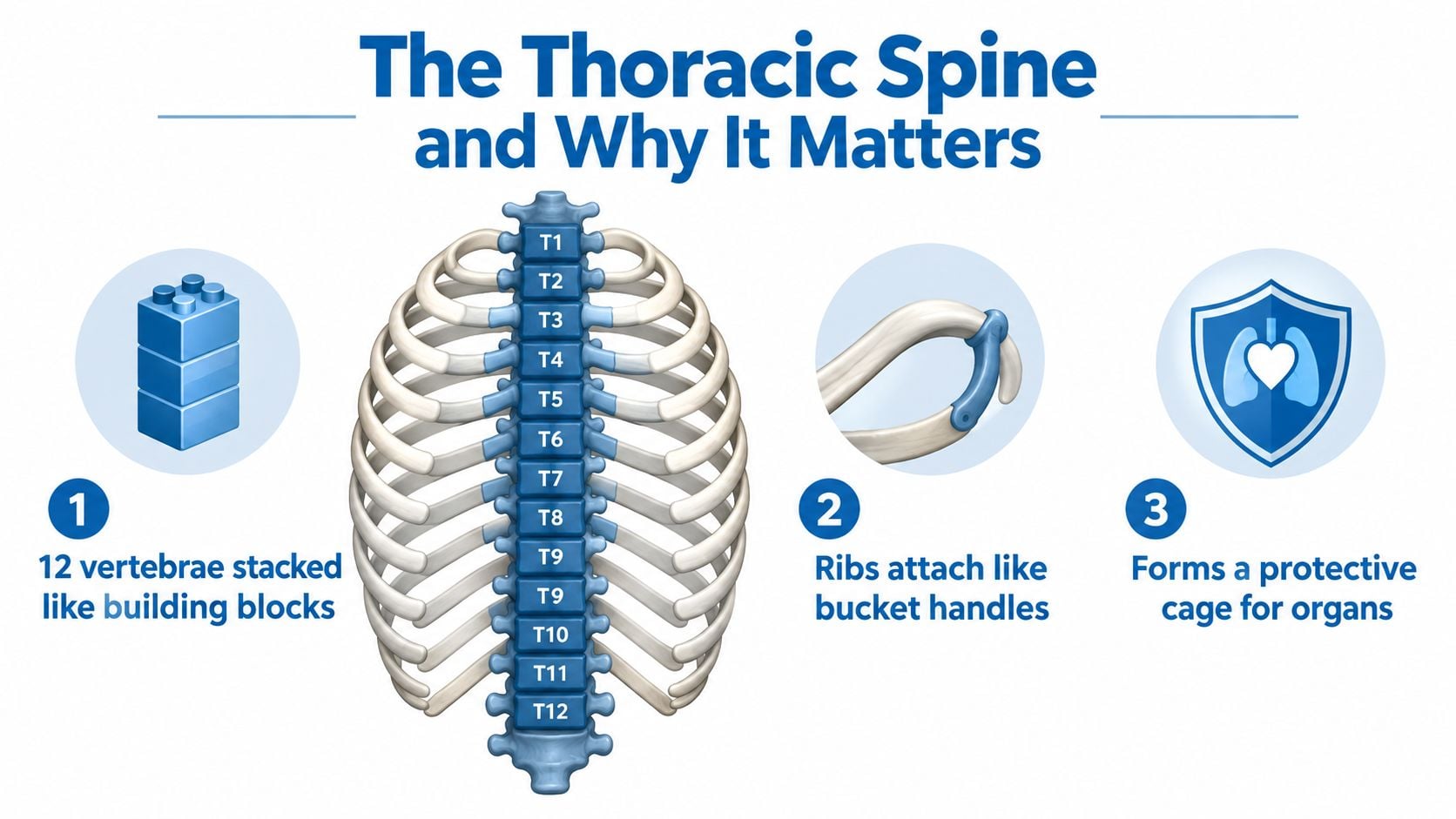
Think of the thoracic spine as a stack of 12 vertebrae, labeled T1 through T12, with ribs attached like curved handles on both sides. Together, those structures form a protective cage around the heart and lungs. That cage gives the body stability, but it also limits motion compared with the neck and lower back.
Several parts matter when pain shows up:
- Thoracic vertebrae support the middle trunk
- Facet joints help guide motion, especially extension and rotation
- Intervertebral discs sit between vertebrae, though thoracic discs are smaller than lumbar discs
- Costovertebral and costotransverse joints connect ribs to the spine
- Scapulothoracic region includes the shoulder blade gliding over the rib cage
Why the structure changes the symptoms
Because the rib cage stiffens the thoracic area, this part of the spine doesn't bend and twist as freely as the neck or low back. When someone develops pain here, the source often isn't a dramatic disc injury. It may be a rib joint that isn't moving well, a facet joint irritated by repeated extension or rotation, or muscles between the spine and shoulder blade that have been overloaded.
The shoulder blades also matter more than many people think. Every time someone reaches, pushes, types, lifts, rows, throws, or carries, the scapula has to glide over the rib cage smoothly. If that motion becomes strained, the mid-back often pays the price.
The thoracic spine protects vital organs, but that same protective design can make nearby joints and muscles absorb repetitive stress in very specific ways.
Why thoracic pain feels different from low back pain
Low back pain often centers on bending, lifting, and sitting load. Thoracic pain more often blends with breathing, rotation, rib motion, posture endurance, and shoulder blade control. That's why someone can have normal lumbar motion but still struggle to reach overhead, sit through a workday, or take a deep breath without mid-back discomfort.
Patient education sources and clinical summaries commonly emphasize that thoracic pain is often driven by mechanical overload of the paraspinal muscles and thoracic facet joints, with triggers such as poor posture, prolonged sitting, repetitive overuse, and acute strain or sprain events, while also noting that the differential includes degenerative disease, inflammatory conditions, vertebral fracture, and thoracic disc herniation overview of thoracic back pain causes.
Common Mechanical and Degenerative Causes
Most adults with thoracic pain fall into this group. The structures involved may differ, but the pattern is usually familiar. Pain changes with movement, posture, breathing, reaching, lifting, or time spent in one position.
The most frequent pain generators
| Cause | Typical Pain Pattern | Common Triggers |
|---|---|---|
| Paraspinal muscle strain | Local soreness or spasm between the shoulder blades | Long desk work, awkward lifting, sudden pull |
| Myofascial trigger points | Tender knots with aching or referred discomfort near the scapula | Repetitive reaching, stress tension, deconditioning |
| Thoracic facet joint irritation | One-sided aching, often worse with twisting or extension | Rotation, prolonged upright posture, repeated extension |
| Rib or costovertebral joint dysfunction | Sharp pain near the spine or along a rib, sometimes worse with deep breath | Coughing, lifting, twisting, sports |
| Intercostal muscle irritation | Pain between ribs, especially with breathing or trunk motion | Sudden reach, forceful cough, strain |
| Degenerative disc disease or spondylosis | Stiff aching pain that builds with activity or posture | Aging changes, repetitive loading |
| Thoracic disc herniation | Mid-back pain with possible band-like chest or abdominal pain | Disc injury, rotation under load |
| Compression fracture | Sudden focal pain, often severe, sometimes after minor strain or fall | Trauma, weakened bone |
| Kyphosis or scoliosis overload | Fatigue, asymmetry, and aching from chronic imbalance | Standing, walking, repetitive daily activity |
Where readers often get confused
A patient may say, “It feels like it must be a disc.” Sometimes it is, but not usually. Thoracic disc problems can happen, yet patient-facing summaries increasingly emphasize that soft-tissue strain, overuse, and joint irritation are common explanations, while thoracic disc problems are less common than lumbar disc problems rib, facet, and biomechanical thoracic pain patterns.
That matters because the next step depends on the pattern:
- Pain that's tender to touch and worse after activity often points toward muscle or myofascial overload.
- Pain that catches with twisting or extension fits better with facet or rib-joint irritation.
- Pain that wraps around the chest wall raises concern for nerve irritation, rib dysfunction, or less commonly a thoracic disc issue.
- Sudden pain after a fall or simple bend in an older adult should raise concern for compression fracture.
A closer look at a few common causes
Muscle strain and myofascial pain are everyday causes of thoracic pain. They often show up after overreaching, lifting in a twisted position, long stretches of slumped sitting, or returning to exercise too quickly. For patients trying to understand the usual healing course and sensible self-care after this kind of injury, this muscle strain recovery advice gives a straightforward overview.
Facet joint pain tends to stay more local. Patients often point with one or two fingers to a sore spot beside the spine. Twisting to one side, arching backward, or staying upright too long may make it worse.
Rib-spine joint irritation is commonly missed. The pain may sit just off the spine or spread along the rib line. Deep breathing, coughing, rolling in bed, or reaching across the body can aggravate it.
Degenerative changes, including osteoarthritis and spondylosis, can stiffen the thoracic spine and irritate joints over time. For readers who want background on how joint wear can contribute to persistent spinal pain, this overview of osteoarthritis and related joint degeneration is often useful.
Serious and Non-Spinal Causes You Should Not Ignore
Most thoracic pain is not dangerous. Still, the mid-back has a wider differential than many people expect. That's why this region deserves a little more caution than a simple “probably posture” answer.
Spinal problems that need prompt attention
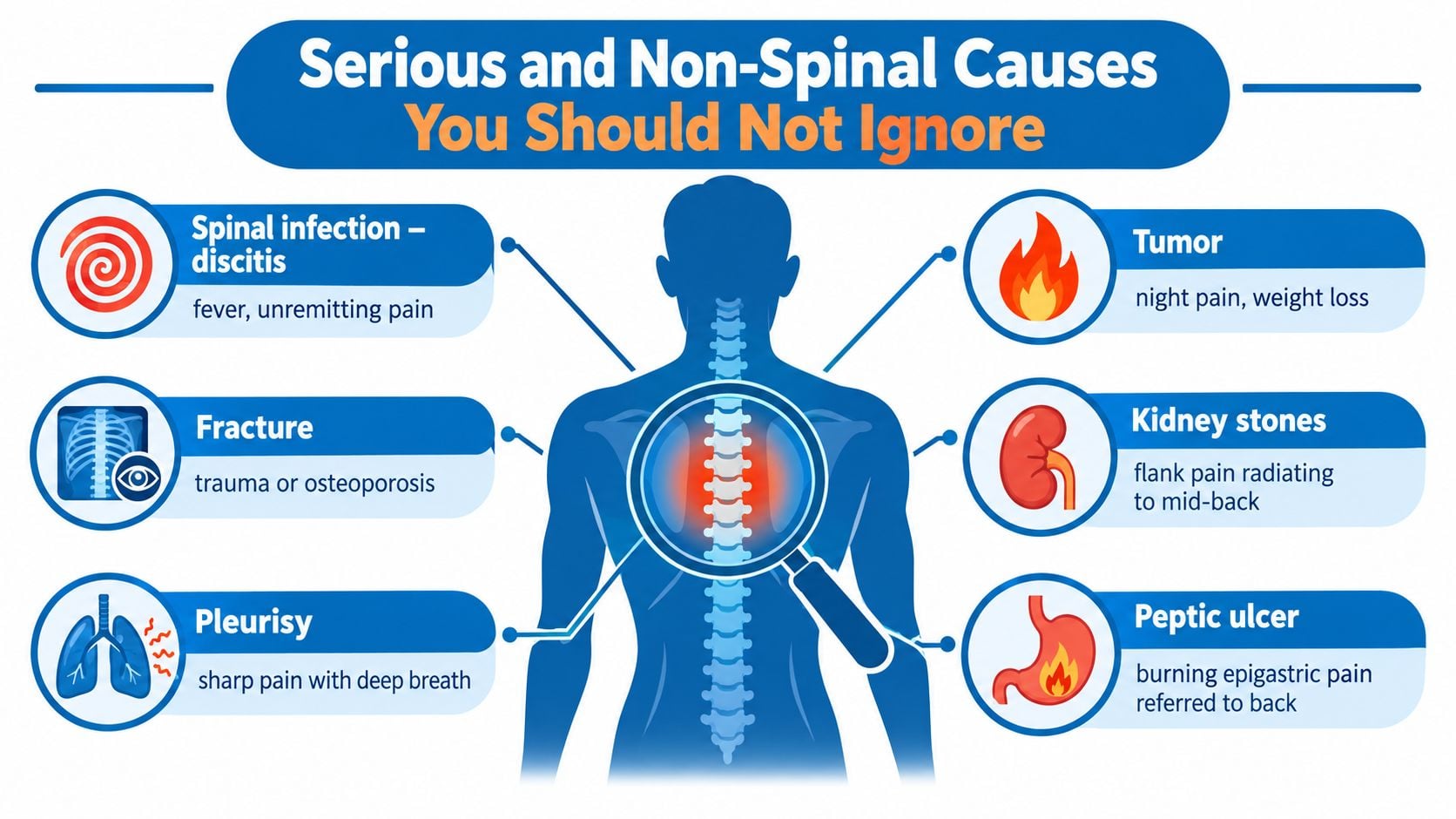
Infection in or around the spine can cause persistent pain that doesn't behave like a strain. Discitis, osteomyelitis, and epidural abscess may bring deep constant pain, often with fever or a general sense that something is wrong.
Tumors can also present as thoracic pain. This includes primary spinal tumors and cancer that has spread from elsewhere. Pain that's worse at rest, wakes someone at night, or comes with unexplained weight loss deserves attention.
Fracture is another key diagnosis, especially after a fall, car crash, or in someone with weakened bone. A vertebral compression fracture may follow a major injury, but in fragile bone it can also appear after a much smaller strain than people expect.
Important non-spinal causes
Thoracic pain can also be referred from organs in the chest or abdomen. That means the source isn't in the spine at all.
Examples include:
- Lung-related pain such as pneumonia or pulmonary embolism, often tied to breathing symptoms
- Heart and large blood vessel emergencies such as aortic dissection, especially if chest pain is part of the story
- Esophageal pain that may be felt behind the chest or into the back
- Gallbladder or pancreatic pain that may spread into the mid-back
- Kidney problems that may cause flank pain radiating toward the back
A practical concern is shingles. Thoracic shingles may begin with burning, tingling, or sharp band-like pain before the rash appears. If a new rash follows rib-line pain, evaluation is appropriate. Patients dealing with lingering nerve pain after shingles can also review post-shingles pain information.
Mid-back pain with fever, night sweats, unexplained weight loss, chest symptoms, or abdominal symptoms shouldn't be treated as routine strain until a clinician says so.
Why the thoracic region gets more caution
Educational reviews note that thoracic pain is often oversimplified into “posture” or “muscle strain,” even though the region has a broader differential that includes inflammatory, degenerative, metabolic, infective, neoplastic, and osteoporotic causes, along with structural disorders such as ankylosing spondylitis, Scheuermann's disease, and scoliosis or kyphosis broad differential in thoracic back pain. The point isn't to scare readers. It's to keep unusual but important patterns from being ignored.
Red Flags and When to Seek Urgent Care
When thoracic pain shows up, the best question isn't “Is this serious?” The better question is “What else is happening with it?” The combination of symptoms usually tells the story more clearly than the pain alone.
Go to the emergency room or call 911
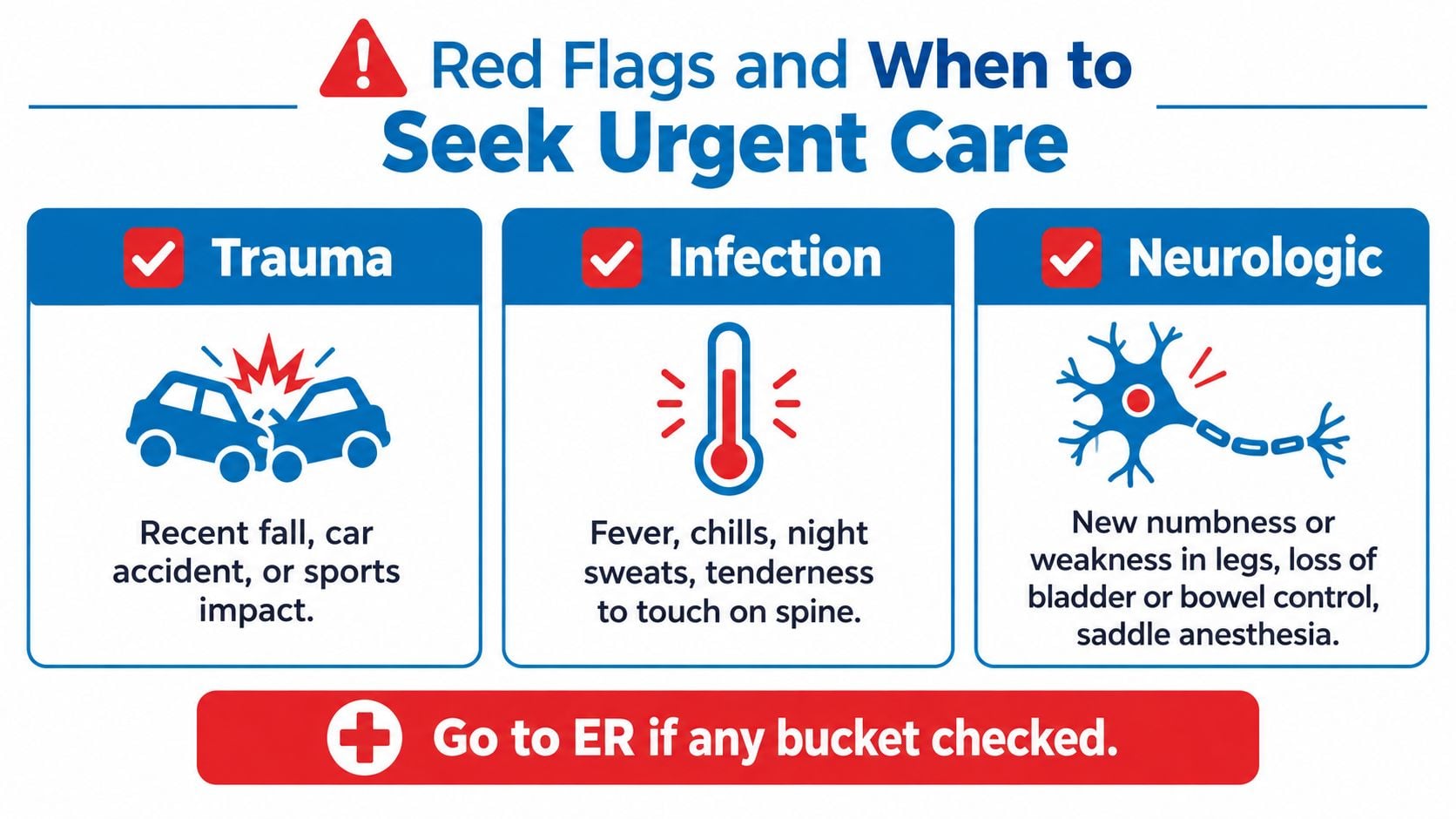
These situations need immediate evaluation:
- New bowel or bladder loss with back pain, leg symptoms, or numbness in the saddle area
- Sudden chest pressure or shortness of breath with upper or mid-back pain
- Severe pain after major trauma such as a car accident or significant fall
- Rapidly worsening leg weakness or trouble walking
- Severe back pain with fever and feeling acutely ill
This is not the time to wait for a routine appointment.
Call for same-day medical guidance
These patterns usually warrant a same-day call to a primary care doctor, urgent care, or pain and spine specialist in New Jersey or Staten Island:
- Pain with fever, chills, or night sweats
- Unexplained weight loss with persistent thoracic pain
- New rash after burning or band-like rib pain
- Sudden focal pain in an older adult or someone with known bone fragility
- Pain that's constant at rest or wakes the patient repeatedly at night
Reasonable to schedule a prompt outpatient visit
Some situations are not emergency-level, but shouldn't be brushed off:
- Pain lasting beyond the expected early strain phase, especially if it keeps returning.
- Pain wrapping around the rib cage or paired with numbness or tingling.
- Mechanical pain that limits work, sleep, driving, or daily function.
- Mid-back pain after repetitive work, especially if lifting, twisting, or prolonged driving are part of the job.
New bowel or bladder dysfunction with thoracic pain is an emergency. Every hour matters.
For adults in New Jersey and Staten Island, prompt evaluation can come through a primary care clinician, urgent care, an orthopedic spine office, or a pain management clinic depending on symptom severity and local access.
How Doctors Diagnose the Cause of Thoracic Pain
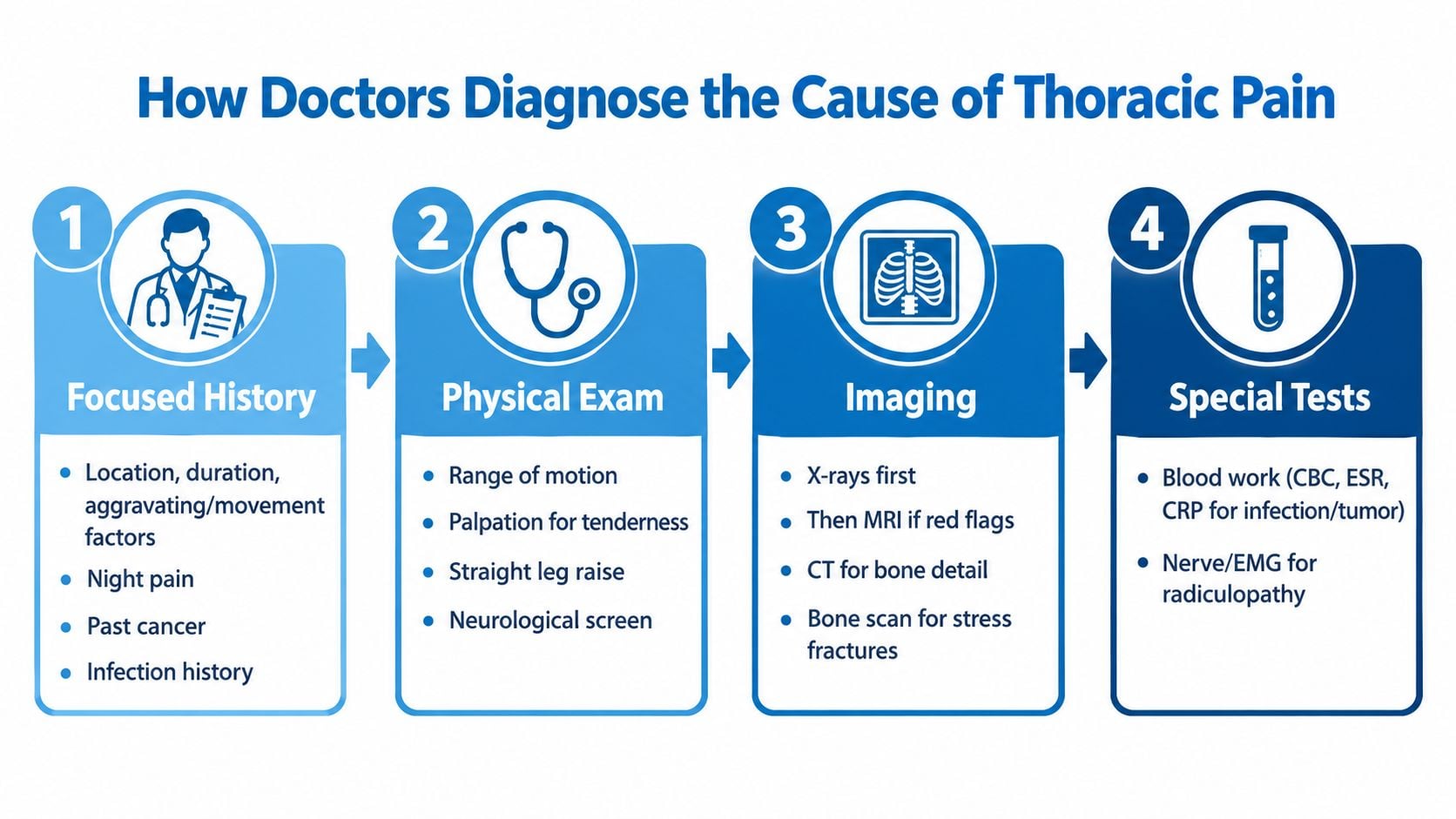
Diagnosis starts with pattern recognition. A good thoracic workup usually becomes clear within the first visit because the history and physical exam often narrow the list quickly.
The history comes first
The clinician usually asks where the pain sits, how long it has been present, what makes it worse, and whether it changes with twisting, breathing, coughing, sitting, or lifting. They also ask about trauma, cancer history, infections, steroid use, osteoporosis risk, and symptoms such as fever, rash, numbness, weakness, or chest and abdominal complaints.
This part matters because thoracic pain caused by a rib joint behaves differently from pain caused by a fracture, infection, or referred organ problem.
The physical exam narrows the source
The exam often includes:
- Posture and spinal alignment observation
- Thoracic range of motion testing
- Palpation for tenderness along muscles, facets, ribs, and spinous processes
- Rib and costovertebral provocation to see whether rib-spine motion reproduces the pain
- Neurologic screening of the legs for strength, reflexes, sensation, and gait
A patient who hurts mainly with rotation and local pressure may have a very different problem from someone with nighttime pain, weakness, and gait change.
When imaging or lab work is added
Plain X-rays are commonly used when trauma, fracture, scoliosis, or kyphosis is suspected. MRI is usually the most useful advanced imaging test when the concern involves discs, the spinal cord, infection, tumor, or persistent nerve-related symptoms. CT can help define bone detail. Bone density testing may be useful when fracture risk is part of the story.
Blood work may include a CBC, ESR, or CRP if infection, inflammatory disease, or another systemic process is suspected. From there, referral may go to a pain physician, orthopedic spine surgeon, neurosurgeon, rheumatologist, oncologist, or another specialist depending on the findings.
Treatment Pathways From Conservative Care to Interventional Procedures
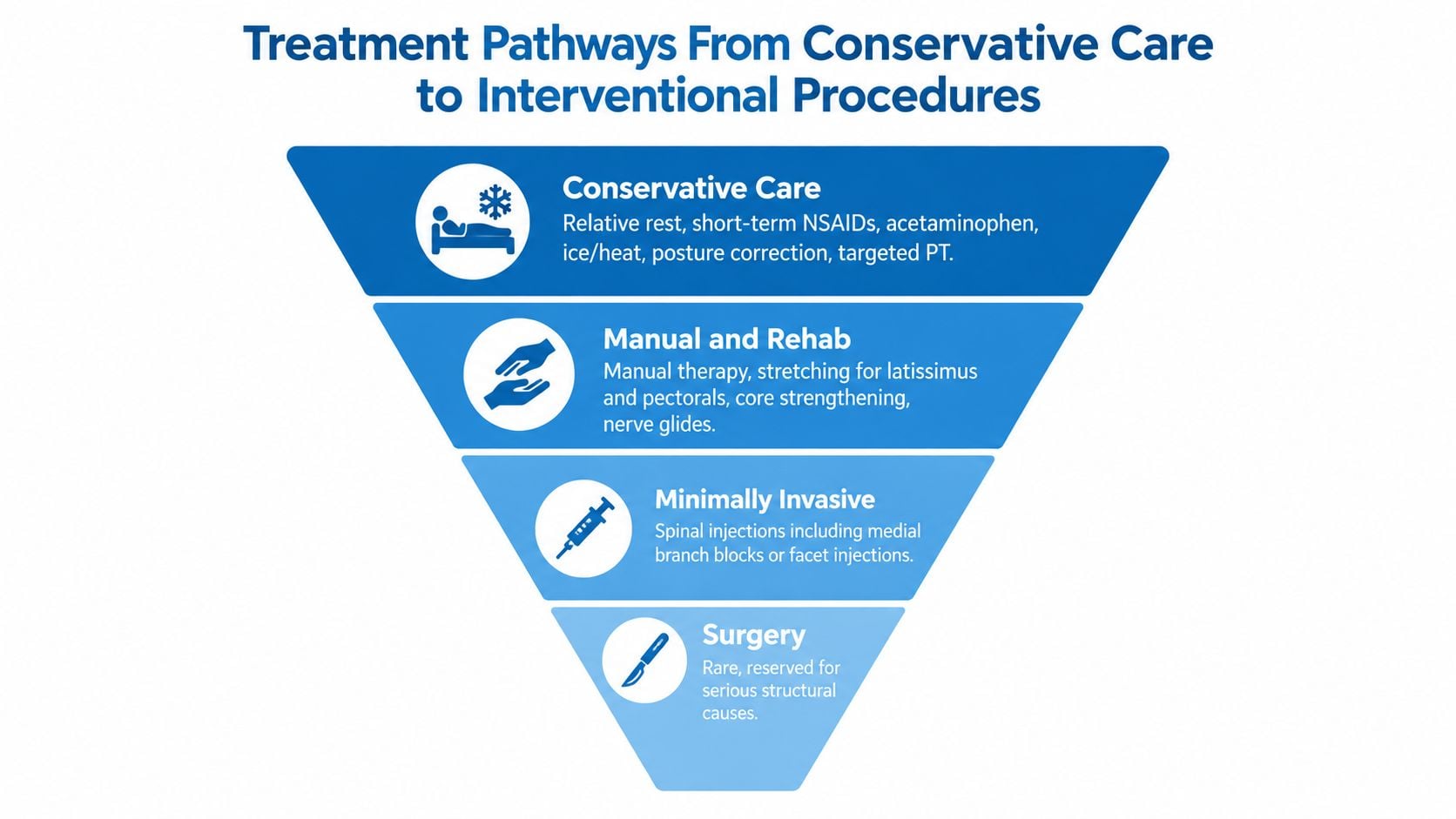
Good thoracic pain treatment usually works best as a stepwise plan, not a race to the most invasive option. The right treatment depends on the cause, but most mechanical cases improve when the pain generator is identified early and managed logically.
First-line care for common mechanical pain
Conservative treatment often includes relative rest, short-term medication if medically appropriate, heat or ice, and a targeted physical therapy plan. The goal isn't to stop all movement. It's to reduce aggravating load while restoring the kind of motion the thoracic region needs, especially extension, rotation, breathing mechanics, and shoulder blade control.
Workstation changes also matter. A person who spends hours hunched over a laptop may need a different chair setup, monitor height adjustment, and scheduled movement breaks. Someone who drives for work may need a plan for seat position, rest breaks, and unloading repeated rotation after the workday.
When pain persists
If symptoms continue or keep recurring, structured rehabilitation often becomes more important than simple rest. That may include manual therapy, mobility work for the thoracic spine and ribs, strengthening around the trunk and shoulder blades, and treatment of myofascial trigger points.
For select patients, image-guided procedures can help confirm and treat the pain source:
- Medial branch blocks may help identify facet-mediated pain.
- Radiofrequency ablation may be considered when facet pain is confirmed and persists.
- Intercostal or rib-related nerve blocks can help when pain tracks along the rib line.
- Trigger point injections may reduce stubborn muscular pain.
- Epidural steroid injections may be useful when a thoracic disc or inflamed nerve root is driving symptoms. Readers can review how epidural steroid injections are used for spine-related pain.
One local option for this kind of workup and image-guided treatment is Interventional Pain Management, which provides pain management, orthopedic, and spine services across New Jersey and Staten Island.
Escalating care doesn't mean conservative treatment failed. It often means the diagnosis became clearer and treatment got more targeted.
When surgery enters the picture
Surgery is usually reserved for specific situations such as progressive neurologic deficit, structural instability, certain fractures, significant cord compression, tumor, or another serious structural cause. Most adults with ordinary mechanical thoracic pain never need that step.
Taking the Next Step Toward Relief
The most useful next move is usually simple. Track the pain pattern for several days. Note where it sits, what movements trigger it, whether it wraps around the ribs, whether breathing changes it, and whether any red flags are present. That short symptom record often helps a clinician sort out muscle strain from rib dysfunction, facet pain, nerve irritation, or something more concerning.
Self-management is reasonable when the pain clearly follows a minor strain, improves with position changes, and keeps moving in the right direction. Formal evaluation makes more sense when the pain persists, returns repeatedly, interferes with sleep or work, or comes with warning signs such as trauma, fever, weakness, rash, or chest and abdominal symptoms.
A pain specialist can offer more than medication alone. That visit may include a focused mechanical exam, review of imaging, guidance on whether physical therapy is enough, and image-guided diagnostic or therapeutic injections when the pain source remains unclear. Acting sooner often keeps treatment simpler and helps patients return to normal activity faster.
Interventional specialists can help sort out whether mid-back pain is coming from muscle strain, rib-spine mechanics, facet joints, nerve irritation, or a condition that needs referral beyond routine care. For adults in New Jersey and Staten Island dealing with persistent thoracic pain, Interventional Pain Management offers evaluation, image-guided procedures, and coordinated orthopedic and spine follow-up when the diagnosis calls for it.