
Vein ablation in 2026 typically runs $1,000 to $5,000 per leg, depending on the technology. The all-in cost is what matters, because mapping, ultrasound, follow-up, and bilateral treatment can change what the patient owes by a lot.
That's why two people with the same diagnosis can walk out of separate consults with very different bills. One quote looks cheap until the extras appear. Another looks higher, but it may already include the pieces that drive the final balance.
Table of Contents
- What You're Actually Paying For
- Typical Price Ranges by Procedure Type
- Anatomy of a Vein Ablation Bill
- How Insurance Coverage and Coding Actually Work
- Estimating Your Real Out-of-Pocket Cost
- Financing and Payment Options That Actually Help
- Local Guidance for New Jersey and Staten Island Patients
- Questions to Ask Before You Book
What You're Actually Paying For
A patient can compare two quotes for the same vein problem and still end up with bills that differ by more than a thousand dollars. That gap usually has nothing to do with medical need, and everything to do with what each practice includes in the quoted episode.
Practical rule: If the quote doesn't say what's bundled, it's not a real comparison.
The clean way to think about vein ablation procedure cost is as four separate buckets. First is the procedure itself, meaning the physician work and the ablation technology. Second is the facility or office setting, because operating room time, staffing, and room use get priced differently depending on where care happens.
Third is imaging and mapping, which is not optional in a real reflux workup. Fourth is follow-up, including duplex surveillance and any additional visit tied to confirming closure. A low headline price often leaves out one or more of those pieces, then adds them later.
The most common mistake is treating a “from” price like a final price. It usually isn't. A better comparison is, “What will the patient owe for the full episode, from mapping through post-procedure follow-up?”
That's exactly how to approach the internal estimate from a vein practice, too. The goal is not to find the cheapest sticker. The goal is to compare the actual payment obligation for the same clinical work, under the same billing rules. For patients starting that process, the practice overview at Interventional Pain Management is a useful place to see how vein evaluation fits into broader care planning.
Typical Price Ranges by Procedure Type
The market doesn't price every ablation the same way, and it shouldn't. Technology choice changes the bill because the hardware, disposable kit, and follow-up burden are different from one method to the next.
What usually sits lower, and what usually sits higher
EVLA generally lands toward the lower-to-middle end of the self-pay spectrum, often because its direct procedure cost can be leaner than other approaches. RFA tends to sit a step higher. Non-thermal methods and adhesive-based options usually sit higher still because device costs are steeper and follow-up is often bundled into the episode.
A 2014 cost model in Phlebology estimated the 8-week total expected cost at $1,827 for EVLA and $2,106 for RFA, compared with $2,165 for polidocanol foam, $2,374 for surgery, and $2,844 for multimodality treatment. That same model found EVLA as the least costly stand-alone thermal option in its pathway, which helps explain why minimally invasive ablation became a mainstream treatment choice for great saphenous reflux. Phlebology cost model
| Technology | Typical Per-Leg Range | Key Cost Driver |
|---|---|---|
| EVLA | Lower-to-middle of the self-pay range | Disposable laser kit and generator use |
| RFA | Mid-range, often higher than EVLA | Catheter cost, imaging, and bundled surveillance |
| Chemical ablation | Varies by protocol and setting | Drug preparation, mapping, and session complexity |
| VenaSeal | Usually the highest of the common outpatient options | Device cost and broader bundled episode pricing |
The point isn't that one method is always better. The point is that the procedure choice is a real cost driver, not a rounding error. A patient comparing quotes should ask for the price per leg and for the fully bundled episode, because that is the only apples-to-apples number that means anything.
Anatomy of a Vein Ablation Bill
The bill usually breaks into pieces that patients never see in the headline number. That's where the surprise comes from, and that's where bad comparisons start.
The line items that actually move the total
The physician's professional fee covers the clinical judgment, the procedure, and the hands-on work. The facility fee covers the room, nursing support, supplies tied to the setting, and the infrastructure needed to do the procedure safely. Imaging and mapping cover the ultrasound work that confirms the reflux pattern and guides treatment.
Consumables matter more than most patients expect. In one European cost model, consumables alone ran $800 to $830 per procedure, and total direct procedure costs for RFA were $1,358 to $1,465.50 before broader overhead and local pricing effects were added. European RFA cost model
The final piece is follow-up. That includes the post-procedure duplex check, and sometimes a visit to review the result and symptoms. If a quote leaves that out, the patient is not getting a complete number.
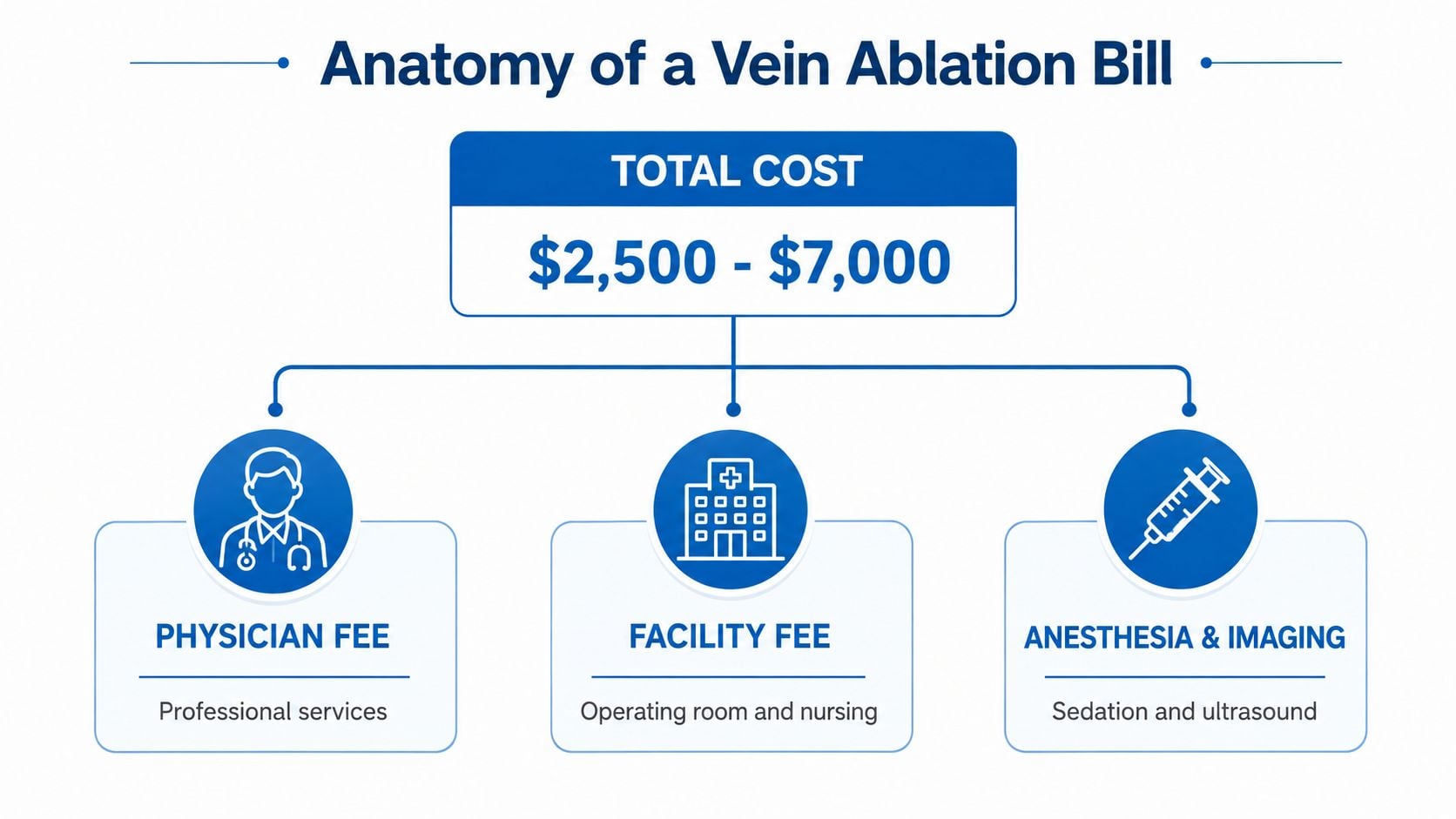
A bundled quote is only useful if it names the bundle. If it doesn't list imaging, follow-up, and the treatment setting, the quote is incomplete.
The most practical move is simple. Ask for an itemized estimate before scheduling, and compare the same components across practices. That's the only way to avoid getting trapped by a low advertised price that grows after the procedure.
How Insurance Coverage and Coding Actually Work
Insurance does not pay because a procedure sounds medically reasonable. It pays when the claim fits the plan's coverage rules and the medical record supports medical necessity.
Why approval and payment are not the same thing
Vein ablation is commonly billed under specific CPT coding for endovenous ablation, and the code is only the starting point. The insurer still looks at symptoms, exam findings, ultrasound evidence, and the plan's own medical-necessity criteria before deciding what it will pay.
Preauthorization sounds like a green light, but it isn't a guarantee. The claim can still be reviewed later, and a denied claim can still land on the patient if the plan says the criteria were not met. A plain-language guide on what insurance won't cover is useful here because many patients assume “approved” and “paid” mean the same thing. They don't.
Compression stockings are another common blind spot. Even when the ablation itself is covered, the stockings may still be out of pocket. That's one of the easiest ways a patient ends up with a small but annoying separate bill.
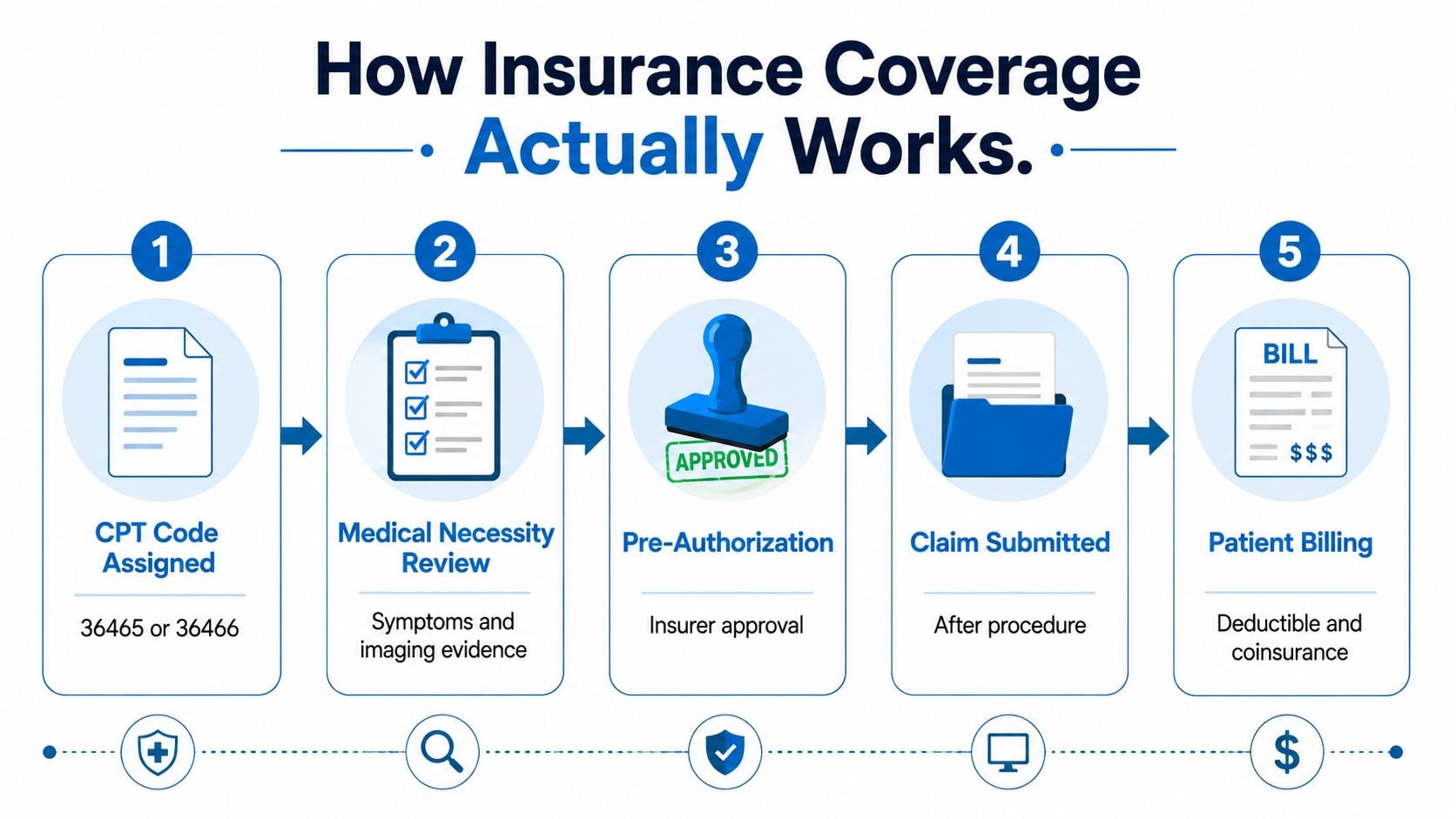
The right question is not, “Is vein ablation covered?” The right question is, “What evidence does the insurer need, what is my deductible status, and what part of the claim could still be my responsibility after review?” That framing saves time and keeps patients from overtrusting a preauthorization letter.
Estimating Your Real Out-of-Pocket Cost
The number on the quote is not the number the patient owes. The patient's share depends on deductible, coinsurance, and the out-of-pocket maximum, and each one changes the math in a different way.
Use the plan's math, not the brochure's math
Start with the contracted rate, not the sticker price. If the plan has negotiated a lower allowed amount, that is the base used for billing calculations. Then check how much of the deductible is still unmet, because that part usually gets paid first.
After the deductible, coinsurance applies until the out-of-pocket maximum is reached. Once the patient hits that maximum, covered care usually drops to zero or close to it for the rest of the plan year, depending on the policy terms.
A simple worksheet makes this easier:
- Step 1: Identify the contracted rate for the ablation.
- Step 2: Subtract any remaining deductible.
- Step 3: Apply coinsurance to the balance, if the deductible is already met.
- Step 4: Stop once the out-of-pocket maximum is reached.
A patient with a $2,500 deductible, 20% coinsurance, and a $6,000 out-of-pocket max facing a $4,200 contracted rate will not owe the same amount in every situation. If the deductible is untouched, the patient may owe up to the deductible amount first. If the deductible is already met, the patient's share falls under coinsurance. If the out-of-pocket max has already been hit, the covered balance may be near zero.
That is why timing matters. The same procedure in the same office can land very differently depending on where the patient is in the plan year. The smartest move is to run the numbers before booking, not after the explanation-of-benefits arrives.
Financing and Payment Options That Actually Help
Patients paying out of pocket need a payment plan that fits the total bill, not just the procedure date. The best option depends on whether the patient is trying to reduce the sticker price, spread the payment, or split the treatment across plan years.
The options that are actually practical
A bundled self-pay package works best when the practice is upfront and the patient wants a single predictable number. That keeps the episode clean, especially when the quote includes mapping and follow-up from the start.
HSA or FSA funds are often the cleanest way to pay when the balance is already set aside. They work especially well for a single-leg treatment where the contribution balance can cover the full patient share without financing.
Third-party medical credit can help when the patient needs monthly payments instead of a lump sum. That can make sense for higher deductible situations, but the payment terms need to be read carefully before agreeing.
Staged bilateral treatment is a useful tactic when both legs need care. Splitting treatment can spread the expense across two plan years, which may improve deductible timing and reduce the pressure of one large bill.
A patient education resource like The Pulse Morristown's financial crisis guide is worth reading if medical bills are already stacking up, because the cost problem is often bigger than one procedure.
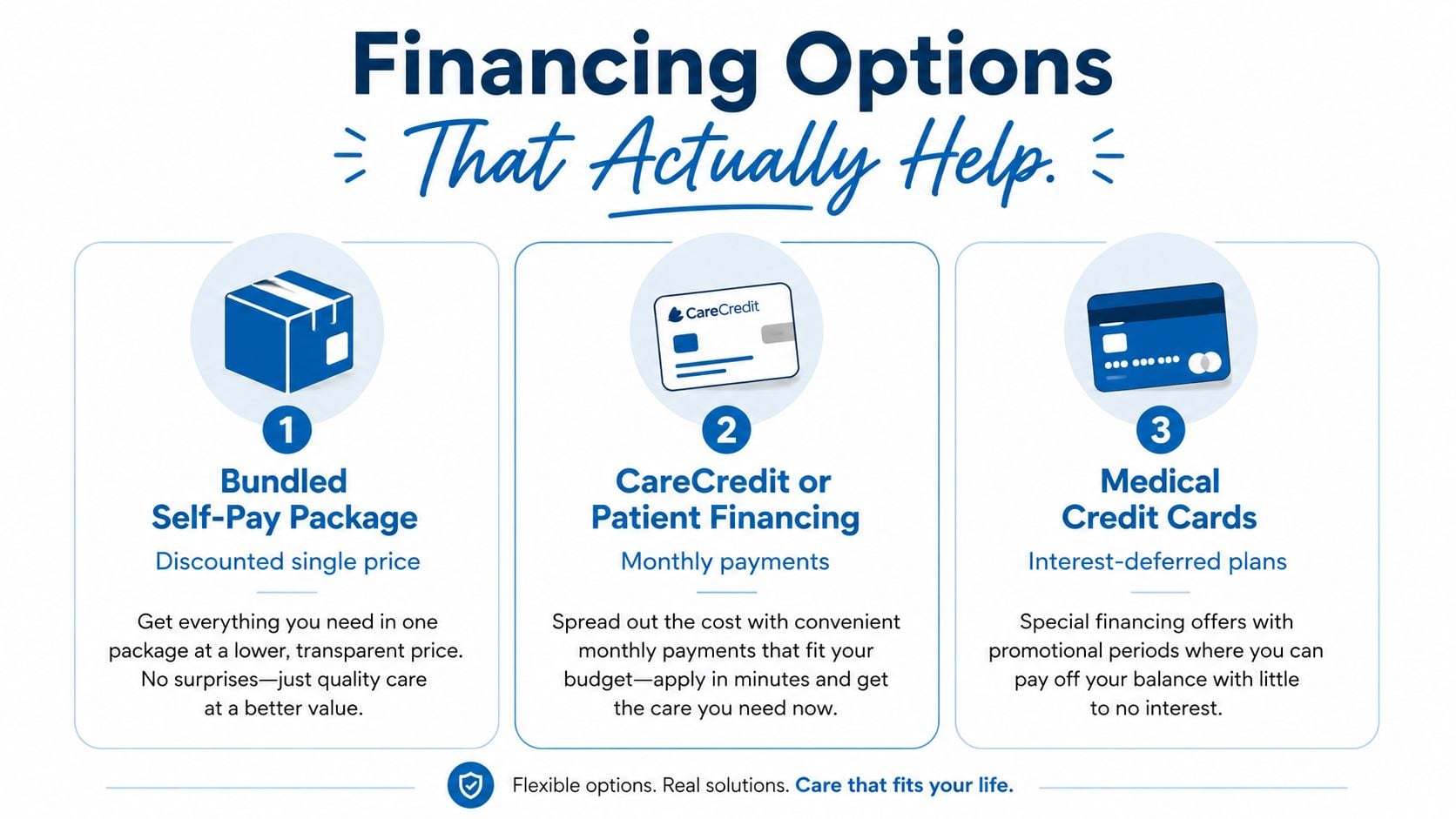
The opinionated answer is this. If the practice can offer a clear bundled quote, that is usually the first option to review. If not, the patient should ask whether staging, HSA funds, or medical credit gives a better total cost over time.
Local Guidance for New Jersey and Staten Island Patients
Geography matters because billing rules are not the same everywhere. In New Jersey, the Out-of-Network Law gives patients stronger protection than many people realize, including the right to a good-faith fee estimate before non-emergency care from an out-of-network provider. New Jersey location and care overview
What to request before the consult ends
Patients should ask for the estimate in writing and make sure it reflects the actual treatment plan, not just a rough starting point. The estimate should cover the procedure, the setting, and the likely follow-up so the patient can compare it with the insurer's side of the ledger.
Staten Island patients often live with a different network mix across the state line, so the smartest move is to apply the same framework on both sides of the river. Ask whether the provider is in-network, what happens if the claim processes out of network, and whether the quote changes if both legs are treated.
Practical rule: A good-faith estimate is only useful if it names the episode of care. If the office can't explain what's included, the patient can't compare it to anything meaningful.
Bring three things to the consult. Bring the insurance card, the deductible and out-of-pocket numbers from the plan summary, and any ultrasound or prior vein workup already done elsewhere. That gives the practice enough information to build a real estimate instead of a vague one.
For patients in this region, the right mindset is simple. Do not ask only whether the procedure is offered. Ask what the all-in charge will be under New Jersey billing rules, and ask for the math in writing before agreeing to schedule.
Questions to Ask Before You Book
A good vein consult should answer cost questions fast. If it doesn't, that's a warning sign.
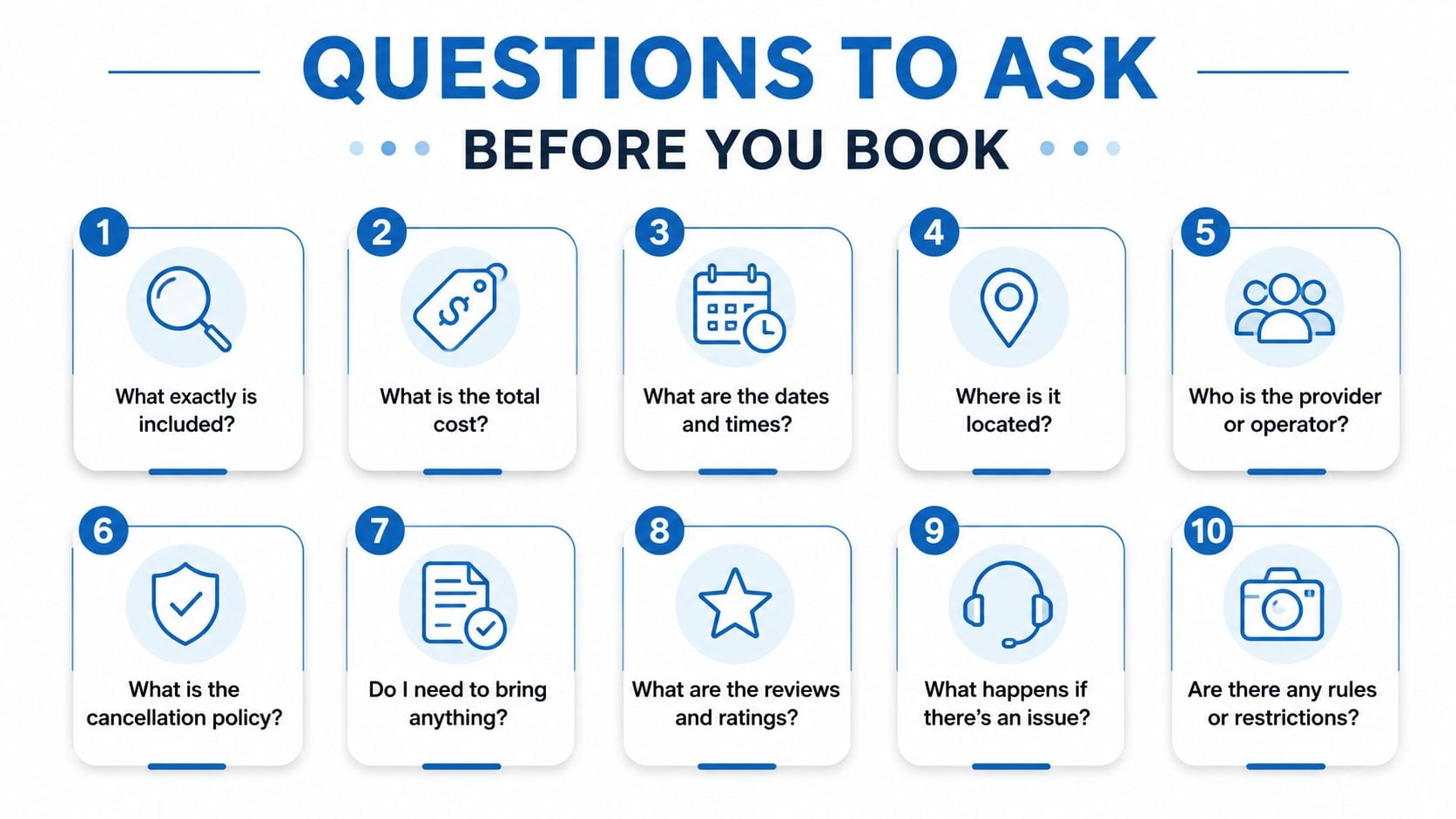
Ask for these answers before anyone talks about dates:
- What is the itemized quote? Ask for every major component in writing.
- What is bundled? Mapping, facility, supplies, and follow-up should be named.
- What CPT code will be billed? That tells the patient what the insurer is likely to review.
- Is the estimate per leg or for both legs? That changes the total immediately.
- Is follow-up duplex included? If not, the quote is incomplete.
- What is the practice's policy if insurance denies after preauthorization? This is the question many skip.
- What is the remaining deductible? That determines the patient's real share.
- Will compression stockings be billed separately? They often are.
- Is the quote for office, ambulatory, or hospital-based care? The setting matters.
- Can the estimate be honored in writing? If the office hesitates, that's telling.
The strongest decision is the one made with the numbers in hand. Patients who ask these questions walk in with knowledge and walk out with fewer billing surprises.
If vein treatment is on the calendar, Interventional Pain Management can help patients in New Jersey and Staten Island sort out the clinical and billing side before the first procedure is booked. Visit Interventional Pain Management to request a consult and get a clearer read on the all-in cost, the insurance path, and the right next step for care.