

A 62-year-old wakes with a stiff knee and spends the first part of the morning deciding which activities must be sacrificed. Injections helped for a while. Physical therapy improved strength, but stairs, shopping, and sleep remain difficult. The prospect of osteoarthritis joint replacement brings hope for pain relief, yet also raises harder questions: Is surgery necessary now? How long will recovery disrupt work or caregiving? What if the result doesn't match expectations?
Those questions deserve more than a simple recommendation to “wait until the pain is unbearable.” Joint replacement is a major treatment for end-stage disease, but the right decision depends on joint structure, daily function, previous treatment, health, support at home, and personal readiness.
Table of Contents
- Why Osteoarthritis Leads to Joint Replacement
- When to Consider Joint Replacement Surgery
- Types of Joint Replacement Procedures
- Risks and Benefits of Joint Replacement
- Prehabilitation and Recovery Roadmap
- Why Some Patients Delay or Decline Surgery
- Long-Term Outcomes and Implant Durability
Why Osteoarthritis Leads to Joint Replacement
Osteoarthritis begins as a change inside the joint, but patients experience it as a gradual loss of ordinary freedom. The smooth cartilage covering the ends of the bones becomes thinner and less capable of distributing load. The underlying bone can become denser and remodel, the joint lining may become inflamed, and bony growths called osteophytes can alter the joint's shape.
Early disease may cause pain after prolonged activity. Later, a person may hurt while standing, walking, or turning in bed. As cartilage loss advances, the joint space narrows and movement becomes less smooth. In severe cases, opposing bone surfaces may come into painful contact, while deformity and weakness create compensatory movement patterns.
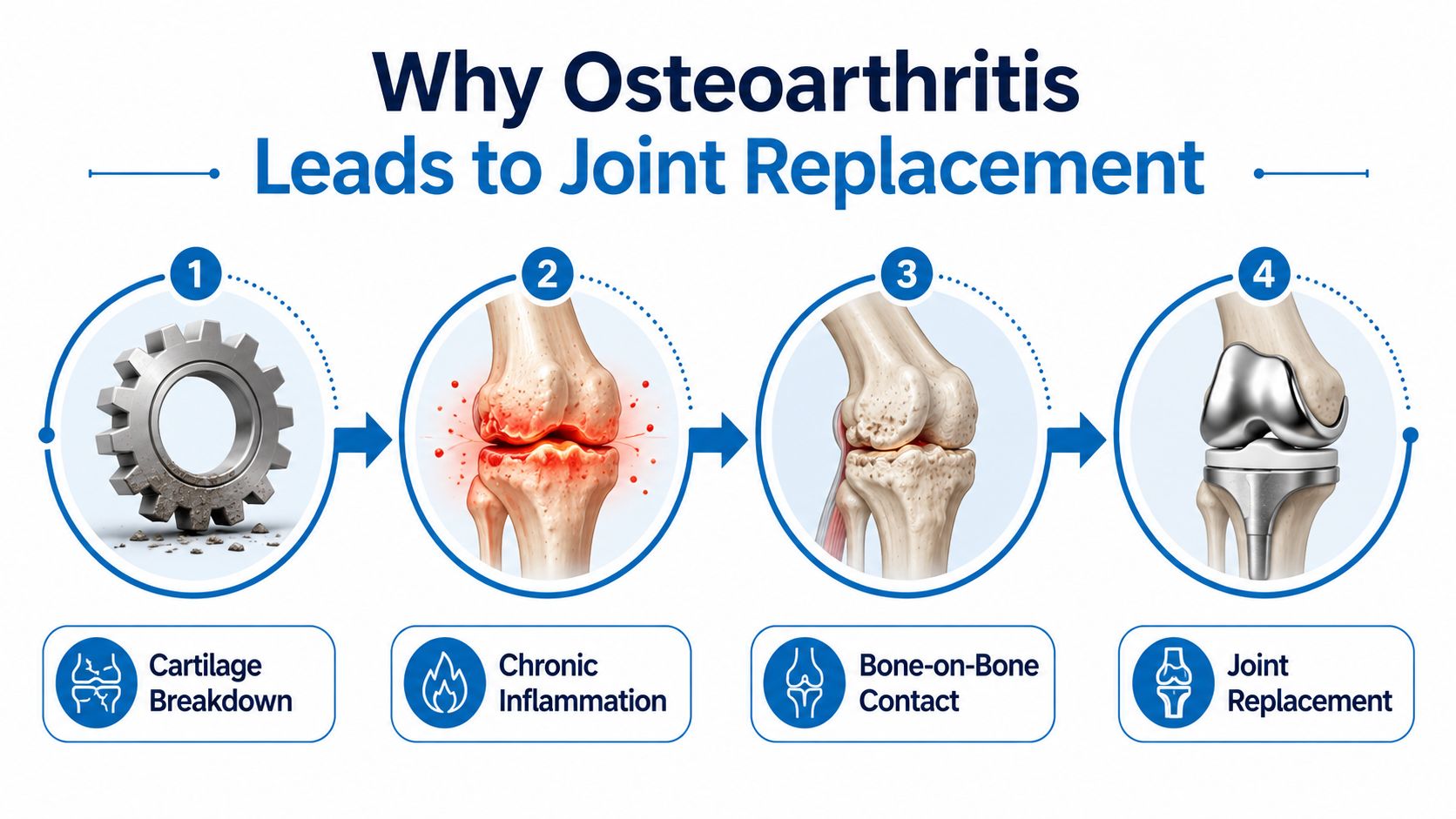
Why conservative care eventually reaches its limit
Exercise therapy, weight management, medication when appropriate, injections, bracing, and activity modification can reduce symptoms and preserve function. They can't rebuild severely damaged cartilage or restore a joint whose mechanics have become unreliable. Resources such as knee pain relief strategies for osteoarthritis can help patients understand symptom-management options while they consider the larger treatment path.
Osteoarthritis is the principal indication for joint arthroplasty. A systematic review reports that incidence has doubled since 1990, while WHO-linked estimates cited by the OECD place the number of people living with symptomatic osteoarthritis at about 528 million worldwide in 2025, a 113% increase since 1990. The same evidence estimated global prevalence at 7.09% in 2019, with an incidence rate of 536 per 100,000 people. These figures are reported in the systematic review of osteoarthritis burden.
The surgical volume reflects that burden. A registry summary covering 2003 to 2024 recorded osteoarthritis as the indication in 91.2% of joint replacement cases. For knee replacement, osteoarthritis accounted for 97.6% of procedures, according to the NCBI registry summary.
Practical rule: Replacement becomes reasonable when the joint can no longer support meaningful daily life despite appropriate nonsurgical treatment. Pain alone matters, but pain combined with structural damage and functional loss matters more.
Patients can review the condition, available treatments, and referral considerations through Interventional Pain Management's osteoarthritis information. The key question isn't whether discomfort has started. It's whether the joint's mechanical failure now outweighs the temporary burden and risks of reconstruction.
When to Consider Joint Replacement Surgery
A surgeon's recommendation should answer two separate questions. First, is the joint damaged enough for replacement to make clinical sense? Second, is the patient ready to accept the recovery, restrictions, and uncertainty that accompany surgery?
No single symptom determines candidacy. A useful assessment combines the following factors:
- Persistent symptoms: Pain, stiffness, and limited motion continue despite a thoughtful course of nonsurgical care.
- Functional interference: The patient struggles with sleep, walking, stairs, employment, exercise, or valued social activities.
- Imaging agreement: X-rays or other imaging show advanced joint damage that matches the symptoms.
- Treatment goals: The patient wants greater function and understands that replacement treats the damaged joint, not every source of pain in the body.
- Medical preparation: Health conditions, medications, dental issues, skin problems, and home support have been reviewed and optimized where possible.
The decision threshold is functional, not theatrical
Patients don't need to wait until they can't walk at all. Delaying until severe weakness, profound inactivity, or a fixed compensatory gait develops can make rehabilitation more demanding. Conversely, an X-ray that looks severe doesn't automatically require surgery if symptoms remain manageable and daily function is acceptable.
Validated tools such as the WOMAC and KOOS can help quantify pain, stiffness, and function. They don't replace an examination, but they can show whether the condition is stable or progressively restricting activity. A clinician may also assess muscle strength, alignment, range of motion, walking pattern, and pain from the spine or nearby joints.
Some patients choose to continue conservative care, including options such as hyaluronic acid injections, when symptoms remain tolerable or timing isn't practical. The decision should be revisited if sleep, mobility, or independence deteriorates.
Readiness includes real life
A clinically appropriate operation can still be poorly timed. Work deadlines, caregiving, transportation, stairs at home, travel plans, and available help during the first part of recovery all affect readiness. Financial and insurance questions also deserve direct discussion rather than last-minute discovery.
A practical conversation with a surgeon should clarify:
- What specific joint damage is visible, and does it explain the symptoms?
- What benefit is realistic for pain, walking, sleep, and activity?
- Which restrictions will apply temporarily, and which may remain?
- What help will be needed at home?
- What happens if surgery is postponed?
Age alone doesn't decide eligibility. Overall health, bone quality, activity demands, expectations, and the condition of the joint carry greater clinical importance.
Types of Joint Replacement Procedures
Knee, hip, and shoulder replacements share the goal of removing damaged joint surfaces and restoring movement, but the operations are not interchangeable. Each joint has different anatomy, stability requirements, muscle demands, and rehabilitation priorities.
| Feature | Knee Replacement | Hip Replacement | Shoulder Replacement |
|---|---|---|---|
| Main surgical choice | Total or partial replacement, depending on the distribution of damage | Total replacement replaces the femoral head and socket | Anatomic or reverse replacement, based heavily on rotator cuff function |
| Important design issue | Cruciate-retaining or posterior-stabilized components may be selected according to anatomy and ligament function | Surgical approach and bearing surfaces influence planning | Implant direction changes the mechanics of elevation and stability |
| Bone fixation | Cemented, cementless, or hybrid fixation | Cemented, cementless, or hybrid fixation | Fixation depends on bone quality, anatomy, and implant design |
| Early rehabilitation | Emphasizes motion, swelling control, quadriceps activation, and gait | Often emphasizes early walking, hip precautions when prescribed, and muscle control | Protects the repair while gradually restoring shoulder motion and strength |
| Functional recovery | Many patients work toward meaningful function over several weeks, with progress continuing beyond the early phase | Walking often begins early, while endurance and strength develop progressively | Motion and strength frequently return more gradually because the shoulder depends on coordinated muscles |
| Activity expectations | Low-impact activities are generally easier to protect than repetitive high-impact loading | Activity recommendations depend on stability, strength, and surgeon guidance | Overhead work and heavy lifting may require particular caution |
Knee replacement
A total knee arthroplasty resurfaces the major damaged compartments. A unicompartmental replacement treats disease confined to one compartment and preserves more of the native knee, but it isn't suitable for every pattern of arthritis. The 2025 American Joint Replacement Registry preview introduced device-specific cumulative revision data for unicompartmental knee components, reflecting a move toward more detailed implant evaluation rather than one universal durability claim. The preview is available through the American Joint Replacement Registry report update.
Cruciate-retaining designs preserve the posterior cruciate ligament when appropriate. Posterior-stabilized designs use a different mechanism when ligament function or surgical considerations favor it. The choice belongs to the surgeon's reconstruction plan, not a simple ranking of one design over another.
Hip replacement
Total hip replacement replaces both the femoral head and acetabular surface. Anterior and posterior approaches use different pathways to the joint, and the best approach depends on anatomy, surgeon expertise, prior surgery, and patient-specific considerations. Bearing combinations may include ceramic-on-ceramic or metal-on-polyethylene components, with selection based on durability goals, anatomy, and risk considerations.
Shoulder replacement
An anatomic shoulder replacement relies on a functioning rotator cuff to reproduce native mechanics. A reverse shoulder replacement changes the ball-and-socket arrangement and can be useful when cuff function is insufficient. Shoulder planning therefore differs completely from knee and hip planning. Implant fixation may be cemented, cementless, or hybrid, with bone quality influencing how components are secured.
Risks and Benefits of Joint Replacement
The strongest benefit of replacement is often a change in what the patient can do without constant joint pain. Patients commonly seek improved walking, sleep, stair use, personal care, and participation in ordinary activities. The operation doesn't guarantee a completely normal joint, and it won't eliminate pain arising from the spine, nerves, muscles, or another joint.
Early recovery includes swelling, soreness, stiffness, and fatigue. Patient-reported disability can improve substantially after knee replacement, but objective performance may progress differently. A 2025 longitudinal systematic review found that self-reported function after osteoarthritis-related total knee arthroplasty improved from a pooled presurgery score of 55.6 out of 100 to 21.1 at 3 to 6 months, with scores of 31.0 at 6 to 12 months and 30.9 at 12 to 24 months. The review, published in the Journal of Orthopaedic & Sports Physical Therapy, is available here as a longitudinal review of knee arthroplasty outcomes.
Risks that require active planning
Short-term complications can include infection, blood clots, bleeding, wound problems, nerve irritation, stiffness, instability, or dislocation, depending on the joint and procedure. Individual risk changes with health conditions, smoking, medication use, body composition, bone quality, prior operations, and rehabilitation capacity.
Long-term concerns include wear, loosening, instability, fracture around the implant, infection developing later, and revision surgery. A large United States registry dataset documented 3,715,320 validated primary and revision total hip and total knee procedures from 2012 to 2023, illustrating both the maturity and scale of modern arthroplasty practice. The 2024 American Joint Replacement Registry report provides that registry context.
| Procedure | 15-Year Survival Rate | Common Benefits | Key Risks | Average Satisfaction Rate |
|---|---|---|---|---|
| Knee replacement | Not established in the verified data provided | Reduced arthritic pain and improved reported function | Stiffness, infection, loosening, instability, revision | Not established in the verified data provided |
| Hip replacement | Not established in the verified data provided | Pain reduction, smoother walking, improved daily mobility | Dislocation, infection, loosening, fracture, revision | Not established in the verified data provided |
| Shoulder replacement | Not established in the verified data provided | Improved pain and upper-limb function when the indication is appropriate | Stiffness, instability, cuff-related problems, loosening, revision | Not established in the verified data provided |
The table intentionally avoids unsupported survival and satisfaction figures. For younger osteoarthritic knee patients, a systematic review reported a 5.4% cumulative all-cause revision rate at a mean follow-up of 10.8 years, while ten-year survival for aseptic loosening alone was 98.2%. Those figures come from the systematic review of younger patients undergoing total knee arthroplasty. They describe a specific population and failure outcome, not a guarantee for every patient.
Prehabilitation and Recovery Roadmap
Preparation begins before the operation. The purpose of prehabilitation isn't to make the joint normal. It's to preserve strength, improve confidence with walking aids, identify medical issues, and make the home environment safer.
A physical therapist may prescribe gentle range-of-motion work, quadriceps or hip strengthening, balance exercises, and conditioning that the painful joint can tolerate. Nutrition, medication review, skin care, and management of conditions such as diabetes or anemia may also enter the surgical plan. The surgeon should provide procedure-specific instructions because an exercise that helps one patient may aggravate another.
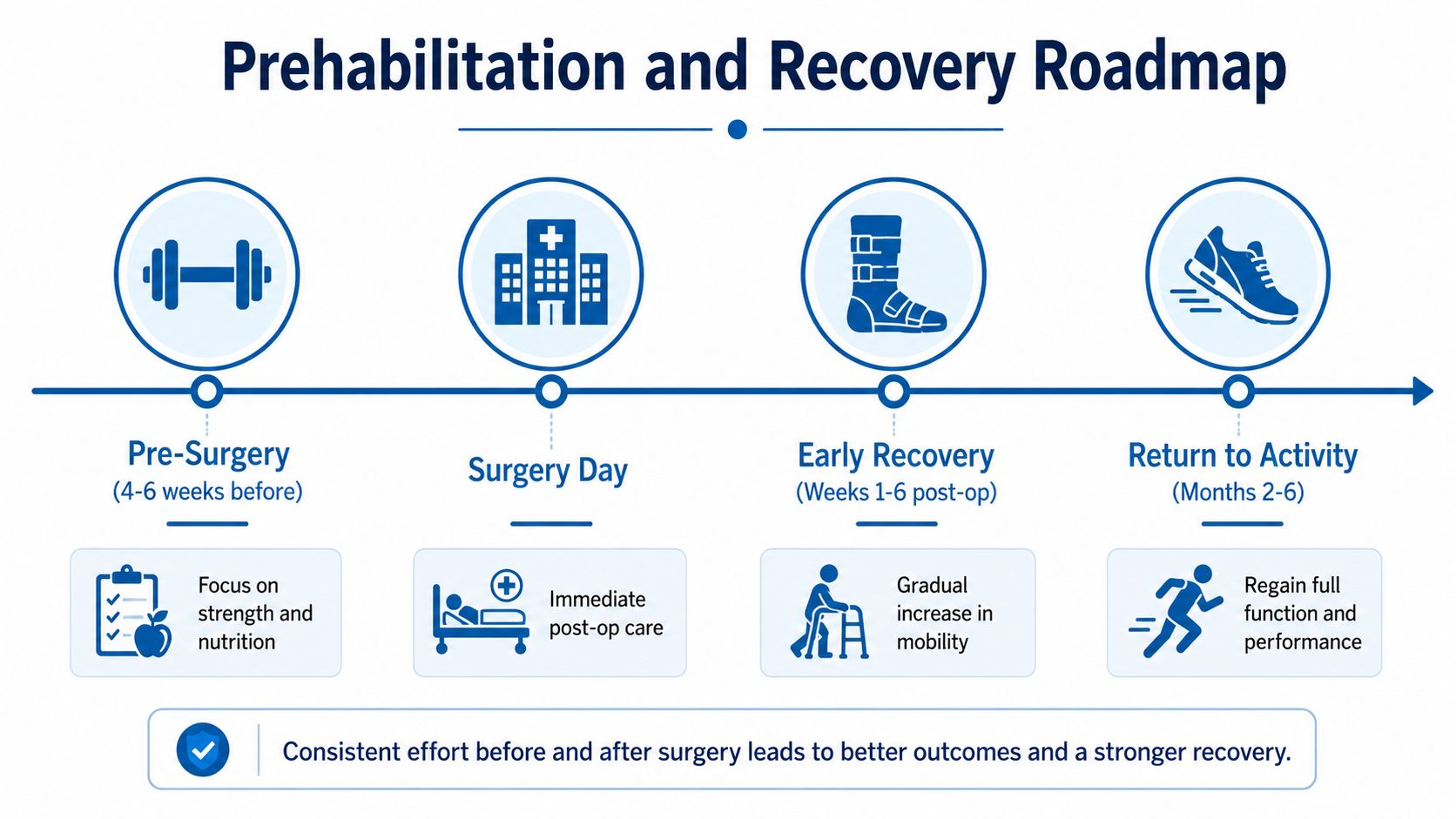
Before and immediately after surgery
Home preparation often matters as much as exercise. Frequently used items should be placed within easy reach, loose rugs should be removed, and a plan should be made for meals, transportation, pets, children, and bathing. A walker, cane, raised seating, or other equipment may be recommended according to the procedure.
On surgery day, the clinical team manages anesthesia, antibiotics when indicated, blood-clot prevention, wound protection, and early movement. Some patients leave the hospital quickly, while others need additional monitoring. Discharge timing depends on medical stability, pain control, safe transfers, walking ability, and home support.
The first weeks
The early home phase focuses on controlling swelling, taking prescribed medication safely, protecting the incision, and completing physical therapy. A short-term increase in pain doesn't necessarily signal a problem, especially after therapy or a change in activity. Progress is usually uneven. A stronger day may be followed by fatigue or increased swelling.
Patients should contact the surgical team promptly for worsening redness, drainage, fever, sudden calf swelling, chest symptoms, new weakness, or pain that changes sharply. Those symptoms need professional assessment rather than self-treatment.
Later rehabilitation
Over subsequent weeks, therapy shifts toward strength, balance, endurance, and task-specific movement. Driving, work, air travel, cycling, swimming, lifting, kneeling, and sport each require separate clearance. A patient who can walk comfortably may still lack the reaction speed, strength, or control required for driving or demanding work.
Recovery is measured by the trend, not by a perfect day-to-day line. Safe progression is more valuable than forcing a timetable.
Why Some Patients Delay or Decline Surgery
Clinical eligibility doesn't create automatic acceptance. A patient may understand that the joint is severely damaged and still decide that surgery isn't acceptable yet. Fear of complications, concern about pain after surgery, limited caregiver support, work disruption, insurance uncertainty, transportation problems, and stories of disappointing outcomes all shape the decision.
Research on patient deliberation describes concerns about cost and insurance, trust in the medical system, recovery burden, and uncertainty about outcomes. It also indicates that patients may be less willing to undergo replacement than the frequency of physician discussions might suggest. The qualitative research on decision-making around joint replacement supports a more careful conversation than a simple eligibility checklist.
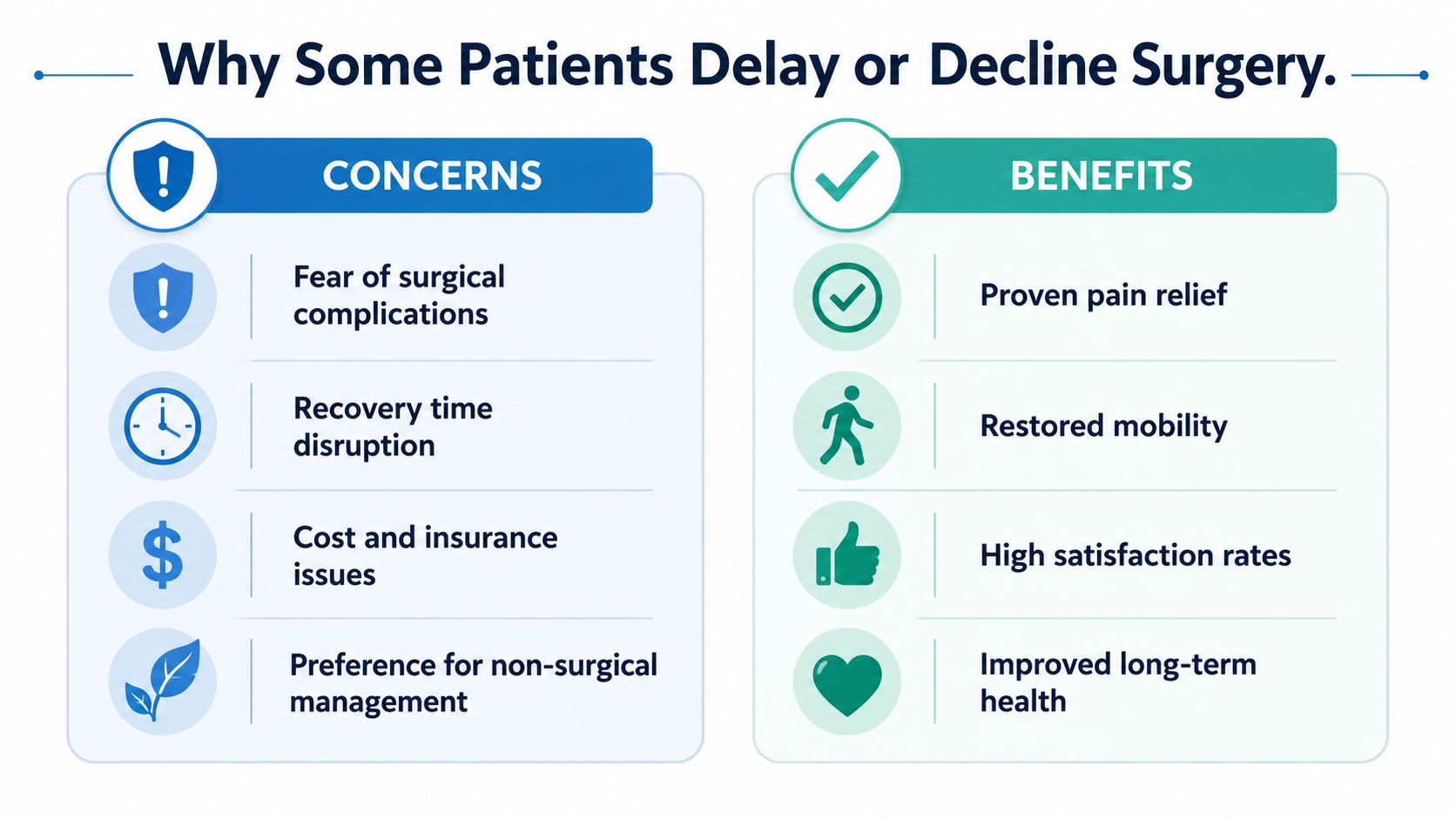
Caution versus avoidance
Caution is reasonable when symptoms remain manageable, the diagnosis is uncertain, medical risks need optimization, or the patient lacks a safe recovery plan. Avoidance becomes more concerning when fear rests on misinformation, when pain is causing severe inactivity, or when the patient has stopped valued activities without reconsidering available support.
A balanced decision conversation can ask:
- Current cost: What does the joint prevent today?
- Recovery cost: What time, assistance, transportation, and work flexibility would surgery require?
- Expected benefit: Which activities are realistic goals, and which may remain limited?
- Alternative plan: What treatment will be used if surgery is postponed?
- Review point: What change would trigger another surgical consultation?
Some people need time to arrange home help or resolve financial questions. Others benefit from a second opinion, clearer imaging explanations, or a pain-management plan while they prepare. The decision should be deliberate, not pressured, but indefinite delay deserves reassessment when function continues to decline.
Long-Term Outcomes and Implant Durability
Joint replacement should be viewed as durable reconstruction, not a permanent biological joint. Most modern implants perform well, yet the likelihood of later problems depends on implant design, fixation, alignment, bone quality, body size, activity, age at surgery, and the reason for the original operation.
The best available verified long-term figures in this evidence set concern total knee arthroplasty in younger patients with osteoarthritis. The reported 5.4% cumulative all-cause revision rate at a mean follow-up of 10.8 years and 98.2% ten-year survival for aseptic loosening alone show why “survival” must be defined carefully. An implant can remain in place while a patient experiences stiffness, pain, instability, or dissatisfaction, and a revision can be required for reasons other than loosening.
What revision surgery means
Revision surgery removes and replaces some or all components of a previous arthroplasty. It may require more extensive bone preparation, specialized implants, bone grafting, or staged treatment when infection is present. Patients can learn more about the role of bone grafting in orthopedic reconstruction, although the need for grafting depends on the amount and location of bone loss.
A 2025 registry preview described the introduction of device-specific cumulative revision data for unicompartmental knee components. That development matters because patients increasingly need implant discussions customized to the joint, component, age, activity profile, and local registry evidence rather than a single universal lifespan statement. Broader projections also anticipate sustained growth in arthroplasty demand through 2050, with projected hip volumes rising by 121% to more than 200% and knee volumes by at least 130% across countries, as reported in the registry-related evidence summarized above.
| Joint Type | 10-Year Survival Rate | 15-Year Survival Rate | 20-Year Survival Rate | Patient Satisfaction Rate |
|---|---|---|---|---|
| Knee | 98.2% for aseptic loosening alone in a specific younger osteoarthritis cohort, not overall survival | Not established in the verified data provided | Not established in the verified data provided | Not established in the verified data provided |
| Hip | Not established in the verified data provided | Not established in the verified data provided | Not established in the verified data provided | Not established in the verified data provided |
| Shoulder | Not established in the verified data provided | Not established in the verified data provided | Not established in the verified data provided | Not established in the verified data provided |
Patient-reported improvement and implant survival are related but distinct outcomes. A successful operation should be judged by pain, function, confidence, sleep, and participation in meaningful activities, not just by whether an implant remains visible on an X-ray. Higher bone mineral density has also been associated with increased odds of hip and knee replacement, with a stronger association reported for hip replacement in a 2025 Mendelian randomization study. That finding reinforces the need for individualized risk assessment rather than assumptions based only on symptom severity.
Interventional Pain Management offers diagnostic evaluation, nonsurgical pain procedures, orthopedic consultation, and joint replacement care for appropriate patients with persistent joint pain. Patients in New Jersey and Staten Island can visit Interventional Pain Management to discuss whether continued conservative treatment, a surgical referral, or a coordinated treatment plan best fits their symptoms and recovery priorities.