
Most advice about preventing varicose veins starts with an overpromise: wear compression socks, exercise, and the veins supposedly won't appear. That isn't medically honest. Varicose veins develop when superficial venous valves fail and blood pools under pressure, and inherited structure, age, pregnancy, and prolonged sitting or standing can outweigh even excellent habits. Authoritative estimates suggest that varicose veins affect up to 30% of people worldwide, with prevalence increasing with age, while a major U.S. review reported about 23% of adults affected. Spider and reticular veins are included, the figures rise to 80% of men and 85% of women in the cited review. (NCBI Bookshelf overview)
The practical question isn't whether someone can guarantee vein-free legs. It's how to reduce avoidable strain, control aching and swelling, recognize progression early, and avoid wasting effort on measures that mainly sound reassuring. The strongest plan combines regular calf activation, weight management when appropriate, targeted compression for symptoms or higher risk, and timely assessment when self-care stops being enough.
Table of Contents
- What Varicose Veins Are and Why Prevention Has Limits
- Movement and Posture Habits That Protect Your Veins
- Weight, Diet, and Circulation-Friendly Living
- Using Compression Stockings the Right Way
- Prevention Strategies for High-Risk Groups
- When Self-Care Is Not Enough and Next Steps
What Varicose Veins Are and Why Prevention Has Limits
Varicose veins are enlarged, twisted superficial veins caused by impaired upward blood flow. Healthy leg veins use one-way valves to help return blood toward the heart. When those valves weaken or become incompetent, gravity encourages blood to pool, increasing pressure within the vein and gradually stretching its walls. That process is commonly described as chronic venous insufficiency.
This explains why lifestyle advice has limits. A person can walk regularly and maintain a healthy weight yet still develop varicose veins because the underlying valve structure is partly inherited or changes with age. Pregnancy can also increase venous pressure and alter circulation, while a job that keeps the legs static for long periods adds another burden. Prolonged sitting and standing are associated with higher incidence in population studies, but avoiding them perfectly isn't realistic for most adults. (NCBI Bookshelf overview)
The realistic prevention target
Prevention should be divided into three separate goals:
- Risk reduction: Lowering modifiable strain through movement, weight control, and less time in a fixed posture.
- Symptom control: Reducing heaviness, aching, and ankle swelling after the veins or early venous symptoms are already present.
- Progression control: Monitoring skin changes, swelling, and discomfort so worsening disease receives appropriate evaluation.
Those goals overlap, but they aren't interchangeable. Independent review evidence found no good evidence that exercise, diet, leg elevation, or avoiding tight clothing reliably prevents disease progression. Compression stockings may ease symptoms, but their ability to prevent new varicose veins remains unclear. (Independent review of conservative management)
Practical rule: A habit that makes the legs feel better at the end of a shift may be valuable, even if it can't guarantee that a vein problem won't develop.
For patients researching varicose veins and spider veins, the most useful mindset is neither alarm nor false reassurance. Healthy habits are worth doing because they support function and symptom control. They shouldn't be marketed as a way to erase hereditary risk.
Movement and Posture Habits That Protect Your Veins
The calf muscles act as a functional pump. Each contraction compresses nearby veins and helps move blood upward, but the pump only works when the muscles contract. Standing still at a counter and sitting motionless at a desk both leave gravity in charge.
Build movement into the workday
A practical workplace routine looks like this:
- Set a 30-minute reminder to change from sitting to standing, or from standing to walking.
- Perform 20 heel raises every hour, using a desk or wall for balance if needed.
- Walk a short loop during phone calls rather than remaining planted in one position.
- Shift weight between both legs while standing, and take brief walking breaks before heaviness becomes intense.
- Avoid crossing the legs at the knee for prolonged periods, since the position can compress the area behind the knee and slow venous return.
The purpose isn't an elaborate exercise program. It's frequent calf activation distributed across the day. A consistent walking routine can be scaled to current ability, and resources covering walking plans for all fitness levels can help adults choose a manageable starting point without turning vein care into an all-or-nothing fitness project.
Protect circulation during travel
Long flights and drives create a predictable problem, the legs stay bent and inactive. Seated ankle pumps, alternating between pointing and flexing the feet, can activate the calf muscles. A useful routine is 10 ankle flexes and extensions each hour, combined with regular opportunities to stand and walk when safe. During a drive, the driver should stop at appropriate intervals rather than attempting exercises while operating the vehicle.
At home, leg elevation can reduce the pressure and fluid accumulation that build during the day. A short period with the legs raised, including a legs-up-the-wall position, may make early symptoms more comfortable. That relief is meaningful, but it should be described accurately, it manages discomfort and swelling rather than repairing faulty valves.
Weight, Diet, and Circulation-Friendly Living
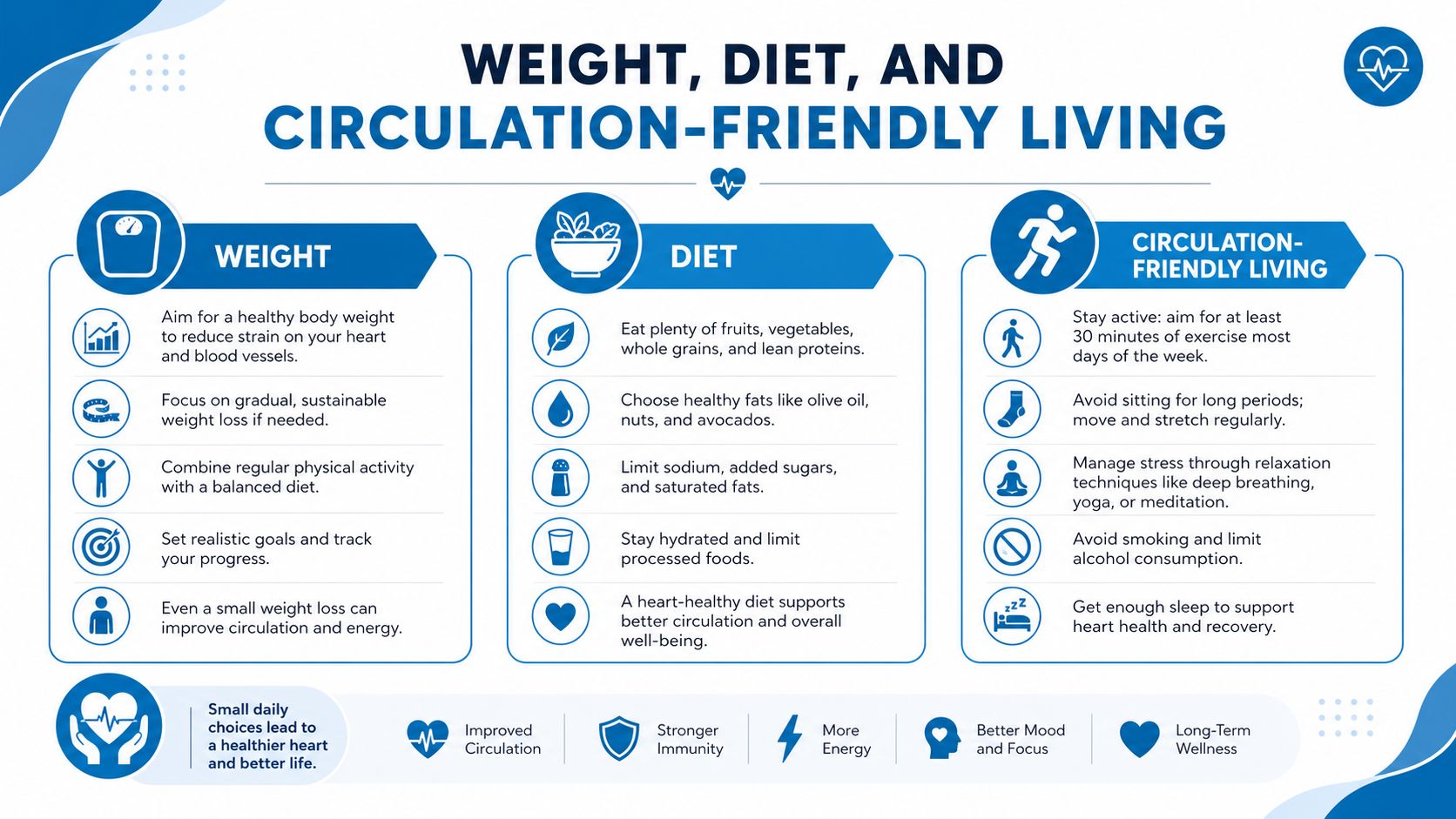
Weight management has a clearer practical rationale than most vein-focused diet claims. Excess body weight can increase pressure within the abdomen and transmit additional force to the veins returning blood from the legs. For someone carrying excess weight, gradual loss may reduce the mechanical burden and improve mobility, which is why weight control is repeatedly included in venous guidance. (Venous guidelines)
That doesn't mean every diet marketed for “circulation” prevents varicose veins. Food choices support general health and may reduce swelling-related discomfort, but they don't restore damaged venous valves.
What deserves attention
- Weight: For adults with obesity, a structured approach to obesity explained evidence-based care may be more useful than a vein-specific supplement or restrictive food list.
- Fiber: Fiber-rich meals can reduce constipation and straining, which may increase abdominal pressure. This is supportive, not proof that fiber prevents varicose veins.
- Sodium: Excess sodium can worsen fluid retention and make ankle swelling more noticeable, so reducing heavily salted and highly processed foods may improve comfort.
- Fluids: Adequate hydration supports normal body function and may help reduce cramping for some people, but it shouldn't be presented as a cure for venous insufficiency.
- Plant foods: Citrus, berries, dark leafy greens, and buckwheat provide flavonoids and other compounds with modest evidence for easing capillary leakage or leg heaviness. Effects are limited, and these foods don't eliminate structural vein disease.
Smoking deserves a separate distinction. It's more strongly associated with arterial harm than with the primary mechanism behind varicose veins, but smoking can impair wound healing if a vein procedure becomes necessary. The honest hierarchy is simple: weight management can make the largest modifiable difference for someone carrying excess weight, while diet quality, hydration, and smoking cessation provide broader supportive benefits.
Using Compression Stockings the Right Way
Compression stockings aren't ordinary support socks. Graduated compression is firmest at the ankle and gradually decreases higher up the leg, encouraging blood to move upward. A loose, non-graduated garment purchased without attention to fit may feel tight without delivering the intended pressure pattern.
The correct strength depends on symptoms, diagnosis, circulation, and medical history. Major venous guidelines recommend 20 to 30 mm Hg knee-high or thigh-high stockings for symptomatic primary venous disease, and 30 to 40 mm Hg for post-thrombotic disease. (Venous guidelines)
Compression stocking classes at a glance
| Class | Pressure (mm Hg) | Best For | What It Actually Does |
|---|---|---|---|
| Class 1 | 15 to 20 | Mild symptoms or limited support needs | May ease early aching and swelling |
| Class 2 | 20 to 30 | Symptomatic venous disease and prolonged standing | Provides stronger symptom support when correctly fitted |
| Class 3 | 30 to 40 | Selected diagnosed venous or post-thrombotic disease | Applies substantial compression under clinical guidance |
The table is a guide, not a prescription. A clinician should assess arterial circulation and the cause of swelling before recommending stronger compression. People with severe peripheral arterial disease or uncontrolled heart failure may need to avoid compression unless a treating clinician specifically clears it.
Fit and timing matter more than enthusiasm
Stockings should go on in the morning, before leg swelling develops. Someone with a standing job may wear them through waking hours and remove them before bed. The garment should lie smoothly, without folds, bunching, or a constricting band at the top. Proper sizing through a medical supply service or pharmacy is often more important than choosing the highest pressure available.
Compression commonly reduces aching and swelling. It doesn't dissolve existing varicose veins, repair failed valves, or guarantee prevention of new veins. Elasticity also fades with use, so garments require periodic replacement based on wear and manufacturer guidance. NICE guidance emphasizes compression hosiery for symptom management when interventional treatment isn't suitable, a more cautious position than consumer advice that presents stockings as a universal prevention tool. (Independent review of conservative management)
Prevention Strategies for High-Risk Groups
A generic prevention list fails because different people face different mechanical and hormonal pressures. A pregnant patient, a nurse who stands through long shifts, and an adult with a strong family history shouldn't receive identical instructions.
Pregnancy
Pregnancy-related risk can change quickly. Clinicians may recommend properly fitted compression early when symptoms or risk factors justify it, along with regular walking and avoidance of prolonged static posture. Side-sleeping is often advised for comfort and to limit pressure from the uterus on major abdominal vessels, but pregnancy positioning should follow the individual's obstetric guidance.
The common mistake is waiting until the legs ache or swell. Stockings are easier to apply before swelling develops, so a pregnant patient who has been advised to use them shouldn't wait for visible veins to appear. New one-sided swelling, sudden pain, chest pain, or shortness of breath requires urgent medical attention rather than self-care.
Family history
Inherited susceptibility can't be trained away. Conservative habits can still begin early, particularly daily walking, calf strengthening, weight control, and attention to recurrent swelling or heaviness. Routine imaging isn't automatically preventive, and guideline summaries state that prophylactic intervention in asymptomatic early disease doesn't prevent progression. (NCBI Bookshelf guideline summary)
That means a baseline scan should be discussed selectively with a clinician, not treated as a universal screening requirement. The useful goal is to investigate symptoms and establish whether venous reflux is present when the clinical history supports it.
Standing occupations
Nurses, teachers, retail workers, and line cooks often can't avoid time on their feet. They can reduce static standing by walking briefly, shifting positions, performing calf raises during routine tasks, and using an anti-fatigue mat as a partial comfort measure. After a shift, elevation and properly fitted compression may help symptoms, while regular movement during the shift prevents the calf pump from going completely quiet.
People who want a joint-friendly way to keep moving can also explore options such as senior dance classes at Danza Academy, provided the activity matches their mobility and medical needs. Adults with other musculoskeletal concerns can review relevant conditions treated by a multidisciplinary practice when pain makes regular movement difficult.
When Self-Care Is Not Enough and Next Steps
Self-care has reached its limit when symptoms persist, change character, or affect the skin. A leg that remains heavy despite elevation and walking deserves assessment, especially when visible veins are enlarging or daily function is declining.
Signs that need clinical attention
Seek medical evaluation for:
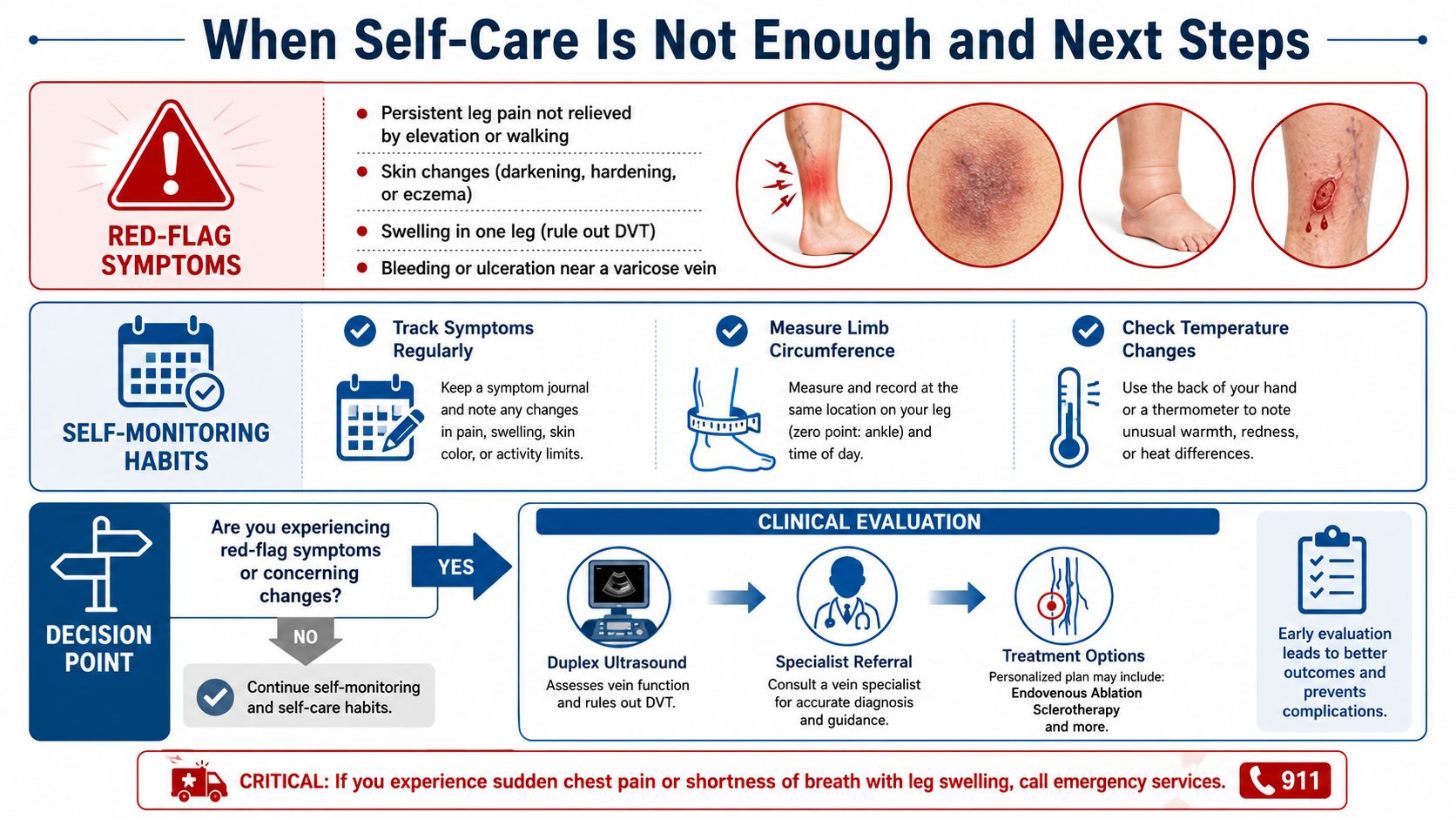
- Persistent leg pain or heaviness that doesn't improve with rest or elevation.
- Enlarged, bulging veins accompanied by aching, itching, or swelling.
- Brownish or reddish ankle discoloration, hardening, eczema, or other skin changes.
- A hard, tender cord along a vein, which may indicate superficial thrombophlebitis.
- Sudden swelling or pain in one calf or leg, which requires urgent assessment for possible deep vein thrombosis.
- A bleeding vein or non-healing ulcer near the ankle.
Sudden chest pain or shortness of breath with leg swelling is an emergency. Emergency services should be contacted immediately.
A simple monitoring routine
A monthly self-check can make gradual change easier to recognize. Photograph the same leg angle in consistent lighting, compare swelling between legs, and record whether aching appears after sitting, standing, travel, or exercise. Self-monitoring doesn't diagnose reflux, but it gives a clinician a clearer timeline than memory alone.
The usual evaluation pathway begins with a primary care clinician or vein specialist. A duplex ultrasound is used to assess blood flow and valve function rather than guessing from appearance. The result helps distinguish cosmetic spider veins from clinically significant venous disease and guides the next decision.
When prevention becomes treatment
Treatment isn't a personal failure. If reflux is producing persistent symptoms or skin complications, modern options may include endovenous ablation, sclerotherapy, or microphlebectomy, selected according to the affected veins and ultrasound findings. Conservative care remains useful, but it shouldn't delay evaluation when the disease is progressing. Patients can review available vein and interventional treatments as part of a clinician-led plan.
Interventional Pain Management evaluates varicose and spider veins alongside musculoskeletal conditions that can make regular movement difficult. Adults in New Jersey and Staten Island can visit Interventional Pain Management to request an assessment, discuss diagnostic imaging when indicated, and receive a treatment plan matched to symptoms, circulation, and daily demands.