
A reader may wake with a stiff neck after sleeping awkwardly, spend the morning rubbing a tight muscle, and assume the problem is simple. Another person may describe the same neck pain as burning electricity traveling into the hand, or notice that buttons and handwriting have suddenly become difficult. Those complaints can sound similar at first, but they lead a clinician down very different diagnostic paths.
That's the purpose of a neck pain differential diagnosis. Instead of assigning every symptom to a strained muscle, a clinician compares the pain pattern, timing, triggers, neurologic findings, medical history, and warning signs. Most neck pain is mechanical and self-limited, yet the evaluation must still identify the smaller group with nerve-root disease, spinal cord compression, infection, cancer, fracture, or vascular pathology.
Table of Contents
- Understanding the Neck Pain Differential Diagnosis Process
- Common Musculoskeletal and Mechanical Causes
- Neurologic and Nerve-Related Conditions
- Systemic Diseases and Referred Pain Patterns
- Red Flags That Demand Immediate Medical Attention
- The Diagnostic Workup and Imaging Guidelines
- When to See a Specialist for Neck Pain
Understanding the Neck Pain Differential Diagnosis Process
A patient may report neck pain after a long day at a desk, while another describes burning that travels into the hand. Both may say their neck hurts, but the diagnostic path differs. A neck pain differential diagnosis helps clinicians sort common mechanical pain from nerve, spinal cord, infectious, cancer-related, fracture-related, or vascular conditions.
The process begins with probability, not fear. Localized stiffness after prolonged posture, no weakness, and pain reproduced by turning the head point more toward a mechanical source. Progressive weakness, balance changes, fever, or a history of cancer calls for broader and faster assessment. BMJ Best Practice's neck pain differential diagnosis guidance provides clinical guidance for considering these different possibilities.
Why the history comes first
The history acts like a map. It shows where symptoms began, what changes them, and whether the pattern fits a local tissue problem or something affecting nerves, the spinal cord, or the wider body. Questions usually cover:
- Onset: Did the pain start after lifting, a collision, a fall, or without an obvious trigger?
- Location: Is it centered in the neck, near the shoulder blade, behind the head, or extending into the arm?
- Quality: Is it achy, tight, sharp, burning, electric, or unusually severe?
- Behavior: Does movement aggravate it, or is it unrelieved by position and worse at rest?
- Associated symptoms: Are there numbness, weakness, gait changes, fever, weight loss, or visual and speech symptoms?
The examination checks whether the leading explanation fits. A clinician assesses neck motion, posture, tenderness, strength, sensation, reflexes, coordination, gait, and signs of nerve or spinal cord dysfunction. A 2011 review in the Journal of Orthopaedic & Sports Physical Therapy on neck pain evaluation emphasizes that the history identifies red and yellow flags, while the physical examination helps confirm or challenge those concerns. The review also supports combining both parts of the assessment rather than relying on symptoms alone.
Practical rule: Imaging can show an abnormality, but it cannot decide whether that abnormality explains the patient's symptoms.
MRI findings may appear in people without pain. The image can be anatomically accurate yet clinically misleading if it is read without the history and examination. A sound diagnosis therefore asks two questions: What does the scan show, and does it match the pain pattern and neurologic findings?
Common Musculoskeletal and Mechanical Causes
Mechanical neck pain usually stays centered in the neck and nearby tissues. It often becomes worse with movement, sustained posture, or local pressure, rather than following a precise path down the arm. The most useful first step is to identify what loads the cervical joints and muscles, then compare that pattern with the patient's symptoms.
Cervical strain and muscle-related pain
A cervical strain can affect muscles and supporting soft tissues after awkward sleep, repetitive work, sudden exertion, or prolonged positioning. The muscles may tighten to protect an irritated area, much like a hand closing around a sore joint. That protective spasm can create stiffness, restricted motion, and pain when the head turns or tilts.
Myofascial pain can produce tender bands or trigger points in the neck, upper back, and shoulder region. It can also coexist with a cervical joint problem, which is why a clinician may examine both the spine and surrounding muscles. Information about myofascial pain syndrome can help patients understand how muscle sensitivity may contribute to a broader pain pattern.
Whiplash and motion-related injury
Acute whiplash follows a rapid back-and-forth movement of the head and neck, commonly during a motor-vehicle collision. Symptoms may include neck soreness, muscle guarding, headache, and reduced range of motion. The timing of the pain, the direction of force, and any neurologic symptoms help determine whether the presentation remains consistent with soft-tissue injury or requires investigation for fracture, disc injury, or nerve involvement.
People involved in a collision may benefit from learning about whiplash treatment for KC drivers, particularly when pain persists after the initial event. Severe trauma, midline tenderness, or neurologic changes shifts the evaluation away from routine strain management.
Osteoarthritis and cervical degeneration
With osteoarthritis, the joints and discs of the cervical spine can develop age-related structural changes. Facet joints function like small hinges at the back of the spine. When those joints become irritated, turning or extending the neck may reproduce localized pain, while nearby muscles may tighten in response.
Degenerative disc changes can also narrow spaces used by nerve roots. The presence of degeneration on an image doesn't automatically establish the pain source. A clinician looks for agreement between the structural finding, the distribution of symptoms, and the examination.
| Pattern | More consistent with | Clinical clue |
|---|---|---|
| Localized ache and stiffness | Mechanical or degenerative pain | Pain changes with neck motion |
| Tender, tight muscle bands | Myofascial pain | Symptoms reproduce with soft-tissue pressure |
| Pain after sudden acceleration or deceleration | Whiplash-related strain | A clear collision or forceful movement preceded symptoms |
| Sharp arm pain with sensory change | Nerve-root involvement | Symptoms follow a recognizable neurologic distribution |
Conservative care may include activity modification, guided exercise, physical therapy, and carefully selected procedures when the diagnosis supports them. The treatment should follow the suspected pain generator, rather than the scan alone.
Neurologic and Nerve-Related Conditions
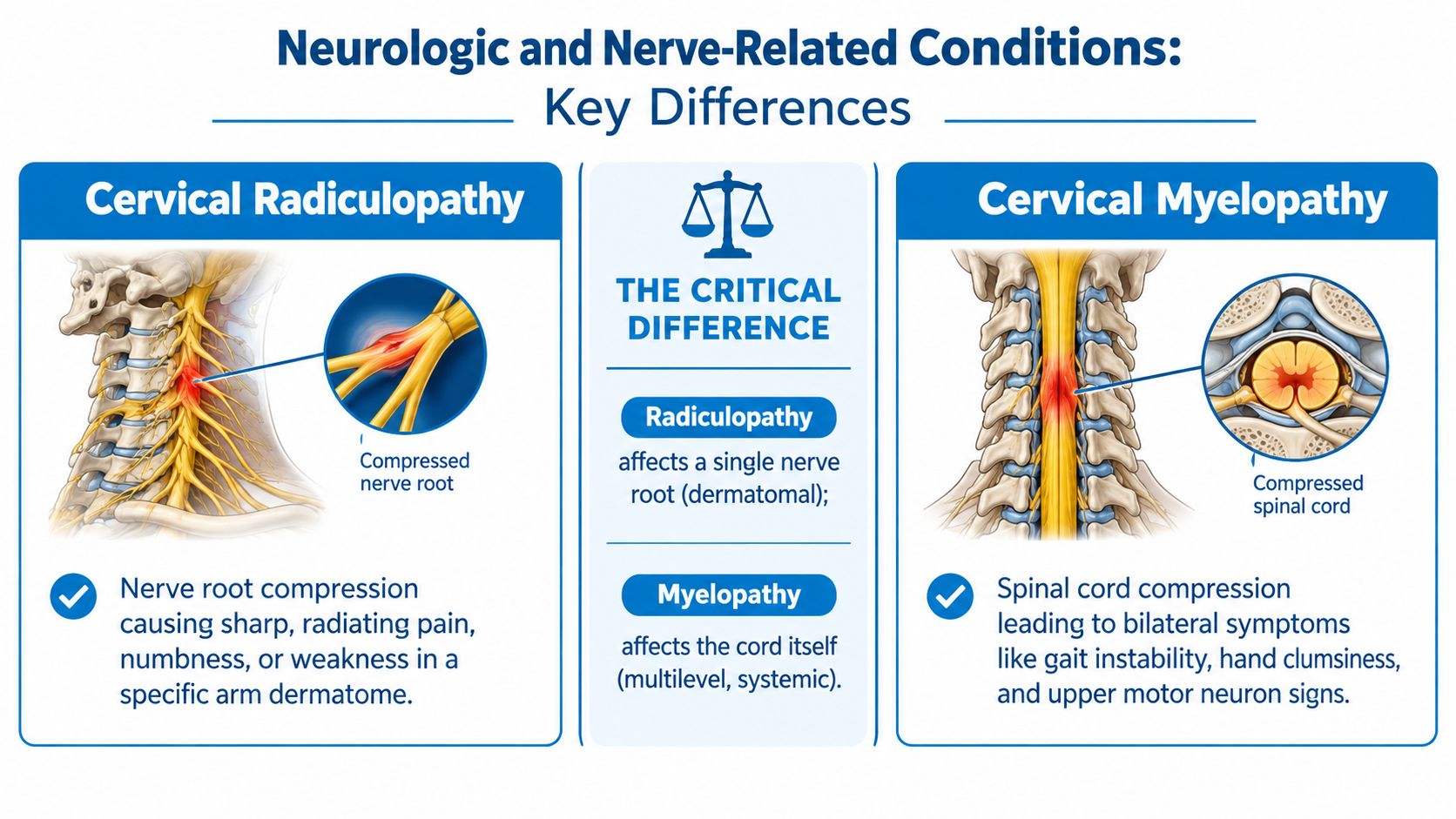
The pattern of symptoms often reveals which part of the nervous system needs attention. Cervical radiculopathy affects a nerve root as it exits the spine. Cervical myelopathy affects the spinal cord itself, so the symptoms may extend beyond one arm and require faster assessment.
Radiculopathy follows a root pattern
An irritated or compressed cervical nerve root can send pain from the neck into the shoulder, arm, or hand. Burning, tingling, numbness, or an electric sensation may accompany it. The examination may also show weakness or a reduced reflex in muscles supplied by that root.
Location provides an important clue. One nerve root usually produces symptoms in a recognizable dermatome or myotome, although patterns can overlap. The clinician compares the patient's symptom map with strength, sensation, reflexes, and selected neck or arm maneuvers. This is similar to tracing an electrical fault: the symptom's route helps identify where the signal is being disrupted.
A disc abnormality can be one cause. An explanation of herniated or bulging discs can clarify how displaced disc material may irritate a nearby nerve root. Imaging alone does not establish radiculopathy. The scan must agree with the symptoms and examination.
Cervical radiculopathy is less common than general neck pain. Reported incidence ranges from 0.83 to 1.79 per 1,000 person-years, with peak occurrence in the fourth and fifth decades, according to BMJ Best Practice. This distinction keeps clinicians from labeling every neck ache a pinched nerve.
Myelopathy involves the cord
The spinal cord carries signals between the brain and much of the body. Compression can therefore cause hand clumsiness, difficulty with fine motor tasks, gait imbalance, leg heaviness, or weakness at multiple neurologic levels.
Symptoms may affect both sides or involve the legs as well as the arms. Dropping objects, struggling with buttons, or feeling unsteady on stairs can prompt testing of reflexes, coordination, walking, and upper motor neuron signs. Progressive findings generally require expedited assessment because ongoing cord compression can impair function.
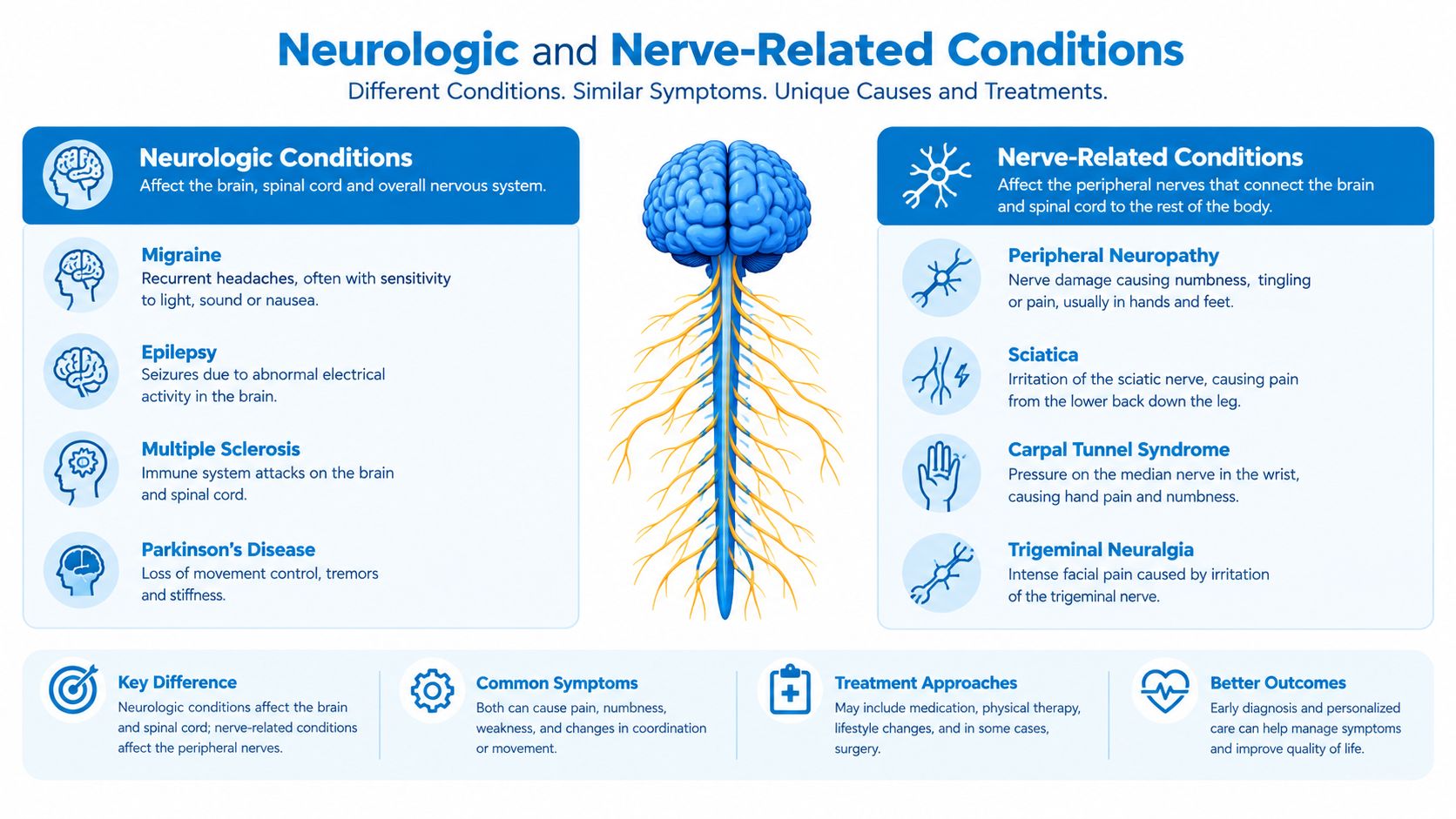
Pain behind the head may follow a different nerve pathway. Patients seeking more detail about head pain and occipital neuralgia can see why this pattern needs its own history and examination.
New radiating arm pain deserves attention. Progressive weakness, hand clumsiness, or balance loss deserves faster attention.
Systemic Diseases and Referred Pain Patterns
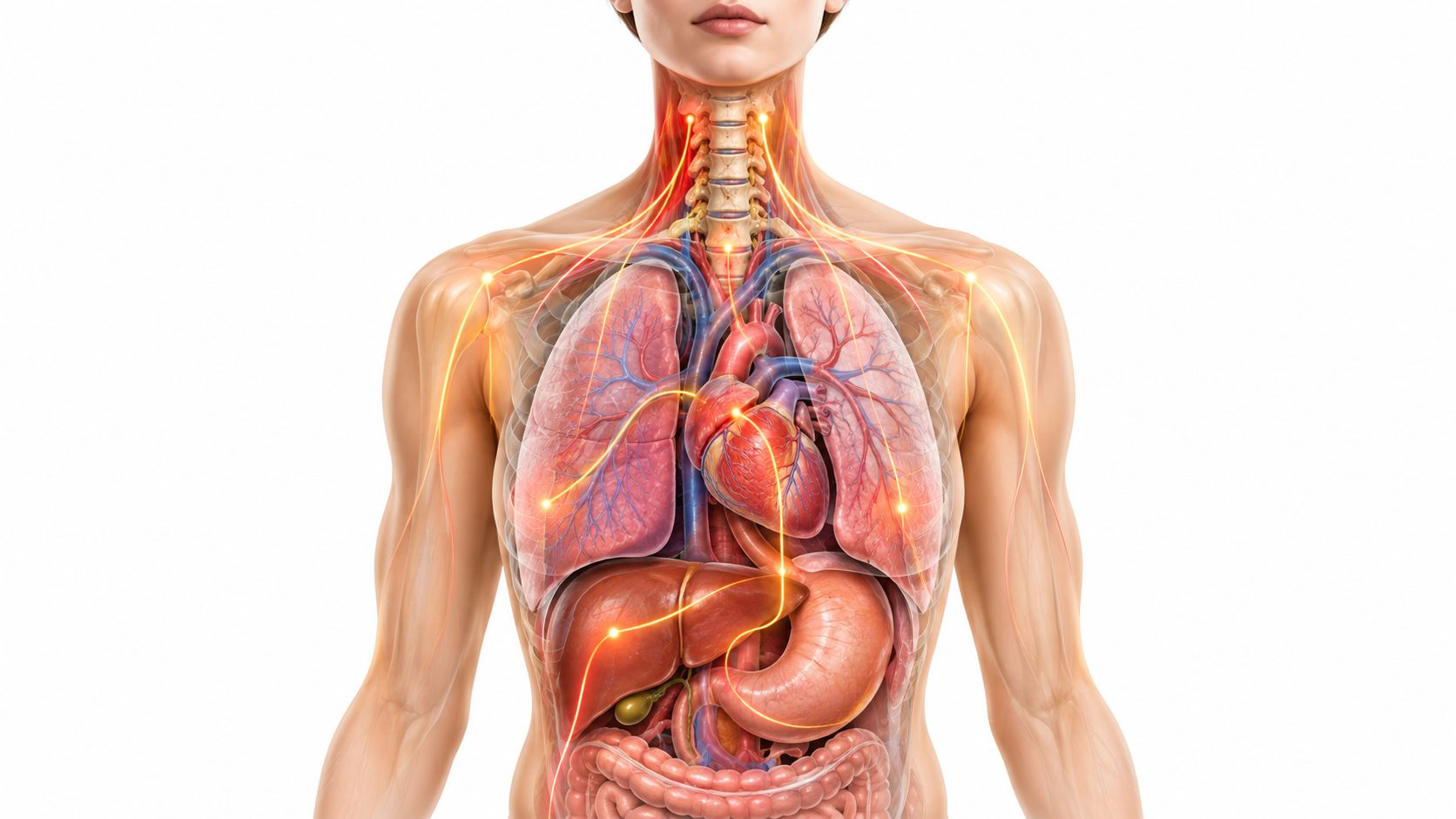
The painful area isn't always the source of the problem. Nerves can transmit discomfort from one region into another, and conditions outside the cervical spine can create symptoms near the neck, shoulder, jaw, or upper back. That's why a careful evaluation may include questions that seem unrelated to the patient's main complaint.
A headache that begins in the upper neck may reflect cervicogenic pain, where cervical structures refer symptoms toward the head. Jaw pain, chewing difficulty, or facial tenderness may point toward temporomandibular joint or dental contributors rather than a cervical joint. Shoulder disease can also be mistaken for neck pain, especially when the patient limits movement and develops secondary muscle tension.
Why systemic symptoms matter
Inflammatory conditions may cause prolonged stiffness, swelling in other joints, or symptoms that don't behave like ordinary mechanical pain. Infection becomes more concerning when neck pain occurs with fever, immunosuppression, injection-drug use, or other signs of systemic illness. Malignancy requires consideration when pain is accompanied by unexplained weight loss, a cancer history, or persistent night pain.
Some visceral or vascular conditions can also refer discomfort toward the neck. The precise workup depends on the complete symptom combination, not the neck pain in isolation. New swallowing difficulty, speech changes, double vision, dizziness, or sudden falls require urgent medical attention because they may indicate neurologic or vascular disease rather than a routine cervical strain.
The clinician's task is to connect symptoms without forcing them into one diagnosis. A patient may have ordinary cervical degeneration and a separate shoulder or jaw condition, or a systemic illness may be producing pain that merely feels musculoskeletal. A broad history prevents the examination from stopping at the most obvious body part.
Red Flags That Demand Immediate Medical Attention
Severe pain alone doesn't always indicate dangerous disease. A familiar flare after an activity may be intense yet still fit a mechanical pattern. Red flags become more meaningful when they alter the likelihood of infection, cancer, fracture, spinal cord compression, inflammatory disease, or vascular pathology.
Features that raise concern
The following findings deserve prompt medical assessment, especially when they're new, progressive, or combined:
- Fever or systemic illness: These findings increase concern for infection or another inflammatory process.
- Unexplained weight loss: This can support investigation for malignancy or systemic disease when paired with persistent pain.
- Night or rest pain: Pain that isn't relieved by position may fit a different pattern from ordinary movement-related strain.
- Cancer history or immunosuppression: These details change the clinician's threshold for further testing.
- Tuberculosis exposure or injection-drug use: Such history can raise concern for spinal infection.
- Severe trauma or vertebral tenderness: These findings require consideration of fracture or instability.
- Progressive weakness or multilevel sensory loss: Broader neurologic involvement raises concern for cord or other serious pathology.
A clinical review identifies age below 20 or above 55, weakness across more than one myotome, and sensory loss across more than one dermatome as features particularly associated with serious underlying causes. The same evidence emphasizes that myelopathy carries greater urgency than isolated radiculopathy when progressive spinal cord signs appear. This review of red flags and serious cervical conditions provides the clinical context for that assessment.
Sudden neurologic symptoms are emergencies
Neck pain accompanied by sudden dizziness, double vision, difficulty speaking, difficulty swallowing, or an unexplained fall shouldn't be managed as a routine muscle strain. These symptoms may indicate a vascular or neurologic emergency, including arterial dissection or stroke-related disease. Emergency evaluation is appropriate rather than waiting for a routine outpatient appointment.
Urgent action: New neurologic loss, rapidly worsening weakness, severe trauma, or neck pain with sudden brainstem-type symptoms requires immediate medical evaluation.
The red-flag literature isn't perfectly consistent. A review of 29 guidelines, of which 12 included red-flag recommendations, found recommendations spanning fracture, cancer, infection, myelopathy, arterial dissection, intracranial disease, inflammatory arthritis, and other systemic conditions, as reported in the 2024 review of neck pain red flags. That inconsistency explains why clinicians don't treat every warning sign as equally predictive. They combine the symptom with the patient's history, examination, and overall risk profile.
The Diagnostic Workup and Imaging Guidelines
Many patients expect an MRI immediately, but imaging is most useful when it answers a specific clinical question. In acute or recurrent neck pain without structural red flags, evidence-based guidance doesn't recommend routine imaging. An image can reveal a disc bulge or degenerative change that isn't responsible for the symptoms, creating anxiety or leading to treatment that doesn't address the actual pain source.
Matching the scan to the suspected problem
| Imaging modality | Primary clinical indication | What it best visualizes |
|---|---|---|
| Plain radiography | Selected nontraumatic cases without red flags | Alignment, general bony structure, and some degenerative changes |
| MRI | Suspected infection, progressive neurologic deficit, or cord involvement | Spinal cord, nerve roots, discs, soft tissues, and inflammatory changes |
| CT | Suspected trauma or bony disruption | Fractures, complex bone injury, and detailed osseous anatomy |
These roles reflect guidance from the American Academy of Family Physicians' neck pain evaluation recommendations. The same guidance describes MRI as preferred for suspected infection, progressive neurologic deficit, or overt cord involvement, while CT is favored when trauma or bony disruption is suspected.
What happens before imaging
The clinician first documents the pain distribution and checks strength, sensation, reflexes, gait, coordination, and neck mobility. Imaging becomes more valuable when those findings point toward a structure that needs confirmation or when a serious disease must be excluded.
Patients who want a plain-language discussion of neck MRI for active professionals may find it useful for understanding what the scan can and cannot answer. An MRI is not a diagnosis by itself. Its clinical value depends on whether the findings match the history and examination.
Targeted testing may also include laboratory work or specialized vascular imaging when infection, inflammation, malignancy, or arterial disease is suspected. The test should follow the clinical question, not replace it.
When to See a Specialist for Neck Pain
Primary care evaluation is appropriate for many uncomplicated neck pain presentations. Specialist assessment becomes more useful when symptoms persist, the diagnosis remains uncertain, neurologic findings progress, or conservative care hasn't restored function.
Situations that merit referral
Persistent arm pain with numbness or weakness may require a spine or interventional pain assessment to determine whether a nerve root is involved. Gait imbalance, hand clumsiness, or multilevel weakness deserves expedited specialist evaluation because those findings may reflect spinal cord compression.
Referral also makes sense when:
- Pain limits work or daily activity: A specialist can connect the diagnosis with functional goals.
- Symptoms continue despite conservative care: The next step may include targeted therapy or diagnostic procedures.
- Imaging and symptoms disagree: A multidisciplinary review can prevent treatment based on an incidental finding.
- Degenerative disease is complex: Multiple pain generators may require coordinated nonoperative and surgical opinions.
- A procedure is being considered: Image-guided injections, nerve blocks, or other interventions should follow a clear diagnostic rationale.
A multidisciplinary center may coordinate physical rehabilitation, medication planning, diagnostic injections, epidural procedures, orthopedic assessment, or spine surgery when indicated. Surgical consultation doesn't automatically mean surgery. It can clarify whether decompression or another procedure is appropriate, while interventional care may offer a less invasive option when the clinical picture supports it.
Patients exploring regenerative approaches should also evaluate the evidence, diagnosis, risks, and alternatives with a qualified clinician before pursuing non-surgical neck pain stem cells. The treatment discussion should remain anchored to the confirmed or most likely pain generator.
Interventional Pain Management evaluates neck and spine conditions through history, physical examination, diagnostic review, and selected image-guided procedures. Patients in New Jersey and Staten Island with persistent neck pain can visit Interventional Pain Management to request an evaluation and discuss whether conservative, interventional, or surgical care fits the clinical findings.