

A spinal cord stimulator trial usually lasts about 3 to 7 days, sometimes up to 10 days, with 1 to 2 days of rest after the leads are placed. Discharge is commonly the same day, and normal routines often resume soon after the temporary leads are removed.
A patient may arrive for the procedure expecting a major operation and leave later that day wondering whether recovery has really started. The trial does involve carefully placed leads, but it isn't the same as recovering from a permanent implant. Most of the short-term work involves protecting the temporary leads, keeping the site clean and dry, and learning whether stimulation improves meaningful daily activities.
That distinction makes the spinal cord stimulator trial recovery time easier to understand. The first days call for restraint, the middle of the trial allows gentle real-life testing, and the removal visit marks the end of the temporary system. The timeline below focuses on what patients can reasonably expect, what they should avoid, and how to gather useful information for the final treatment decision.
Table of Contents
- What to Expect From Your Spinal Cord Stimulator Trial
- Understanding How a Spinal Cord Stimulator Trial Works
- Spinal Cord Stimulator Trial Recovery Time and Daily Milestones
- Immediate Aftercare and Activity Restrictions During the Trial
- Common Side Effects and When to Call Your Care Team
- How to Optimize Your Trial for the Best Result
- Deciding on Next Steps After Your Trial Ends
What to Expect From Your Spinal Cord Stimulator Trial
On trial day, a patient with persistent back or leg pain may feel a mix of relief and uncertainty. The leads are placed, connected to an external controller, secured at the skin, and checked before discharge. The experience is usually designed as a short outpatient evaluation rather than a long hospital recovery. Cleveland Clinic describes the spinal cord stimulator trial as a brief evaluation with same-day discharge commonly used for the temporary procedure.
The temporary system gives the care team a chance to assess whether stimulation helps the specific pain pattern. It also lets the patient test practical changes, such as walking farther, standing longer, sleeping more comfortably, or completing a household task that pain had made difficult. A lower pain score matters, but improved function often gives the clearest picture of whether the therapy fits everyday life.
The first days feel different from permanent implant recovery
The leads remain outside the body and connect to a wearable external device. That setup explains why the trial doesn't follow the same recovery path as a permanent system, which places the power source under the skin. The temporary leads still need protection, however, because unnecessary movement can disturb their position and the dressing needs protection from contamination and moisture.
Patients are generally advised to rest after placement and avoid movements that pull across the lead area. The restrictions can feel inconvenient, especially for someone eager to test normal activity, but they help preserve the validity of the evaluation.
Practical rule: A quiet first phase usually produces a more reliable trial than rushing into strenuous activity and risking a lead problem.
Why the timeline matters
A patient who expects a long surgical recovery may become unnecessarily alarmed by mild soreness. A patient who assumes the temporary leads are harmless may bend, twist, or soak the dressing too soon. Knowing the purpose of each phase reduces both types of confusion.
The most useful question isn't whether the back hurts less. It is whether the patient can perform important activities with less interruption while the system remains comfortable and secure.
Understanding How a Spinal Cord Stimulator Trial Works
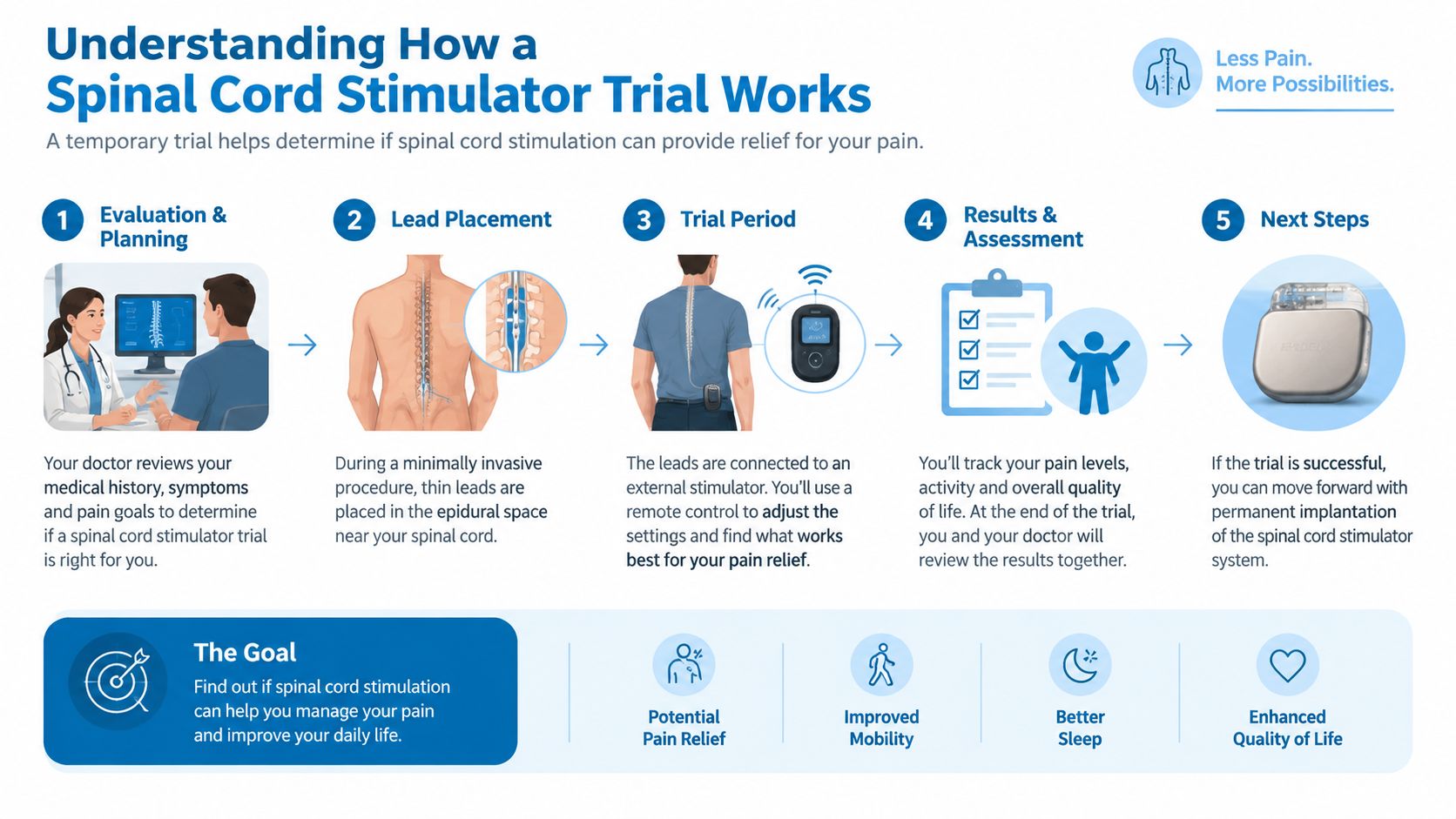
A spinal cord stimulator trial can be understood as a temporary test drive. Thin leads are positioned near the spinal cord in the epidural space, then connected to an external battery and programmer. The device delivers controlled stimulation while the patient and clinical team assess pain relief and function. A clinical overview of spinal cord stimulation and its treatment role can provide additional context before a consultation.
The process generally follows a sequence:
- Lead placement: The clinician places the temporary leads using image guidance and secures the external portion at the skin.
- Connection: The leads connect to an external controller that allows the care team to adjust stimulation.
- Initial programming: Settings are selected according to the patient's pain pattern and comfort.
- Daily testing: The patient uses the system during permitted activities and records changes in pain and function.
- Lead removal: At the end of the evaluation, the temporary leads are removed and the results are reviewed.
Temporary leads change the recovery question
With a permanent implant, recovery focuses more heavily on healing surgical wounds and allowing the implanted hardware to settle. During a trial, the main concern is different. The body is adjusting to the procedure, but the technical priority is keeping the externalized leads stable and the dressing clean.
That is why bending, twisting, stretching, lifting, and water exposure are commonly restricted. These instructions aren't intended to prevent every movement. They aim to reduce lead migration and infection risk while the evaluation is underway. Patients can usually perform gentle, approved activity, but the care team's instructions take priority because lead placement and dressing methods vary.
The trial tests life, not just symptoms
A successful trial shouldn't be judged only while the patient is sitting still. The patient may need to test walking, standing, sleeping, personal care, and other tasks that were limited by pain. The clinician may adjust settings during the trial so the assessment reflects the best reasonable use of the therapy.
The result is therefore a combined judgment. The team considers pain relief, useful activity, comfort, medication needs, and the patient's ability to manage the system. A temporary improvement that doesn't translate into better daily function may not support moving forward with permanent implantation.
Spinal Cord Stimulator Trial Recovery Time and Daily Milestones
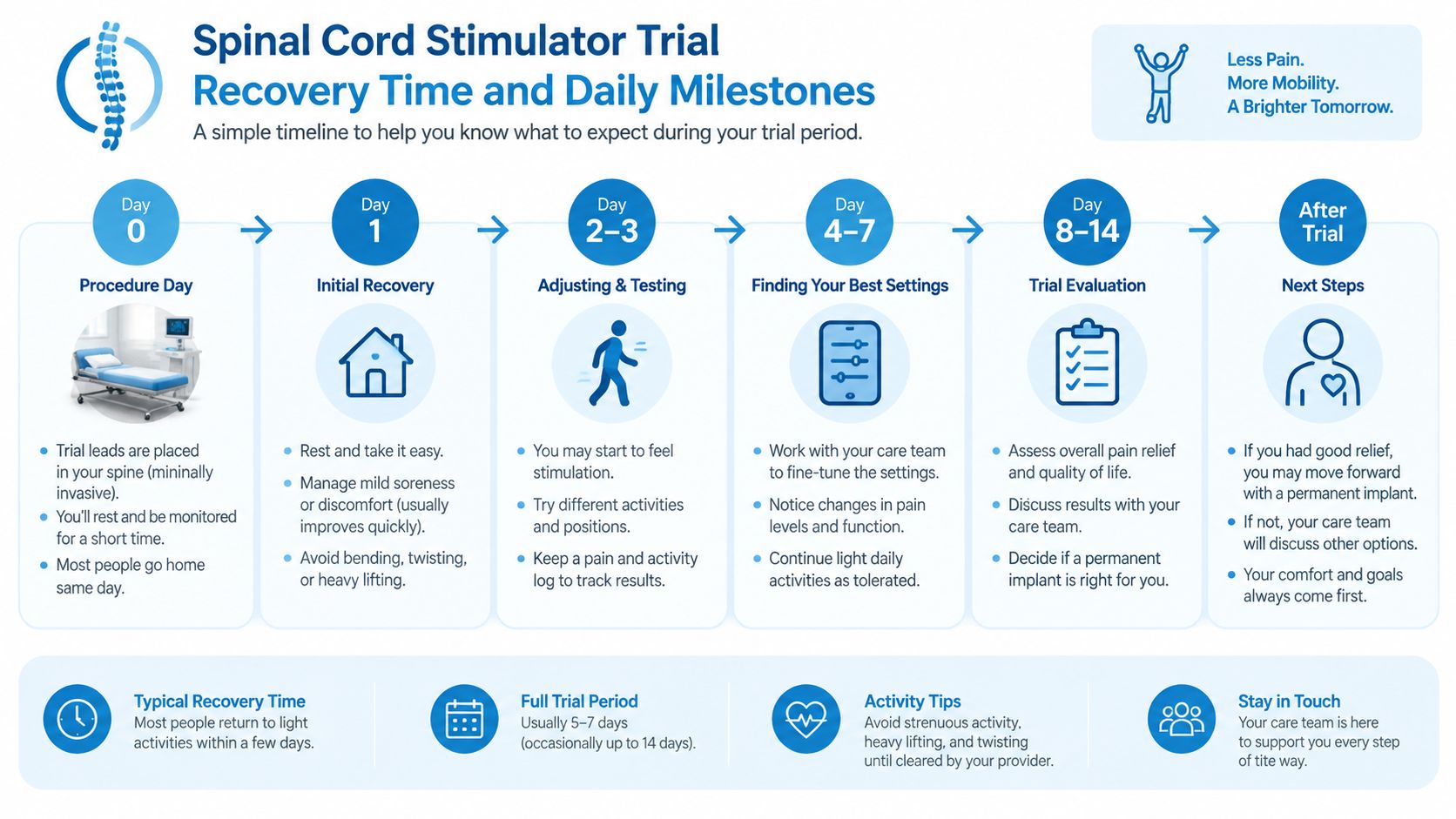
The calendar is usually short, but each phase has a different purpose. The trial itself commonly lasts about 3 to 7 days, and some clinical sources describe a window extending to 10 days. Spine-health explains that many evaluations fall within roughly 3 to 10 days and that the early recovery period centers on protecting the temporary leads.
Procedure day
The patient typically arrives for lead placement, receives instructions, and leaves after the team confirms that the temporary system is functioning. Same-day discharge is common for this outpatient step. Mild soreness or tenderness at the insertion site may occur, and the external controller should remain secured as instructed.
The rest of procedure day should be deliberately uneventful. A patient can arrange transportation, prepare a comfortable resting area, keep essentials within easy reach, and avoid plans that require repeated bending or carrying.
The first 1 to 2 days
The first 1 to 2 days are generally the most protective part of recovery. Patients are commonly told to rest during this period and avoid bending, twisting, stretching, heavy lifting, and other motions that could pull on the leads. Cleveland Clinic's patient guidance describes this early rest period and the movement precautions used after lead placement.
Rest doesn't mean staying completely motionless unless the clinician specifically says so. Short, gentle movement approved by the care team can help a patient manage basic needs, but the focus remains on stability rather than proving what the body can tolerate.
The active testing window
From roughly day 3 through day 7, the patient can usually begin evaluating ordinary tasks within the permitted limits. A person with walking-limited pain might compare a short walk with the usual baseline. Someone whose pain interrupts standing might observe whether preparing a simple meal or showering feels more manageable.
The point isn't to push until symptoms flare. It is to repeat meaningful activities cautiously and note whether stimulation produces consistent, useful change. The trial may last longer under an individual clinic's protocol, but extending it isn't automatically better.
For broader organization of symptoms, activities, and clinical follow-up, patients may also find it useful to browse care plan workflow notes and adapt the general planning principles to the instructions from the pain team.
Lead removal
At the scheduled end of the trial, the clinician removes the temporary leads and reviews the patient's notes. Normal routines can often resume soon afterward, subject to the care team's wound and activity instructions. The decision then shifts from protecting the trial system to judging whether the observed improvement justifies a conversation about a permanent implant.
Immediate Aftercare and Activity Restrictions During the Trial
Aftercare is best treated as a protection checklist. The temporary leads are secured at the skin, so an activity that seems harmless can place traction on the dressing or lead pathway. The restrictions also help reduce infection risk while the site remains covered. Patients dealing with pain after previous spine treatment can review general information about pain after back surgery, but trial-specific instructions must come from the treating team.
Protect the dressing and insertion site
The dressing should stay in place according to the clinic's instructions. Patients shouldn't peel it back to inspect the site repeatedly, apply unapproved products, or replace it without guidance. Hand hygiene matters before touching the area, and any loose, wet, or contaminated dressing should prompt a call to the care team.
Water exposure is usually restricted during the trial. Baths, swimming, and hot tubs can soak the dressing and expose the insertion site to contamination. Showering may be allowed with a protective covering, but the exact method depends on the dressing and should be confirmed before the patient gets wet.
Limit movements that pull on the leads
During the restricted phase, patients generally avoid:
- Bending and twisting: Turning from the waist or reaching toward the floor can tug on the lead area.
- Stretching and reaching: Large overhead or side-reaching movements may strain the secured portion.
- Heavy lifting: Carrying groceries, laundry baskets, or equipment can recruit the back muscles and disturb the setup.
- High-impact exercise: Running, jumping, and vigorous workouts should wait until the clinician gives clearance.
- Repeated household chores: Vacuuming, mopping, and changing bedding often combine bending, pulling, and twisting.
Gentle walking may be encouraged if it doesn't conflict with the clinic's instructions. Clothing should be loose enough not to rub the dressing, and sleep positions should avoid direct pressure on the site or pulling the external connector.
Driving and work require individual clearance
Driving can involve sudden twisting, prolonged sitting, and responsibility for responding quickly to traffic. The patient should ask the care team whether driving is permitted, especially while adjusting stimulation or taking medication that causes drowsiness. Work decisions depend on the physical demands of the job. Desk work may be easier to modify than lifting, climbing, repetitive bending, or field labor.
Common Side Effects and When to Call Your Care Team
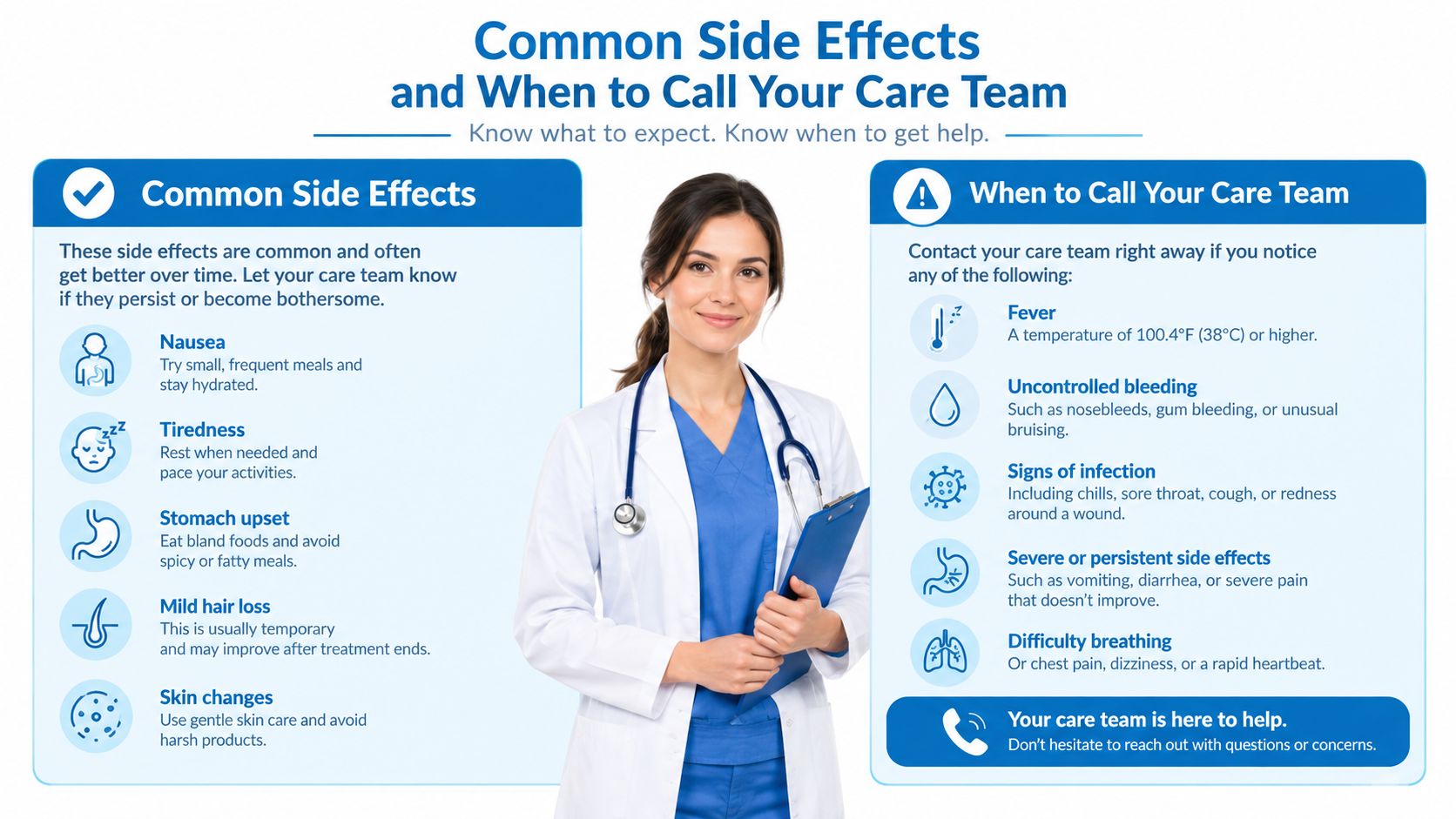
Mild symptoms don't automatically mean the trial is failing. The insertion area may feel sore or bruised, and the patient may notice temporary discomfort from the dressing or the leads. Stimulation can also feel unfamiliar, including tingling for some patients, while others may feel little or no sensation even when the system is helping.
The safest approach is to judge symptoms by their severity, direction, and associated signs. Mild soreness that gradually settles is different from pain that intensifies. A stable dressing is different from drainage or spreading redness.
Symptoms that may be expected
Patients may experience:
- Local tenderness: The skin near the lead placement can be sensitive after the procedure.
- Mild bruising: A small amount of discoloration can occur around the treated area.
- Adjustment sensations: Stimulation settings may create tingling or another unfamiliar feeling while the team fine-tunes the device.
- Fatigue: The procedure, disrupted sleep, and attention required during the trial may leave the patient tired.
These symptoms should still be mentioned during scheduled communication with the clinic. The care team can determine whether they fit the expected course for that patient.
Warning signs deserve prompt attention
A patient should contact the care team promptly about fever, worsening redness, drainage, severe or escalating pain, or a dressing problem that cannot be corrected with the provided instructions. Those signs can indicate infection or another complication that needs clinical assessment.
A sudden loss of stimulation or an abrupt change in coverage also deserves a call. It may reflect a programming issue, but lead migration must be considered, particularly if the change follows an unplanned movement or strain.
Safety principle: A possible infection or lead problem should be reported rather than watched in silence. The clinic can decide how urgently the patient needs evaluation.
Emergency symptoms, such as severe weakness, major breathing difficulty, or a rapidly worsening overall condition, require emergency medical attention rather than waiting for a routine office response.
How to Optimize Your Trial for the Best Result
A trial becomes more informative when the patient treats it as a structured observation period rather than a pass-or-fail pain test. The most valuable record connects stimulation with specific activities. “Pain was better” helps, but “standing to prepare food felt possible without the usual interruption” gives the clinical team a clearer basis for discussion.
Track function alongside pain
A simple paper or phone note can capture the same categories each day:
- Pain: Record the usual intensity and the areas that changed.
- Function: Note walking, standing, sleeping, personal care, and household tasks.
- Medication: Record whether prescribed rescue medication was needed differently than usual.
- Comfort: Describe tingling, pressure, irritation, or difficulty managing the external equipment.
- Settings: Note important programming changes and whether they altered relief or comfort.
The record doesn't need elaborate scoring. Consistent observations are more useful than a detailed entry on one day followed by silence.
Test meaningful activities carefully
A patient who normally stops walking because of leg pain might take a short, approved walk and record the result. A patient whose pain interferes with sleep might note how often symptoms interrupt rest. Someone limited by standing can compare a necessary task, such as washing dishes, with the usual baseline.
Testing should stay within the movement restrictions. The trial isn't a challenge to see whether the leads can withstand normal exertion. It is a controlled opportunity to observe whether ordinary life becomes more manageable.
Longer isn't automatically more accurate
Patients often assume that adding days will produce a better answer. Current consensus guidance says a trial lasting longer than 10 days is ordinarily not recommended because longer exposure can raise infection risk without a clear benefit in decision quality, as summarized in the published consensus guidance. The same source notes that reported overall SCS complication rates in published reviews fall around 31.9% to 43%, with lead migration identified as the most common issue.
A registry entry discussed in that guidance describes trial durations ranging from 3 to 14 days, showing that protocols vary and that clinicians continue to study the optimal length. The practical lesson is to follow the prescribed schedule rather than requesting extra days automatically. A longer trial may add exposure to risk without adding useful information.
Deciding on Next Steps After Your Trial Ends
Lead removal is the point at which recovery and treatment evaluation come together. The clinician removes the temporary leads, checks the site, and reviews the patient's activity notes, symptom changes, medication experience, and comfort with the system. The key decision is whether the trial produced enough meaningful relief and functional improvement to justify discussing permanent implantation.
A patient doesn't need to report perfect relief to have a useful result. The care team may weigh whether pain became more manageable, whether important activities returned, whether stimulation was tolerable, and whether the patient could follow the device instructions safely. The trial's length also matters because more exposure isn't necessarily a better test when infection and migration risks increase.
Before leaving the review visit, patients can ask:
- Which improvements support moving forward?
- Which symptoms or limitations make permanent implantation less suitable?
- What would permanent implant recovery involve?
- Which activity restrictions would continue after the procedure?
- What warning signs should be reported after lead removal?
For patients comparing treatment pathways, pain management services may include non-invasive, interventional, and surgical options selected according to the clinical problem. A spinal cord stimulator is one part of a broader pain plan, not a substitute for individualized evaluation.
The main reassurance is straightforward. Spinal cord stimulator trial recovery time is usually brief, but the temporary system deserves careful handling. Protecting the leads, tracking real function, reporting warning signs, and reviewing the results give the patient and clinician the clearest basis for the next decision.
Interventional Pain Management evaluates chronic back, neck, and post-surgical pain and provides spinal cord stimulation assessment and follow-up when clinically appropriate. Patients can review treatment options and request guidance through Interventional Pain Management before scheduling the next step.