
A neck nerve block can sound like a straightforward answer after months of pain. Yet “nerve block” describes several different procedures, and the right choice depends on whether pain comes from a facet joint, an irritated nerve root, the occipital nerves, or a sympathetic pain pathway. For an adult in New Jersey or Staten Island who has tried therapy and medication without enough improvement, the most important question isn't which structure is being tested or treated, and what decision will follow the result.
Table of Contents
- When a Neck Problem Pushes You Toward a Nerve Block
- The Main Types of Nerve Blocks Used for Neck Pain
- Diagnostic Versus Therapeutic Roles of a Cervical Block
- What Happens Before, During, and After the Procedure
- What the Evidence Shows About Relief and Duration
- Where Nerve Blocks Fit Among Other Neck Pain Options
- Who Is a Good Candidate and When to Seek a Referral
- Practical Takeaways and Common Patient Questions
When a Neck Problem Pushes You Toward a Nerve Block
A 52-year-old office worker has had neck pain for four months. The ache spreads across the shoulders, turning the head to check a blind spot aggravates it, and ibuprofen plus physical therapy has helped only partly. Sleep has become difficult, but there's no tingling, weakness, or pain traveling down either arm.
That pattern matters. Pain that stays mainly in the neck and upper shoulder region is different from pain caused by a compressed cervical nerve root. Mechanical aggravation, such as pain with rotation or extension, can raise suspicion that the small joints at the back of the cervical spine, called facet joints, are contributing. It still doesn't prove the diagnosis.
Chronic neck pain is common. One review reported a 34% total prevalence in the general population, while 14% experienced pain lasting more than six months (review of chronic neck pain and cervical facet pain). Among people already identified as having chronic neck pain, controlled studies estimated that 39% to 67% may have pain arising from cervical facet or zygapophysial joints, the structures supplied by the medial branch nerves (same clinical review).
Why the block enters the conversation
A clinician usually considers a block after reviewing the pain pattern, neurological examination, imaging, medication history, and response to conservative care. The purpose isn't to skip rehabilitation or declare other treatments unsuccessful. It's to improve diagnostic confidence when persistent symptoms continue to limit driving, work, sleep, or ordinary movement.
For this office worker, a controlled cervical medial branch block could test whether selected facet joints are generating the pain. If the response is absent, the plan may return to rehabilitation, medication adjustment, or evaluation of another source. If the response is strong but temporary, it may support a more durable treatment discussion, such as radiofrequency ablation, while still requiring careful patient selection.
Practical rule: A neck block should answer a clinical question. “Which structure is causing the pain?” is a more useful question than “Can an injection fix the neck?”
A patient with arm pain, numbness, or weakness follows a different pathway. A patient with pain at the base of the skull and headache may need another type of block. The details described on a neck pain evaluation page help show why diagnosis comes before procedure selection.
The Main Types of Nerve Blocks Used for Neck Pain
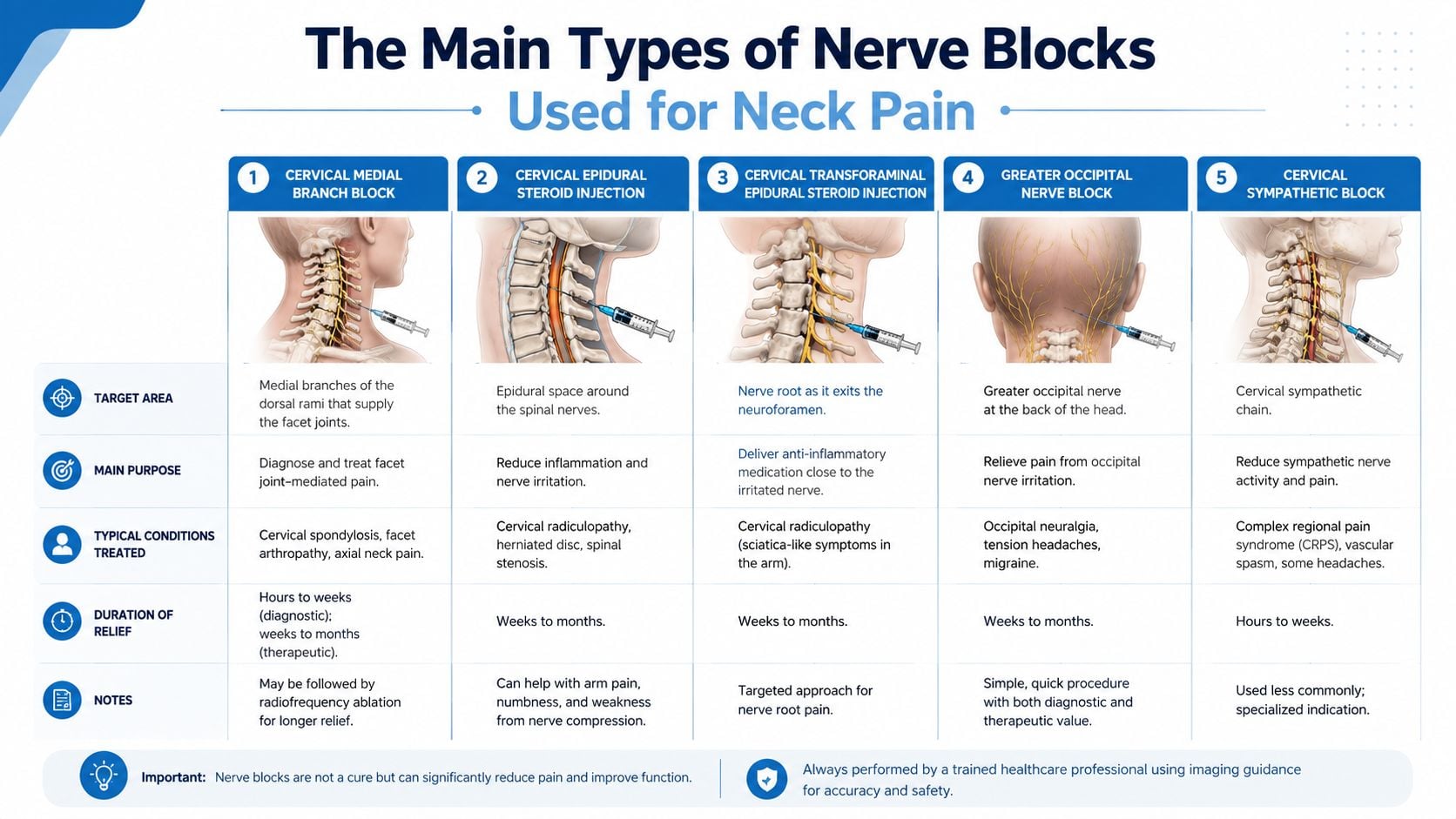
A nerve block is a targeted injection placed near a nerve or nerve-bearing structure. The medication may include a local anesthetic, which temporarily interrupts pain signaling, and sometimes a corticosteroid intended to reduce inflammation. The injection's name reflects its target, not a universal treatment for every form of neck pain.
Cervical nerve root blocks
A cervical selective nerve root block targets an exiting spinal nerve as it passes through the opening between vertebrae. Physicians generally consider it when symptoms travel from the neck into the shoulder, arm, or hand and the examination and imaging suggest irritation of a particular nerve root.
This procedure may help reduce inflammation around the root and may also clarify whether that root is responsible for the symptoms. It isn't designed to diagnose ordinary axial neck pain arising from facet joints, and it isn't a general remedy for every disc bulge or pinched-nerve sensation.
Cervical medial branch blocks
A medial branch block anesthetizes the small nerves that carry pain signals from cervical facet joints. It is the best-supported diagnostic approach for suspected facet-mediated, non-radicular neck pain.
The procedure doesn't inject the joint itself as a broad pain treatment. Instead, it temporarily quiets the nerve supply to selected joints. A meaningful response during the expected anesthetic period can connect those joints to the patient's pain, especially when controlled comparative testing is used.
Occipital nerve blocks
An occipital nerve block targets nerves at the back of the scalp and upper neck. Clinicians may consider it for occipital neuralgia or headache patterns that appear to originate in the upper cervical region.
It won't address a lower cervical facet joint or an irritated nerve root because the pain is felt in the neck. The location and quality of the pain must fit the suspected target.
Stellate ganglion blocks
A stellate ganglion block targets sympathetic nerves in the lower neck. It is reserved for selected sympathetically maintained pain conditions, including certain complex regional pain syndromes or post-traumatic upper-extremity pain patterns.
Routine mechanical neck pain usually doesn't justify this procedure. The distinction matters because a treatment aimed at sympathetic activity isn't interchangeable with a medial branch block or cervical nerve root block. A general overview of injection options in pain management can provide context, but the final choice requires an individualized examination.
Diagnostic Versus Therapeutic Roles of a Cervical Block
A patient with neck pain may feel temporary relief after an injection, but that response can answer two different questions. A diagnostic block uses local anesthetic to test whether a particular nerve or facet joint is contributing to the pain. A therapeutic block may include corticosteroid, with the aim of reducing inflammation and extending relief beyond the anesthetic's short action.
The purpose determines how the result should be judged. For diagnosis, the key finding is meaningful pain reduction during the period when the anesthetic should be working. For treatment, follow-up focuses on pain, sleep, movement, medication use, and daily function.
| Feature | Diagnostic Block | Therapeutic Block |
|---|---|---|
| Primary purpose | Identify a suspected pain generator | Attempt symptom relief |
| Medication emphasis | Short-acting local anesthetic | Local anesthetic, sometimes with corticosteroid |
| Result that matters | Meaningful, time-appropriate pain reduction | Improvement in pain and function over follow-up |
| Main limitation | False positives, especially with less stringent methods | Relief may be brief or inconsistent |
| Possible next decision | Consider targeted treatment if criteria are met | Continue rehabilitation or reassess the diagnosis |
A single test can make a facet joint seem responsible when it is not. Diagnostic cervical facet blocks used alone have reported false-positive rates from 27% to 63%. For that reason, earlier protocols favored controlled comparative blocks and a higher threshold, such as 75% or more pain relief (clinical review of cervical facet blocks).
A separate review found cervical facet pain prevalence of 36% to 60% when controlled blocks produced at least 75% pain relief. Other findings reported 49.3% prevalence with double blocks and a 25.6% false-positive rate. These differences show why the number of blocks, comparison method, and relief threshold affect diagnostic confidence (systematic review of cervical facet interventions).
The scan shows anatomy. The block tests whether that anatomy is actually producing the patient's pain.
This distinction matters in New Jersey and Staten Island, where patients may encounter the term “nerve block” as though it describes one standard treatment. The strongest support applies to carefully controlled diagnostic medial branch blocks for non-radicular facet pain. Evidence for lasting therapeutic benefit is more limited and less consistent, so a positive diagnostic response should guide a stepwise plan rather than promise permanent relief.
Disc degeneration, a bulging disc, or facet arthropathy may appear near painful or pain-free structures. Imaging therefore needs to match the examination and symptom pattern. It cannot replace a properly designed diagnostic test.
What Happens Before, During, and After the Procedure
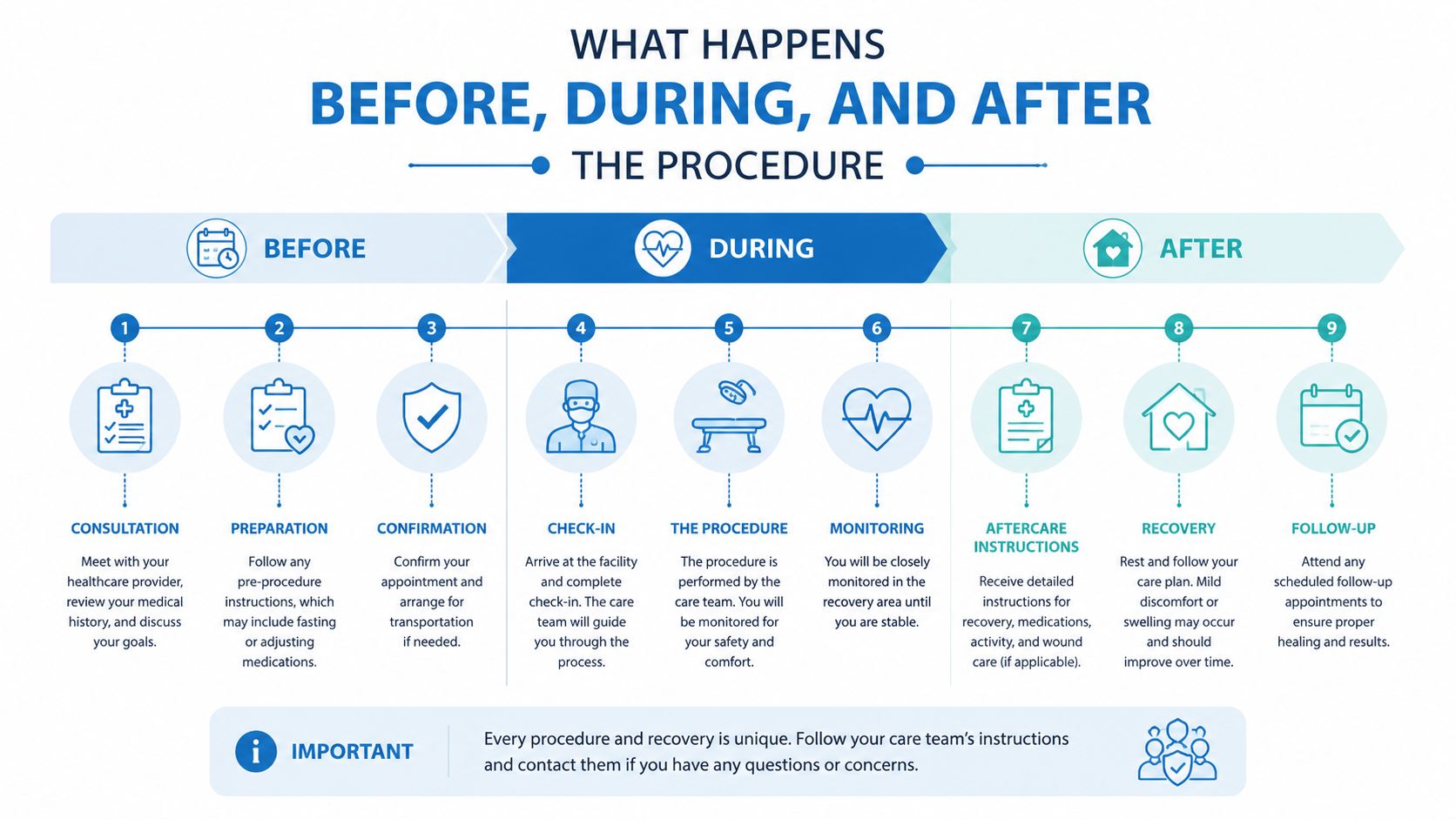
Preparation begins with a clinical review rather than a needle. The physician examines the pain distribution, neurological findings, prior treatment response, imaging, medication list, allergies, and factors that could raise bleeding or infection risk. The office also gives procedure-specific instructions about eating, drinking, and medications.
Before the injection
On arrival, staff verify the planned procedure and target. The patient changes if needed, receives monitoring, and is positioned so the cervical area is accessible. Some patients remain fully awake, while others receive limited sedation depending on the procedure and medical circumstances.
Image guidance improves the physician's ability to approach the intended structure. Fluoroscopy uses live X-ray imaging, while ultrasound can provide a radiation-free approach for selected cervical blocks. A meta-analysis found ultrasound-guided cervical medial branch blocks had similar success and pain efficacy to traditional image-guided approaches, with possible safety and performance-time advantages (meta-analysis of ultrasound-guided cervical medial branch blocks).
During the injection
The skin is cleaned and numbed. The physician advances a thin needle toward the selected nerve or joint region under imaging guidance, then may use contrast to confirm the needle's position before delivering the medication.
The injection itself generally takes only minutes, although preparation and recovery make the total visit longer. Pressure, brief stinging, or a momentary increase in familiar symptoms can occur. Sharp or persistent discomfort should be reported immediately so the team can reassess.
After the procedure
Staff observe the patient for short-term effects such as dizziness, temporary numbness, weakness, or an unusual reaction. Mild soreness at the injection site can occur, and the anesthetic may briefly change sensation or movement in the treated region.
A responsible recovery plan includes:
- Arrange transportation: Sedation, numbness, or temporary weakness can make driving unsafe.
- Protect the neck: Avoid heavy lifting or strenuous activity until the treating clinician provides clearance.
- Record the response: Note pain during the anesthetic period, movement that became easier, and symptoms over the following days.
- Report concerning changes: New or worsening weakness, spreading numbness, fever, severe headache, or other unexpected neurological symptoms need prompt medical advice.
The response log is especially valuable after a diagnostic medial branch block. The clinician needs to know whether turning the head, driving, sleeping, or working improved during the expected anesthetic window, not just whether the patient felt generally better at some point.
What the Evidence Shows About Relief and Duration
Evidence differs substantially by procedure and diagnosis. The strongest support for cervical medial branch blocks concerns their diagnostic role in carefully selected patients with suspected facet-mediated pain, not a promise of indefinite symptom control from the injection itself.
A systematic review of neck-pain injection therapies included 12 trials and 667 participants. It found weak evidence for many injection interventions and moderate-quality evidence showing little or no difference between steroid-and-bupivacaine nerve block injections and bupivacaine alone for chronic neck pain (systematic review of injection therapies).
Controlled medial branch studies have reported at least 50% pain relief with meaningful functional improvement at 3, 6, and 12 months in patients selected through comparative local anesthetic blocks. In one 2-year follow-up cohort, 85% to 93% achieved significant relief, with average relief lasting 17 to 19 weeks per procedure and cumulative benefit documented for 83 to 89 weeks over the study period (cervical medial branch block follow-up study). These results apply to a selected population and shouldn't be generalized to every person with neck pain.
| Block Type | Best Evidence | Typical Relief Duration |
|---|---|---|
| Medial branch block | Diagnostic value for confirmed or suspected facet pain | Often temporary, with duration varying by patient and purpose |
| Cervical nerve root block | Targeted evaluation and short-term treatment of radicular symptoms | May be short-lived; long-term functional evidence is less certain |
| Occipital nerve block | Selected occipital neuralgia or cervicogenic headache patterns | Variable and diagnosis-dependent |
| Stellate ganglion block | Narrow sympathetic pain conditions | Mixed evidence outside carefully selected cases |
A review of cervical facet interventions found that comparative blocks requiring 100% pain relief before radiofrequency neurotomy were associated with a 61% chance of complete pain relief after ablation in the selected treatment pathway (systematic review of cervical facet interventions). That figure supports the value of stringent selection, not a guarantee for an individual patient.
Where Nerve Blocks Fit Among Other Neck Pain Options
Nerve blocks work best as part of a layered plan. They shouldn't replace an appropriate effort to restore movement, improve strength, reduce mechanical strain, and identify warning signs.
Physical therapy often addresses deep neck flexor control, shoulder-blade mechanics, posture, mobility, and tolerable strengthening. Activity modification can reduce aggravating movements without encouraging prolonged inactivity. Medication choices depend on medical history, kidney and stomach health, cardiovascular risk, sleep, and whether symptoms are neuropathic.
Matching the intervention to the diagnosis
- Axial mechanical pain: Rehabilitation, activity changes, and medication review usually come first. A medial branch block may be considered when facet pain remains plausible and the result would change management.
- Radicular pain: Arm pain, tingling, numbness, or weakness may point toward nerve-root irritation. A targeted root or epidural injection addresses a different problem from facet-mediated axial pain.
- Confirmed facet pain: A positive controlled diagnostic pathway may lead to radiofrequency ablation, which treats the same medial branch nerves with a longer-lasting intent. Information about radiofrequency ablation can help patients understand why the diagnostic step matters.
- Structural neurological disease: Progressive weakness, myelopathy, instability, or a clearly compressive lesion may require spine or orthopedic evaluation rather than repeated injections.
- Persistent complex pain: Neuromodulation may be considered only after careful evaluation and failure of appropriate conservative and interventional options.
The sequence should follow the diagnosis. A procedure chosen because it sounds familiar can delay the treatment that fits the pain generator.
Who Is a Good Candidate and When to Seek a Referral
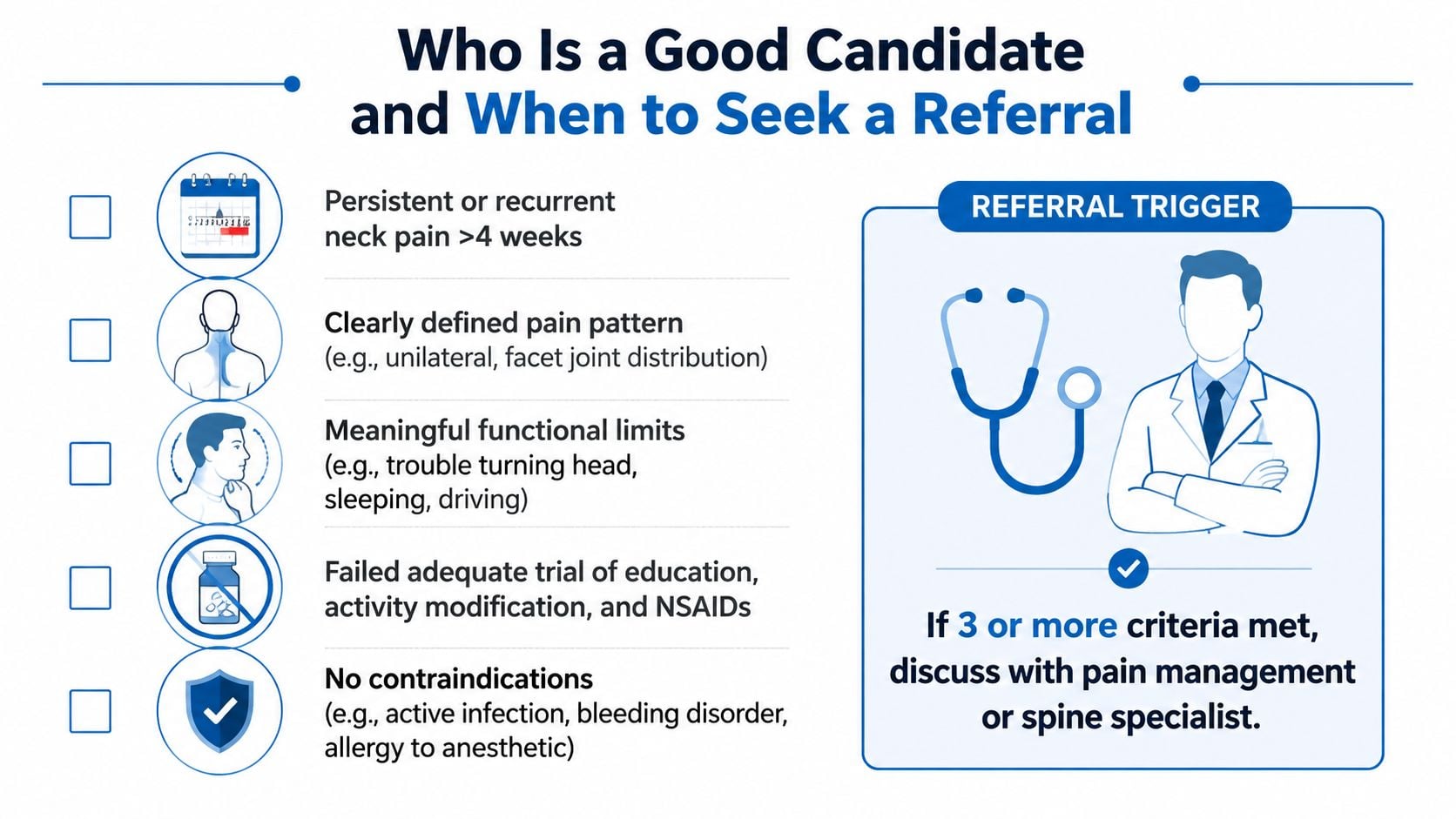
A reasonable candidate has persistent or recurring neck pain, a recognizable symptom pattern, and meaningful limits in activities such as turning the head, driving, working, or sleeping. Symptoms should have received an appropriate trial of education, activity modification, physical therapy, or medication unless the clinical situation makes earlier specialist review necessary.
Facet-mediated pain becomes more plausible when movement reproduces symptoms, tenderness corresponds to the cervical joints, and the neurological examination doesn't show a clear nerve-root deficit. Even then, the examination only establishes suspicion. A controlled medial branch block provides the more specific test when the clinician is considering facet-directed treatment.
Different symptoms require different referrals
A patient with pain extending into the arm, sensory changes, or weakness may need evaluation for cervical radiculopathy and a possible nerve root block. A patient with pain at the upper neck and back of the skull may fit an occipital block pathway. A stellate ganglion block generally belongs to the evaluation of a sympathetic pain syndrome, not ordinary neck stiffness.
A coordinated referral can include pain medicine, orthopedics, and spine surgery when appropriate. The reviewing clinician should correlate the physical examination with imaging, medication effects, therapy records, work demands, and prior injections. The purpose is to avoid treating an incidental imaging finding as the source of every symptom.
A good candidate isn't defined by pain intensity alone. The pain pattern, examination, treatment history, and planned next decision must line up.
Certain symptoms require prompt medical assessment rather than a routine injection appointment:
- New weakness or coordination loss: These may indicate neurological compromise.
- Progressive numbness: Symptoms that spread or worsen need examination.
- Fever or unexplained weight loss: These can signal an infection or systemic illness.
- Severe night pain or recent trauma: The cause may require urgent investigation.
- Bowel or bladder changes: New loss of control is an emergency warning sign.
Practical Takeaways and Common Patient Questions
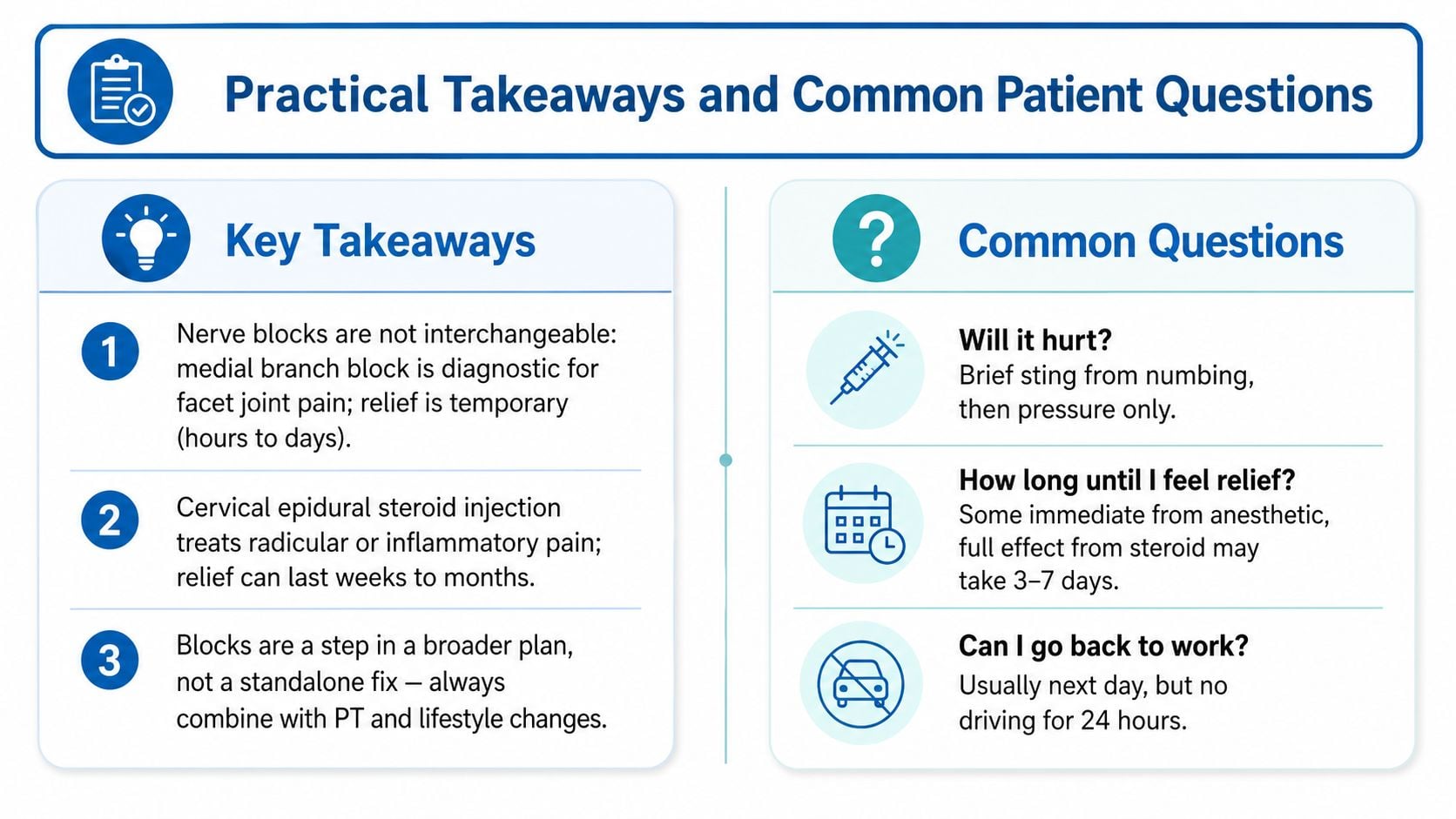
Nerve blocks for neck pain aren't interchangeable. A medial branch block tests whether selected cervical facet joints contribute to axial pain. A nerve root block targets a specific irritated spinal nerve, while occipital and stellate ganglion blocks serve narrower clinical purposes.
Patients should ask four direct questions before scheduling:
- What structure is suspected? The answer should match the symptoms and examination.
- Is the procedure diagnostic or therapeutic? A temporary anesthetic response has a different meaning from longer symptom relief.
- What result will change the plan? The clinician should explain whether the next step is rehabilitation, repeat testing, radiofrequency treatment, or another evaluation.
- What restrictions and risks apply? Medication use, allergies, bleeding risk, sedation, transportation, and follow-up should be reviewed in advance.
Common questions
Will the injection hurt? Local numbing usually limits discomfort, although the patient may feel a brief sting or pressure.
How quickly can relief begin? Local anesthetic can produce an early change in pain. Any anti-inflammatory effect from corticosteroid, when used, may follow a different timeline, and the exact response varies.
Can a patient return to work? That depends on the block, sedation, symptoms, and job demands. Driving restrictions and activity limits should come from the treating team rather than a generic schedule.
What happens if relief is brief? Brief relief can still be diagnostically useful, but it shouldn't automatically lead to repeated injections. The clinician should review the response, confirm whether it matched the intended anesthetic window, and decide whether the diagnosis and next treatment remain sound.
For patients in New Jersey and Staten Island, practical planning also includes insurance authorization, image-guidance capability, clinician experience, and access to rehabilitation and follow-up. Interventional Pain Management offers evaluation and image-guided interventional procedures, including nerve blocks, within a broader pain, orthopedic, and spine-care setting.
Urgent symptoms such as fever, major new weakness, loss of bladder or bowel control, or rapidly progressive neurological changes require urgent medical care, not a routine injection visit.
Interventional Pain Management evaluates neck pain by matching symptoms, examination findings, imaging, and prior treatment response to the appropriate procedure, including targeted nerve blocks when clinically indicated. Adults in New Jersey and Staten Island can visit Interventional Pain Management to request an evaluation and discuss a stepwise plan for diagnosis, rehabilitation, and image-guided care.