
Which pain pump best fits a patient's pain problem, and why do so many guides blur together devices that work in completely different ways? That gap matters because a pump placed under the skin for long-term spinal pain is not the same thing as a temporary device used after surgery. For patients comparing options in New Jersey or Staten Island, the core question is less about labels and more about where the pain is coming from, how long relief is needed, and whether a device should stay in place or come home only for recovery. For mobility-related support, a guide for individuals with mobility impairments can also help frame the practical side of living with medical equipment.
Table of Contents
- 1. Intrathecal Drug Delivery Pumps implantable pain pumps
- 2. Spinal Cord Stimulation SCS Devices neuromodulation pumps
- 3. Epidural Infusion Pumps catheter-based drug delivery
- 4. Peripheral Nerve Catheters and Continuous Peripheral Nerve Blocks CPNBs
- 5. Non-Implantable Wearable Pain Relief Devices TENS PNS Topical Patch Systems
- 6. Radiofrequency Ablation RFA Pumps and Delivery Systems
- 7. Regenerative Medicine Pump Systems Platelet-Rich Plasma and Stem Cell Delivery
- 7-Point Comparison of Pain Pump Types
- Take the Next Step Toward Pain Relief
1. Intrathecal Drug Delivery Pumps implantable pain pumps
An intrathecal pump is the classic long-term answer when pain has stayed stubborn despite medications, injections, therapy, or surgery. It sits under the skin, usually in the abdomen, and sends medicine through a catheter into the cerebrospinal fluid around the spinal cord, which is why it can use smaller doses than pills do. The modern story of these systems includes the first commercially available programmable pump in 1988, broader use for cancer and non-cancer pain in 1991, and the SynchroMed II in July 2004, with later FDA approval of Prometra and MedStream in 2012 (historical review).
Who usually gets evaluated
These devices are often discussed for chronic spinal pain, failed back surgery syndrome, complex regional pain syndrome, severe neuropathic pain, and cancer pain. In practice, the candidate is usually someone who still hurts despite a serious treatment history and who can keep up with refills and follow-up. A patient with chronic low back pain after multiple surgeries may need this kind of targeted delivery, while someone with widespread, diffuse pain may not be a good fit.
Practical rule: a pump that lives inside the body only works well when the patient can reliably return for refills and device checks.
A strong evaluation usually includes psychological screening, a trial period, and medication planning. The NIHR review found 114 studies involving more than 2,000 patients, with morphine the most common intrathecal drug and bupivacaine often added, which shows how established the field is while still requiring careful selection (NIHR review). That same review also reported dose escalation that could be substantial, so refill timing and follow-up aren't optional.
What patients should expect
Patients should also learn device basics before surgery. Refill schedules, MRI restrictions, airport screening, infection warning signs, and catheter problems all matter. For residents in NJ or Staten Island, that education is especially useful when choosing a center that can coordinate pain management, mental health support, and refill logistics close to home.
2. Spinal Cord Stimulation SCS Devices neuromodulation pumps
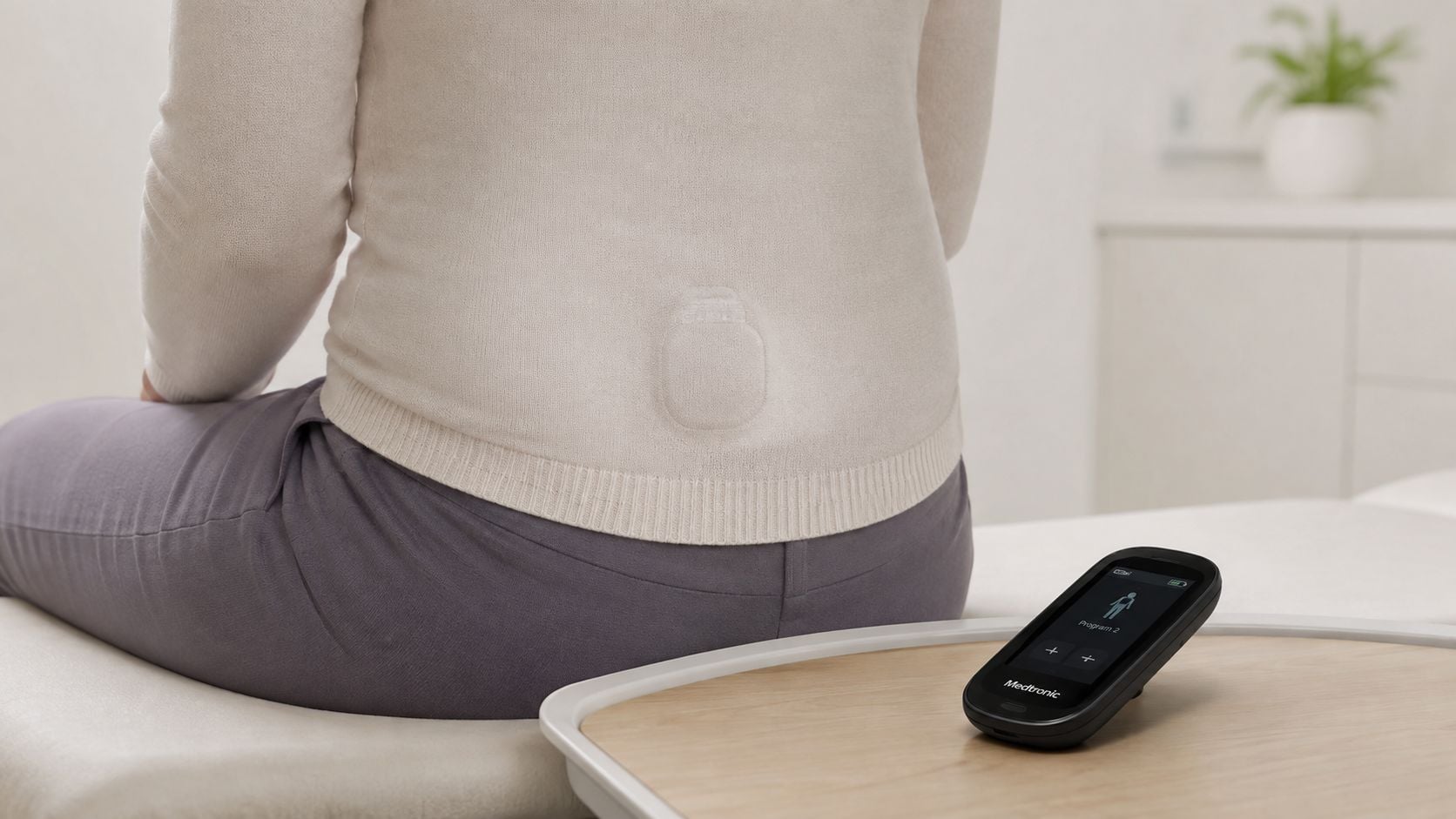
Spinal cord stimulation is different from a medicine pump, but many patients still group it in the same family because it changes how pain signals move through the body. Instead of delivering drugs, it uses electrical stimulation from an implanted pulse generator and leads in the epidural space to interrupt pain signals before they reach the brain. The idea follows the basic gate-control model of pain, which makes it a fit for nerve-related pain that hasn't responded well to conservative care.
The most useful way to think about SCS is as a pain “volume knob” rather than a painkiller. A patient with sciatica, radiculopathy, or persistent pain after spine surgery may feel less burning, tingling, or shooting pain when stimulation is adjusted correctly. In many clinics, that trial-and-programming phase is what determines whether the device matches the patient's pain map.
Why programming matters
SCS depends on screening, trial coverage, and patient feedback. A person may be asked to describe where the tingling starts, where it fades, and how much of the painful dermatomes are covered during the trial. That's why a clinic often pairs the device with physical therapy and careful programming notes. The internal guide on spinal cord stimulation is useful for patients who want a closer look at how those decisions get made.
A practical example is the patient with failed back surgery syndrome who still can't sit through a workday or drive without sharp leg pain. If stimulation softens that pattern, the device may improve function even before the pain score fully normalizes. That functional shift is often the primary reason patients choose this path.
3. Epidural Infusion Pumps catheter-based drug delivery
Epidural infusion pumps deliver medicine into the epidural space, which sits just outside the spinal cord. Some are temporary and portable, especially after surgery, while others can be part of longer-term pain care. The key difference from intrathecal systems is location, since epidural medication surrounds the spinal nerves rather than entering the cerebrospinal fluid.
This category is easy to misunderstand because the same general idea, continuous pain medicine through a catheter, can be used in both hospital recovery and chronic pain care. A person leaving a knee replacement or spine operation may go home with a small portable pump to reduce pain during the first phase of healing. Another patient might receive a more targeted epidural approach for painful spinal nerve irritation when the care plan calls for close monitoring.
What makes epidural pumps useful
The main appeal is direct delivery without relying only on oral medication. That can reduce the need for systemic pain medicine and give the care team more control over timing. For surgery patients, the pump can act like a bridge, holding pain down until the body is ready to transition to pills and movement therapy.
Epidural catheters need clear removal plans, because the safest temporary device is the one that leaves on time.
Patients should know how the dressing is checked, when the catheter comes out, and which symptoms need urgent attention. Fever, persistent headache, or neck stiffness should never be ignored. For New Jersey and Staten Island patients, the biggest practical advantage is simple, local follow-up, because temporary pain devices work best when the team that placed them can also remove them on schedule.
The same clinical logic applies after major orthopedic work, spine procedures, or other operations where early movement matters. When the catheter is placed and removed with discipline, the pump becomes part of a controlled recovery plan rather than a source of confusion.
4. Peripheral Nerve Catheters and Continuous Peripheral Nerve Blocks CPNBs
Peripheral nerve catheters are among the most targeted types of pain pumps because they aim at one limb or one surgical area. Instead of treating pain across the whole spine, they deliver local anesthetic near a specific nerve, such as the nerves serving the shoulder, knee, ankle, arm, or foot. That makes them useful when the pain source is narrow and well mapped.
A focused tool for a focused problem
A patient recovering from ACL reconstruction may get a femoral catheter. Someone after shoulder arthroscopy may use an interscalene catheter, while a knee replacement patient may benefit from an adductor canal or femoral block. The pattern is simple, local pain gets local treatment. The nerve block guidance can help patients understand why these catheters are often chosen for surgery recovery.
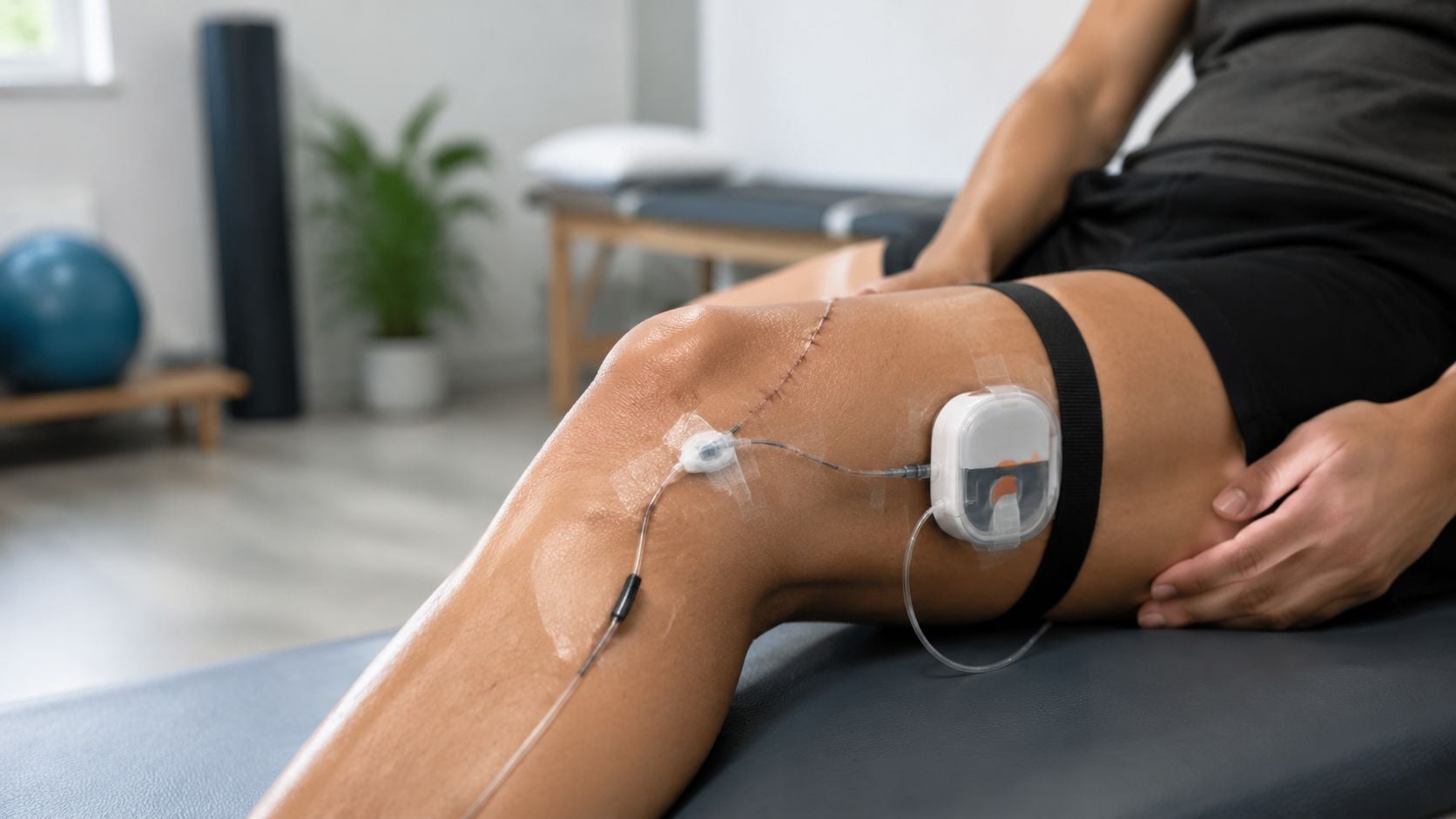
These catheters are usually temporary, and that matters. The home plan often includes dressing care, watching for dislodgement, and learning the difference between normal numbness and a problem. The patient who is sent home with written instructions should know exactly when the catheter should come out and how to shift to oral medicine.
The strongest use case is often immediate post-op recovery. A person can walk, sleep, and do rehab exercises more comfortably when the nerve is calm, and that can make the first few days after surgery feel less overwhelming. If the catheter is placed accurately and removed on time, it becomes a short-term helper rather than a long-term commitment.
5. Non-Implantable Wearable Pain Relief Devices TENS PNS Topical Patch Systems
Not every pain device is implanted, and not every pump pumps medication. Wearable systems such as TENS units, peripheral nerve stimulation wearables, and topical patch systems stay outside the body and are often chosen by patients who want a lower-commitment option. They're especially appealing when the pain is localized, the recovery period is short, or the patient wants to avoid more invasive treatment.
A TENS unit works by sending mild electrical stimulation through adhesive pads on the skin. A topical patch, by contrast, delivers medication through the skin to one area, which is why lidocaine patches are often discussed for localized joint or muscle pain. These options are simple, but simple doesn't mean weak. For the right problem, they can be practical and repeatable.
Why wearables stay popular
The biggest advantage is convenience. A patient can often use the device at home, pair it with exercise or physical therapy, and avoid some of the burden that comes with refills or surgery. That makes wearable devices a good fit for people who are still figuring out which type of pain pump, or non-pump, they need.
If a patient can manage pain at home with a wearable device, the care plan can stay lighter and more flexible.
These devices also fit people who want drug-free support or who need a bridge while waiting for a procedure. They are not the answer for every chronic pain condition, but they can be a smart first step. In clinical conversations, they often come up before more invasive options because they're easier to try and easier to stop.
6. Radiofrequency Ablation RFA Pumps and Delivery Systems
Radiofrequency ablation sits on the border of device-based pain care, because it's not a pump in the strict sense, but it does use controlled energy delivery to change how pain travels. The system heats a targeted nerve pathway to reduce its ability to send pain signals. That's why it's often used for facet joint pain, sacroiliac joint pain, and certain localized neuropathic pain patterns.
The important distinction is that RFA isn't about delivering medicine over time. It's about interrupting one specific pain pathway after a diagnostic block suggests that the nerve is the right target. For many patients, that trial step is what separates a promising procedure from a random guess.
Why the diagnostic step matters
The internal guide on radiofrequency ablation is a useful next read for patients who want to understand the workup before ablation. The diagnostic block helps show whether the pain source is the medial branch, lateral branch, or another nerve pathway. Once that's clear, the procedure can be more precise.
A patient with chronic facet pain may use RFA as a way to reduce pain long enough to resume exercise, work, or daily tasks. Another patient may use it as a bridge before considering a more permanent pain device. The effect is often temporary rather than permanent, so the care team needs to explain expectations clearly and document baseline function before treatment.
7. Regenerative Medicine Pump Systems Platelet-Rich Plasma and Stem Cell Delivery
Regenerative medicine devices are the most biologically focused option on this list. They're not traditional pumps, but they do use specialized delivery systems to place platelet-rich plasma or other regenerative material directly into injured tissue. That makes them relevant for joint, tendon, and soft tissue pain where the goal is healing, not just masking symptoms.
This category is often discussed in the same broad conversation as pain devices because patients want durable relief, not just short-term numbing. A knee with osteoarthritis, a shoulder with tendinopathy, or an Achilles tendon that keeps flaring may all prompt a conversation about whether tissue-targeted biologic treatment makes sense. The timeline is different from nerve blocks or wearable devices, because regenerative care usually takes time to show its effect.
How patients usually think about this option
Patients often ask whether this is a replacement for surgery. Usually, it's better framed as a non-surgical option that may complement rehab and symptom control. The non-surgical back pain options resource can help explain how biologic care fits alongside other conservative strategies.
A good candidate is typically someone with a clear structural diagnosis and viable tissue, not someone with vague or widespread pain. That difference matters. If the goal is to calm a damaged tendon or arthritic joint enough to move better, regenerative delivery can make sense. If the pain source is nerve compression or severe central pain, another type of pain pump or device may be a better fit.
7-Point Comparison of Pain Pump Types
| Intervention | Implementation Complexity 🔄 | Resource Requirements ⚡ | Expected Outcomes ⭐📊 | Ideal Use Cases | Key Advantages 💡 |
|---|---|---|---|---|---|
| Intrathecal Drug Delivery Pumps (Implantable Pain Pumps) | High, surgical implantation, programmable device, specialist follow‑up | High, OR, device ($20k–$35k+), ongoing refills and monitoring | ⭐⭐⭐⭐⭐ Significant, sustained relief for refractory chronic/neuropathic pain; lowers systemic opioid exposure | Refractory chronic pain (failed back surgery, CRPS, opioid‑tolerant patients) | Targeted CSF delivery reduces systemic side effects; reversible and programmable |
| Spinal Cord Stimulation (SCS) Devices / Neuromodulation Pumps | High, trial period then implantation; requires programming expertise | High, device ($15k–$30k+), trial supplies, frequent programming visits | ⭐⭐⭐⭐ Effective in ~50–70% of well‑selected neuropathic/post‑surgical pain patients | Failed back surgery syndrome, radiculopathy, chronic neuropathic pain | Non‑pharmacologic, reversible, trialable; advanced closed‑loop options |
| Epidural Infusion Pumps (Catheter‑Based Drug Delivery) | Moderate, catheter placement under imaging; temporary or implantable options | Moderate, external pumps for acute care or implantable systems; inpatient/outpatient support | ⭐⭐⭐ Good acute post‑op and targeted epidural analgesia; reduces opioid needs short‑term | Acute post‑operative pain (spine/orthopedics), short‑term chronic epidural therapy | Effective post‑op analgesia; lowers systemic doses; can shorten hospital stay |
| Peripheral Nerve Catheters / Continuous Peripheral Nerve Blocks (CPNBs) | Moderate, ultrasound‑guided catheter placement; short‑term management | Low–Moderate, portable/elastomeric pumps, trained staff, home instruction | ⭐⭐⭐⭐ Excellent regional postop pain control; enables earlier rehab and decreased opioids | Orthopedic surgeries (knee, shoulder, ankle), accelerated physical therapy | Precise regional analgesia, facilitates rehab, minimal systemic toxicity |
| Non‑Implantable Wearable Pain Relief Devices (TENS, PNS, Patches) | Low, non‑invasive, patient‑applied; requires education for optimal use | Low, inexpensive, portable units or patches; minimal clinical resources | ⭐⭐⭐ Variable efficacy across patients; useful as adjunct for mild–moderate pain | Home management of neuropathy, post‑op adjunct, conservative care | Non‑invasive, low‑cost, drug‑free, reusable; easy patient self‑management |
| Radiofrequency Ablation (RFA) Delivery Systems | Moderate, minimally invasive; requires imaging guidance and specialized training | Moderate, RFA generator/electrodes, outpatient procedural suite; repeatable treatments | ⭐⭐⭐⭐ Provides 6–12 months (often) of relief for facet/SI/peripheral nerve pain | Facet‑mediated back/neck pain, sacroiliac dysfunction, targeted neuropathic pain | Durable, implant‑free relief; outpatient procedure; repeatable when needed |
| Regenerative Medicine "Pump" Systems (PRP, Stem Cell Delivery) | Moderate–High, sterile point‑of‑care processing and image‑guided injection | High, centrifuges/kits, trained staff, costly per treatment ($2k–$8k+), variable coverage | ⭐⭐⭐ Variable results; potential for tissue healing and longer‑term symptom improvement (weeks–months) | Tendon injuries, osteoarthritis, sports medicine, adjunct to interventional care | Biologic approach addressing tissue pathology; may provide regenerative, longer‑term benefits |
Take the Next Step Toward Pain Relief
The right device depends on the pain pattern, the treatment history, and the amount of day-to-day support the patient can realistically maintain. Intrathecal pumps are usually reserved for deep, chronic pain that has outlasted conservative treatment. SCS, epidural infusion, nerve catheters, wearables, RFA, and regenerative options each solve a different problem, so the best choice starts with the right diagnosis rather than the most familiar device name.
For patients in New Jersey or Staten Island, candidacy also depends on local logistics. Refill timing, follow-up visits, imaging needs, and coordination with primary care or mental health providers all matter, especially for implanted systems. A patient who can't keep up with appointments may do better with a temporary or non-implantable option, while someone with severe refractory pain may benefit from a more durable solution after a formal evaluation.
An interventional pain specialist should walk through trialing, risks, daily maintenance, and lifestyle fit in plain language. That conversation is where the crucial decision is made, because a pain device only helps if it matches the condition, the anatomy, and the patient's routine. For many people, the next step is getting a candidacy review and asking which option gives the best balance of relief, safety, and convenience.
Interventional Pain Management helps patients in New Jersey and Staten Island compare pain treatment options with a clear, practical plan. Their board-certified team offers evaluation across interventional pain, spine, orthopedic, and neuromodulation care, so patients can match the right device or procedure to the right diagnosis. Visit Interventional Pain Management to schedule an evaluation and take the next step toward relief.