
Persistent pain can make ordinary decisions feel exhausting. A person may have already tried rest, physical therapy, oral medication, and activity changes, yet still wake with burning leg pain, neck pain, facial pain, or a joint that limits every movement. The next appointment often brings a difficult question: what can target the painful structure without immediately moving to a more invasive treatment?
Nerve block pain management may be one answer for carefully selected patients. It isn't a universal fix or a promise that pain will disappear permanently. Instead, it's a focused procedure that can help identify a pain source, calm an irritated nerve, support rehabilitation, and sometimes provide relief that lasts far beyond the first period of numbness. A consultation with an interventional pain management team can clarify whether the symptoms match a nerve that can be safely targeted.
Patients may also need a broader medical evaluation when persistent pain occurs alongside signs of inflammation or another underlying condition. A clinician can explain whether an Affordable C-reactive protein screening is appropriate as part of that discussion. The important first step is a careful diagnosis, followed by a treatment plan built around the person's health, medication profile, goals, and daily responsibilities.
Table of Contents
- Introduction to Advanced Pain Relief
- What Is a Nerve Block
- The Nerve Block Procedure Step by Step
- Conditions Commonly Treated with Nerve Blocks
- Evaluating the Benefits and Potential Risks
- Is a Nerve Block the Right Choice for You
- Frequently Asked Questions About Nerve Blocks
Introduction to Advanced Pain Relief
Consider a patient who has spent months adjusting sleep positions, limiting favorite activities, and taking medication that only dulls symptoms. Physical therapy may have helped movement, but a sharp sensation still travels down the leg whenever the patient stands. Another patient may have persistent neck pain after an injury, while a third struggles with facial pain that interrupts eating and conversation.
These experiences can feel discouraging, especially when imaging results don't seem to explain every symptom. Pain specialists approach the problem by combining the patient's description, physical examination, medical history, and imaging when available. The purpose isn't solely to make a painful area numb. It's to determine whether a particular nerve, nerve root, joint, or inflamed structure is generating the symptoms.
A nerve block should answer a clinical question, not serve as a random injection.
Interventional pain management uses targeted procedures to diagnose and treat pain while preserving a role for physical therapy, medication review, behavioral support, and activity planning. A block may be considered when conservative care hasn't provided enough relief, when the pain follows a recognizable nerve pattern, or when a physician needs more information before recommending another treatment.
The history of these procedures also matters. CMS documentation traces the development of regional anesthesia from early methods of nerve compression and chemical infiltration toward standardized clinical techniques. Heinrich F. W. Braun used epinephrine for nerve blockade and coined the term conduction anesthesia in 1902, while Gaston Labat described practical regional anesthesia techniques in 1922 and helped found the American Society of Regional Anesthesia in 1923 (CMS historical coverage documentation).
That long development doesn't mean every patient will benefit. It does show that nerve blocks are an established part of procedural pain care. For a nervous but hopeful patient, the most useful expectation is balanced: a block may create a window for recovery and better function, but the likely duration and purpose depend on the diagnosis.
What Is a Nerve Block
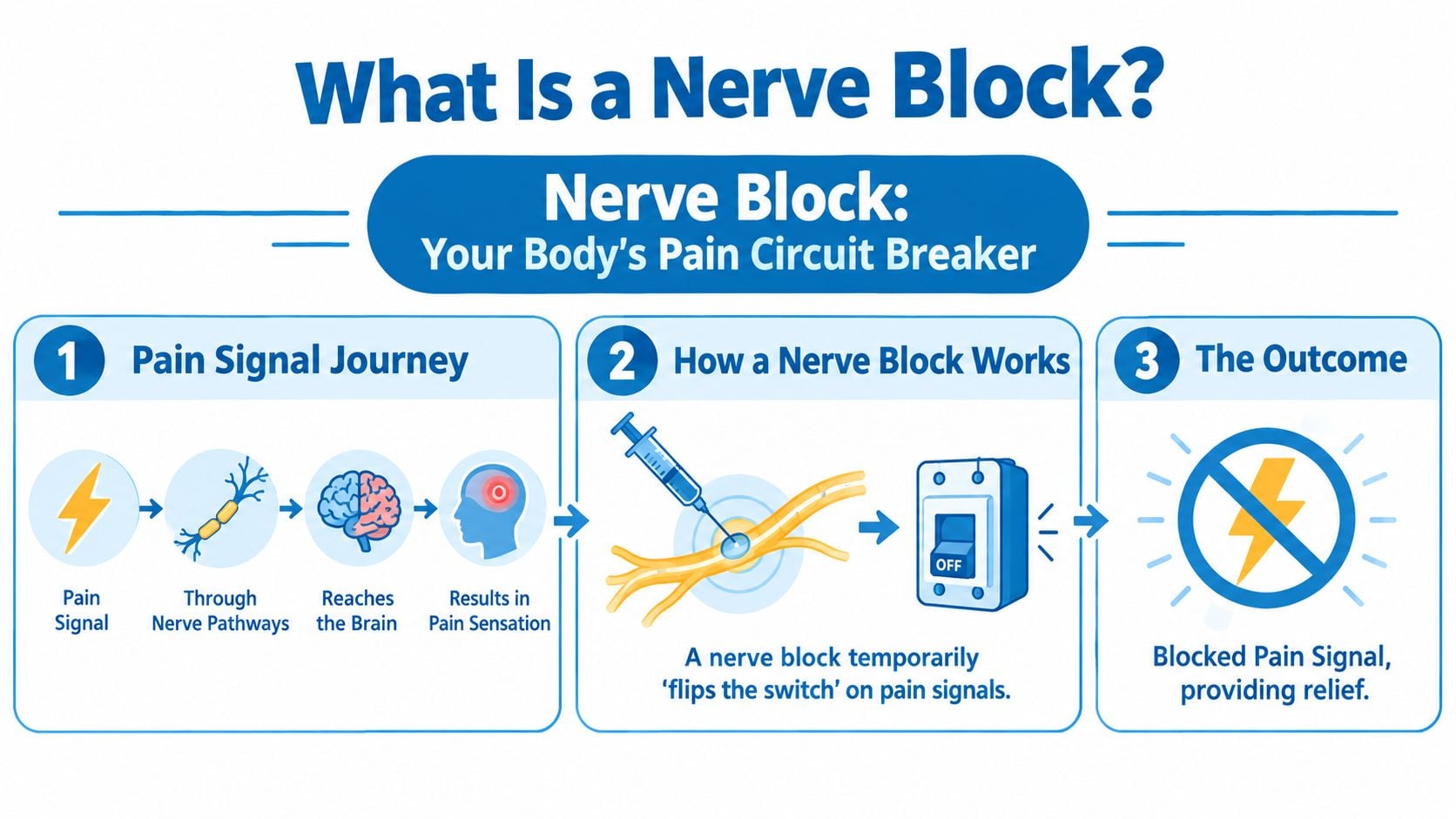
A nerve block works much like a circuit breaker for pain signals. A painful nerve sends electrical messages toward the spinal cord and brain, where the body interprets them as pain. A clinician places medication near a specific nerve or group of nerves to interrupt that transmission before the signal completes its journey.
The injection commonly includes a local anesthetic, which temporarily numbs the nerve. In selected situations, a corticosteroid may also be used to address inflammation around the irritated structure. The medication choice, dose, and injection location depend on the suspected pain generator, the patient's medical history, and the type of block being considered.
Diagnostic and therapeutic purposes
A diagnostic block is designed to gather information. If numbing a particular nerve temporarily reduces the patient's familiar pain, the response may support the conclusion that the nerve contributes to the symptoms. The result doesn't always identify every cause, but it can help the specialist refine the diagnosis and decide whether another treatment is sensible.
A therapeutic block aims to reduce pain and inflammation. It may help a patient move more comfortably, sleep better, or participate in rehabilitation. Relief can be brief for some conditions and more durable for others, so the procedure shouldn't be described as a permanent cure unless the treating clinician has a specific reason to expect that outcome.
Why precision matters
The nerve must be identified accurately. Depending on the location, the physician may use ultrasound or fluoroscopy to visualize anatomy and guide the needle. This precision is especially important because a block matched to the actual pain generator has a better chance of helping than an injection placed near the wrong structure.
Nerve block techniques developed over centuries. CMS history identifies Braun's work with epinephrine in nerve blockade in 1902 and Labat's role in formalizing practical regional anesthesia and professional education in 1922 and 1923 (CMS chronology of regional anesthesia). Modern practice builds on that progression from basic nerve interruption to image-guided, clinician-taught procedures.
The Nerve Block Procedure Step by Step
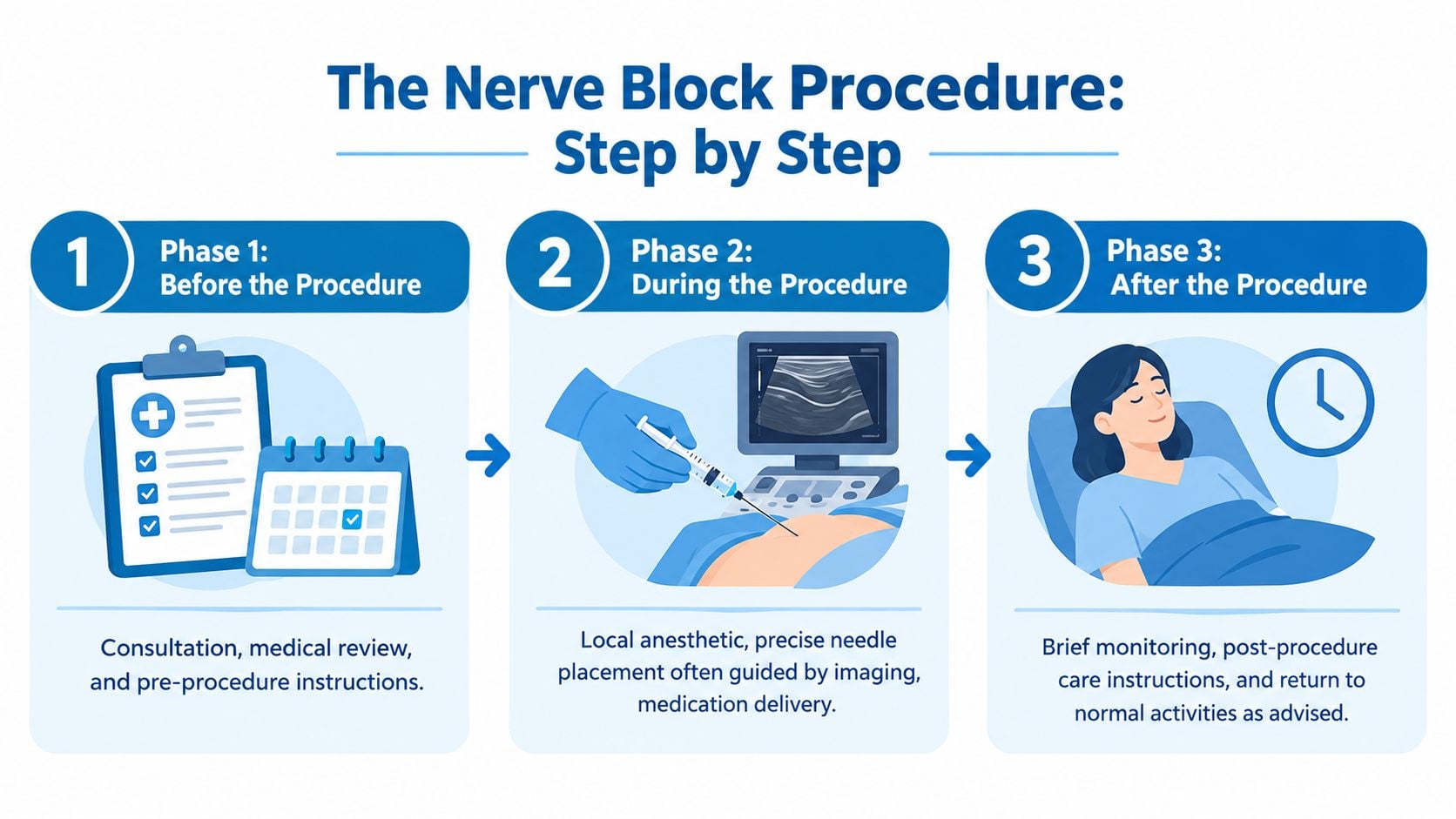
Uncertainty often creates more anxiety than the injection itself. Knowing what happens before, during, and after the procedure gives patients a practical framework and creates specific opportunities to ask questions.
Before the procedure
The consultation usually begins with the pain pattern. The clinician may ask where the pain starts, where it travels, what triggers it, and whether numbness or weakness accompanies it. A medication review is essential, particularly for blood thinners, diabetes treatments, immune-suppressing medication, and known allergies.
Patients should ask:
- What is the target? The answer should identify the nerve, nerve root, joint, or region being treated.
- Is the purpose diagnostic or therapeutic? The expected result and follow-up plan differ.
- What medications need review? Patients shouldn't stop prescribed medication without specific medical instructions.
- What assistance is needed afterward? Temporary weakness or numbness may affect walking or driving.
Routine injection education can also help patients understand why clinicians vary injection locations rather than repeatedly using one spot. General information about injection site rotation patterns may be useful background, although a nerve block's location must be determined by anatomy and medical indication.
In the procedure room
The patient is positioned to allow access to the treatment area. The skin is cleaned with sterile preparation, and a local anesthetic numbs the skin before the treatment needle advances. Ultrasound or fluoroscopy may guide placement, depending on the nerve and body region.
The physician delivers medication around the intended target, not into a random painful area. Patients may feel pressure, brief stinging, or a temporary change in sensation. The team monitors the patient and explains what sensations are expected.
Some spinal injections have a different target and technique. Patients comparing options can review epidural steroid injections with the treating specialist rather than assuming every spine injection works the same way.
After the procedure
A short observation period allows the team to assess immediate symptoms, movement, and vital signs. Patients may be told not to drive if numbness, weakness, sedation, or the treated body region makes driving unsafe.
The first hours can be confusing because anesthetic relief may arrive before any anti-inflammatory effect. A patient may feel excellent temporarily, then notice pain returning as sensation comes back. The discharge instructions should explain activity limits, medication use, wound care, and which symptoms require an urgent call.
Conditions Commonly Treated with Nerve Blocks
A targeted block makes the most sense when symptoms follow a plausible nerve pathway or when a specialist needs to test a suspected pain source. The same procedure name can describe different treatments in different body regions, so the patient's diagnosis matters more than the injection label.

Radiating spine pain
A patient with sciatica may describe low back pain that travels through the buttock and leg, sometimes with tingling or numbness. A herniated disc, narrowing around a nerve, or another spinal problem may irritate a nerve root. A carefully selected block can reduce the nerve-related pain enough to support movement and rehabilitation, while the response may also provide diagnostic information.
People with sciatica and pinched nerve symptoms should report weakness, changes in walking, and bowel or bladder symptoms promptly. Those details can change the urgency and type of evaluation.
Spinal stenosis can produce pain or heaviness during standing and walking. A block may be considered when the clinical pattern suggests inflammation or irritation around a specific nerve, but it won't reverse the underlying narrowing. The specialist must weigh symptom relief against other options, including rehabilitation and, when clinically indicated, surgery.
Neck, joint, and post-surgical pain
A neck block may be appropriate when pain appears to arise from a defined nerve or cervical structure. Joint-related blocks can help clarify whether a particular joint contributes to shoulder, knee, or other regional pain. Persistent pain after surgery requires especially careful assessment because scar tissue, altered anatomy, nerve irritation, and unrelated pain sources can overlap.
Some facial pain syndromes have shown the potential for unusually durable control. CMS evidence describes idiopathic trigeminal neuralgia patients who underwent nerve block procedures, with 52.3% of those receiving a single procedure still experiencing pain relief at a 10-year follow-up (CMS long-term trigeminal neuralgia evidence review). That result applies to a specific condition and treatment context, not to every nerve block or every chronic pain diagnosis.
Patients tracking facial pain or headaches may find symptom logs useful during consultation. A migraine risk forecast app can be one way to organize patterns, but it doesn't replace a clinical evaluation or determine whether a nerve block is appropriate.
Evaluating the Benefits and Potential Risks
The main advantage of a nerve block is specificity. Oral medication affects the body broadly, while a block places medication near the nerve believed to be transmitting pain. When the target matches the pain generator, the patient may gain relief, improved movement, and a better opportunity to participate in physical therapy.
Comparative reviews of randomized trials describe peripheral nerve blocks as an opioid-sparing analgesic strategy in suitable perioperative settings. The benefit depends on accurate anatomy, appropriate targeting, and the relationship between the blocked nerve and the actual surgical pain source (review of peripheral nerve block outcomes).
Potential benefits
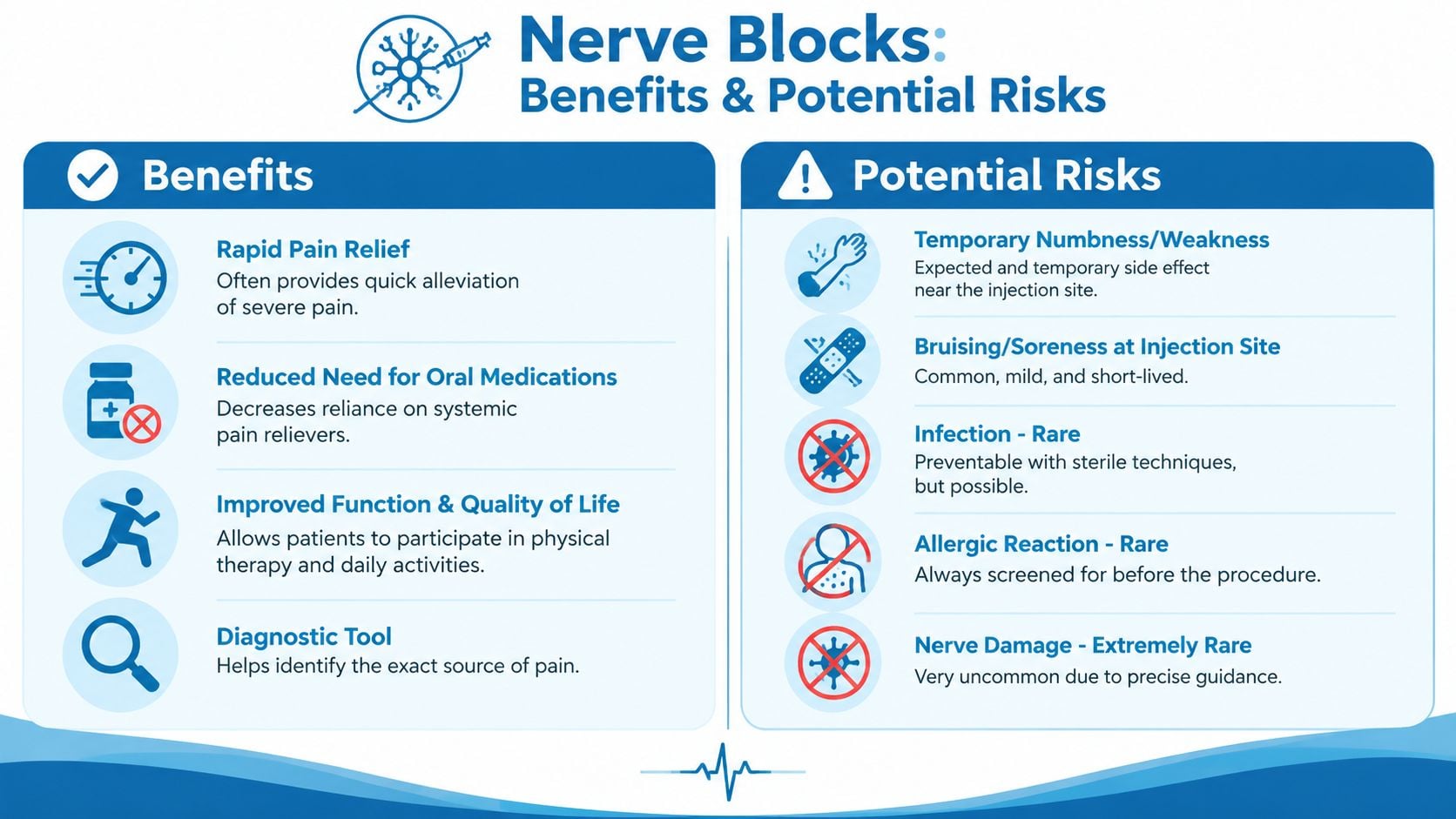
- Rapid symptom relief: The local anesthetic can reduce pain soon after treatment, although duration varies.
- Less reliance on systemic medication: A successful block may reduce the need for some oral pain relievers, under medical supervision.
- Improved function: Less pain can make walking, sleep, exercise, or formal rehabilitation more achievable.
- Diagnostic clarity: A meaningful response can support the conclusion that the targeted nerve contributes to the pain pattern.
The procedure may also help a specialist decide what shouldn't happen next. If a technically appropriate block fails to change the expected pain, the clinician may reconsider the diagnosis rather than repeatedly treating the same target.
Risks patients should understand
Temporary numbness or weakness can occur in the treated region. Injection-site soreness, bruising, bleeding, infection, medication reactions, and incomplete relief are also possible. Patients taking blood thinners or living with pre-existing neuropathy need individualized instructions because their risk profile may differ.
Long-term neurologic injury after a peripheral nerve block is uncommon, but it isn't impossible. Prospective studies estimate long-term injury at roughly 2.4 to 4 cases per 10,000 blocks, while transient neurologic deficits lasting up to two weeks occur more often, around 8.2% to 15% (review of neurologic complications after peripheral nerve block).
Practical rule: New or worsening weakness, persistent numbness, spreading redness, fever, severe swelling, breathing difficulty, or rapidly escalating pain deserves prompt medical guidance.
Ultrasound guidance, incremental injection, attention to anatomy, and avoidance of excessive injection pressure are practical safety measures. A clinician may also alter the plan when the patient has neuropathy, needs deep sedation, or takes medication that affects bleeding.
Is a Nerve Block the Right Choice for You
A nerve block may be worth discussing when pain is localized or follows a recognizable nerve pattern, conservative treatment hasn't provided enough improvement, and the examination supports a specific target. The patient should also be able to describe a meaningful goal, such as walking farther, sleeping through the night, completing therapy, or reducing medication-related problems.
A block may be less useful when pain is widespread, the suspected source is uncertain, or symptoms don't match the nerve being considered. That doesn't mean the pain is unreal. It means a different diagnostic approach may be safer and more informative.
Comparing the role of treatment
Physical therapy addresses movement, strength, flexibility, and confidence. Medication may help control symptoms across a broader area, but it can also create unwanted systemic effects. A nerve block focuses on a suspected pain pathway and may provide a temporary window for those other treatments to work more effectively.
Epidural injections address medication delivery in the epidural space and aren't interchangeable with every peripheral or regional nerve block. Surgery addresses structural problems when the clinical situation calls for it, particularly when there is significant neurologic compromise or a condition unlikely to improve with less invasive care.

Questions for the consultation
Patients can bring a symptom timeline, medication list, prior imaging, and a description of activities pain prevents. Useful questions include:
- What structure is suspected, and what evidence supports that conclusion?
- What result would count as a meaningful response?
- How will the block affect physical therapy or daily activity?
- What alternatives exist if the block doesn't help?
- Which symptoms after treatment require urgent contact?
Interventional Pain Management offers evaluation and treatment options that include nerve blocks, epidural injections, orthopedic care, and spine services. The appropriate choice depends on the patient's diagnosis, examination, imaging, health history, and functional goals.
Frequently Asked Questions About Nerve Blocks
How long does relief last?
There's no single timetable. The anesthetic effect may be temporary, while any anti-inflammatory benefit can follow a different course. Relief may last briefly, recur after an initial improvement, or continue for a longer period in selected conditions. Evidence for long-term benefit varies by pain type, and an AHRQ review found that some postoperative pain applications have only low-strength evidence for modest short-term relief, with insufficient evidence for certain recovery outcomes (review of chronic pain nerve block evidence).
Can a patient receive another block?
A repeat procedure isn't automatic. The clinician considers the first response, the duration of improvement, the diagnosis, medication risks, examination findings, and whether the treatment helped the patient reach a functional goal. Repeating a procedure that provided no meaningful benefit usually requires a careful reassessment rather than simple scheduling.
What does numbness feel like?
The area may feel warm, heavy, tingling, or less sensitive. Weakness can occur when the treated nerve also controls movement. Patients should protect the numb area from heat, pressure, falls, and accidental injury until normal sensation and strength return according to the discharge instructions.
Can the patient return to normal activities?
That depends on the body region, the degree of numbness or weakness, sedation, and the clinician's instructions. Driving and strenuous activity may be restricted until movement and sensation are reliable. A safe return plan should be based on function, not on the patient's wish to resume activities immediately after temporary relief.
Patients seeking nerve block pain management should bring these questions to a specialist consultation. Clear expectations about purpose, duration, repeat treatment, and warning signs help turn a frightening injection into an informed clinical decision.
Interventional Pain Management evaluates nerve-related spine, neck, joint, and post-surgical pain and offers image-guided procedures when clinically appropriate. Patients can visit Interventional Pain Management to request an evaluation and discuss whether a nerve block fits their symptoms, treatment history, and recovery goals.