
A patient may arrive at a pain clinic after months of neck or low back pain, normal-looking days interrupted by sharp flares, and little improvement from exercise, medication, or other conservative care. Imaging may show several age-related changes, but it often can't identify which finding is generating the pain. That uncertainty is where a medial branch block procedure can help, not by proving a diagnosis with absolute certainty, but by testing whether facet-joint pain is a plausible treatment target.
The distinction matters. A medial branch block is usually a short-acting screening test that may guide a later decision about radiofrequency ablation. It can also reduce pain temporarily, but that temporary relief shouldn't be confused with a durable cure or a guarantee that one specific structure is responsible for every symptom.
Table of Contents
- When Back or Neck Pain Leads to a Medial Branch Block
- How Medial Branch Blocks Target Facet Joint Pain
- Diagnostic and Therapeutic Roles of the Procedure
- What to Expect During and After the Injection
- Interpreting Results and Understanding Diagnostic Certainty
- Risks, Limitations, and Common Misconceptions
- Next Steps After Your Medial Branch Block
When Back or Neck Pain Leads to a Medial Branch Block
Consider a patient with persistent low back pain that stays mostly in the back and buttock rather than traveling down the leg. The examination suggests that certain movements load the small joints at the back of the spine. Imaging shows degenerative changes, but those findings overlap with changes seen in people who don't have pain. After the clinician reviews the history, performs a physical examination, and considers other possible pain generators, a medial branch block may become a reasonable next diagnostic step.
The same reasoning can apply to neck pain, particularly when discomfort and stiffness seem connected to the joints behind the cervical vertebrae. The procedure isn't appropriate for every person with spinal pain. A clinician must first consider whether the symptoms fit facet-mediated pain and whether another condition better explains them.
Patients often find the role of imaging confusing. Imaging can show anatomy, but it doesn't always identify which structure is producing pain at a particular moment. A broader evaluation of back and neck pain combines the patient's symptom pattern, physical findings, medical history, and imaging rather than treating a scan as the final answer.
Where the block fits
The usual pathway is less dramatic than many patient-facing descriptions suggest:
- Clinical assessment: The physician identifies the pain pattern, aggravating movements, neurological findings, and functional limitations.
- Review of alternatives: Disc-related pain, nerve-root irritation, sacroiliac pain, muscle pain, fracture, infection, and other causes may need consideration.
- Targeted testing: If facet joints remain plausible pain generators, the medial branch nerves supplying them can be temporarily anesthetized.
- Treatment planning: The response may help determine whether a longer-lasting intervention, such as radiofrequency ablation, deserves discussion.
Practical rule: The block should answer a treatment-planning question, not promise a perfect explanation for every symptom.
A patient who experiences meaningful relief during the expected anesthetic window may have facet-mediated pain contributing to the problem. That result can support a next step, but it doesn't erase other sources of pain or guarantee that ablation will succeed. A weak response may redirect the evaluation toward another source, which is still useful information.
How Medial Branch Blocks Target Facet Joint Pain
Facet joints are small paired joints at the back of the spine. They help guide movement and contribute to stability as the neck and back bend, rotate, and extend. Like other joints, they can become painful after injury or through degenerative changes, but the presence of degeneration on an image doesn't automatically establish that the facet joint is the active pain generator.
Each facet joint receives sensation from small nerves called medial branch nerves. A useful analogy is an electrical circuit. The facet joint acts like a sensor, the medial branch nerve carries the signal through the circuit, and the brain processes that signal as pain. A medial branch block places local anesthetic near the relevant nerve, temporarily interrupting the signal.
The injection generally targets the nerve rather than filling the facet joint itself. That difference separates a medial branch block from an intra-articular facet injection. The first tests the sensory pathway serving the joint, while the second places medication into the joint space. Both may appear in a pain-treatment discussion, but they answer different clinical questions.
Why targeting the nerve can be informative
A block is informative only if the anesthetic reaches the intended nerve without spreading widely enough to numb unrelated structures. That technical requirement explains why image guidance and careful injectate control matter. If medication reaches neighboring nerves or muscles, pain relief may occur for reasons unrelated to the facet joint, making the test less specific.
The procedure can therefore be understood as a temporary circuit interruption:
- The clinician identifies the suspected medial branch nerve under image guidance.
- A small amount of local anesthetic is delivered near the target.
- The patient performs or observes activities that normally provoke pain.
- The care team compares symptoms and function with the pre-procedure baseline.
The block doesn't repair cartilage, reverse degeneration, or remove every source of spinal pain. It asks whether interrupting this particular sensory pathway changes the patient's familiar pain in a meaningful and time-linked way.
Diagnostic and Therapeutic Roles of the Procedure
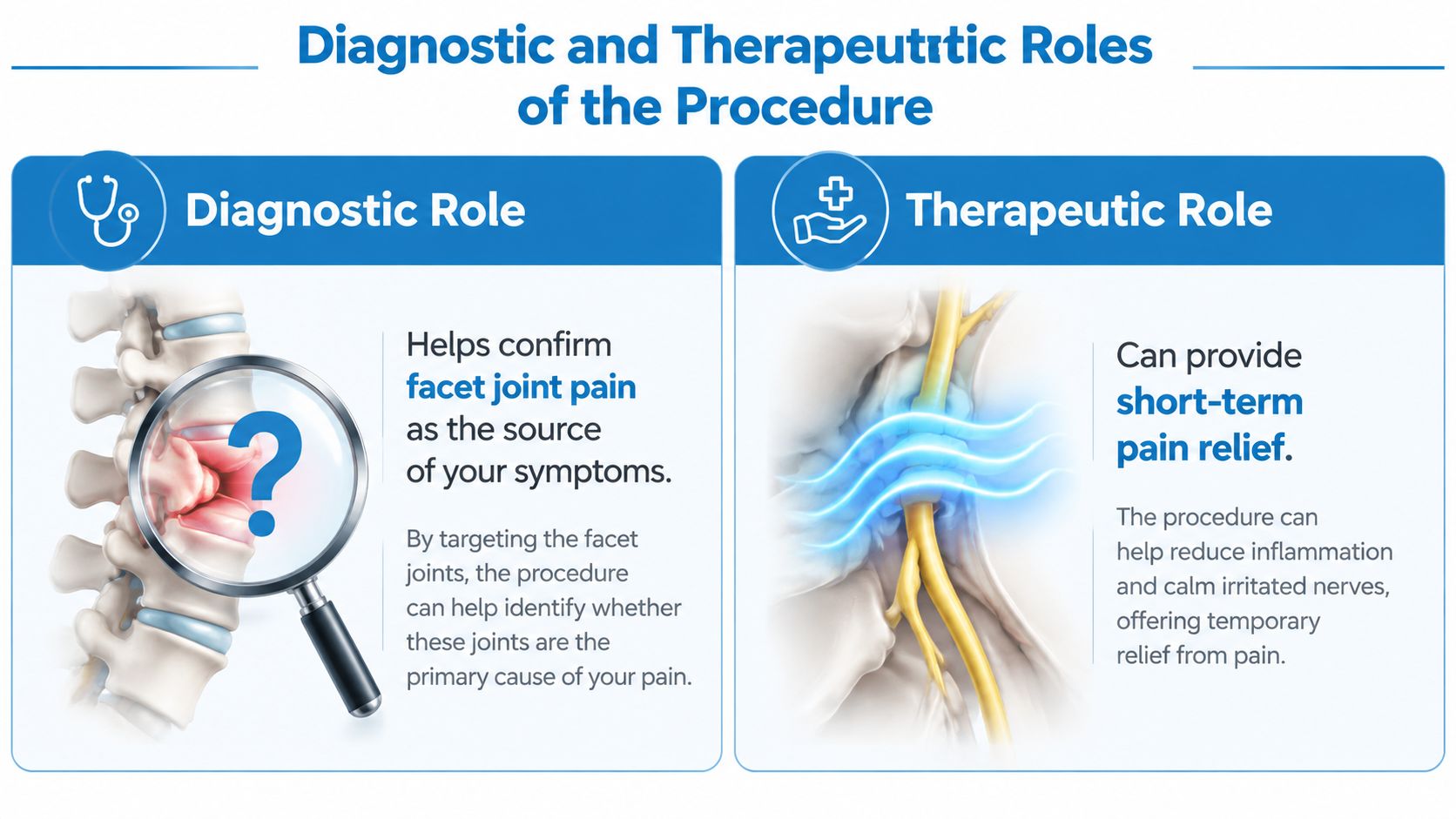
The primary role of a medial branch block is diagnostic and prognostic. It helps estimate whether the medial branch nerves, and therefore the facet joints they serve, are involved in the patient's pain. The practical question is often whether the patient might benefit from radiofrequency denervation, rather than whether the block can establish a single unquestionable diagnosis.
Controlled comparative blocks have found facet-joint pain prevalence of 39% in the cervical spine, 34% in the thoracic spine, and 27% in the lumbar spine among patients with chronic spinal pain, as reported in a PubMed-indexed evaluation of controlled diagnostic blocks. The same body of evidence illustrates why patient selection matters. In one comparison, lumbar facet pain prevalence was 21% among patients with low back pain only and 41% among patients with pain involving multiple spinal regions, while another review found prevalence ranging from 36% to 67% when an 80% pain-relief threshold was used, all reported in that reference.
Those differences aren't minor technical details. A stricter threshold can reduce the number of people labeled positive, while a more permissive threshold can admit more patients but may include more false-positive responses. The measured prevalence changes because the test definition changes.
Temporary relief versus durable treatment
A local anesthetic block can provide short-term relief during the period when the medication is active. Some clinicians may include a steroid for a therapeutic aim, but that doesn't turn every block into a durable treatment. Coverage policies and guidelines may classify therapeutic medial branch blocks as investigational, and the main value of a diagnostic block remains its ability to inform a later treatment decision.
Evidence also shows that outcomes vary with the clinical setting and intended use. In a randomized cervical trial, 85% of patients receiving local anesthetic alone and 93% receiving local anesthetic plus steroid achieved at least 50% improvement at 2 years; the average number of procedures was 5.7 over 2 years, and average relief per procedure lasted 17 to 19 weeks, according to the reported cervical follow-up study. A separate multicenter lumbar study found a positive categorical outcome in 11% of medial branch block patients at one month versus 6% in controls, with average three-month pain scores of 3.2 ± 2.5 and 3.5 ± 1.9, respectively, in the same source.
These findings support a careful conclusion: blocks can be used therapeutically in selected protocols, but they aren't automatically a long-term solution. Lumbar blocks are primarily used as prognostic tests before radiofrequency ablation, and expert guidance considers them more predictive of ablation outcomes than intra-articular facet injections. A patient considering a nerve block should ask whether the planned injection is diagnostic, therapeutic, or intended to select a later procedure.
What to Expect During and After the Injection
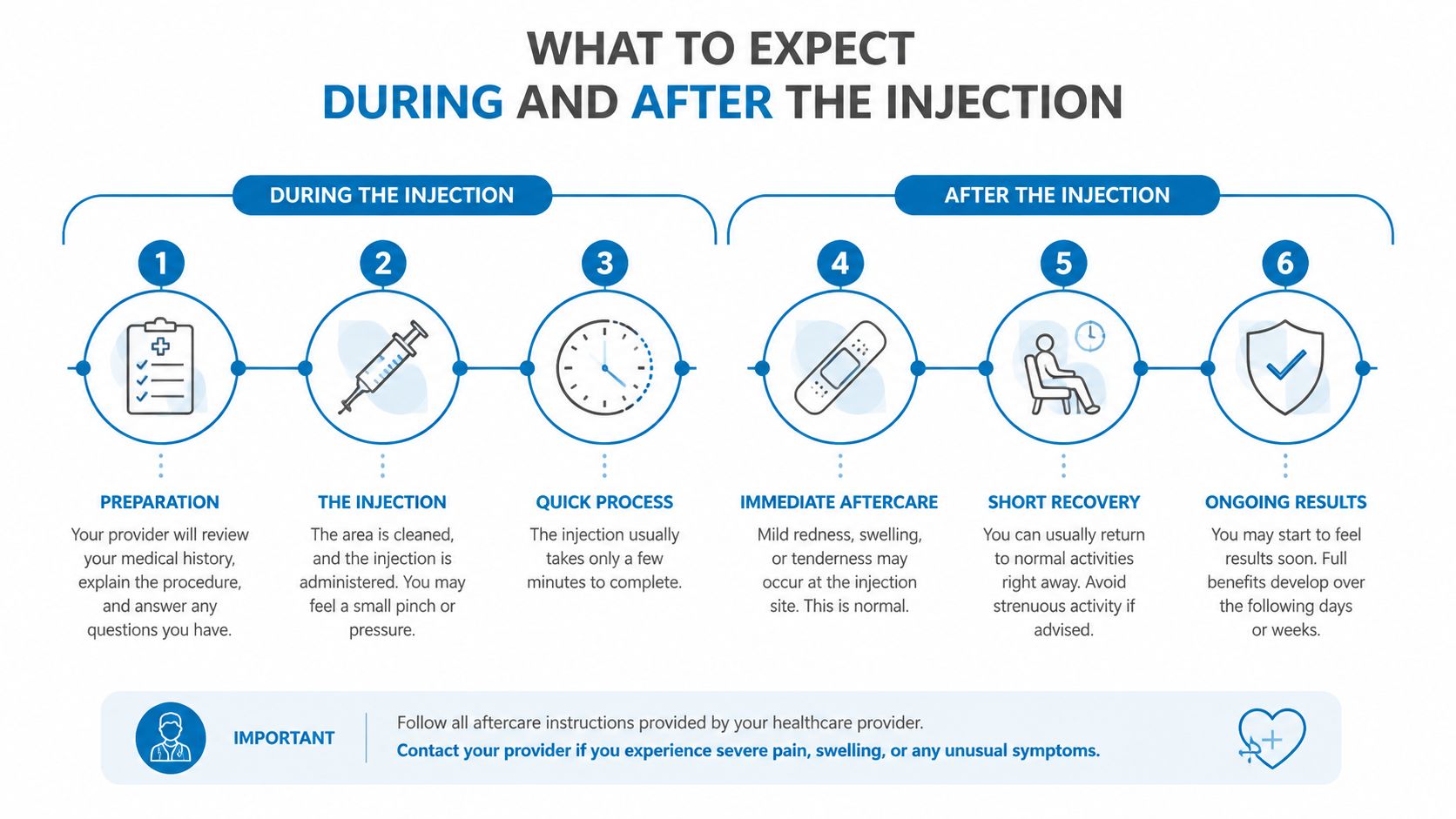
Preparation begins with a review of symptoms, medications, allergies, relevant medical conditions, and the treatment question the block is meant to answer. The care team may discuss blood-thinning medication, infection risk, transportation, and whether sedation is appropriate. Because sedation can interfere with activity-based assessment, many diagnostic protocols emphasize avoiding routine sedation unless there's a specific reason to use it.
The patient is positioned so the clinician can access the selected spinal levels. The skin is cleaned, local skin anesthetic is used, and image guidance helps the physician direct the needle toward the medial branch target. The injection itself may cause brief stinging, pressure, or an unusual temporary sensation. Sharp or severe discomfort should be reported immediately.
Why technical details affect the result
Injectate volume is especially important. Larger volumes can spread to adjacent structures and reduce diagnostic specificity. Evidence summarized in guideline material indicates that 0.25 mL has reliably contacted lumbar medial branches with less extravasation, while 0.5 mL may capture adjacent levels. Major guidance recommends keeping lumbar diagnostic volume below 0.5 mL per level, with cervical guidance around 0.3 mL, as described in the clinical guideline document on medial branch block technique.
The clinician may use contrast to verify needle position, depending on the protocol and patient factors. Image guidance, small volumes, and careful level selection all serve the same purpose, preserving the test's ability to answer a localized question.
The monitoring period
The most valuable part of the appointment may occur after the needle is removed. The patient should follow the care team's instructions and observe whether familiar, activity-related pain changes while the anesthetic is expected to work.
A useful record includes:
- Baseline symptoms: Note the pain level and the movements or activities that usually provoke it.
- Functional tests: If safe, repeat ordinary actions such as standing, walking, turning, or extending the spine.
- Timing: Record when relief begins, how strong it feels, and when the usual pain returns.
- Pain quality: Distinguish relief of the familiar target pain from changes in unrelated soreness, numbness, or muscle discomfort.
The return of pain after the anesthetic wears off isn't automatically a failure. A diagnostic block is expected to be temporary. The clinical interpretation depends on whether the patient's characteristic pain and function changed in a pattern that matches the medication's expected duration.
Interpreting Results and Understanding Diagnostic Certainty
A “positive” block doesn't have one universal definition. Some policies require two diagnostic blocks with at least 80% relief, while other guidance recognizes that a single block producing 50% relief may be a reasonable route to radiofrequency ablation in selected lumbar cases, as described in the consensus guidance on lumbar facet interventions. The disagreement reflects a genuine tradeoff between specificity and access, not merely administrative inconsistency.
A higher threshold makes it harder to call a test positive. That can reduce false positives, but it may also exclude patients whose facet pain is real yet mixed with other pain sources. A lower threshold may identify more possible candidates, while increasing uncertainty about whether the targeted nerves caused the entire improvement.
One block or more than one
Single-block strategies generally maximize access and sensitivity. Dual-block or higher-threshold strategies improve specificity, but they can create false negatives and exclude some true facet-pain patients before treatment. Expert guidelines describe this directly: stricter selection can increase the chance of successful denervation while also increasing the risk of missing appropriate candidates.
The test can also produce a false-positive result. Pain may improve because of placebo effects, reduced fear, rest during the appointment, or spread of anesthetic to nearby structures. A positive response is therefore better understood as probability-changing evidence, not a definitive proof.
A meaningful response is strongest when the familiar pain improves during the expected anesthetic window and the patient can perform previously painful activities more comfortably.
Why insurance requirements differ
Coverage policies often prioritize different goals. One policy may emphasize a high relief threshold to reduce false positives, while another may accept a lower threshold in selected patients to avoid excluding potential responders. The coverage guidance discussing diagnostic medial branch blocks and radiofrequency denervation_V1.0.2025_Pub03.19.2025_upd05.29.2025_Pub03.19.2025_upd05.29.2025.pdf) describes this broader policy split and the concern that a high threshold, often 75% to 80%, may reduce false-positive diagnoses.
Patients should ask which threshold, number of blocks, documentation, and activity testing their insurer and physician require. The central issue remains clinical: whether the response is sufficiently consistent and specific to justify a more durable intervention.
Risks, Limitations, and Common Misconceptions
A medial branch block is targeted and minimally invasive, but it isn't risk-free. Potential problems include temporary soreness, bleeding, infection, allergic reaction, unintended numbness, or injury to nearby structures. Individual risk depends on the spinal region, medical history, medications, anatomy, and procedural technique, so the treating clinician should review those factors directly.
The procedure also has important limitations. A technically accurate injection can still produce an unclear result if the patient has several overlapping pain generators. Facet degeneration may coexist with disc pain, sacroiliac pain, muscle pain, or nerve irritation. In that setting, relief may be partial because the block tests one contributor rather than the entire pain experience.
Comparing the main options
| Approach | Main question or purpose | What it cannot establish |
|---|---|---|
| Medial branch block | Whether interrupting a medial branch changes the suspected facet-related pain | That the facet joint is the only pain source |
| Intra-articular facet injection | Whether medication placed inside the joint changes symptoms | That the medial branch pathway will predict ablation response |
| Conservative care | Whether activity modification, rehabilitation, or medication improves function and symptoms | Which spinal structure is definitively responsible |
| Radiofrequency ablation | Whether longer-lasting interruption of the medial branch pathway is appropriate after selection | That all spinal pain will disappear |
A block shouldn't be treated as a cure because pain improves for several hours. Some therapeutic protocols report longer relief with repeated blocks, but other coverage policies regard therapeutic medial branch blocks as investigational. The intended purpose must be clear before the injection begins.
When caution is especially important
Patients with prior spine surgery, mixed symptoms, neurological findings, or extensive degenerative changes may need a more careful interpretation. A negative result doesn't always mean the facet joints play no role. It may reflect inaccurate targeting, insufficient anesthetic coverage, an overly strict threshold, or pain that comes from multiple sources.
The safest expectation is that the block narrows the field. It doesn't close the investigation.
Next Steps After Your Medial Branch Block
After the monitoring period, the physician reviews the pain diary, functional response, timing, examination findings, and the procedural details. The result generally falls into one of three practical categories.
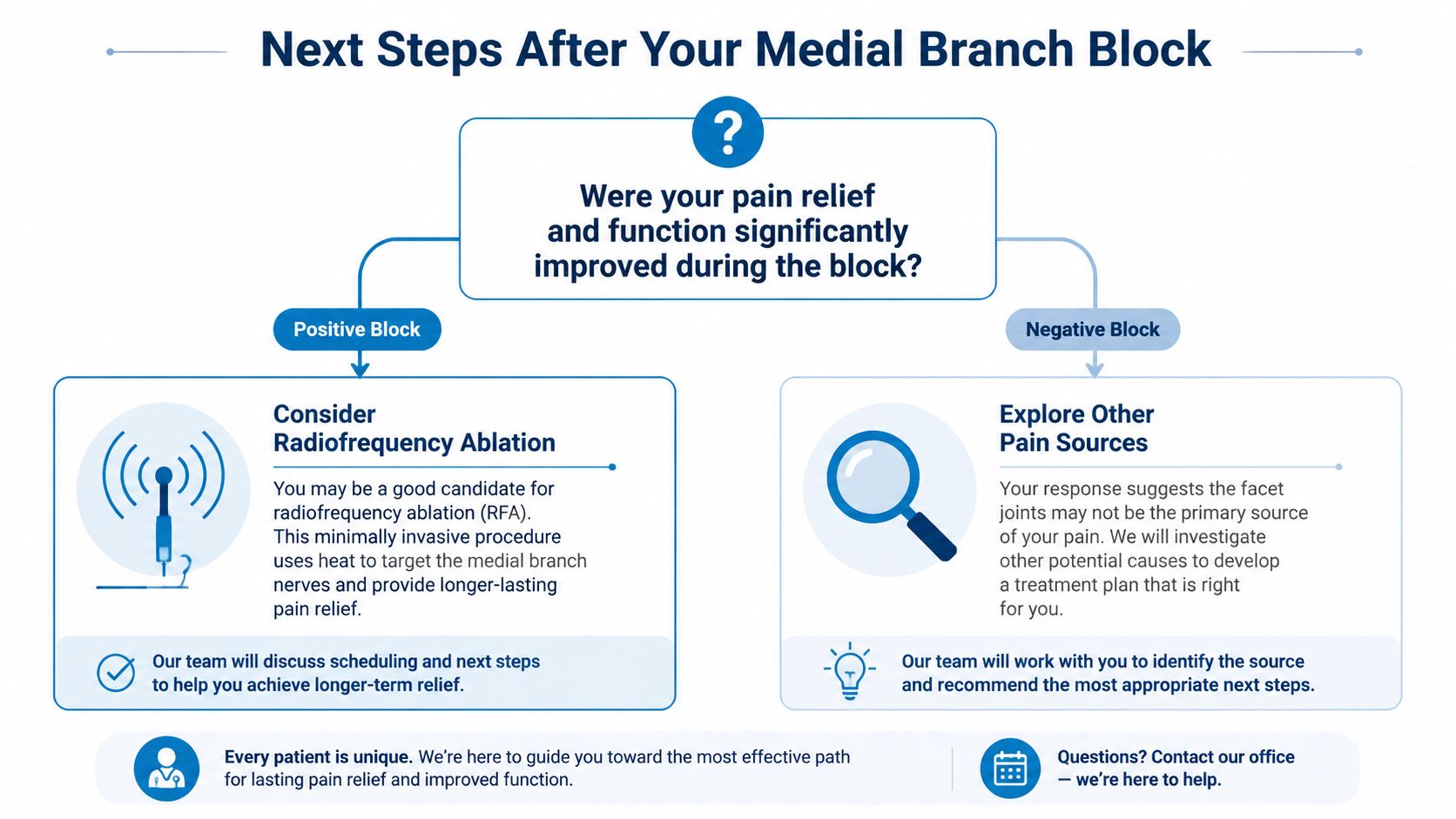
A clearly positive response may support a discussion about radiofrequency ablation, particularly when the relief matches the expected anesthetic period and the patient's usual provoking activities become easier. The exact pathway may require additional diagnostic testing or documentation, depending on clinical judgment and payer criteria.
A negative response shifts attention toward other pain generators. That may lead to additional examination, rehabilitation, medication review, another targeted diagnostic approach, or a referral to a different service. The block has still contributed useful information by making one proposed treatment target less likely.
An inconclusive response calls for restraint rather than an automatic procedure. The physician may review whether the correct pain was tested, whether activity was adequately assessed, whether the anesthetic timing matched expectations, and whether another block or diagnostic strategy would add meaningful information.
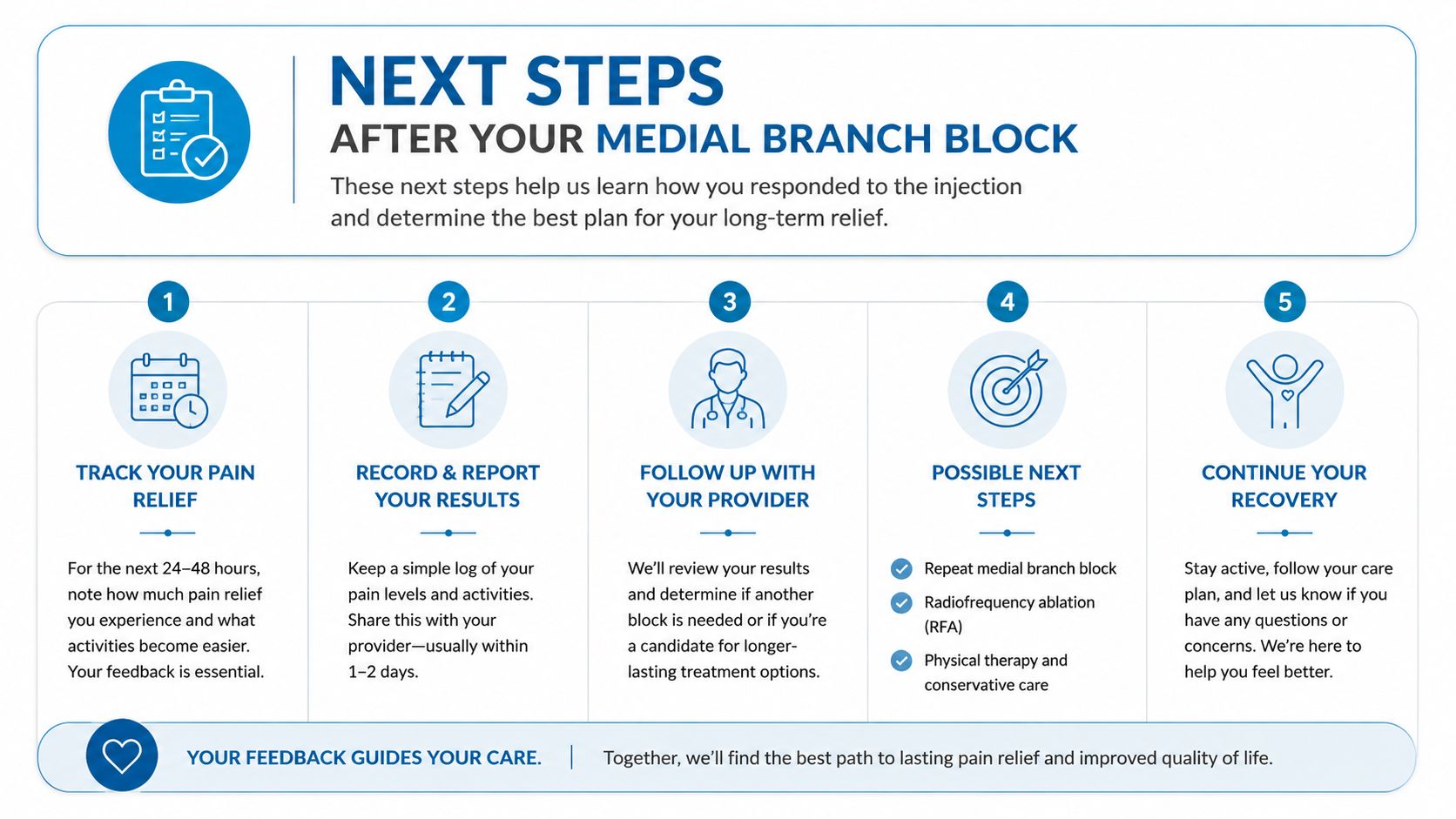
The most useful questions are concrete:
- Which pain improved, and which pain remained?
- Did function improve during the anesthetic window?
- What threshold defines a positive result for this treatment plan?
- Is another block required?
- What alternatives will be considered if the result is negative or uncertain?
The right conclusion isn't just “the injection worked” or “the injection failed.” The better conclusion is whether the response provides enough evidence to choose the next treatment responsibly.
Interventional Pain Management evaluates spinal pain through medical history, physical examination, imaging review, and targeted procedures such as nerve blocks and facet-related injections when clinically appropriate. Patients in New Jersey and Staten Island can visit Interventional Pain Management to discuss whether a medial branch block fits their symptoms and what treatment options may follow.