
Every step can feel like a reminder that the heel pain is still in charge. The stretching, the ice, the orthotics, the shoe changes, even the injection that was supposed to calm things down, all of it may have helped for a little while and then the pain came back. For many people, that cycle turns into fatigue, worry, and the quiet fear that this is just how life is going to feel now.
Plantar Fasciitis Embolization, or PFE, enters the conversation when heel pain has stopped behaving like a simple strain and started acting like a stubborn chronic pain problem. It is a minimally invasive, image-guided procedure designed to target the abnormal blood vessels linked with ongoing symptoms, not to cut the fascia itself. In carefully selected patients, the goal is to reduce pain at its source while avoiding the recovery burden of open surgery.
Table of Contents
- When Heel Pain Just Won't Quit
- Understanding Why Plantar Fasciitis Becomes Chronic
- What Is Plantar Fasciitis Embolization
- Are You a Candidate for This Procedure
- PFE Benefits Risks and Expected Outcomes
- Your Next Steps with IPM Health
When Heel Pain Just Won't Quit
A person with chronic plantar fasciitis often knows the pattern by heart. The first few steps out of bed sting, long shifts on the feet become miserable, and even a short walk to the mailbox can feel like a calculation. After months of trying to outsmart the pain, many people end up feeling less like a patient and more like a project that keeps failing.

That frustration is real, and it doesn't mean the pain is exaggerated. It usually means the problem has become more complex than a simple overuse injury. When conservative care keeps failing, the question changes from “How can the heel be rested?” to “What is keeping this pain alive?”
Practical rule: if the same heel keeps flaring despite structured care, the next step should be a deeper diagnosis, not just another round of the same treatment.
For some people, that deeper look reveals a pain pattern that may respond to a targeted procedure rather than another temporary fix. PFE is one of those advanced options. It belongs in a thoughtful, multidisciplinary plan for people who've already done the hard work of trying the usual measures and still haven't gotten durable relief.
Understanding Why Plantar Fasciitis Becomes Chronic
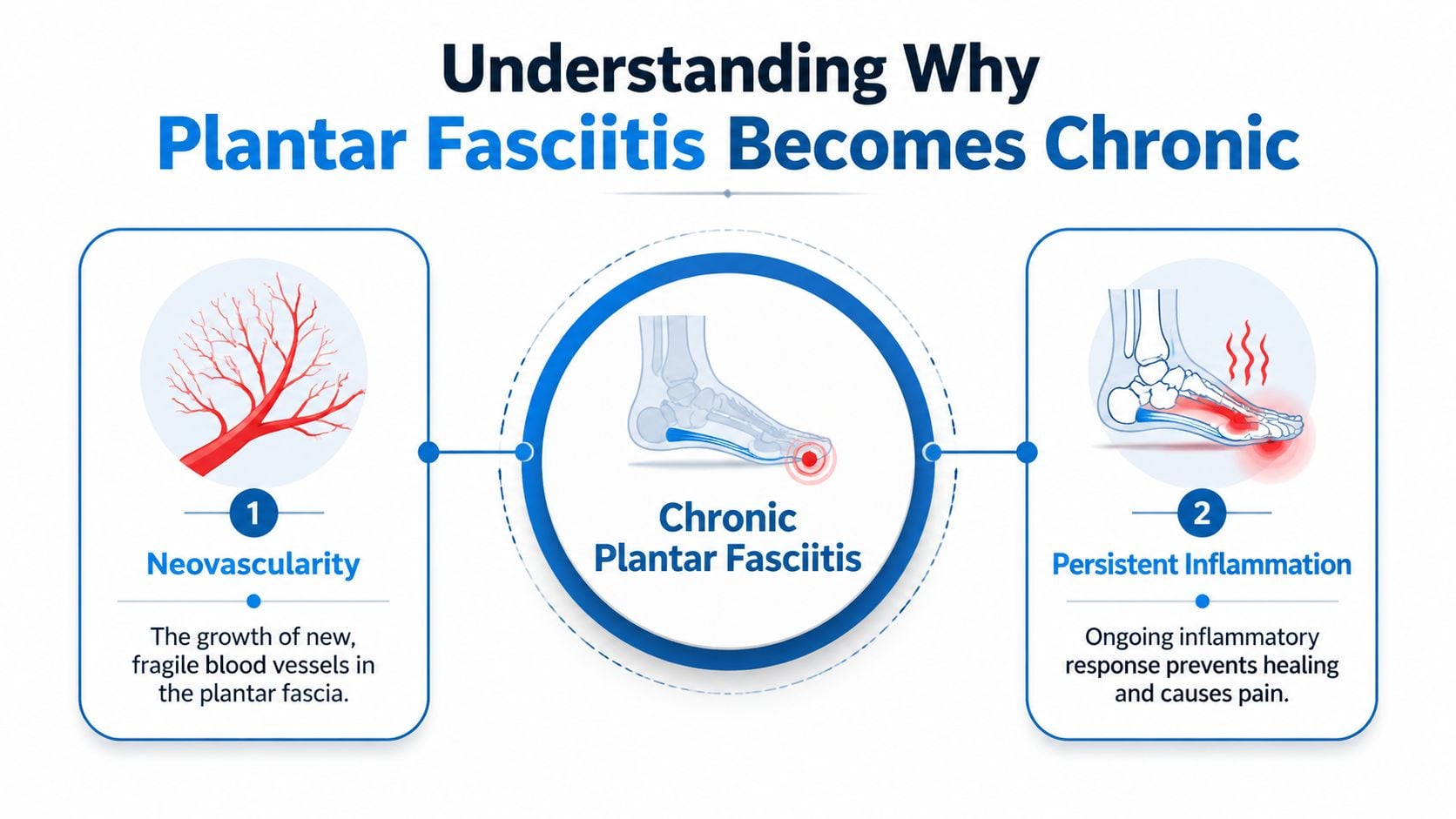
Chronic plantar fasciitis is easier to understand when the plantar fascia is compared to a strong rope. In a healthy foot, that rope supports the arch and handles stress with some give. In a chronic pain state, the tissue can behave more like a frayed rope, irritated and constantly tugged, with the body trying to repair it in a way that never fully settles.
Neovascularity and persistent irritation
One of the important changes in chronic plantar fasciitis is neovascularity, which means abnormal tiny blood vessels grow into the painful area. These vessels are fragile and tend to travel with inflammatory activity, so instead of letting the tissue calm down, they help keep the pain cycle active. That's why chronic heel pain is not always just “inflammation” in the everyday sense, it can be a structural pain process that keeps feeding itself.
Why that matters for treatment
The logic behind PFE becomes clear. If the abnormal vessels are helping sustain the pain, then a treatment that selectively targets those vessels can interrupt the cycle without cutting into the fascia itself. That is a very different strategy from trying to numb the area or stretch through symptoms.
For readers trying to understand related tendon and soft-tissue pain patterns, the broader principle is similar across chronic overuse conditions, and the approach to evaluation is laid out in this overview of tendinitis and bursitis care. The key point is that persistent pain often needs a different lens, not just more endurance.
Chronic heel pain can look simple on the surface, but the biology underneath often isn't simple at all.
What Is Plantar Fasciitis Embolization
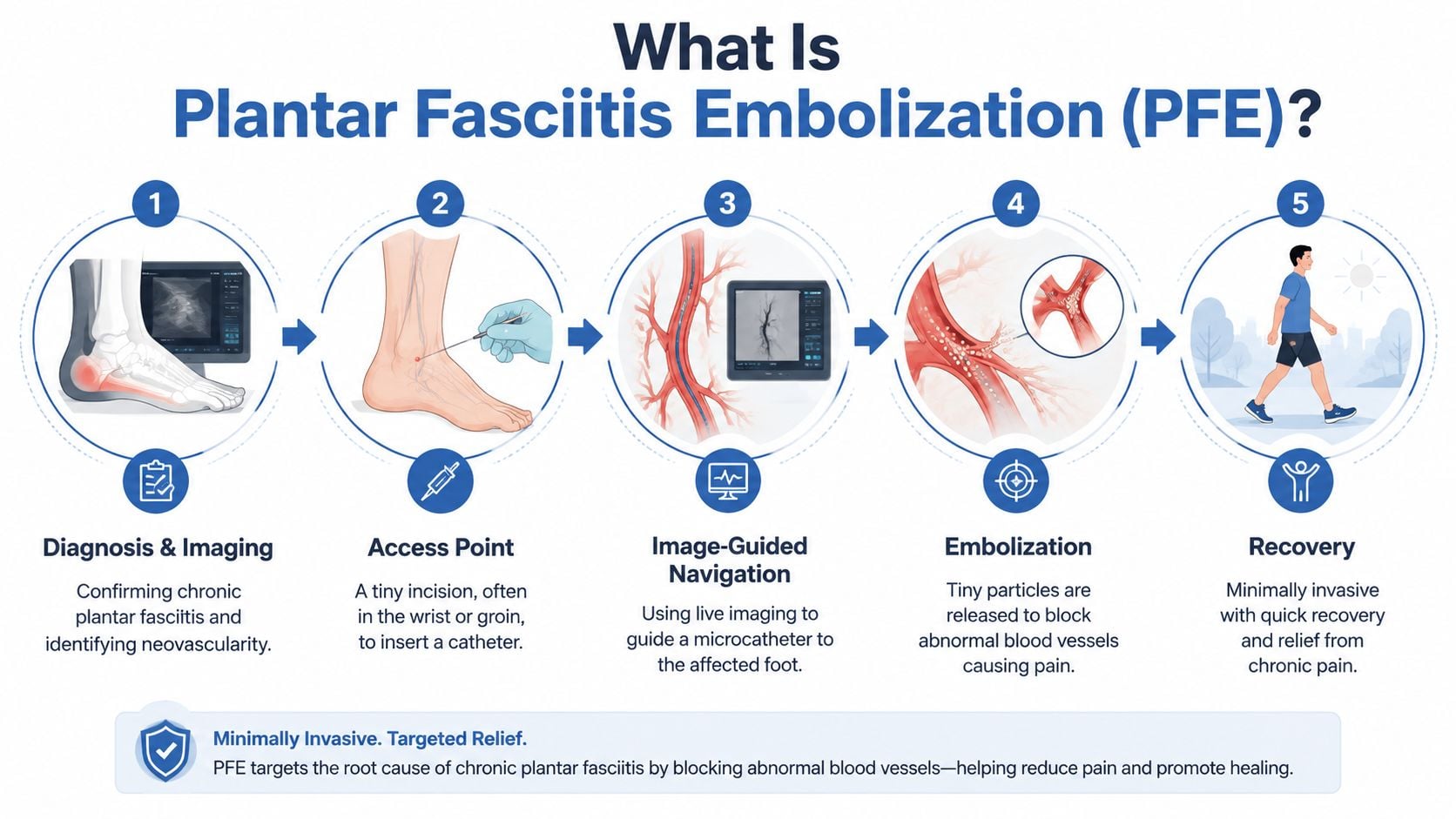
PFE is a catheter-based, image-guided procedure. A specialist places a very small catheter into an artery, uses live imaging to guide it toward the blood supply feeding the painful heel, and then releases microscopic embolic particles to block the abnormal neovessels. The treatment is precise, selective, and designed to affect the unwanted blood flow rather than the normal circulation the foot still needs.
A patient-friendly way to think about it
The easiest analogy is to think of the painful area as a room with too many faulty faucets running into it. Those faucets keep the room damp, irritated, and hard to dry out. PFE doesn't rebuild the room, it selectively turns off the extra faucets that are feeding the problem.
That distinction matters because the procedure is not aimed at removing the plantar fascia or making a large incision in the foot. It focuses on the abnormal supply lines that seem to sustain chronic inflammation and pain. For a patient, that usually means the experience feels more like a targeted vascular procedure than traditional foot surgery.
What the process feels like
Patients are commonly surprised by how direct the treatment is. The entry point is small, the imaging guides the work, and the goal is accuracy rather than tissue disruption. The procedure is meant to fit into a modern interventional care pathway where image review, symptom history, and procedural planning all matter.
If a person has been told that heel pain is “just something to live with,” PFE offers a different message. It says the pain may have a visible, treatable vascular component, and that component can sometimes be approached without a large operation.
Are You a Candidate for This Procedure
The clearest candidate profile starts with a long-running pattern. PFE is typically considered after symptoms last more than 6 months despite structured conservative care such as physical therapy, orthotics, and at least one corticosteroid injection. That timing matters because the procedure is not meant for a fresh strain or a short-lived flare, it is designed for the patient whose heel pain has already resisted standard care, including corticosteroid injections for plantar fasciitis.
What specialists look for
A good evaluation usually begins by confirming that the heel pain is plantar fasciitis and not another problem that can feel similar. Imaging can help identify whether neovascularity is present, and the clinical history helps show whether the pain pattern has become chronic and treatment-resistant. That combination often opens the door to PFE.
The decision also depends on how the foot behaves day to day. If pain is worst with the first steps after rest, keeps returning after standard care, and has not improved in a way that matches the effort already made, the case for a targeted vascular approach becomes stronger.
A simple comparison of common options
| Treatment | Mechanism | Invasiveness | Recovery Time | Typical Outcome |
|---|---|---|---|---|
| Physical therapy | Improves flexibility, load tolerance, and movement patterns | Non-invasive | Varies with consistency | Can help many patients, especially earlier in the course |
| Corticosteroid injection | Temporarily calms local inflammation | Minimally invasive | Usually brief | May reduce pain for a time, but relief can fade |
| PFE | Blocks abnormal blood vessels linked to chronic pain | Minimally invasive, image-guided | Usually less disruptive than surgery | Designed for persistent heel pain that has not settled with conservative care |
| Surgical fasciotomy | Releases part of the fascia | Invasive | Longer and more demanding | May be considered when structural or refractory cases need operative treatment |
For chronic, treatment-resistant pain, the point is not that one option is always the right answer. The better choice depends on the exam, imaging, symptom history, and how much function the person has lost.
A multidisciplinary review helps separate patients who may still improve with conservative care from those who are ready for a more focused procedure. That is often where a careful interventional team adds the most value.
Decision point: a candidate for PFE usually is not asking for an easier first step, but for a better next step after the usual path has already been tried.
PFE Benefits Risks and Expected Outcomes
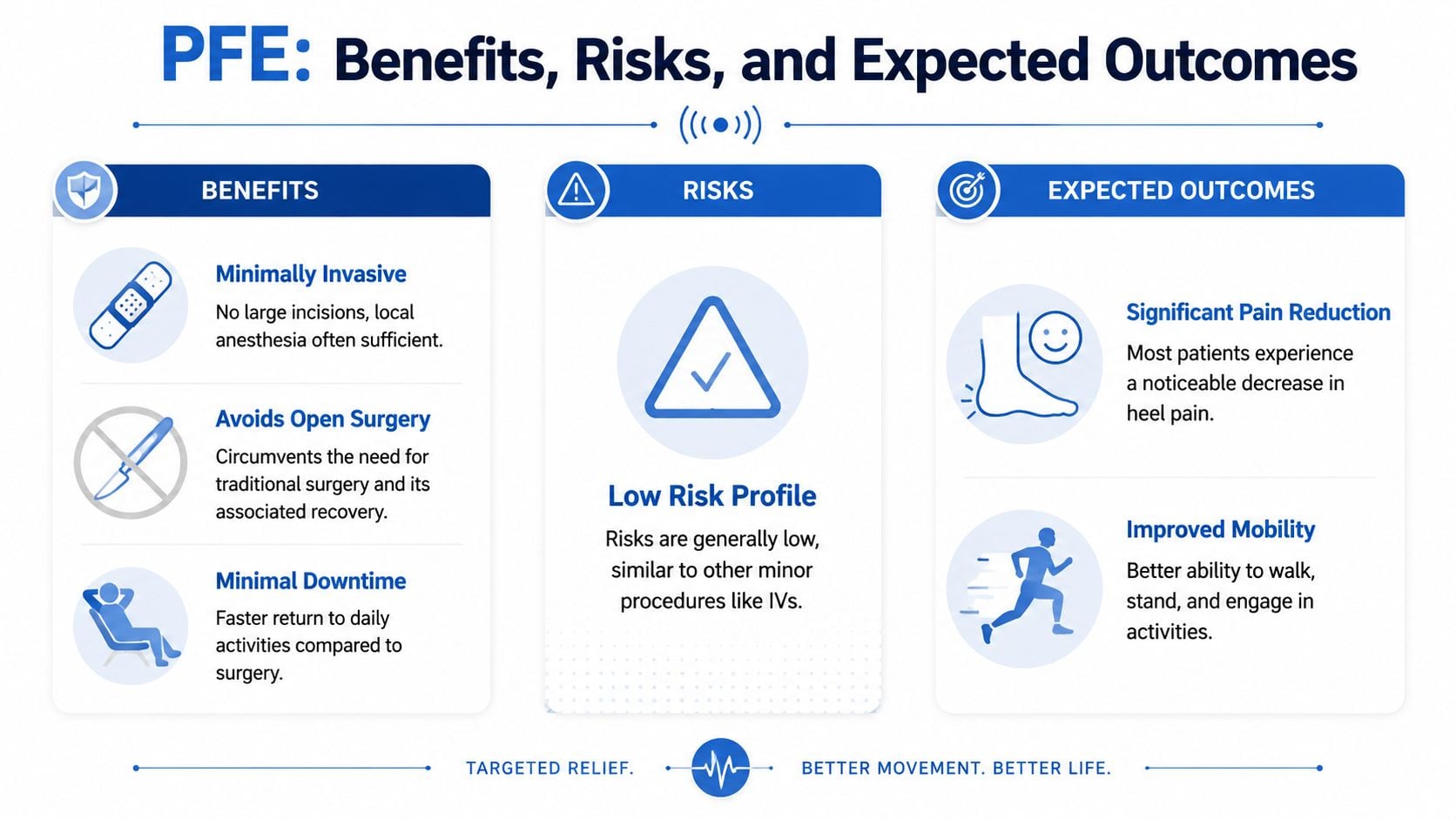
For a patient who has already tried stretching, rest, and injections, PFE can feel like a more focused next step. It is minimally invasive, avoids cutting the plantar fascia, and is usually chosen when the goal is to target the pain source without the recovery burden of open surgery. That can matter for someone who still needs to work, care for family, or stay active while dealing with heel pain that keeps returning.
What the evidence suggests
A clinical series of 66 patients treated between January 2020 and February 2022 followed them for a mean of 30.9 months. In that group, ultrasound-guided intra-arterial embolization aimed at abnormal neovessels was linked with meaningful improvement in pain and function, and the AOFAS score rose from 65.8 before treatment to 92.8 at 1 year, with the authors reporting no major adverse events (source). A separate review found that 85% of patients had clinically significant pain reduction at 3 months, and mean VAS pain scores dropped from about 7.5 to 2.0 by 12 months in treatment-resistant patients (source). Taken together, those findings suggest that both pain and function may improve gradually rather than all at once.
Benefits, risks, and realistic expectations
Benefits usually include a smaller procedural burden, a recovery that interrupts daily life less than surgery, and the possibility of meaningful symptom relief without a large incision. Risks are generally low, but any procedure can still cause bruising at the entry site, infection, or unintended blockage of a vessel, even when the procedure is performed carefully. A thorough consultation helps weigh those possibilities against the person's anatomy, medical history, and goals.
If you are comparing PFE with injections, this overview of corticosteroid injection care helps show why a temporary pain-calming approach is different from a treatment that aims at abnormal blood vessels. That distinction often makes the choice easier to understand.
A strong plan also depends on the rest of the care team. Clear review of imaging, symptoms, and prior treatment response, plus the kind of technical controls for compliant AI used to support secure medical workflows, helps keep the decision grounded in the patient's actual problem rather than a one-size-fits-all label.
What a reasonable outcome looks like
A reasonable outcome is not instant perfection. It is steadier walking, less first-step pain, fewer daily workarounds, and a real chance that the heel stops dominating every plan. Patients who tend to do best with PFE are usually the ones whose pain has already shown that it will not settle with repetition alone.
Your Next Steps with IPM Health
The best next step is not guessing. It is a thorough evaluation by a team that can confirm the diagnosis, review imaging, and rule out other causes of foot pain before choosing a procedure. At Interventional Pain Management, that kind of multidisciplinary review matters because chronic heel pain can sit at the intersection of pain medicine, orthopedics, and image-guided intervention.

Why coordinated care matters
A patient doesn't need only a procedure recommendation. They need the right diagnosis first, then a plan that fits the actual cause of pain, not just the label on the chart. That's where a team approach can help, because a foot problem may need imaging review, clinical examination, and a discussion of both non-surgical and minimally invasive options.
Planning the visit
A thoughtful consultation usually includes the symptom timeline, prior treatments, and the details of any scans or injections already done. For patients in New Jersey or Staten Island, scheduling an appointment can be the start of that process, whether the final plan points toward PFE or another treatment path. Readers who need a practical framework for privacy-aware digital workflows can also use technical controls for compliant AI as a helpful reference when asking how clinical tools are handled responsibly.
The right team should never push a single answer before the diagnosis is solid. If heel pain has dragged on despite doing everything asked, the next move is a careful evaluation with specialists who can connect the dots and build a plan that makes sense for the whole person.
A CTA for Interventional Pain Management.