

Only 17% of patients return to their preinjury performance after arthroscopic ACL reconstruction at an average of 2.3 years, while 62% return to participation and 16% sustain a new ACL injury. The operation can restore stability, but it doesn't guarantee that an athlete will compete at the same level as before.
That distinction changes how athletes should think about surgery. Returning to participation may mean getting back onto the field, court, or training floor, while returning to preinjury performance means reproducing the speed, confidence, strength, cutting ability, and competitive output that existed before the tear. Those are different outcomes, and treating them as one success-or-failure result gives patients an incomplete picture.
Table of Contents
- Understanding Arthroscopic ACL Reconstruction Outcomes
- What Is Arthroscopic ACL Reconstruction and How It Works
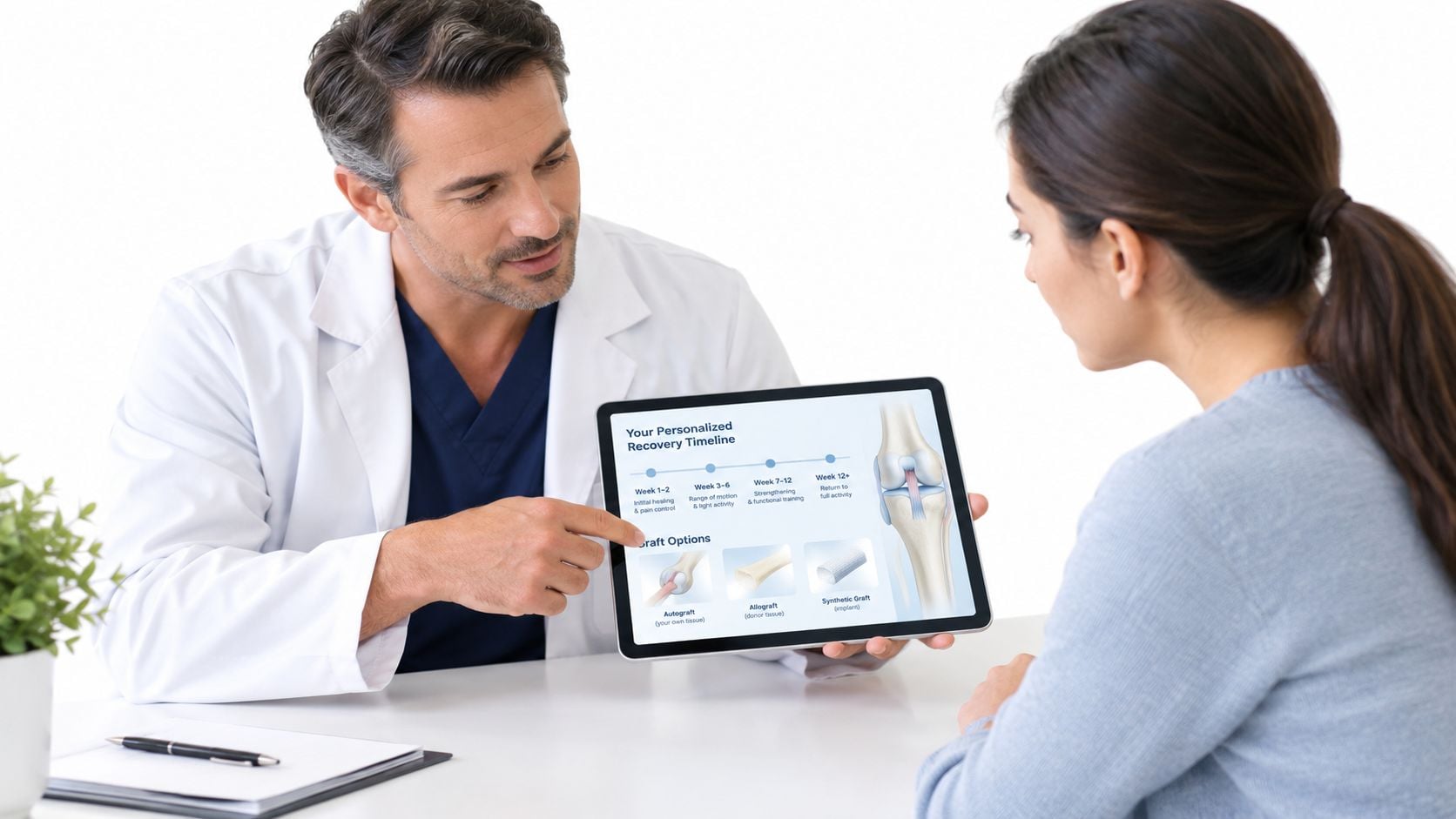
- Choosing Between Autograft and Allograft Options
- The Surgical Procedure Step by Step
- Recovery Timeline and Rehabilitation Phases
- Risks, Failure Rates, and Long-Term Joint Health
- How Individualized Care Improves Your Outcomes
Understanding Arthroscopic ACL Reconstruction Outcomes
A soccer player may be cleared to join team practice yet still hesitate before a sudden change of direction. A basketball player may return to games but avoid aggressive defensive slides. A recreational athlete may resume exercise but never regain the confidence to compete. These patients have returned to participation, but they haven't necessarily returned to their former performance.
The available evidence makes that gap clear. A nationwide study reported that 62% returned to participation, 50% returned to sport, and only 17% returned to preinjury performance, measured at a mean of 2.3 years after reconstruction. The same study reported that 16% sustained a new ACL injury. These figures come from the return-to-sport evidence summarized in a 2024 scoping review.
Why the distinction matters
An athlete's result depends on more than whether the graft is intact. Quadriceps strength, movement quality, knee confidence, sport-specific conditioning, psychological readiness, and exposure to reinjury risk all influence the final level of performance. A stable knee is essential, but stability alone doesn't recreate timing, power, or trust in the limb.
Long-term evidence also shows that reconstruction isn't a perfect mechanical reset. A 2022 systematic review and meta-analysis found a 13.4% failure rate, with a 95% confidence interval of 10.4% to 16.7%, across very long-term follow-up data (systematic review of long-term ACL reconstruction outcomes).
Practical rule: The meaningful question isn't only whether surgery can restore stability. It's whether the surgical plan and rehabilitation process fit the athlete's actual demands.
Patients should therefore approach arthroscopic ACL reconstruction as one stage in a longer performance and joint-health plan. It can be the right operation for a symptomatic rupture, particularly when instability interferes with pivoting activity, but it won't substitute for disciplined rehabilitation or an individualized return-to-sport decision.
What Is Arthroscopic ACL Reconstruction and How It Works
The ACL is a strong band of tissue inside the knee that helps control forward movement of the shinbone and rotational stability. When it tears, the knee may buckle during cutting, landing, or pivoting. A surgeon can replace the damaged ligament with a graft, using small arthroscopic portals rather than a large open incision.
A useful analogy is replacing a damaged suspension cable on a bridge. The surgeon does not just place tissue in the middle of the knee and hope it functions. The graft must follow the original ligament's route, pass through accurately positioned bone tunnels, and remain securely attached while the body incorporates it.
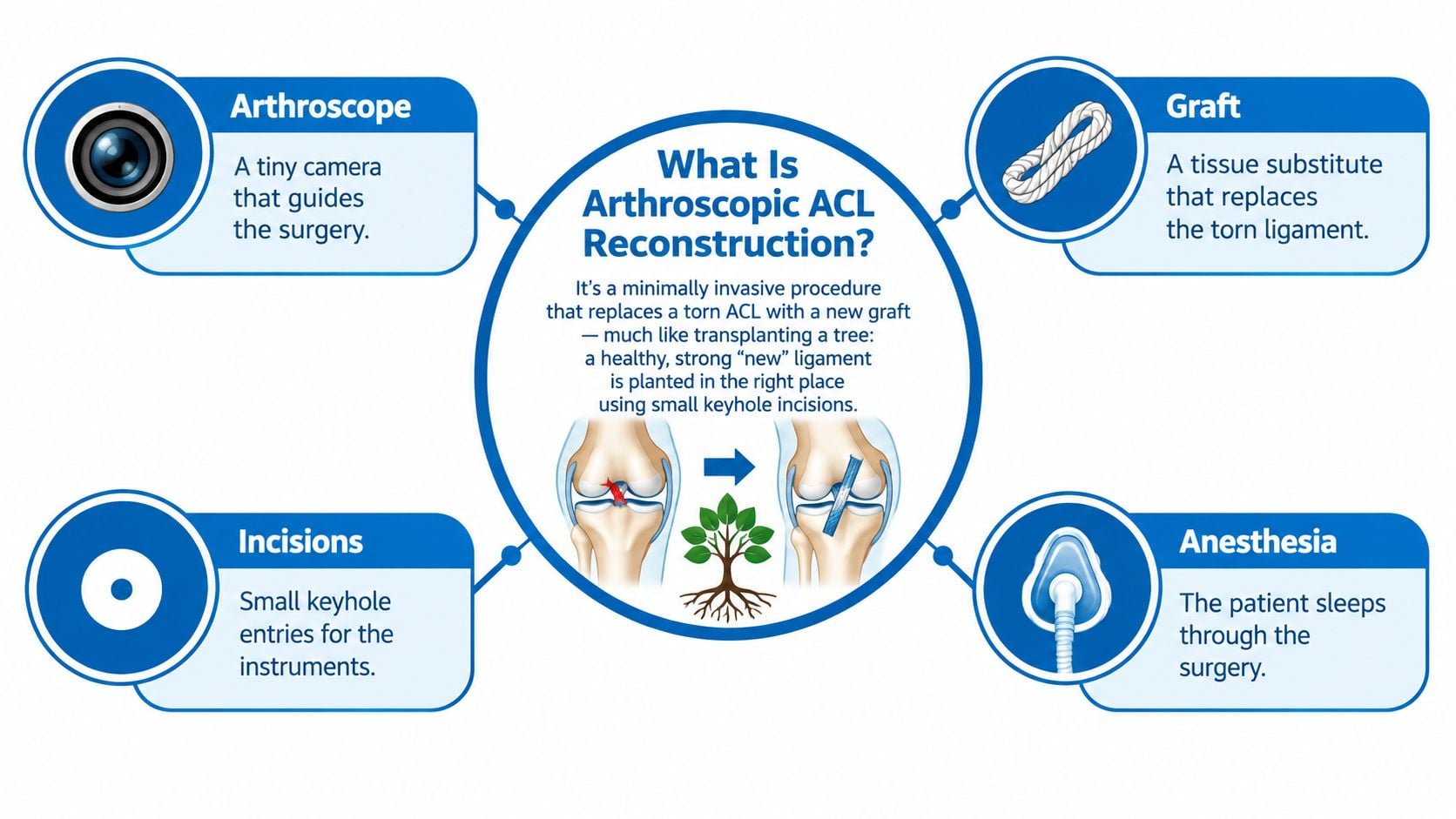
The four priorities that protect the reconstruction
- Use an appropriate graft: Common autografts include bone-patellar tendon-bone and quadrupled hamstring tendon. The choice must account for sport, anatomy, symptoms, and revision risk.
- Place the tunnels anatomically: Bone tunnels should sit within the native ACL footprints, helping the graft reproduce the ligament's stabilizing direction.
- Precondition the graft: Cyclic loading can create laxity. Graft preparation before fixation helps address that mechanical issue.
- Secure fixation near the joint: Fixation must tolerate the loads imposed during rehabilitation while biological healing develops.
Biomechanical testing reported the native ACL failing at about 2160 N, compared with average ultimate failure loads of about 2977 N for bone-patellar tendon-bone, 4140 N for quadrupled hamstring, and 2353 N for quadriceps tendon-bone constructs (biomechanical comparison of ACL graft strength). Those figures describe tensile testing, not the complete clinical behavior of a graft inside a living knee. Harvest effects, fixation, tunnel placement, healing, and rehabilitation all influence the outcome in actual practice.
A patient with a suspected tear should first obtain a careful examination and appropriate imaging. A plain-language overview of symptoms and evaluation is available in this guide to an ACL tear, but treatment decisions require an individualized clinical assessment.
Choosing Between Autograft and Allograft Options
Graft choice can influence whether an athlete merely returns to participation or regains preinjury performance. An autograft uses the patient's own tissue, usually from the patellar tendon, hamstring tendons, or quadriceps tendon. An allograft uses donor tissue. The right option depends on age, sport, knee symptoms, prior surgery, and the loads the reconstructed knee must handle.
Higher-quality studies generally associate autograft with lower graft rupture and reoperation risk and better recovery of pre-injury activity. Allograft avoids tendon removal from the patient's knee and may reduce donor-site symptoms, but incorporation and durability require careful consideration for athletes exposed to repeated cutting, jumping, and contact. These findings are summarized in a systematic review of ACL autograft and allograft reconstruction.
The trade-off within autografts
Patellar tendon autografts often provide a favorable stability profile, including lower reported pivot-shift risk. The trade-off is a greater likelihood of anterior knee pain, kneeling discomfort, and other harvest-site complaints.
Hamstring autografts usually cause less anterior knee pain, less kneeling pain, and less extension loss. Some patients and surgeons accept potential differences in rotational stability and revision risk. The cited registry evidence included 45,998 primary ACL reconstructions and reported lower revision risk with patellar tendon autografts than with hamstring autografts.
| Graft option | Potential advantage | Important trade-off |
|---|---|---|
| Patellar tendon autograft | Strong stability profile and lower reported revision risk in registry evidence | More anterior knee and kneeling pain |
| Hamstring autograft | Less harvest-site anterior and kneeling pain | Stability and revision considerations may matter for high-demand athletes |
| Allograft | No tendon harvest from the patient's knee | Rupture, incorporation, and activity-recovery concerns may be greater |
The decision should account for age, sport, competitive level, occupational demands, knee symptoms, previous surgery, and willingness to accept harvest-site symptoms. A volleyball player who depends on repeated jumping may prioritize different factors than an athlete who kneels at work or plays a sport with lower rotational demand. The goal is not only a stable knee on examination. It is a graft choice that supports the patient's intended level of performance while accepting its specific costs.
Patients should ask how the graft will be obtained, prepared, and managed. This overview of bone harvesting explains why donor-site planning matters, although graft selection remains one part of the broader surgical strategy.
The Surgical Procedure Step by Step
The operation usually follows a deliberate sequence, although the exact plan changes with the tear pattern, associated meniscal injury, anatomy, and selected graft. The patient is asleep under anesthesia, and the surgical team examines the knee directly with an arthroscope, a small camera introduced through a keyhole portal.
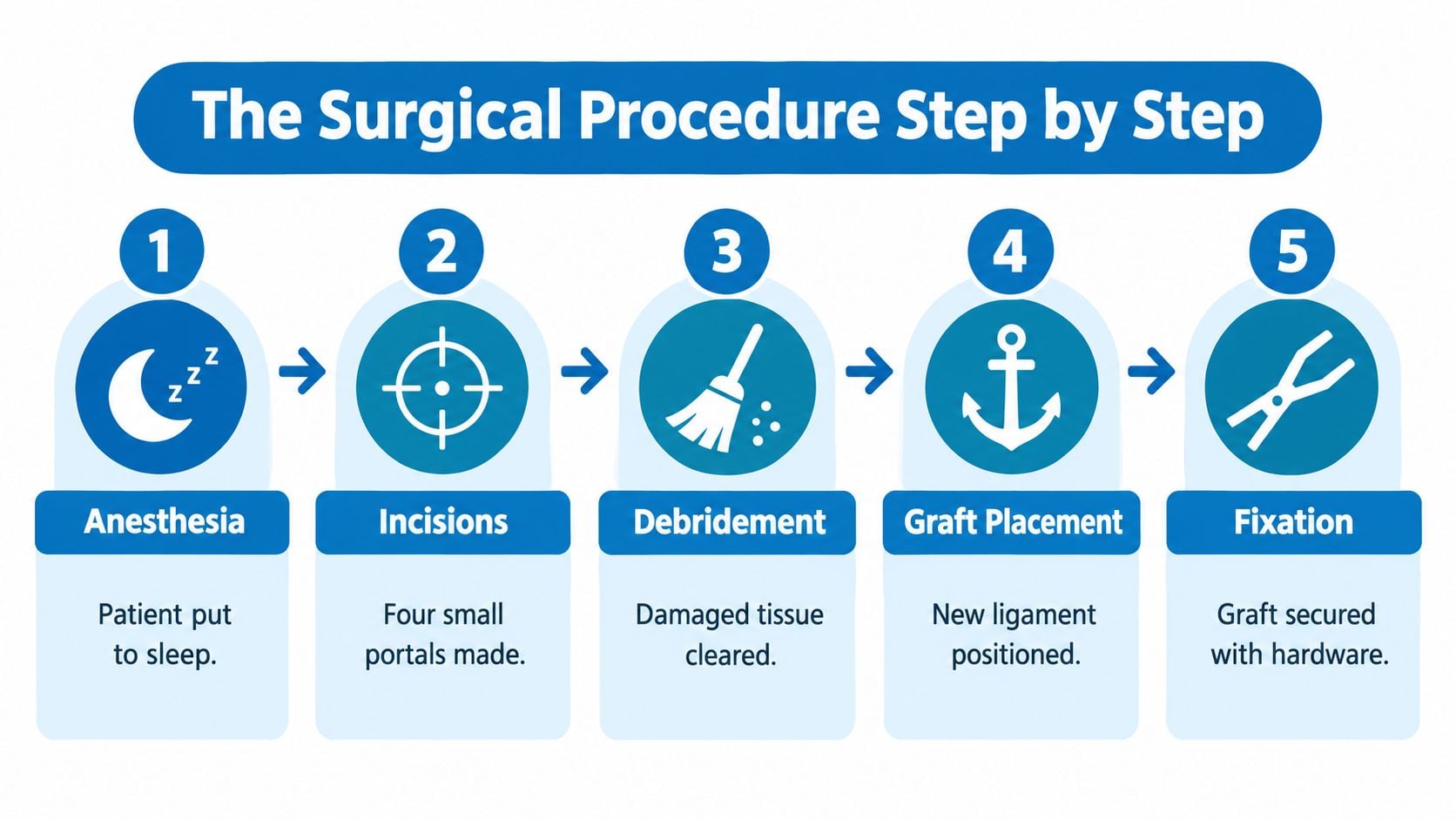
What happens during surgery
- Anesthesia and examination: After anesthesia, the surgeon confirms the instability pattern and inspects the joint for cartilage, meniscal, and ligament damage.
- Portal creation: Small arthroscopic entries allow the camera and instruments to reach the knee. Additional access may be needed for graft preparation or treatment of associated injuries.
- Removal of damaged tissue: Torn ACL remnants that interfere with visualization or graft placement are cleared while useful tissue may be preserved when appropriate.
- Tunnel preparation: The surgeon creates tunnels in the femur and tibia at the native ACL attachment areas. Anatomical positioning is central to restoring the correct direction of restraint.
- Graft passage and fixation: The graft is passed through the tunnels, tensioned, and secured with fixation selected for the graft, bone quality, anatomy, and rehabilitation plan.
Why fixation deserves attention
A strong graft can still fail clinically if the tunnels are poorly positioned or fixation doesn't control movement. Biomechanical principles therefore treat graft selection, tunnel placement, preconditioning, and fixation as connected decisions rather than isolated technical details.
Associated injuries may change the procedure and recovery. A meniscal tear, for example, can require treatment during the same operation, and patients can review general information about a torn meniscus before discussing the MRI and examination findings with an orthopedic surgeon.
The patient's immediate experience typically includes pain, swelling, stiffness, and reliance on crutches or a brace. Early instructions focus on protecting the reconstruction, restoring safe motion, controlling swelling, and beginning muscle activation. The surgical result provides the framework, but rehabilitation determines how well the knee learns to use it.
Recovery Timeline and Rehabilitation Phases
Recovery isn't a race against the calendar. A graft may look secure at the end of surgery, but the surrounding muscles, movement patterns, joint motion, and psychological confidence still need coordinated rebuilding. Modern return-to-sport decisions increasingly favor criteria-based rehabilitation, using objective testing and psychological readiness instead of elapsed time alone.
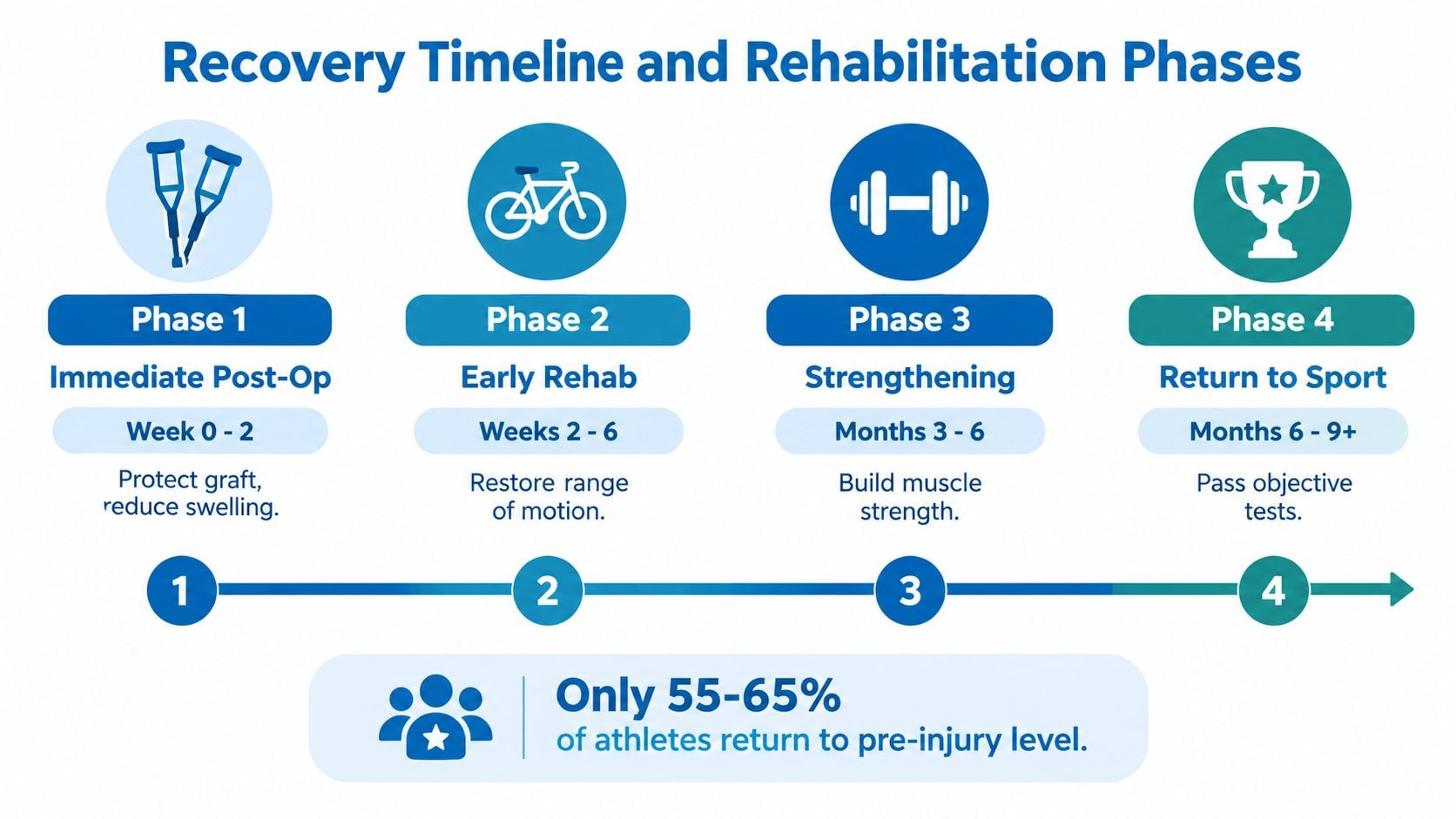
Four phases with different priorities
- Immediate postoperative care: The early focus is swelling control, safe weight bearing as directed, knee extension, and quadriceps activation. A stiff knee or persistent swelling can interfere with later progress.
- Early rehabilitation: Therapy develops motion, gait control, and basic strength. The patient should earn each progression rather than only reach a date on the calendar.
- Strength and movement rebuilding: Later rehabilitation adds progressive resistance, single-leg control, landing mechanics, and sport-specific loading. Strength deficits can remain even when daily walking feels normal.
- Return-to-sport preparation: Running, cutting, jumping, and reactive drills should be introduced in stages. Clearance should follow objective performance, movement quality, medical review, and psychological readiness.
The 2024 scoping review found no clear consensus on which return-to-sport tests best predict reinjury, although it supported a multidisciplinary approach. More recent evidence described in the same verified body of work suggests that objective testing and psychological readiness scores are more informative than time alone, while wearables and machine-learning models remain promising but heterogeneous.
A calendar can tell a patient how long healing has taken. It can't prove that the knee is ready for an unpredictable tackle, landing, or change of direction.
Athletes and families may also benefit from a broader practical injury recovery guide when organizing activity modification, rehabilitation support, and recovery habits. That resource shouldn't replace the treating team's plan, particularly when swelling, locking, instability, or worsening pain changes the clinical picture.
Risks, Failure Rates, and Long-Term Joint Health
ACL reconstruction can restore mechanical stability, but it cannot guarantee normal knee function for life. Young athletes often judge the operation by their first season. The knee's long-term health depends on what happens over many years, including later injuries, joint loading, and associated meniscal or cartilage damage.
The 2022 systematic review and meta-analysis cited earlier reported that 13.4% of ACL reconstructions were considered failures, with a 95% confidence interval of 10.4% to 16.7%. Individual reconstruction series reported higher failure rates than that pooled estimate. The variation reflects differences in graft choice, tunnel placement, surgical technique, patient factors, rehabilitation, and exposure to reinjury.
Stability is not the same as joint preservation
Reconstruction can improve stability without erasing the original injury or preventing later degeneration. A 2023 meta-analysis comparing reconstruction with nonoperative care found that surgery produced significantly better knee stability and favored better International Knee Documentation Committee outcomes. The overall difference in osteoarthritis risk between groups was not statistically significant, yet the review reported a 57% higher risk of osteoarthritis among patients who underwent surgery (meta-analysis comparing ACL reconstruction with nonoperative care).
That result does not establish that reconstruction causes every later degenerative change. Patients who choose surgery may differ from those receiving nonoperative care in injury severity, activity demands, instability, and associated damage. The practical conclusion is narrower: stability matters, but surgery does not remove long-term joint risk.
What failure can mean
Failure may mean graft rupture, persistent laxity, recurrent instability, or a new injury. It is not always one dramatic event. A knee can feel stable during routine activity yet fail to meet the demands of competitive pivoting sport, which exposes the difference between returning to participation and returning to preinjury performance.
Meniscal and cartilage status, recurrent swelling, alignment, workload, and the quality of ongoing care all affect the joint's trajectory. Athletes who return to high-demand activity without addressing these factors may face preventable setbacks. Long-term clinical review is appropriate, particularly after another injury, repeated swelling, or renewed instability. Recovery should be judged by durable function and the patient's actual goals, not by surgical completion alone.
How Individualized Care Improves Your Outcomes
The best surgical decision isn't the one that sounds most impressive in a general article. It's the plan that matches the injury pattern, knee anatomy, graft trade-offs, sport demands, work requirements, rehabilitation access, and tolerance for risk.
A cutting athlete may prioritize rotational stability and accept more harvest-site symptoms. A person whose job requires frequent kneeling may weigh anterior knee pain differently. Someone with a meniscal injury, previous ligament surgery, generalized laxity, or limited access to physical therapy may need a different sequence and a more cautious progression.
The care plan should answer practical questions
- What is injured: Examination and imaging should identify the ACL pattern and any meniscal, cartilage, or additional ligament damage.
- What does the patient need to do: The target isn't only "normal activity." It might be competitive pivoting sport, manual work, running, or comfortable daily movement.
- Which graft fits that target: Autograft and allograft choices carry different durability and donor-site considerations.
- How will progress be measured: Strength, range of motion, swelling, movement quality, functional testing, and psychological readiness should shape progression.
- Who coordinates setbacks: Persistent pain, stiffness, instability, or fear of movement should trigger reassessment rather than an automatic push through the protocol.
The 2025 evidence on ACL repair and reconstruction adds another reason to avoid simple universal recommendations. A meta-analysis of randomized trials found no statistically significant differences between repair and reconstruction for IKDC, Lysholm, Tegner, anterior-posterior laxity, or failure rate, with a failure-rate risk ratio of 1.10, and a 95% confidence interval of 0.70 to 1.72 (2025 meta-analysis of ACL repair and reconstruction). Other recent evidence reported higher failure and residual laxity when arthroscopic repair was performed more than 3 weeks after injury, showing why timing and tear characteristics matter.
Interventional Pain Management and Ortho-Spine Center evaluates orthopedic and sports injuries alongside pain and rehabilitation needs, with treatment plans informed by clinical findings, functional demands, and lifestyle. A coordinated team can help address perioperative pain, surgical questions, physical recovery, and barriers that might otherwise interrupt rehabilitation.
Interventional Pain Management evaluates ACL and other joint injuries, coordinates orthopedic care, and supports pain management as patients work through recovery. Athletes and active adults in New Jersey and Staten Island can visit Interventional Pain Management to request an individualized evaluation and discuss the safest path toward restored stability and function.