

A patient with burning pain down one leg has finally reached the consent visit. The MRI shows a disc problem, daily walking has become difficult, and an epidural steroid injection sounds like a reasonable next step. Then the physician mentions bleeding, infection, nerve injury, paralysis, and death. Most patients leave that conversation wondering whether the procedure is a carefully controlled treatment or a gamble.
The honest answer is more specific. Epidural steroid injection risks depend on the route used, the spinal level, the needle's relationship to nerves and blood vessels, the steroid formulation, and the patient's medical history. Routine soreness is not the same as a spinal cord injury, and a lumbar interlaminar injection shouldn't be treated as interchangeable with a cervical transforaminal injection. The evidence supports calm, detailed consent rather than blanket reassurance or alarm.
Table of Contents
- What an Epidural Steroid Injection Actually Does
- Common Reactions in the First Few Days
- Less Common Procedural Complications
- Rare but Serious Events and the FDA Warning
- How the Three Approaches Compare on Risk
- Pre-Procedure Checklist to Lower Your Risk
- Weighing Repeat Injections and Cumulative Effects
- When to Seek Urgent Care and Final Takeaways
What an Epidural Steroid Injection Actually Does
An epidural steroid injection places a corticosteroid, sometimes combined with a local anesthetic, into the epidural space near irritated spinal nerves. The aim is to calm inflammation associated with radicular pain from a herniated disc, spinal stenosis, or post-surgical scarring. The steroid doesn't repair a torn disc, widen a narrowed canal, or remove a bone spur. It may create a window in which pain settles enough for movement and rehabilitation to become possible.
Consider a person with leg pain caused by an inflamed lumbar nerve root. A transforaminal injection approaches the nerve through the opening where it exits the spine, making the medication relatively targeted. An interlaminar injection enters between the bony parts of the vertebrae and distributes medication more broadly in the epidural space. A caudal injection travels through the sacral hiatus at the base of the spine and may be useful when access higher in the lumbar spine is difficult or when symptoms involve more than one lower spinal level.
Fluoroscopy or computed tomography can help confirm the needle's position, and contrast material may be used to check the pattern of medication flow. Imaging doesn't eliminate risk, but it helps the physician understand the needle's location rather than relying only on surface landmarks. Patients considering the procedure can review how corticosteroid injections fit into a broader treatment plan through this corticosteroid injection resource.
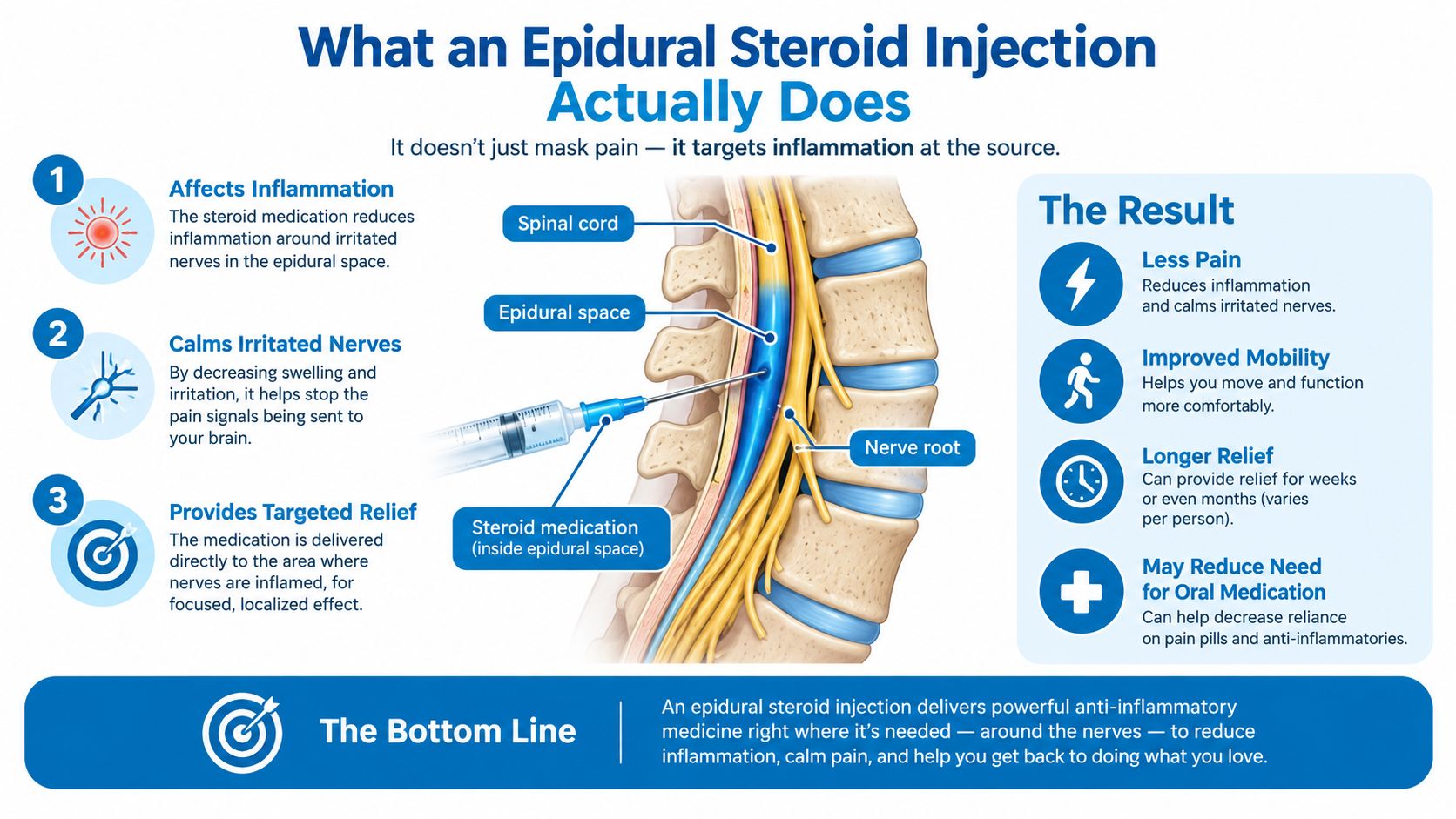
Relief is usually considered temporary, often measured in weeks to a few months, rather than a permanent correction. That limited purpose matters when weighing risks. A procedure may be reasonable if it helps someone participate in physical therapy or avoid escalating medication, but repeated treatment deserves a separate discussion about cumulative steroid exposure and diminishing benefit.
Common Reactions in the First Few Days
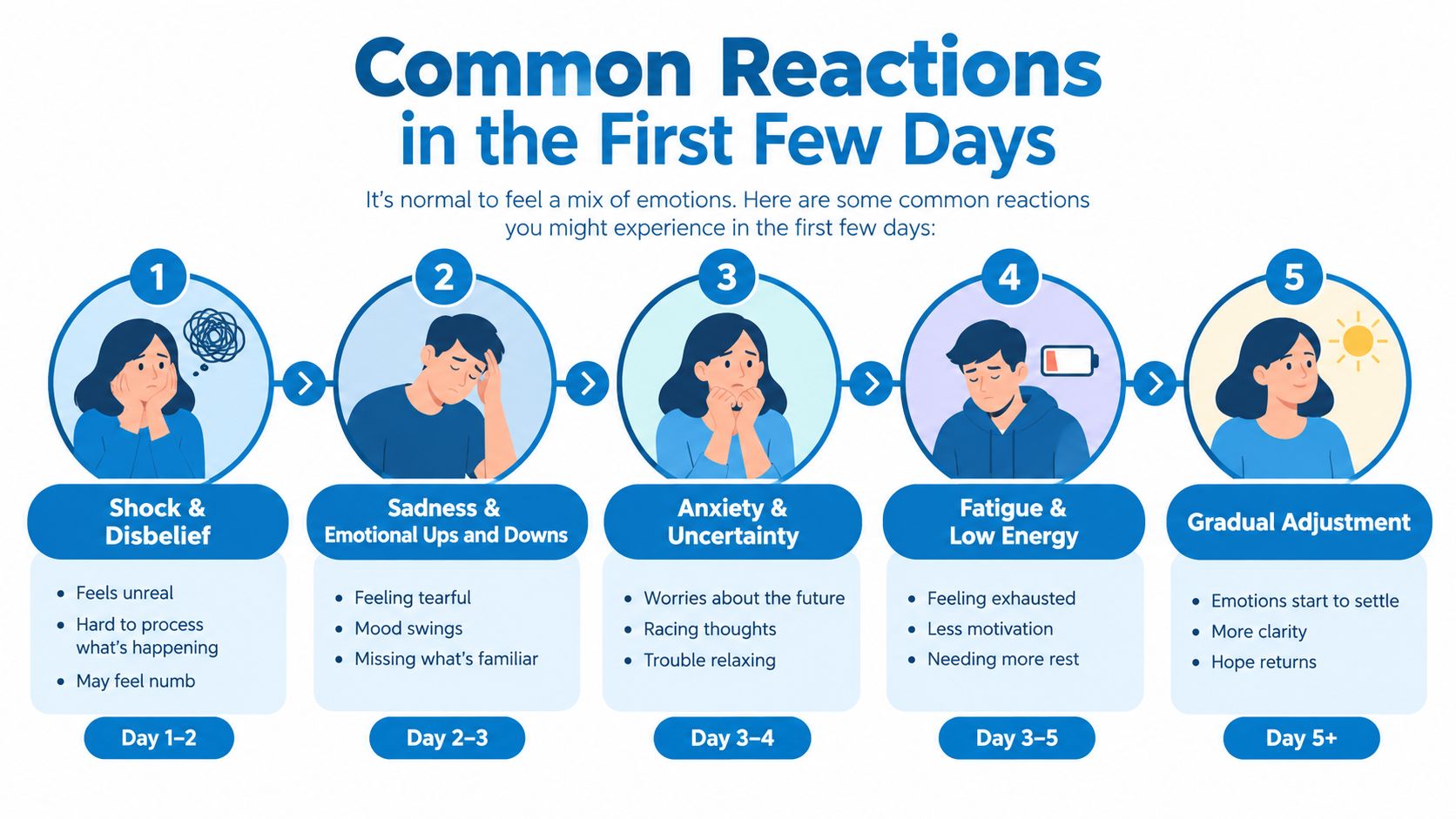
Most early symptoms are uncomfortable rather than dangerous. Their timing and pattern often explain what's happening.
What patients may notice
- Injection-site soreness: The needle passes through skin and soft tissue, so localized tenderness or bruising can occur. Ice wrapped in cloth, relative rest, and ordinary post-procedure instructions may help.
- Temporary numbness or heaviness: Local anesthetic can briefly affect nearby sensory or motor nerves. The patient shouldn't walk unassisted until normal strength and sensation have returned.
- Flushing and warmth: Some corticosteroid enters the bloodstream. Facial warmth, flushing, or a brief sensation of being overheated can follow.
- Sleep or mood changes: Steroids can temporarily interfere with sleep and may cause restlessness, irritability, or a short-lived mood shift.
- Mild fluid retention: A person may feel puffy or notice a transient change in blood pressure, particularly if they already have cardiovascular or blood-pressure concerns.
- Blood glucose elevation: Steroid absorption can raise blood sugar in people with diabetes and can also affect people without diabetes. Glucose monitoring should follow the treating clinician's instructions.
A steroid flare can confuse patients. Pain may briefly increase for 24 to 72 hours, sometimes because corticosteroid crystals irritate tissue before the anti-inflammatory effect settles. A flare that gradually improves is different from pain accompanied by fever, progressive weakness, or a new neurologic deficit.
A sensible home plan
The patient should follow the discharge instructions, protect the injection area, avoid strenuous activity until the clinical team permits it, and monitor symptoms that the physician specifically asked them to track. People with diabetes may need a more deliberate glucose plan, while those with blood-pressure or heart conditions may be asked to monitor readings.
Practical rule: Expected soreness should trend toward improvement. New or worsening neurologic symptoms shouldn't be explained away as a normal steroid reaction.
Less Common Procedural Complications
Between expected soreness and catastrophic neurologic events is a smaller group of documented procedural complications. A needle can puncture the dura, the membrane surrounding spinal fluid. The result may be a post-dural puncture headache, typically worse when upright and relieved when lying down.
A large retrospective study of 4,265 injections in 1,857 patients recorded one self-limited headache caused by dural puncture and found no major complications overall. Minor complications occurred at an overall rate of 2.4% per injection in the published study.
Patients may faint or feel lightheaded from a vasovagal reaction during needle placement. Bleeding deserves closer attention in people taking anticoagulant or antiplatelet medication, or in those with a bleeding disorder. A hematoma can compress nearby neural structures. Infection, including an epidural abscess or disc infection, is uncommon but may become dangerous without prompt treatment. Direct needle contact with a nerve can cause immediate electric pain and, rarely, lasting injury.
Why the approach changes the calculation
The approach changes which structures lie near the needle and which complications deserve particular attention. In the same study, minor complications occurred at a rate of 2.1% for transforaminal injections and 6.0% for interlaminar injections. These figures describe that study's reported complications, not a universal risk for every physician, spinal level, or patient. They also cannot establish that one approach is always safer, because interlaminar, transforaminal, and caudal injections serve different anatomic targets and diagnoses.
| Complication | Interlaminar | Transforaminal | Caudal |
|---|---|---|---|
| Dural puncture or spinal-fluid headache | More relevant because the needle enters the posterior epidural space | Possible, depending on level and trajectory | Generally less likely because access begins through the sacral hiatus |
| Vasovagal reaction | Possible | Possible | Possible |
| Hematoma | Possible, with risk shaped by medication and bleeding history | Possible, with risk shaped by medication and bleeding history | Possible |
| Infection | Possible | Possible | Possible |
| Direct nerve or vascular injury | Possible | More important concern near the exiting nerve root and vessels | Possible, but medication is less specific to one nerve root |
The table offers a map, not a personal forecast. Before consent, the physician should review the imaging, medication list, spinal level, planned approach, and steroid formulation. Ask which structures are closest to the needle for your injection, how bleeding and infection risks are being reduced, and which symptoms should prompt a call after the procedure.
Rare but Serious Events and the FDA Warning
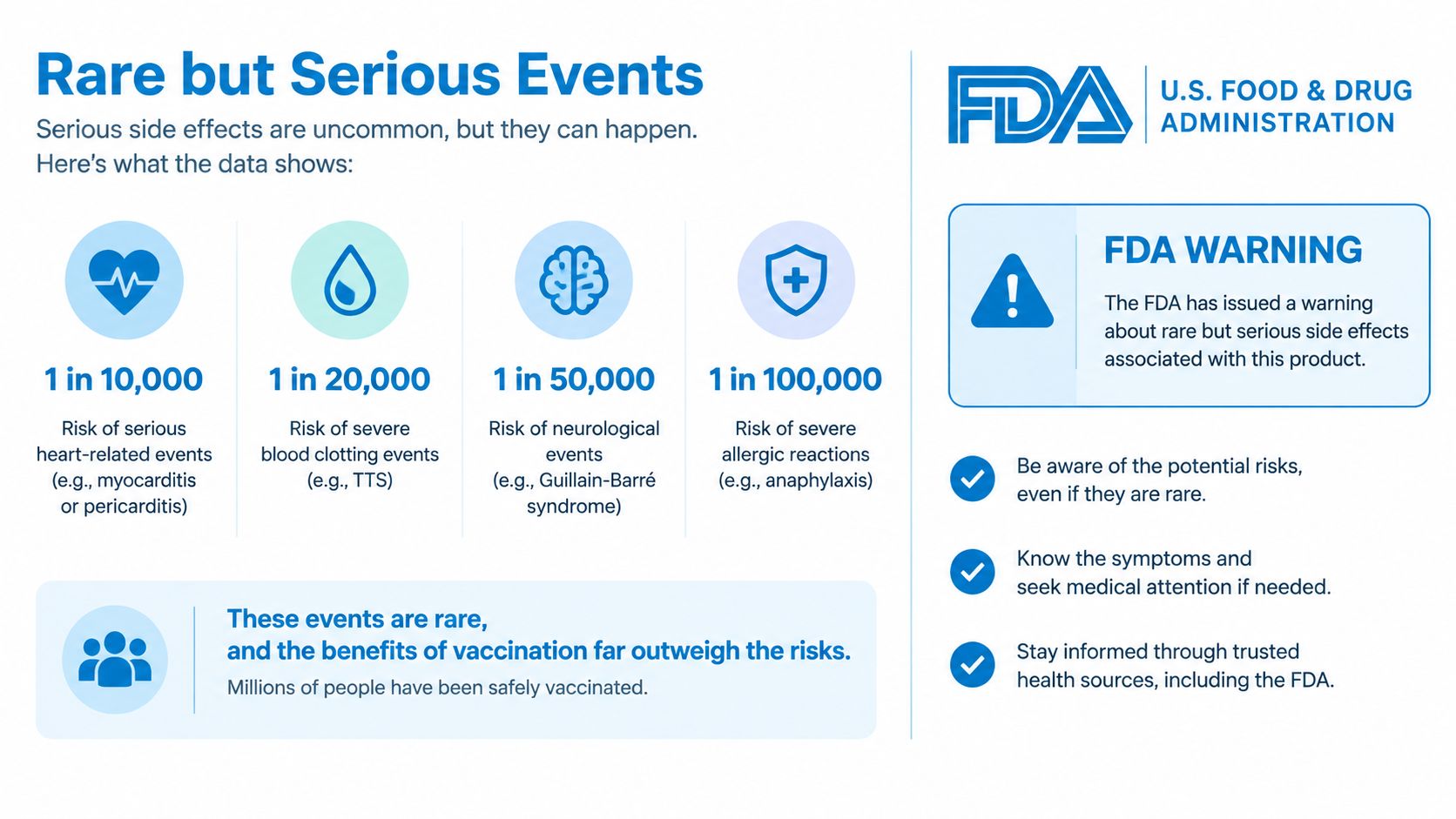
Imaging guidance improves needle placement, but it cannot remove every vascular or anatomic hazard. In April 2014, the FDA warned that epidural corticosteroid injections may cause rare but serious events, including loss of vision, stroke, paralysis, and death. Its review identified 131 serious neurologic adverse-event cases: 15 involving the transforaminal approach, 6 involving the interlaminar approach, 2 involving the caudal approach, and 108 with no approach specified as summarized in the cited safety review.
The main concern with some transforaminal injections is accidental entry into an artery. If particulate steroid enters a vessel supplying the spinal cord or brain, particles can block blood flow and cause ischemic injury. Cervical transforaminal procedures receive particular scrutiny because the spinal cord and major blood vessels lie nearby. Spinal narrowing, previous surgery, or unusual vessel anatomy can change how the clinician weighs that risk.
What remains uncertain
A precise risk estimate for one patient is difficult. Reporting systems may record severe cases without showing how many injections were performed overall, while case reports cannot calculate the probability for every approach, spinal level, or medical history.
A separate cohort of 52,935 patients reported 0.46% ESI-related events per procedure, including 0.011% major complications, 6 major complications, 1 death, and 1 case of neurologic sequelae in the cited cohort review. That population and study design differed from the retrospective review above, so these figures should not be combined into one average.
Clinical practice commonly favors non-particulate dexamethasone for cervical transforaminal injections to reduce concern about particulate embolization. No steroid formulation makes the procedure risk-free. At the consent visit, ask which approach is planned, whether your anatomy or health conditions alter the concern, and which rare symptoms require urgent attention. Informed consent should cover both the minor effects patients are more likely to notice and the severe outcomes they are unlikely to experience.
How the Three Approaches Compare on Risk
A patient with pain down one leg may be offered a targeted transforaminal injection, while broader symptoms may lead to an interlaminar or caudal approach. The choice is both a targeting decision and a safety decision. It depends on the pain pattern, MRI findings, spinal anatomy, planned level, and conditions such as bleeding risk or diabetes.
| Approach | Access Route | Best For | Common Complications | Approach-Specific Serious Risks |
|---|---|---|---|---|
| Interlaminar | Between the vertebral laminae into the posterior epidural space | Broader or central symptoms, including some stenosis patterns | Soreness, temporary numbness, headache, bleeding, infection | Dural puncture, epidural hematoma, and neural compression |
| Transforaminal | Through the neural foramen toward an exiting nerve root | More focal radicular pain tied to a particular nerve | Soreness, temporary numbness, vascular entry, nerve irritation | Arterial injection, spinal cord ischemia, paralysis, stroke, or death, especially in higher-risk cervical procedures |
| Caudal | Through the sacral hiatus from the bottom of the spine | Lower lumbar symptoms, multilevel disease, or difficult upper access | Soreness, pressure, systemic steroid absorption, infection | Vascular or neural injury remains possible, although direct dural access is generally less likely |
Reported complication rates vary widely, from 2.4% to 16.8%, because studies use different definitions, techniques, patient groups, and follow-up periods in the reviewed evidence. Serious complications remain rare. Epidural hematoma is estimated at about 1 in 70,000 to 1 in 190,000 injections, but its consequences can be severe. These figures describe groups of patients, not the exact probability for one individual.
The route changes which anatomy is closest to the needle. A transforaminal injection can place medicine near one nerve root, which may make sense for sharply localized radicular pain. It also brings nearby blood vessels into the safety discussion, particularly in cervical procedures. An interlaminar injection covers a broader epidural area, while a caudal route enters from below and may be useful for multilevel or technically difficult access. Caudal placement may make direct dural entry less likely, but it is not risk-free and may be less precise for one nerve.
The steroid formulation and imaging guidance also matter. Ask which approach and spinal level are planned, why they match your symptoms, and how your anatomy or medical conditions change the risk. You can review the clinical context of a lumbar epidural steroid injection before discussing those questions at the consent visit.
Pre-Procedure Checklist to Lower Your Risk
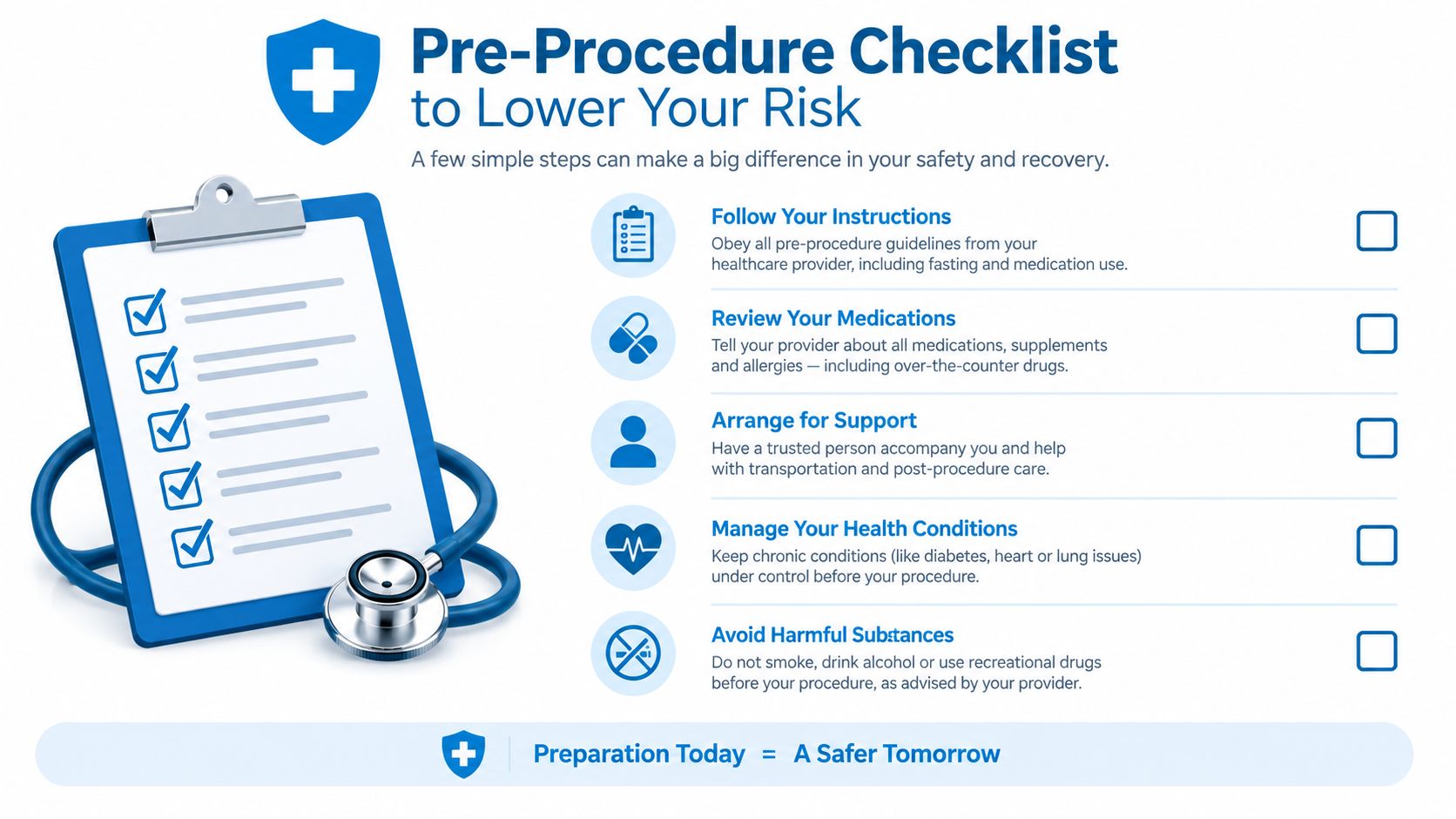
Risk reduction starts before the needle touches the skin. The physician and clinical team should understand the diagnosis, the planned spinal level, medications, allergies, bleeding history, and conditions that could change how the steroid is monitored.
Records and medical screening
- Review the MRI: The physician should match the imaging abnormality to the side, level, and pattern of radiating pain. An incidental disc finding isn't automatically the pain source.
- Discuss blood thinners: Anticoagulant and antiplatelet medications may need an individualized hold based on procedural guidance and the reason the medication was prescribed. The patient shouldn't stop any medication independently.
- Report infection or fever: An active infection can change whether an injection is appropriate.
- Clarify allergies: The team should ask about contrast, local anesthetic, and steroid reactions. A previous reaction may require an alternative plan.
- Plan for diabetes: Steroids can disturb glucose control, so the treating team should know the diabetes regimen and agree on monitoring.
- Review cardiovascular status: Blood-pressure instability and heart disease may affect sedation, monitoring, or whether the procedure should proceed.
- Mention pregnancy possibility: Pregnancy status can change imaging and medication decisions.
Patients transferring MRI reports, medication lists, or prior procedure notes can use a practical guide to faxing patient records to help organize information for the medical office.
Questions worth asking at consent
The following questions aren't a test of the physician. They help the patient understand the plan:
- Which steroid formulation will be used, and why?
- Why is the interlaminar, transforaminal, or caudal route appropriate for this diagnosis?
- Will fluoroscopy or CT confirm needle position, and will contrast be used?
- What complications are most relevant at the planned spinal level?
- How should blood thinners, diabetes medicines, and other prescriptions be managed?
- Who should be contacted if pain worsens, a fever develops, or weakness appears?
- What functional improvement would justify considering another injection?
Day-of instructions may include fasting, arranging transportation, wearing comfortable clothing, and bringing an updated medication list. For broader context on injection options, patients can review the types of pain-management injections.
Weighing Repeat Injections and Cumulative Effects
A repeat injection should earn its place through measurable functional benefit, not merely a temporary change on a pain scale. If the first procedure helped a patient walk farther, sleep better, reduce medication use, or participate in rehabilitation, another injection may have a clearer rationale. If relief was brief, incomplete, or unrelated to improved function, repeating the same intervention deserves skepticism.
Corticosteroids can affect the body beyond the epidural space. Repeated exposure may contribute to hormone-axis suppression, immune modulation, sleep disruption, mood changes, blood-glucose dysregulation, weight change, and bone-health concerns. These risks matter more for patients with diabetes, metabolic disease, infection vulnerability, osteoporosis risk, or other reasons to limit steroid exposure.
A practical decision framework
- Repeat for function: A meaningful return to walking, work, exercise, or rehabilitation supports a discussion of another injection.
- Pause for diminishing benefit: Shorter relief after each procedure suggests that the treatment may no longer be changing the underlying problem.
- Reconsider the diagnosis: Failure may indicate that the pain isn't primarily coming from an inflamed nerve root.
- Add active treatment: An injection should support strengthening, mobility work, and other rehabilitation rather than replace them.
- Escalate when appropriate: Progressive weakness, severe structural compression, or persistent disability may require a spine-surgery discussion.
A 2026 systematic review described low-certainty evidence associating epidural steroid injection with deep infection at about 0.7%, dural puncture at about 1.4%, and temporary altered consciousness at about 2.1%, while also emphasizing common minor effects such as increased pain, numbness, and injection-site pain in the review summary. Because the evidence is low certainty, those figures shouldn't be treated as a personal forecast. They do reinforce why the cumulative question matters: a small short-term benefit may not justify repeated exposure when functional gains are fading.
When to Seek Urgent Care and Final Takeaways
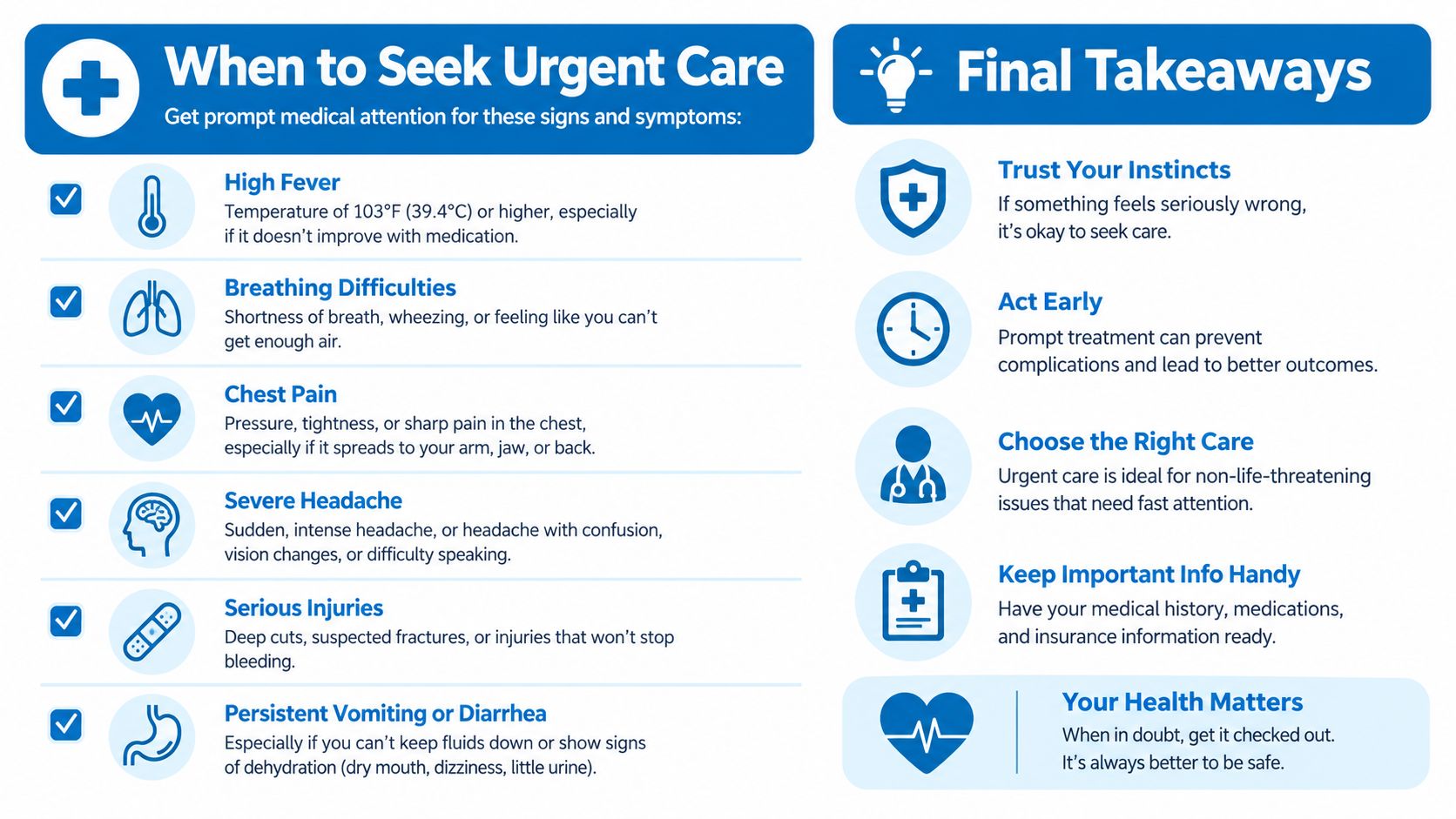
A mild ache at the needle site or a temporary flare can be expected. Progressive neurologic change is not an ordinary recovery symptom. A patient should contact the treating physician the same day, or seek emergency evaluation when symptoms are severe, for:
- A sudden severe headache: Especially one that is markedly worse when upright, which may indicate dural puncture.
- New or progressive weakness: Trouble lifting a foot, standing, gripping, or moving an arm needs urgent assessment.
- Loss of bladder or bowel control: This can signal serious nerve compression.
- Saddle numbness: Numbness around the inner thighs, buttocks, or genital region requires prompt evaluation.
- Fever above 101°F: Fever with worsening spinal pain, chills, or feeling acutely ill raises concern for infection.
- Rapidly worsening pain after initial improvement: A pattern that worsens after the first couple of days, especially with weakness or numbness, may indicate hematoma, abscess, or nerve compression.
Questions patients often forget
Can the patient drive home? Transportation is usually arranged in advance, especially if sedation or temporary leg numbness is involved. The office's instructions take priority.
When can effectiveness be judged? Immediate anesthetic relief may not predict the steroid response. The patient and physician should agree on a reasonable observation period and on which functional changes to record.
What if the injection doesn't work? Lack of benefit should prompt diagnostic review and consideration of physical therapy, medication changes, other targeted procedures, or surgical evaluation when indicated.
Will it damage the spine long-term? The injection doesn't correct structural disease, and repeated steroid exposure has systemic considerations. The risk-benefit decision depends on the route, formulation, frequency, medical history, and response.
When is surgery the better conversation? Progressive neurologic loss, severe compression, or persistent disabling symptoms despite appropriate nonsurgical care can make surgical consultation more relevant than another injection.
The safest decision is individualized. Patients should ask about the approach, steroid type, imaging method, relevant complication pattern, and the plan for follow-up before consenting.
Interventional Pain Management offers image-guided epidural injections alongside diagnostic evaluation, rehabilitation-oriented care, nerve procedures, and spine-surgery consultation when appropriate. Adults in New Jersey and Staten Island can visit Interventional Pain Management to discuss whether an injection fits the diagnosis, anatomy, medical history, and long-term treatment goals.