
What does a spinal stenosis surgery success rate measure? Pain relief, longer walking distance, preserved independence, or freedom from another operation? Those outcomes can point in different directions, which is why a single headline percentage can create false confidence or unnecessary fear.
Lumbar spinal stenosis narrows the space available for nerves in the lower spine. Surgery usually aims to relieve that pressure, but the result depends on the anatomy being treated, the patient's health, the procedure selected, and the length of follow-up. A useful discussion separates three questions: How much relief occurs early? How durable is that relief? What is the chance of treatment failure or reoperation?
Patients considering surgery often benefit from coordinated input from interventional pain, orthopedic, and spine specialists. Interventional Pain Management and Ortho-Spine Center uses a multidisciplinary model in which non-surgical care, injections, rehabilitation, decompression, fusion, and other procedures can be considered according to the clinical problem rather than a generic success-rate claim.
Table of Contents
- Why One Success Rate Does Not Tell the Whole Story
- What the Published Success Rates Actually Show
- Comparing Surgical Options and Their Outcomes
- How Patient Factors Shift Your Individual Odds
- Recovery Timeline and What Can Go Wrong
- When Surgery Is the Right Choice and When It Is Not
- Questions to Ask Your Spine Surgeon Before Deciding
Why One Success Rate Does Not Tell the Whole Story
A patient who can walk to the mailbox without stopping may describe surgery as a success even if some back pain remains. Another patient may care most about leg numbness, while a third may judge the operation by whether another procedure can be avoided. These are reasonable definitions, but they aren't interchangeable.
Clinical studies also measure outcomes differently. Some use a formal questionnaire, some assess pain or physical function, and others record satisfaction or treatment failure. A study can therefore report a favorable result for one outcome while showing that a meaningful minority had persistent or worsening symptoms for another.
The three lenses that matter
Short-term relief asks whether leg pain, numbness, or walking limitation improves during the early recovery period. Nerve decompression can provide meaningful relief, but postoperative soreness and delayed nerve recovery can make the first days or weeks difficult to interpret.
Long-term durability asks whether the improvement remains over time. Spinal degeneration doesn't stop because one area has been decompressed. New narrowing, recurrent symptoms, or progression elsewhere can affect the later experience.
Reoperation risk asks whether another procedure becomes necessary. A patient may experience useful symptom relief without meeting a study's definition of complete success, while another may improve initially and later require additional treatment.
Practical rule: A surgeon and patient should define success before discussing a percentage. The target might be walking farther, reducing leg pain, improving sleep, or protecting neurological function.
The operation also has to match the source of symptoms. Nerve compression that corresponds closely with the patient's leg symptoms and imaging is a different decision from generalized back pain with several possible causes. That distinction is central to interpreting any spinal stenosis surgery success rate.
What the Published Success Rates Actually Show
What does a spinal stenosis surgery success rate measure? The answer depends on when patients are assessed and how researchers define success. Short-term relief, long-term durability, and the need for another operation are separate outcomes, so one headline percentage can conceal important differences.
Historical research found meaningful improvement after decompressive surgery, while longer follow-up showed that some benefits may lessen over time. A widely cited synthesis from 1992 reported that, on average, 64% of patients treated surgically for lumbar spinal stenosis had good-to-excellent outcomes. The same historical review also summarized a prospective study of 170 patients, which reported success rates of 88.1% at 6 weeks, 86.7% at 6 months, and 70.8% at 1 to 11 years after decompressive laminectomy (historical evidence on spinal stenosis surgery success rates).
Results change with the follow-up window
Early results often capture relief after pressure on the nerves has been reduced. Patients may walk farther or experience less leg pain, although postoperative soreness and slow nerve recovery can affect how those first weeks feel.
Long-term results answer a different question: whether the improvement remains durable. Spinal degeneration continues after surgery, and narrowing can recur or develop at another level. That does not erase an early benefit, but it explains why a later assessment may show a lower success rate.
The same long-term study reported 66.6% success for lumbar stenosis with a herniated disc and 63.6% for lateral recess stenosis. These figures show how the anatomical pattern can affect outcomes. Modern research also uses different measures. One patient-based study reported 63.8% clinically successful outcomes, 55.2% significant improvement in physical function, and 58.6% satisfaction with treatment. A later observational spine-register study reported 33% treatment failure at 12 months, including a 22% worsening rate. Both findings are discussed in a modern evidence review.
| Follow-Up Period | Reported Success Rate | Key Context |
|---|---|---|
| Historical average | 64% | Good-to-excellent outcomes after surgical treatment |
| 6 weeks | 88.1% | Early success after decompressive laminectomy |
| 6 months | 86.7% | Continued short-term improvement |
| 1 to 11 years | 70.8% | Lower long-term success, reflecting durability limits |
| Modern patient-based assessment | 63.8% | Clinically successful outcome |
| Modern register assessment at 12 months | 33% treatment failure | Includes a 22% worsening rate |
Across surgical studies, decompression results commonly fall around 60% to 80%, but that range is not an individual forecast. Technique, patient selection, anatomy, follow-up length, and the outcome being measured can all change the reported result. Reoperation risk is another separate measure, and it should be discussed rather than hidden inside a single success percentage.
Comparing Surgical Options and Their Outcomes
Which operation has the highest spinal stenosis surgery success rate? The answer depends on what “success” means. Short-term relief, long-term durability, and the chance of another operation are separate outcomes, much like judging a bridge by how quickly it opens, how long it remains stable, and whether it later needs repairs.
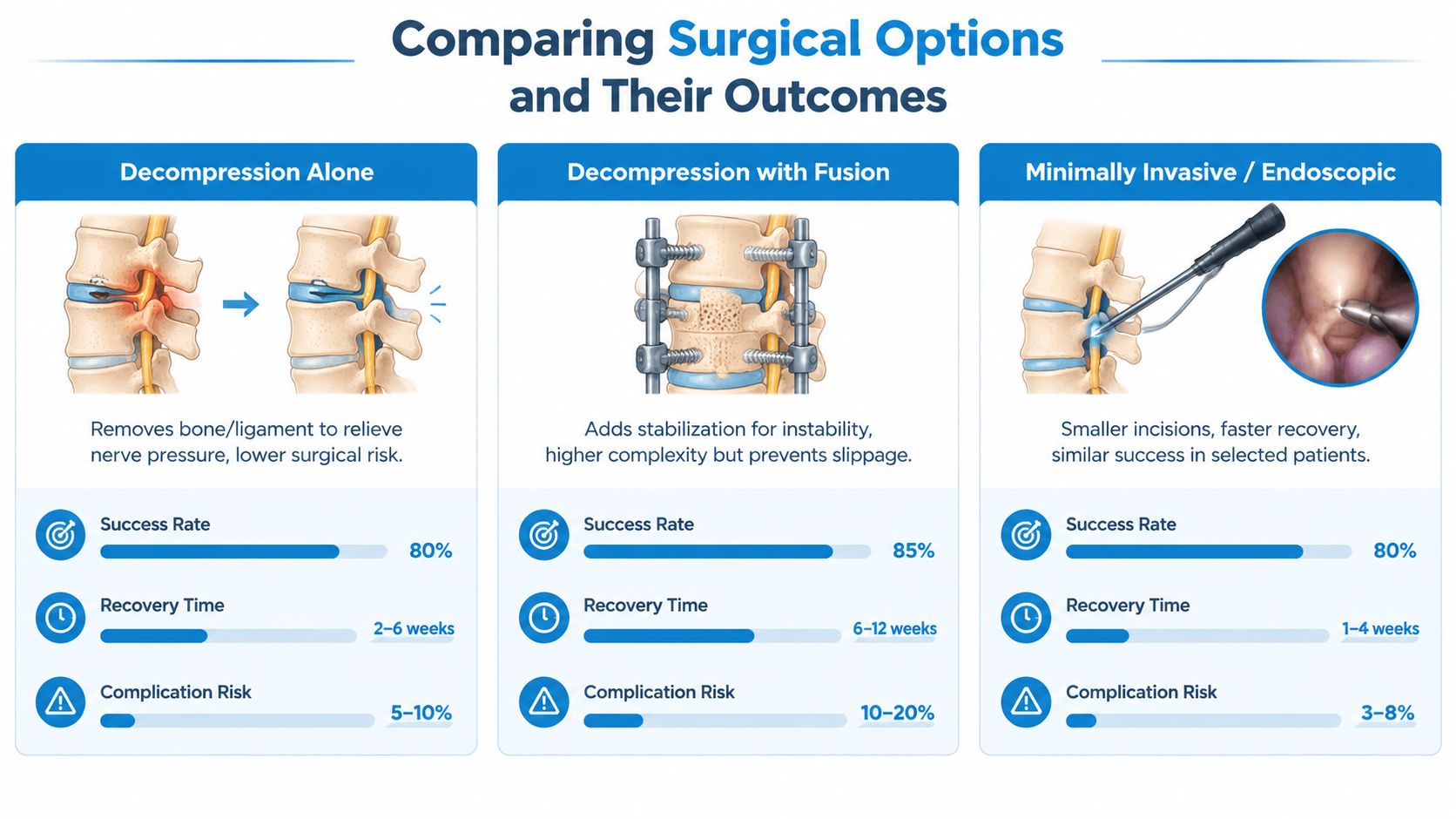
The first decision is whether the spine needs pressure relief alone or pressure relief with stabilization. Decompression removes bone or other structures crowding the nerves. Fusion adds stabilization when abnormal motion, deformity, or vertebral slippage creates a separate mechanical problem.
For a stable spine in which leg symptoms mainly reflect nerve compression, decompression may address the primary cause. A laminectomy is one example. Laminectomy treatment information explains the procedure and its usual role.
Decompression, fusion, and newer techniques
A systematic review found no clear advantage of decompression plus fusion over decompression alone for pain, disability, or walking ability. The same systematic review of lumbar stenosis procedures also describes the limited evidence for minimally invasive and endoscopic approaches. This does not make fusion inappropriate. It means added hardware and bone healing should have a specific purpose, rather than being assumed to improve every result.
Fusion may be reasonable when instability, deformity, or slippage changes the mechanical problem. Its greater complexity also brings a recovery that includes bone healing. The expected benefit must therefore justify that added burden.
Minimally invasive and endoscopic procedures use smaller access routes in selected patients. Early evidence suggests possible functional benefits and fewer adverse events, while uncertainty remains about durability beyond 6 months. Interspinous spacer devices require separate discussion because published comparisons found higher reoperation rates than bony decompression, 28% versus 7%.
The appropriate operation depends on the outcome being prioritized. Someone seeking improved walking may receive a different recommendation from someone whose main concern is instability. Both choices can be reasonable when matched to the underlying problem.
How Patient Factors Shift Your Individual Odds
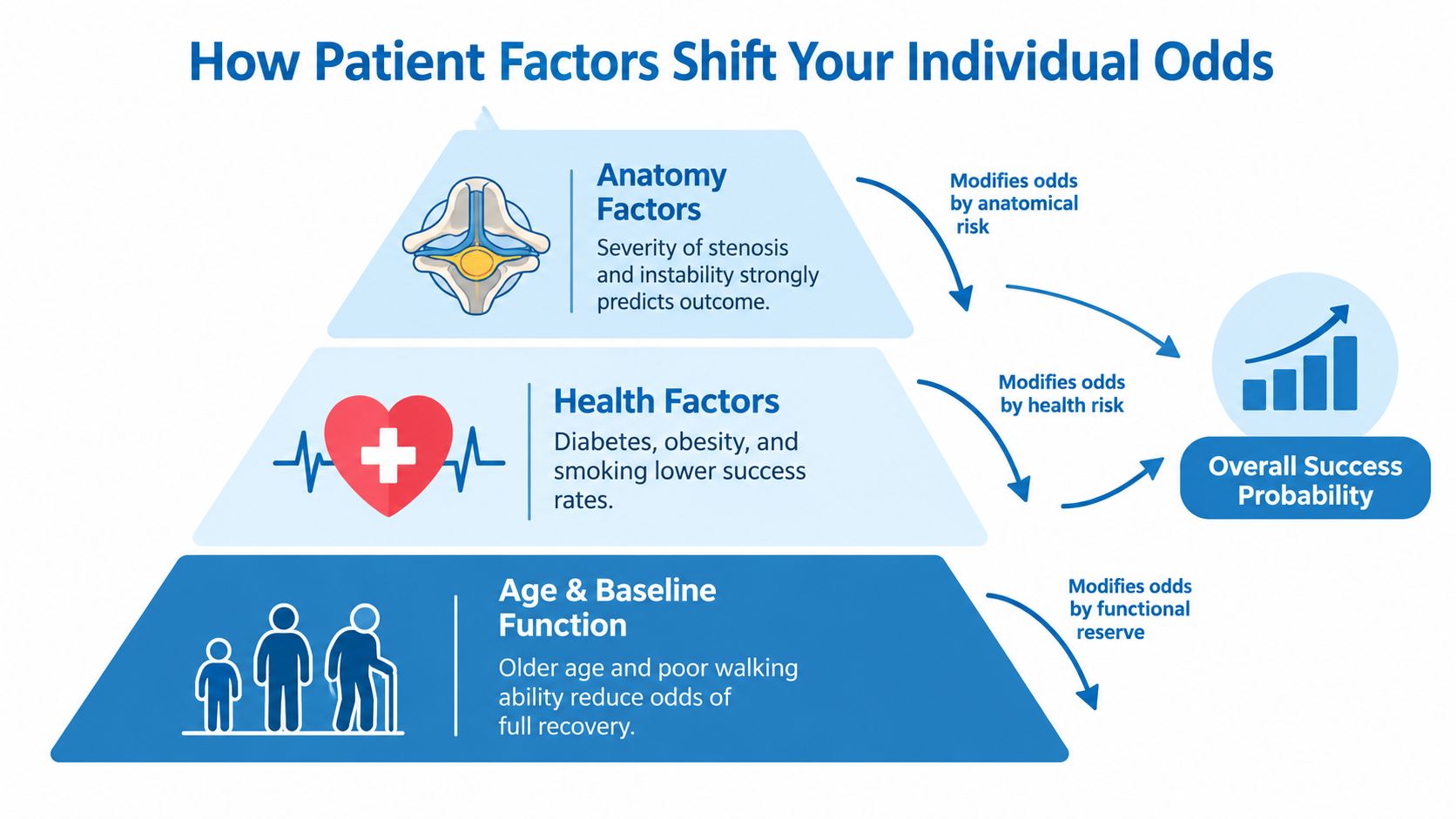
Population averages describe groups, not individuals. Two patients can have similar MRI reports and very different expected outcomes because one has a stable spine and good medical reserve while the other has advanced disc degeneration or significant cardiovascular disease.
A multicenter endoscopic decompression study identified two particularly important risk markers. An intradiscal vacuum phenomenon increased the odds of a poor clinical outcome more than eightfold, with an odds ratio of 8.26 and a 95% confidence interval of 2.32 to 29.34. Ischemic cardiovascular comorbidity raised the odds more than thirteenfold, with an odds ratio of 13.3 and a 95% confidence interval of 1.9 to 92.57 (multicenter endoscopic decompression study).
Anatomy comes first
A vacuum phenomenon can indicate advanced disc degeneration and may signal that decompression alone won't address every source of mechanical pain. Imaging must therefore be interpreted alongside standing alignment, motion, neurological findings, and the pattern of symptoms. An MRI finding by itself doesn't determine whether surgery will succeed.
Medical health changes the risk calculation
Cardiovascular disease can increase perioperative risk and may also correlate with reduced resilience during recovery. The surgical team may need to review medications, cardiac status, walking capacity, nutrition, and other conditions before recommending an operation.
Age requires the same balanced interpretation. A systematic review found that patients aged 80 years or older achieved similar improvement in pain and disability compared with younger patients, but they also experienced significantly higher overall complications, mortality, readmission, and longer hospital stays (systematic review of lumbar surgery in older adults).
Age alone doesn't answer whether surgery is worthwhile. Functional goals, frailty, medical reserve, and the burden of untreated symptoms matter just as much.
An older adult may gain meaningful walking ability while facing a more demanding hospital course. That is why a personalized consultation should discuss both expected functional improvement and acceptable risk, rather than labeling surgery as either safe or unsafe based only on age.
Recovery Timeline and What Can Go Wrong
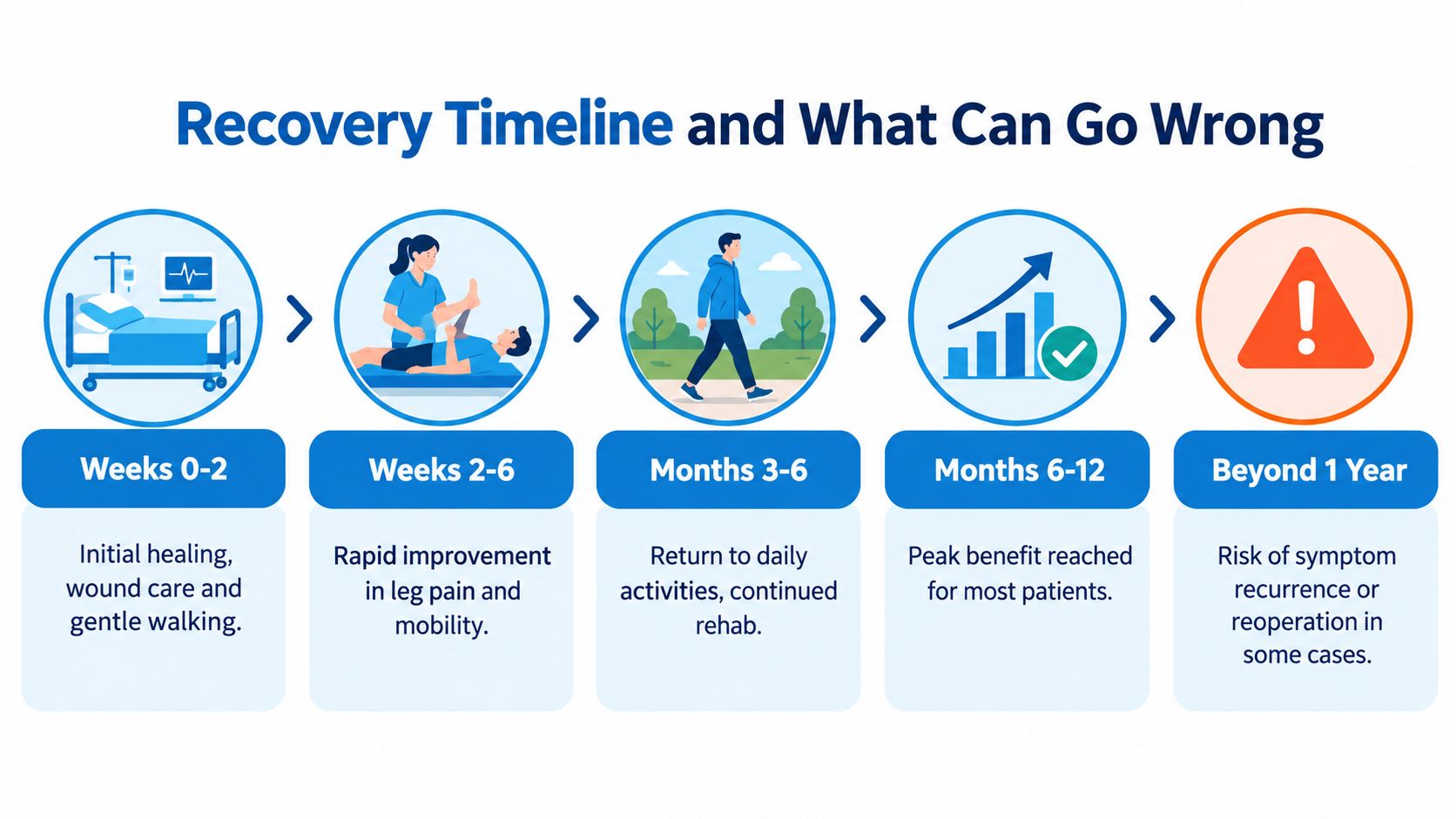
How should you interpret improvement after spinal stenosis surgery? Recovery is better understood as a sequence than as a single success event. Leg pain may ease soon after decompression, while fatigue, incision soreness, or fluctuating numbness continues as irritated nerves recover. Early relief is encouraging, but it measures short-term response, not permanent durability or future reoperation risk.
Early healing and later durability
During the first weeks, protect the incision, keep moving gently, and increase activity gradually. Physical therapy can help rebuild strength and walking tolerance after the immediate postoperative period. The pace depends on the operation, starting function, age, and other medical conditions.
At 12 months, an observational register study reported a 22% worsening rate among patients classified as treatment failures. As noted earlier, that finding illustrates why a headline success rate can mislead. A patient may improve quickly yet later develop recurrent symptoms, renewed narrowing, or another problem requiring assessment.
Possible complications include infection, dural tears, persistent nerve symptoms, recurrent stenosis, and degeneration at nearby spinal levels. Their importance varies with the procedure and the patient's anatomy. Ask the surgeon which risks apply to the proposed operation and how they would affect recovery, long-term relief, or the possibility of another surgery.
When a postoperative call is appropriate
Contact the surgical team urgently for new or worsening weakness, increasing numbness, loss of bladder or bowel control, fever, wound drainage, or rapidly escalating pain. Chest pain or shortness of breath requires emergency evaluation. Older adults may also have a heavier recovery burden, including longer hospital stays and higher readmission risk, as noted in the age-focused review cited earlier.
Persistent symptoms do not automatically prove that surgery failed. They still warrant structured reassessment, which may include reviewing the original diagnosis, examining the nerves, and checking for recurrent or adjacent-level disease. The pain after back surgery information provides context for why ongoing pain should be evaluated rather than judged from one number alone.
When Surgery Is the Right Choice and When It Is Not
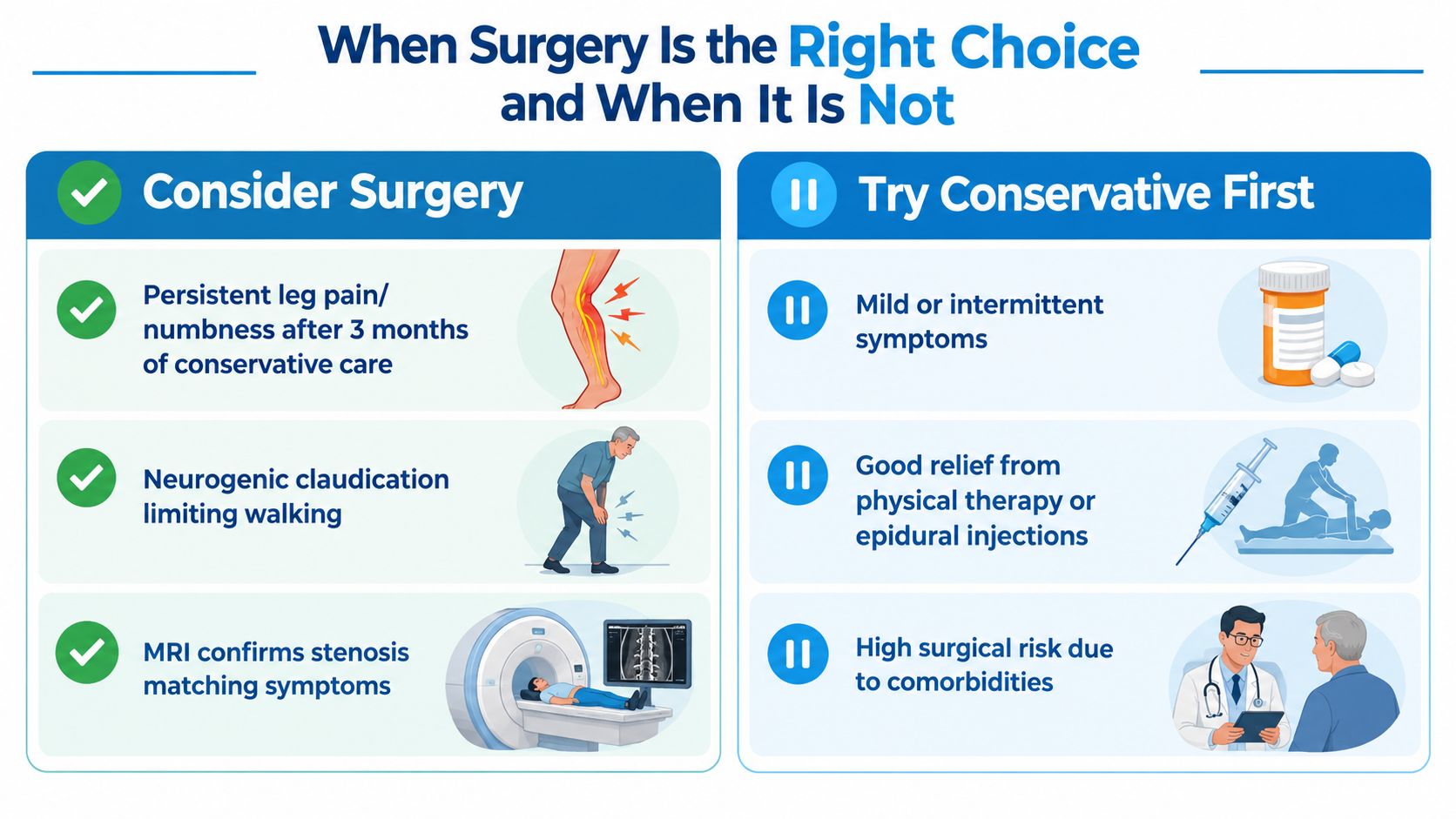
Surgery becomes more persuasive when symptoms, examination findings, and imaging identify the same problem. Persistent leg pain or numbness, neurogenic claudication that restricts walking, or progressive neurological deficits can shift the balance toward decompression, especially when non-surgical care hasn't provided adequate relief.
Conservative treatment may include physical therapy, activity modification, medication management, and targeted procedures. An epidural steroid injection may help reduce nerve-related inflammation for selected patients, while a diagnostic nerve block can help clarify the pain source.
A structured decision threshold
Surgery is more likely to be reasonable when:
- Symptoms persist: Leg pain, numbness, or walking limitation continues despite an appropriate trial of non-surgical care.
- Function is restricted: The patient can't perform essential daily activities or walk a meaningful distance without stopping.
- Findings match: Imaging shows stenosis at the level that corresponds with the neurological pattern.
- Neurology changes: Progressive weakness or other objective deficits increase the urgency of specialist assessment.
Conservative care remains reasonable when symptoms are mild, intermittent, or improving. It also makes sense when physical therapy or an injection provides useful relief, or when medical conditions make operative risk disproportionate to the expected benefit.
The decision isn't surgery versus no treatment. For persistent pain after surgery, neuromodulation such as spinal cord stimulation may be considered in appropriate cases. Interventional Pain Management is one multidisciplinary practice that evaluates interventional pain procedures, rehabilitation needs, and surgical options within the same broader care pathway.
Questions to Ask Your Spine Surgeon Before Deciding
A consultation should produce more than a procedure name. It should clarify the problem being treated, the outcome being pursued, the expected durability, and the plan if recovery doesn't follow expectations.
Questions about the target
- Which symptom is the operation expected to improve? Leg pain, walking tolerance, numbness, weakness, or back pain may respond differently.
- What finding confirms that the spinal stenosis is causing those symptoms? The answer should connect the examination, symptom pattern, and imaging.
- What would count as a successful result? The patient and surgeon should define a practical functional goal rather than relying on a broad label.
Questions about the operation
- Why is decompression alone being recommended, or why is fusion being added? The explanation should address stability, slippage, deformity, and the amount of bone removal required.
- What is known about this procedure's short-term relief and long-term durability? Ask for separate expectations rather than one combined success rate.
- How does the surgeon's recommendation change if the priority is walking, pain relief, or avoiding reoperation?
Questions about personal risk
- How do age, frailty, cardiovascular disease, bone health, and other medical conditions affect the plan?
- Which complications are most relevant in this specific case?
- What recovery support will be needed at home, in physical therapy, or during follow-up?
Questions about the next decision
- What happens if symptoms persist or return? The plan might include repeat imaging, rehabilitation, injections, medication review, or another procedure.
- Is a second surgical opinion appropriate?
- Which non-surgical options remain reasonable before proceeding?
A patient who brings these questions is better positioned to interpret a personalized spinal stenosis surgery success rate. The most useful estimate isn't the largest number found online. It's the one tied to the patient's anatomy, goals, health, procedure, and expected time horizon.
Interventional Pain Management offers diagnostic evaluation, image-guided injections, rehabilitation coordination, and spine surgical assessment for patients weighing treatment for lumbar spinal stenosis. Visit Interventional Pain Management to request an evaluation and discuss whether conservative care, an intervention, or surgery fits the individual clinical picture.