
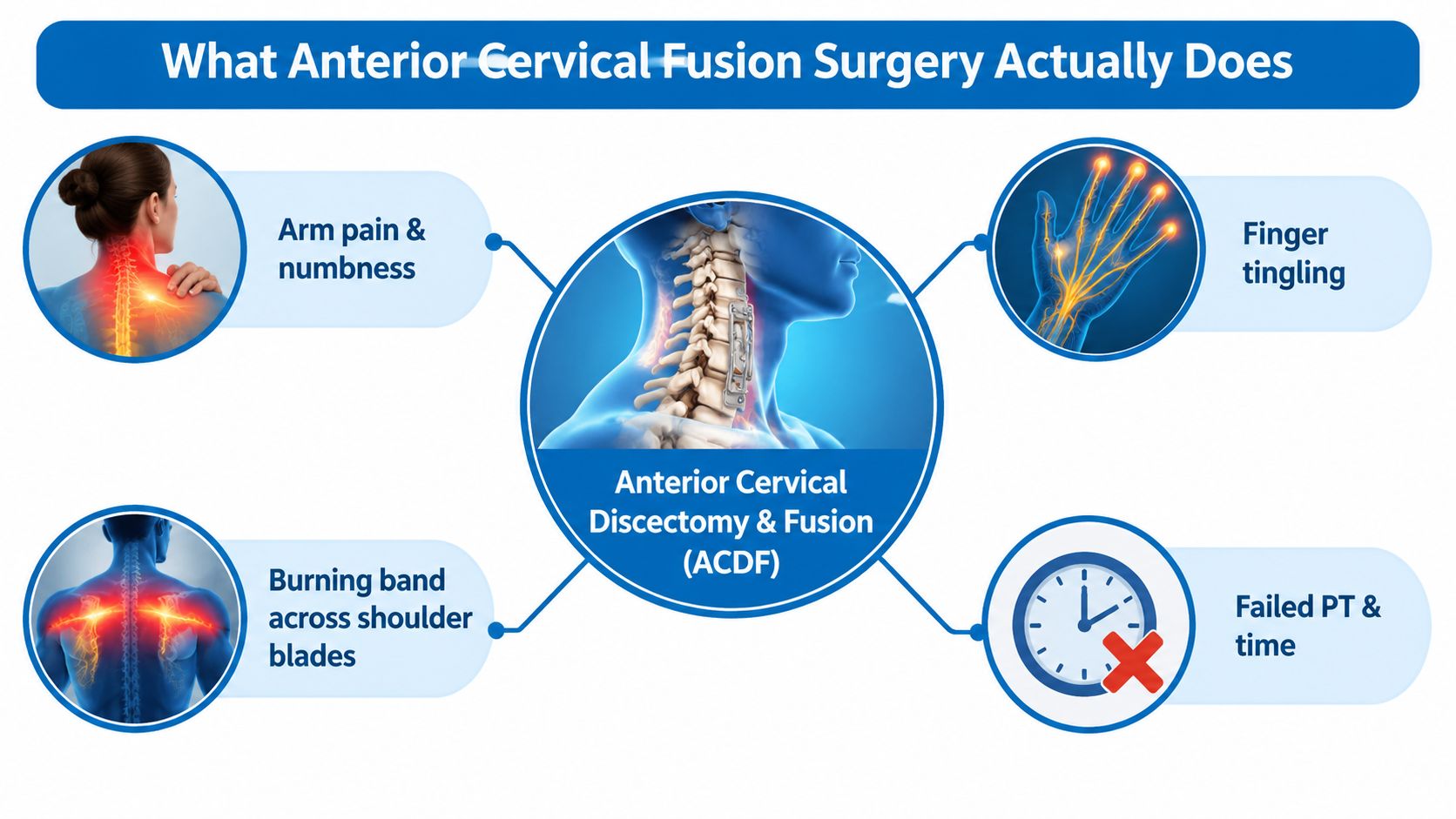
A patient in New Jersey or Staten Island may arrive at a consultation after weeks of waking with arm pain, numb fingers, or a burning band across the shoulder blades. Physical therapy, medication, activity changes, and time may have helped only temporarily. The difficult question then becomes whether anterior cervical fusion surgery is necessary, how many levels should be treated, and how the operation could affect work, driving, and future neck health.
Anterior cervical discectomy and fusion, commonly called ACDF, isn't a procedure that removes pressure from a nerve. It also changes how the neck carries motion and load. Understanding that trade-off helps patients ask better questions about imaging, implants, recovery, adjacent-segment disease, and the surgical team.
Table of Contents
- What Anterior Cervical Fusion Surgery Actually Does
- Who Needs This Surgery and How the Decision Gets Made
- Inside the Operating Room
- Real Risks and How Often They Actually Happen
- Recovery Week by Week and When Normal Life Returns
- Alternatives Worth Comparing Before You Commit
- Choosing the Right Surgeon and Center in New Jersey or Staten Island
- Putting It All Together and Your Next Step
What Anterior Cervical Fusion Surgery Actually Does
The cervical spine is a stack of small, cushioned blocks. The blocks are the vertebrae, and the cushions between them are discs. The spinal cord and nerve roots travel behind this stack, so a worn disc, herniated disc, or bone spur can press on those delicate structures.
Anterior cervical fusion surgery reaches the spine from the front of the neck. During an ACDF, the surgeon removes the damaged disc and clears away material pressing on the spinal cord or nerve root. The open disc space is then filled with a bone graft or cage, allowing the neighboring vertebrae to heal into one stable unit.
Two jobs in one operation
ACDF performs two related jobs:
- Decompression: The surgeon removes the disc, bone spurs, and other compressive material so the nerve root or spinal cord has more room.
- Stabilization: The surgeon replaces the disc space with a spacer or graft and holds the vertebrae still while they heal.
The first job addresses the source of arm pain, tingling, numbness, or weakness. The second stops painful movement at a damaged level. That can be useful when the disc has collapsed, the joints have become arthritic, or the vertebrae have become unstable.
A useful analogy is a damaged hinge in a door. Removing the obstruction may let the door swing freely again, but if the hinge itself is painful and worn, stabilizing it can prevent the same motion from continuing to irritate nearby structures.
Why the number of levels matters
A one-level fusion removes motion from one disc space. A two- or three-level fusion removes motion from a longer section of the neck and requires a larger reconstruction. The operation may relieve compression across all diseased levels, but it also creates a larger change in the neck's load distribution.
A systematic review of anterior cervical fusion approaches pooled 2,682 patients and reported an overall fusion rate of 89.5%. Fusion rates were 92.1% for single-level ACDF, 79.9% for two-level ACDF, and 65.0% for three-level ACDF, showing why surgeons pay close attention to fixation and graft strategy as the construct becomes longer.
Practical rule: The smallest construct that fully treats the responsible compression is often the most important mechanical decision in the operation.
Who Needs This Surgery and How the Decision Gets Made
A recommendation for ACDF should follow a chain of reasoning, not appear as a leap from an abnormal MRI to an operating room. The chain usually begins with symptoms that match a nerve or spinal cord problem.
Arm pain traveling below the shoulder, finger tingling, numbness, loss of hand coordination, gait imbalance, or progressive weakness can point toward cervical nerve-root or spinal-cord compression. Neck pain alone doesn't automatically mean that fusion is appropriate. The examination must connect the reported symptoms with objective findings and imaging.
From symptoms to imaging
An MRI usually provides the clearest view of discs, nerve roots, the spinal cord, and narrowing around them. Plain X-rays can show alignment, disc-space collapse, bone spurs, and overall posture. Flexion-extension X-rays may add information when instability is suspected, while CT can define complex bone anatomy before surgery.
The surgical question changes according to what the images show:
- A single-level soft disc herniation may require a focused decompression and reconstruction.
- Multilevel spondylotic stenosis may need a longer construct if several levels compress the cord or roots.
- Deformity or kyphosis can affect whether an anterior approach, posterior approach, or combined strategy is safer.
- Myelopathy, meaning spinal-cord dysfunction, deserves particular attention because clumsy hands, balance changes, and weakness can progress even when pain isn't severe.
A reasonable course of nonsurgical care may include therapy, medication, activity modification, or an image-guided injection. The appropriate duration depends on the neurological examination, severity, and progression. Progressive weakness or clear spinal-cord findings may change the urgency and make prolonged observation inappropriate.
How personal factors change the recommendation
Age, smoking status, bone quality, diabetes, general health, and job demands all matter. A person who drives for work or lifts equipment needs a different recovery plan from a desk worker who can work remotely. Smoking and poor bone quality can also make fusion planning more demanding.
| Indication | Typical Symptoms | Key Imaging Finding |
|---|---|---|
| Cervical radiculopathy | Arm pain, numbness, finger tingling, weakness | Disc herniation or foraminal narrowing |
| Cervical myelopathy | Clumsy hands, balance difficulty, gait changes | Spinal-cord compression or canal stenosis |
| Disc collapse with neck pain | Mechanical neck pain and reduced motion | Disc-space loss and degenerative change |
| Multilevel degeneration | Arm or neck symptoms across several patterns | Narrowing at multiple cervical levels |
| Instability or deformity | Pain with movement, posture changes, neurological symptoms | Abnormal motion or altered alignment |
Patients can review the condition behind many of these findings through this guide to degenerative disc disease. The key is not whether an MRI looks abnormal. Many adults have degenerative findings without symptoms. The key is whether the imaging explains the symptoms and examination.
Inside the Operating Room
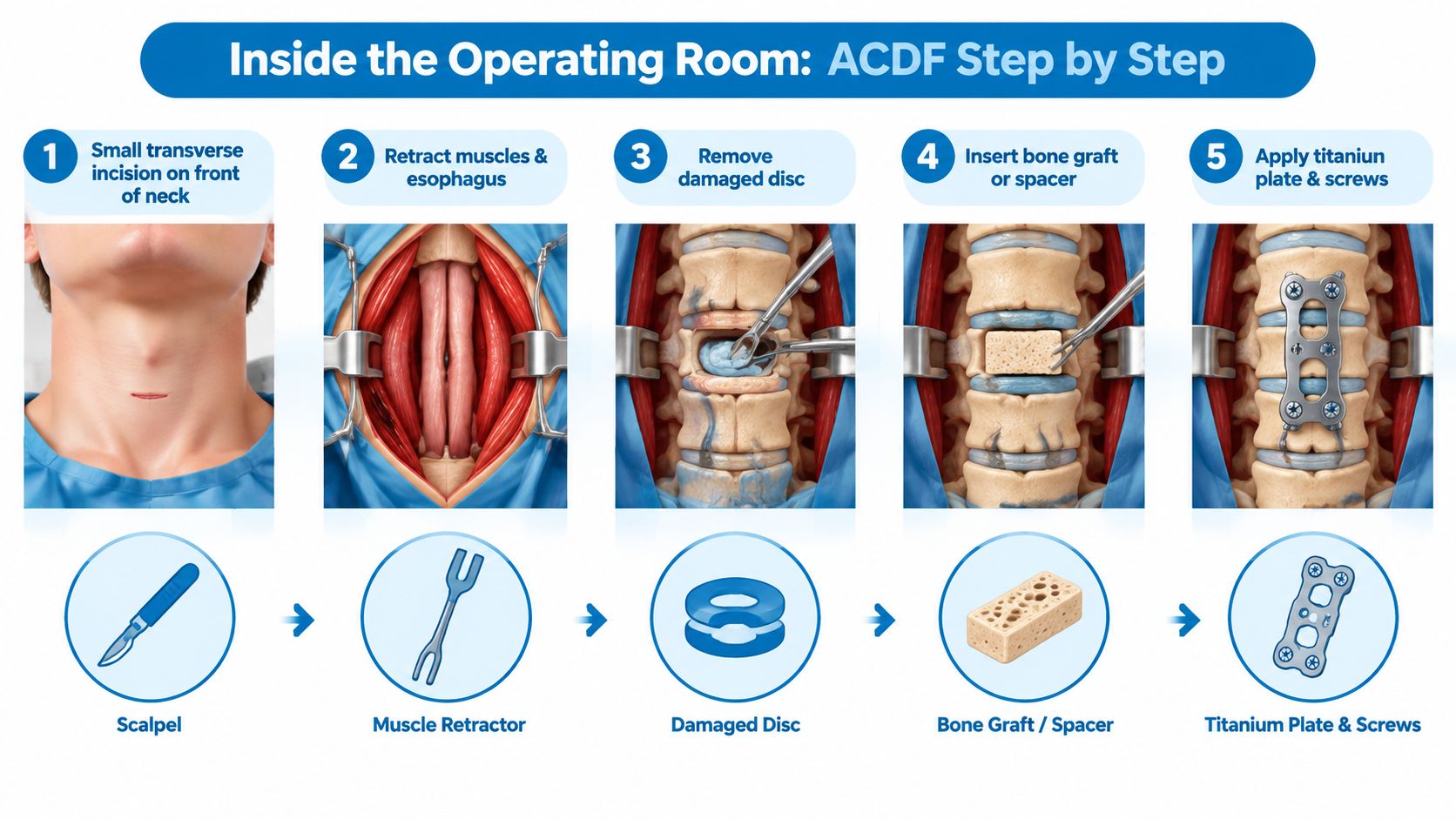
The operating room process is carefully staged, and the patient is asleep under general anesthesia. The surgeon positions the neck to provide a safe path to the front of the cervical spine, then makes a small transverse incision in a natural skin crease.
The tissues in front of the spine include muscles, the airway, and the esophagus. The surgeon gently moves these structures aside rather than cutting through the spinal cord or entering the back of the neck. A left-sided approach is often selected because of the anatomy of the recurrent laryngeal nerve, although the approach depends on the patient's anatomy and the surgeon's judgment.
Removing the pressure
After the surgeon confirms the correct level with imaging, the damaged disc is removed. The surgeon also removes osteophytes, commonly called bone spurs, that narrow the nerve passage or spinal canal. The decompression may extend down to the posterior longitudinal ligament, a strong structure along the back of the vertebral bodies.
The goal isn't to remove bone indiscriminately. It is to create adequate room for the nerve roots and spinal cord while preserving the stability needed for reconstruction.
Rebuilding the disc space
Once the disc space is prepared, the surgeon inserts an interbody graft or cage. The implant restores disc height, helps open the nerve passage, and bears load while bone grows across the space. Materials can include the patient's own bone, donor bone, or synthetic materials. Patients can review the role of bone grafting in fusion surgery when discussing the planned construct.
A plate and screws may be placed across the front of the vertebrae. Another option is a zero-profile device that sits more within the disc space and has less prominence in front of the spine. Implant profile can influence soft-tissue irritation and swallowing comfort, while the choice also depends on alignment, stability, bone quality, and the number of levels.
Final checks
The team may use intraoperative neuromonitoring to track selected nerve and spinal-cord signals during the operation. After the surgeon confirms implant position and alignment with imaging, the incision is closed.
For a one- or two-level case, operative time is often described as roughly one to two hours, although anesthesia, positioning, imaging, and recovery-room time add to the patient's total time at the facility. The exact duration depends on the number of levels, anatomy, prior surgery, and the technique selected.
Real Risks and How Often They Actually Happen
Every consent discussion should connect a complication to a decision. ACDF risks don't exist in isolation. The number of levels, implant profile, bone health, smoking status, and alignment all influence the balance between adequate decompression and mechanical stress.
Swallowing difficulty is the most commonly discussed early concern. A meta-analysis reported an overall dysphagia rate of 7.6%, with a 95% confidence interval of 1.4% to 13.8%, while a national cohort identified postoperative dysphagia in 3.3% of 1,212,475 ACDF cases in the cited analysis (review of dysphagia after ACDF). Symptoms may reflect temporary irritation from retraction and swelling, but persistent or worsening swallowing difficulty needs medical review.
The same review found dysphagia in 6.6% of multiple-level cases versus 4.0% of single-level cases, with an odds ratio of 1.42 and a 95% confidence interval of 1.05 to 1.91. That finding gives patients a concrete reason to ask whether every proposed level is necessary and whether a lower-profile implant is appropriate.
The main consent decisions
| Complication | Typical Rate | Patient Decision It Connects To |
|---|---|---|
| Postoperative dysphagia | 7.6% overall in a meta-analysis | Number of levels and implant profile |
| Postoperative dysphagia in a national cohort | 3.3% | Construct and soft-tissue handling |
| Dysphagia after multiple-level surgery | 6.6% | Whether more than one level needs treatment |
| Dysphagia after single-level surgery | 4.0% | Whether a focused operation is feasible |
| Fusion failure, or pseudarthrosis | Varies by construct and patient factors | Smoking, bone quality, and levels fused |
| Adjacent-segment pathology | Roughly 25% within 10 years in high-quality reviews | Alignment and how much motion is removed |
Hoarseness can occur when the recurrent laryngeal nerve becomes irritated. A neck hematoma can threaten the airway and may require urgent treatment. Infection, hardware problems, nerve injury, spinal-cord injury, and vertebral artery injury are less common but serious risks that belong in the consent conversation.
Adjacent segments are a load question
Fusion stops motion at the treated level, so the segments above and below may experience greater flexibility and stress. A finite-element study found that both zero-profile and standard plate constructs increased adjacent-segment flexibility and raised disc, endplate, and facet stresses compared with a normal cervical spine (biomechanical study of adjacent-segment loading).
Reviews describe adjacent-segment pathology as roughly 25% within 10 years, with clinically relevant disease estimated at about 1.6% to 3% per year (review of adjacent-segment pathology after cervical fusion). This isn't proof that fusion alone causes every later problem. The original degeneration, the number of fused levels, and postoperative kyphosis can all contribute.
Recovery Week by Week and When Normal Life Returns
Recovery after ACDF has two timelines. Symptoms from nerve compression may improve early, but the bone still needs time to grow across the treated disc space. A patient can feel better before the fusion is mature, so comfort alone doesn't authorize heavy lifting, forceful neck movement, or contact sports.
The early phase
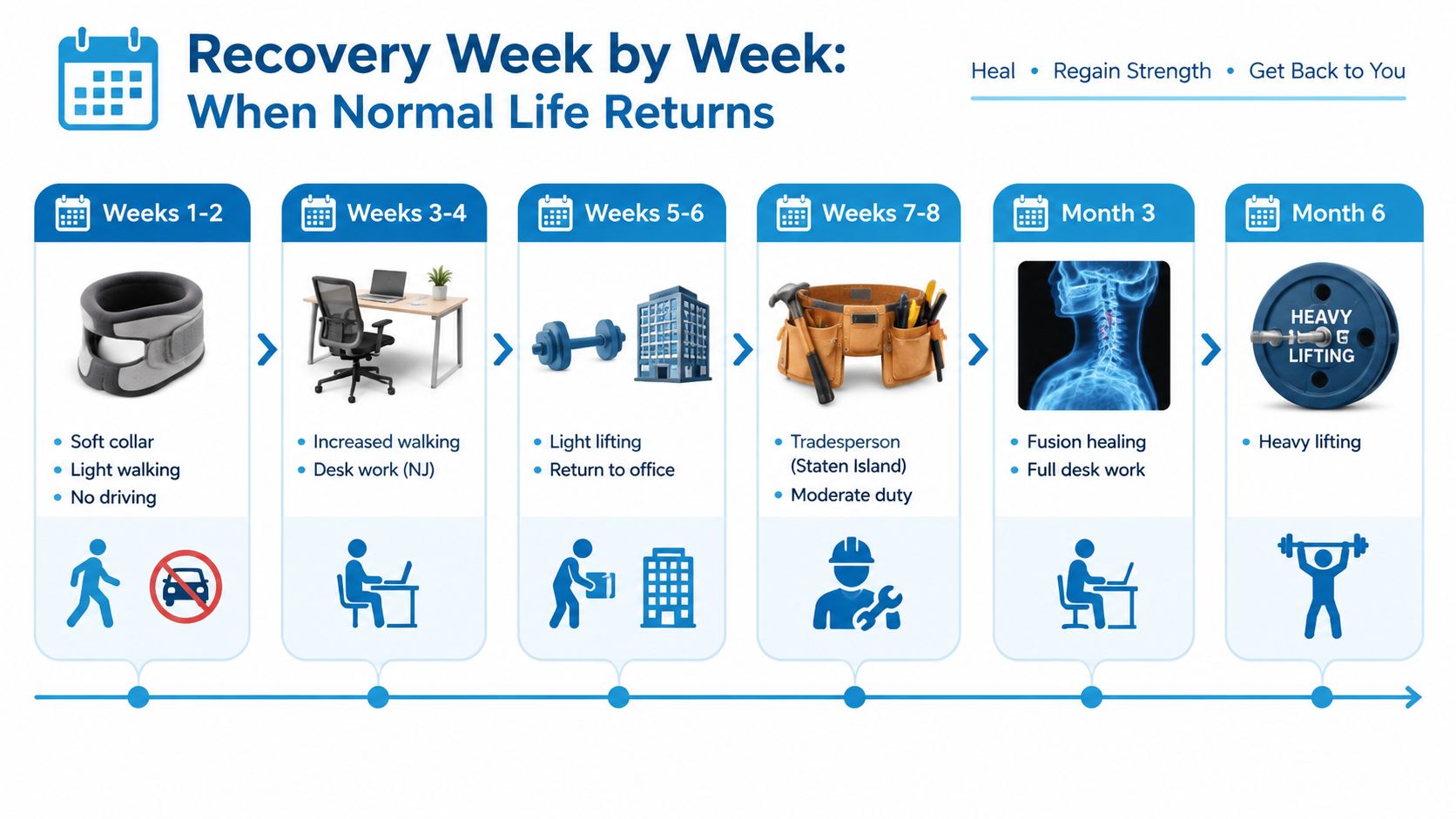
During the first one to two weeks, patients generally focus on short walks, wound care, sleep positioning, and swallowing comfort. A soft collar may be prescribed, or the surgeon may recommend no collar. Driving should wait until the patient can turn comfortably, react safely, and is no longer taking sedating pain medication.
A multidisciplinary survey-based guideline found consensus for light duty and driving within one to two weeks after one-level ACDF (ACDF return-to-work and activity guideline). That doesn't mean every patient receives the same clearance. Persistent weakness, severe pain, medication effects, or a job requiring frequent head turning can extend the restriction.
By weeks three to six, many patients are reducing opioid medication if it was prescribed and increasing walking. Desk work may resume when concentration, sitting tolerance, and transportation are safe. Light duty is different from unrestricted work, particularly for a Staten Island tradesperson who climbs, carries tools, or works around vibration.
The longer recovery
From weeks six to twelve, the surgeon may add progressive strengthening and gradually approve heavier tasks, depending on examination and X-rays. Some patients notice continuing nerve recovery beyond this period, especially when a nerve was compressed for a long time.
Published guidance recommends about six weeks off work for two- or three-level ACDF and about three months for three-or-more-level ACDF (ACDF return-to-work and activity guideline). The wording reflects planning guidance, not a guarantee. Number of levels, bone quality, smoking status, and job demands can all shift the timeline.
Call the surgical team promptly for increasing weakness, difficulty breathing, rapidly worsening swallowing, fever with wound drainage, new severe neck swelling, or loss of bladder or bowel control.
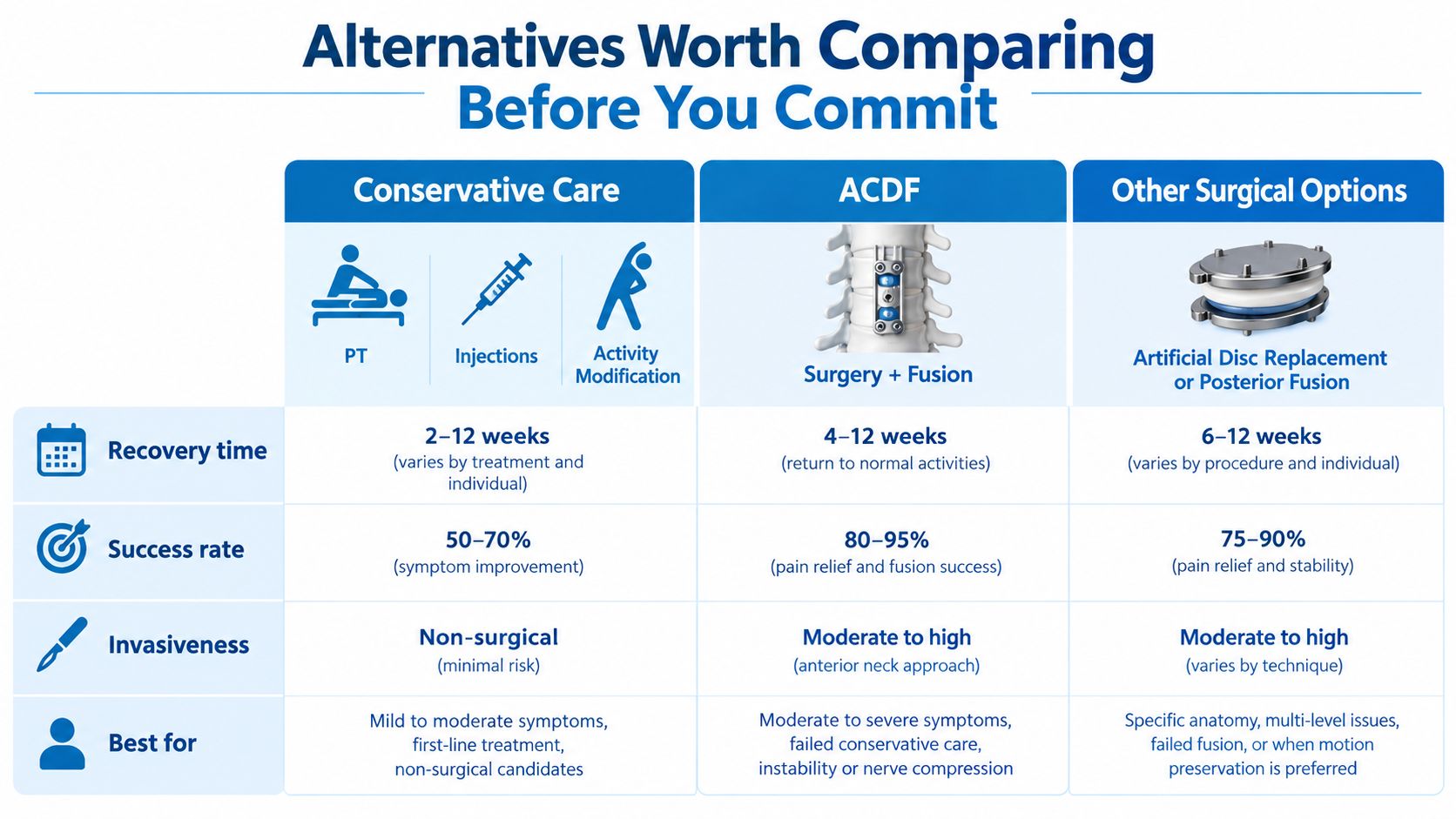
Alternatives Worth Comparing Before You Commit
ACDF is one branch in a treatment decision, not an automatic endpoint. The right alternative depends on where the compression sits, how many levels are involved, whether the neck is stable, and whether the primary problem is nerve pain, spinal-cord dysfunction, mechanical neck pain, or a combination.
Conservative care
Physical therapy, activity modification, medication, and targeted injections may be appropriate when symptoms are stable and there is no progressive neurological deficit. Therapy can address posture, muscle control, and tolerance for daily activity. An injection may help clarify whether a particular nerve root is generating the arm symptoms, although temporary relief doesn't necessarily correct structural compression.
A reasonable nonsurgical trial should have a defined purpose. The clinician should identify which symptoms are expected to improve, what activity is safe, and which neurological changes require earlier reassessment.
Artificial disc replacement
Cervical artificial disc replacement aims to decompress the nerve while preserving motion at the treated level. It may suit a carefully selected patient with generally single-level disease, limited facet-joint arthritis, adequate stability, and anatomy that can accept the device. Age can influence candidacy, but imaging and joint condition matter more than age alone.
Patients comparing options can review the discussion of artificial disc replacement surgery. Motion preservation doesn't mean the operation eliminates all future neck degeneration. It means the reconstruction is designed to retain movement at the treated level when the anatomy supports that goal.
Posterior procedures
Posterior cervical foraminotomy can address a nerve compressed from the back or side, particularly when the disc space remains suitable and the neck doesn't require correction. Laminoplasty or laminectomy with fusion may be considered when compression sits behind the spinal cord or involves multiple levels.
The decision frame is straightforward:
- Conservative care fits stable symptoms that may respond without reconstruction.
- ACDF fits anterior compression when predictable decompression and fusion are needed.
- Artificial disc replacement fits selected anatomy where motion preservation is a realistic objective.
- Posterior surgery fits compression patterns that are better reached from behind or extend across multiple levels.
Choosing the Right Surgeon and Center in New Jersey or Staten Island
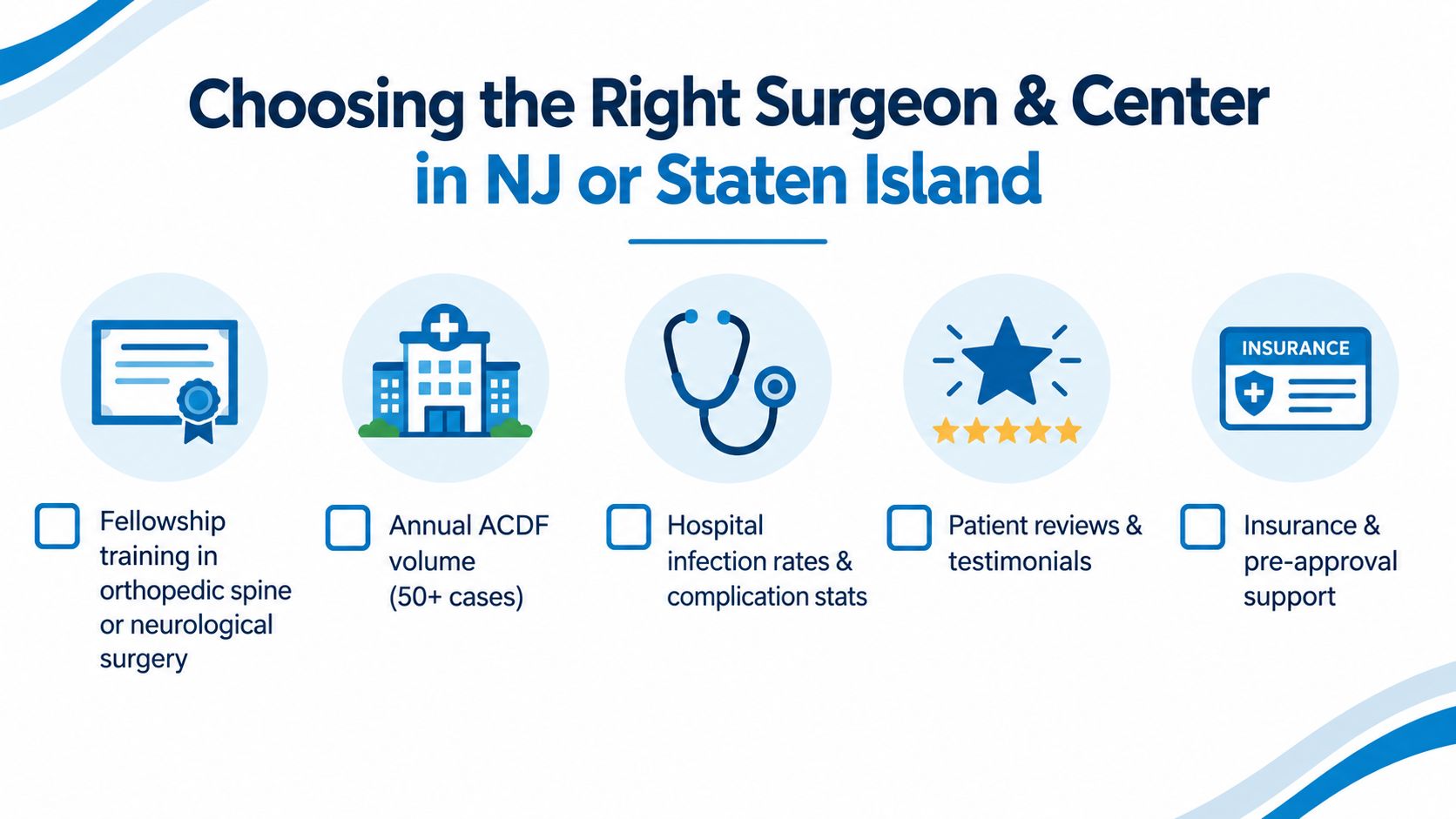
Surgeon selection should be a verification exercise rather than a response to polished marketing. A consultation should leave the patient understanding the diagnosis, the number of levels proposed, the reason for the approach, the alternatives, and the consequences of choosing less or more surgery.
A practical verification checklist
- Training: Confirm fellowship training in orthopedic spine surgery or neurological spine surgery.
- Relevant volume: Ask how often the individual surgeon performs ACDF and how the hospital tracks cervical fusion outcomes.
- Backup coverage: Determine whether the center has appropriate anesthesia, critical-care, vascular, and ear, nose, and throat support when needed.
- Audited outcomes: Ask about readmission, infection, revision, and unplanned-return rates rather than relying only on general hospital rankings.
- Consent quality: The surgeon should explain graft choice, plate versus zero-profile hardware, alignment goals, and why each level belongs in the construct.
Patients in New Jersey and Staten Island can also check state medical board profiles for licensing status, disciplinary actions, and malpractice information. Those records are only one part of due diligence, but they provide verifiable information that patient testimonials can't replace.
The center's staffing matters if same-day or next-day discharge is being considered. The patient should ask how swallowing problems, airway concerns, neurological changes, and pain-control issues are monitored after surgery. Intraoperative neuromonitoring may also be relevant, depending on the case and the surgeon's protocol.
A second opinion is especially useful when more than two levels are proposed, when deformity is present, or when artificial disc replacement or posterior surgery might be reasonable. Two fellowship-trained surgeons may interpret the same MRI differently because their experience and practice settings differ. That conversation can clarify the decision faster than ordering another scan without a new clinical question.
Putting It All Together and Your Next Step
Anterior cervical fusion surgery should be viewed as one option along a spectrum of care. Decompression can relieve pressure on a nerve or spinal cord, while fusion changes motion and redistributes load. That is why the number of levels, implant profile, alignment, and adjacent-segment health matter more than the size of the skin incision.
Patients in New Jersey and Staten Island can take three practical steps:
- Bring a symptom and activity diary to the next consultation, including sleep disruption, driving limits, hand weakness, walking changes, and work tasks.
- Request a second opinion from a fellowship-trained spine surgeon if more than two levels or an alternative procedure has been recommended.
- Verify insurance pre-authorization requirements and ask whether the selected center tracks cervical fusion outcomes.
The goal is restored function, not a perfect-looking scan. The strongest surgical plan is the one that matches the patient's symptoms, neurological findings, anatomy, health, and occupational demands.
Interventional Pain Management offers diagnostic evaluation, image-guided injections, nonoperative spine care, and surgical consultation for cervical nerve and spinal conditions. Patients can bring imaging and symptom records to a personalized discussion of whether conservative care, anterior cervical fusion surgery, or another option fits their needs by visiting Interventional Pain Management.