

Epidural steroid injections aren't pain-free, but the discomfort is usually brief and limited to the skin prick and pressure during needle placement, followed by mild soreness for a day or two. In a 2011 study, increased pain occurred in 1.1% of injections, while pain at the injection site occurred in 0.33% of injections. The study published in Pain Medicine provides useful context: measurable discomfort can happen, but severe pain isn't the usual experience.
People researching "are epidural steroid injections painful" are often trying to picture one specific moment. Is it the needle? The medicine? The pressure near an irritated nerve? Or the hours afterward, when the anesthetic wears off? A clear answer requires separating the procedure into phases instead of treating it as one large, frightening event.
Most patients encounter four sensations: a quick skin prick, pressure as the physician positions the needle, a brief feeling of warmth or pressure as medication enters, and tenderness afterward. Each phase has a different cause and a different way to manage it. Understanding those distinctions can make the appointment feel more predictable and give patients better questions to ask before treatment.
Table of Contents
- A Straight Answer to a Nervous Question
- What the Procedure Feels Like Step by Step
- How Numbing and Sedation Keep Discomfort in Check
- Factors That Change How Much It Hurts
- After the Injection What Soreness Is Normal
- Practical Ways to Prepare and Recover
- Why the Fear Usually Outlasts the Experience
- Common Questions Patients Ask Before Booking
A Straight Answer to a Nervous Question
An epidural steroid injection is generally considered minimally invasive, but minimally invasive doesn't mean sensation-free. The skin must be punctured, and a needle must be guided into the epidural space near the irritated spinal nerves. Local anesthetic usually limits the sharp part of that experience, while image guidance helps the physician place the needle accurately.
The first sensation is typically the numbing injection. It can feel like a brief pinch or sting. After that, the larger procedure needle usually creates more pressure than sharp pain because the skin and superficial tissues have been numbed. Authoritative clinical guidance describes epidural injections as procedures that may use topical local anesthesia or intravenous sedation, depending on the patient and clinical setting. The clinical reference from the National Center for Biotechnology Information explains how anesthesia and sedation can improve tolerance during needle placement.
The medication can produce a short-lived feeling of heaviness, warmth, tingling, or pressure. A patient may also notice a momentary sensation traveling into the buttock or leg if the needle or medication comes close to an irritated nerve. That sensation should be reported immediately, but it doesn't automatically mean something has gone wrong.
Afterward, the injection site may feel bruised or tender. Independent guidance describes mild soreness lasting a day or two, and broader evidence indicates that relief is most consistently seen in the short term, often within about three months and sometimes up to six months. The American Academy of Neurology's evidence summary places the temporary discomfort in the context of possible subsequent symptom relief for selected patients.
Practical rule: Patients shouldn't try to endure unexpected sharp, electric, or escalating pain silently. The physician can pause, adjust the needle, change the medication flow, or provide reassurance when the patient describes what's happening.
What the Procedure Feels Like Step by Step
Before the needle enters
If your back or leg already hurts, lying face down can be the most uncomfortable part at first. For a lower-back injection, you usually lie on your stomach while a cushion supports your hips or abdomen. The team cleans the skin, and the physician uses fluoroscopic imaging to identify the treatment area.
The cleansing solution may feel cool or wet. Small adjustments and pillows can help your muscles relax, giving the physician better access and reducing tension around the needle path.
The skin prick and needle advance
The first sharp feeling usually comes from the local anesthetic. It may sting briefly as it enters the skin and superficial tissue. After the area becomes numb, the procedure needle generally feels more like dull pressure, pushing, or mild stretching than ongoing sharp pain.
Fluoroscopy lets the physician monitor the needle's position during advancement. You may notice pressure in your back or a brief twinge in your hip or leg. Describe that sensation as it occurs. It helps the physician distinguish ordinary pressure from irritation near a sensitive nerve.
The medication entering the epidural space
As the steroid and anesthetic mixture enters the epidural space, you may feel warmth, heaviness, fullness, or pressure. Tingling or a temporary increase in your familiar radiating sensation can also occur. The injection is brief, and the procedure often ends sooner than anxious patients expect.
The sensation varies with the approach, spinal level, anatomy, and degree of nerve irritation. For background on how injection approaches differ, see this guide to types of injections used in pain management.
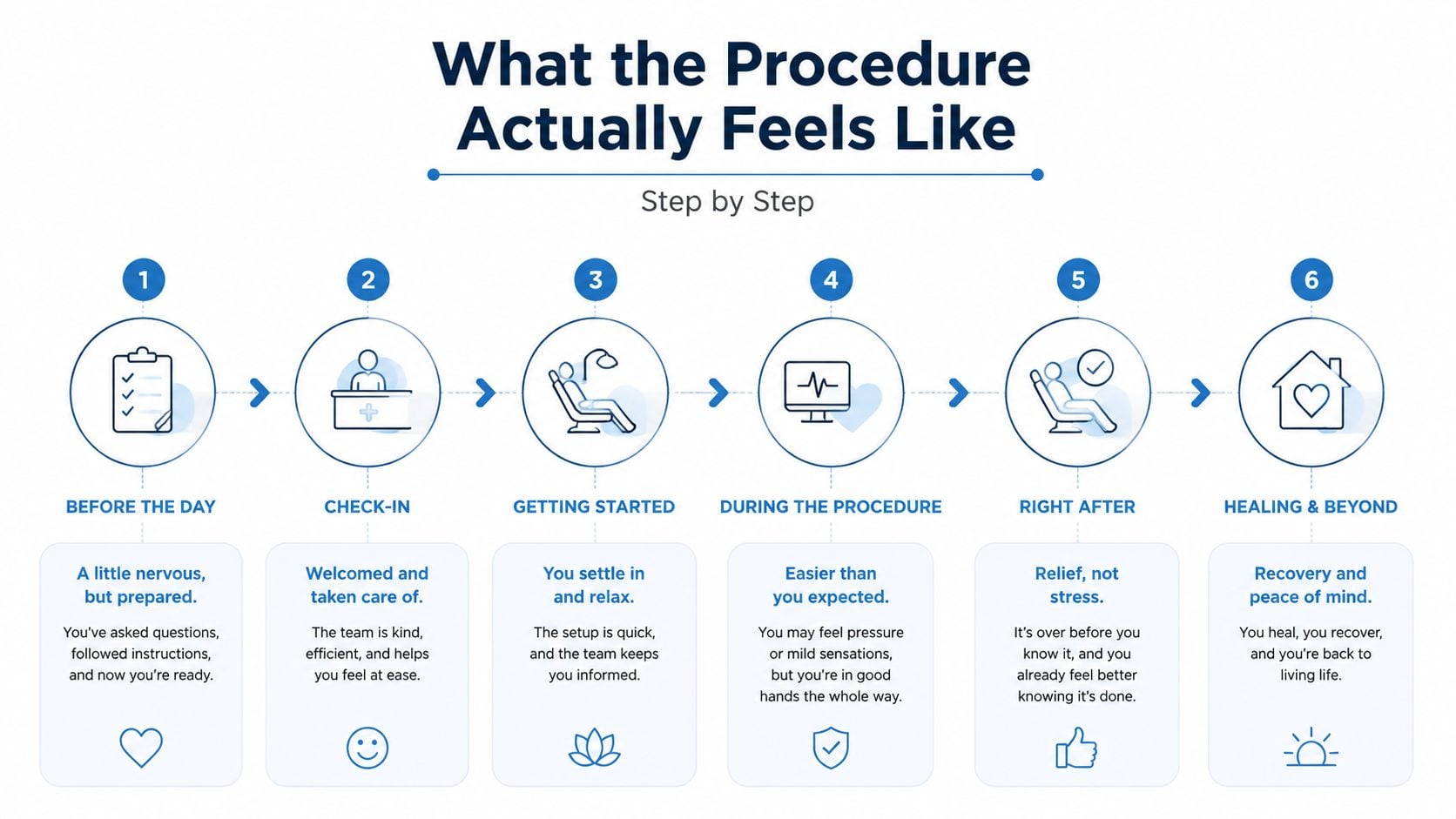
The simplest expectation is this: the sharp feeling is usually concentrated at the anesthetic injection. Needle advancement and medication delivery more often produce pressure, warmth, heaviness, or short-lived tingling. Ask the team to explain each step, breathe slowly as the needle advances, and speak up if you feel unexpected sharp, electric, or escalating pain. You should not try to endure it without speaking up.
How Numbing and Sedation Keep Discomfort in Check
Pain control begins before the epidural needle reaches its target. The clinician first uses a local anesthetic, commonly a numbing medicine such as lidocaine or bupivacaine, in the skin and tissues along the planned entry point. That injection can sting, but it reduces sensation during the deeper needle placement.
The patient may still feel movement and pressure after numbing. That distinction is intentional. Being able to sense pressure and communicate allows the patient to report an unusual twinge, while the anesthetic reduces the sharper pain associated with skin and superficial tissue penetration.
Some patients receive light intravenous sedation, particularly when anxiety, positioning, or prior procedural difficulty makes remaining fully alert challenging. Light sedation is designed to promote relaxation while preserving enough awareness for communication. Deeper anesthesia usually isn't necessary for this type of image-guided procedure, and the appropriate choice depends on health history, medications, airway considerations, and the physician's plan.
| Method | What It Does | Discomfort It Targets |
|---|---|---|
| Local anesthetic | Numbs the skin and superficial tissues | Sharp skin prick and needle entry |
| Light sedation | Reduces anxiety and helps the patient remain relaxed | Fear, muscle guarding, and difficulty staying still |
| Fluoroscopic guidance | Shows needle position in real time | Unnecessary repositioning and repeated needle passes |
| Calm communication | Gives the patient predictable information and a way to report sensations | Surprise, uncertainty, and escalating anxiety |
Real-time imaging is important for more than accuracy. It helps the physician plan the needle path and confirm placement instead of relying only on surface landmarks. A patient considering related procedures can also read about nerve blocks and their role in pain care, although the technique and expected sensations differ by treatment.
“Pressure is expected. Sharp or electric pain should be reported.”
That simple distinction helps the team respond quickly without making the patient guess whether a sensation is normal.
Factors That Change How Much It Hurts
No two injections feel exactly alike. The approach determines which tissues the needle crosses and where medication is delivered. A caudal injection enters through the lower sacral region, an interlaminar injection approaches between spinal bones, and a transforaminal injection follows a path toward a specific nerve root. Each can create a different pattern of pressure or fullness.
The physician also considers the needle size, the number of treatment levels, and the amount of solution required. More tissue passes or a greater volume can create more pressure. That doesn't mean the procedure will be severely painful, but it explains why one patient may feel only a brief pinch while another notices a stronger sense of stretching or cramping.
Anatomy and baseline symptoms
Prior back surgery can change scar tissue and landmarks. Scoliosis, body shape, osteoporosis, and limited ability to lie comfortably may affect positioning or needle planning. A patient with severe baseline nerve pain may also be more sensitive to a temporary reproduction of familiar symptoms.
The treatment plan should account for those differences rather than assume that every patient will tolerate the same approach. Imaging, physical examination, medical history, and medication review all help the physician decide whether an injection is appropriate and how to perform it safely.
Anxiety and muscle guarding
Anxiety can tighten the muscles around the back and make positioning harder. It can also make ordinary pressure feel more threatening because the patient is watching for danger with every movement. Pre-procedure counseling, slow breathing, clear narration, and a prearranged signal to pause can reduce that cycle.
A practical conversation before treatment should cover the planned approach, the likely sensations, whether sedation is appropriate, and what the patient should do if pain becomes sharp. Those details give the patient control without promising an entirely sensation-free procedure.
After the Injection What Soreness Is Normal
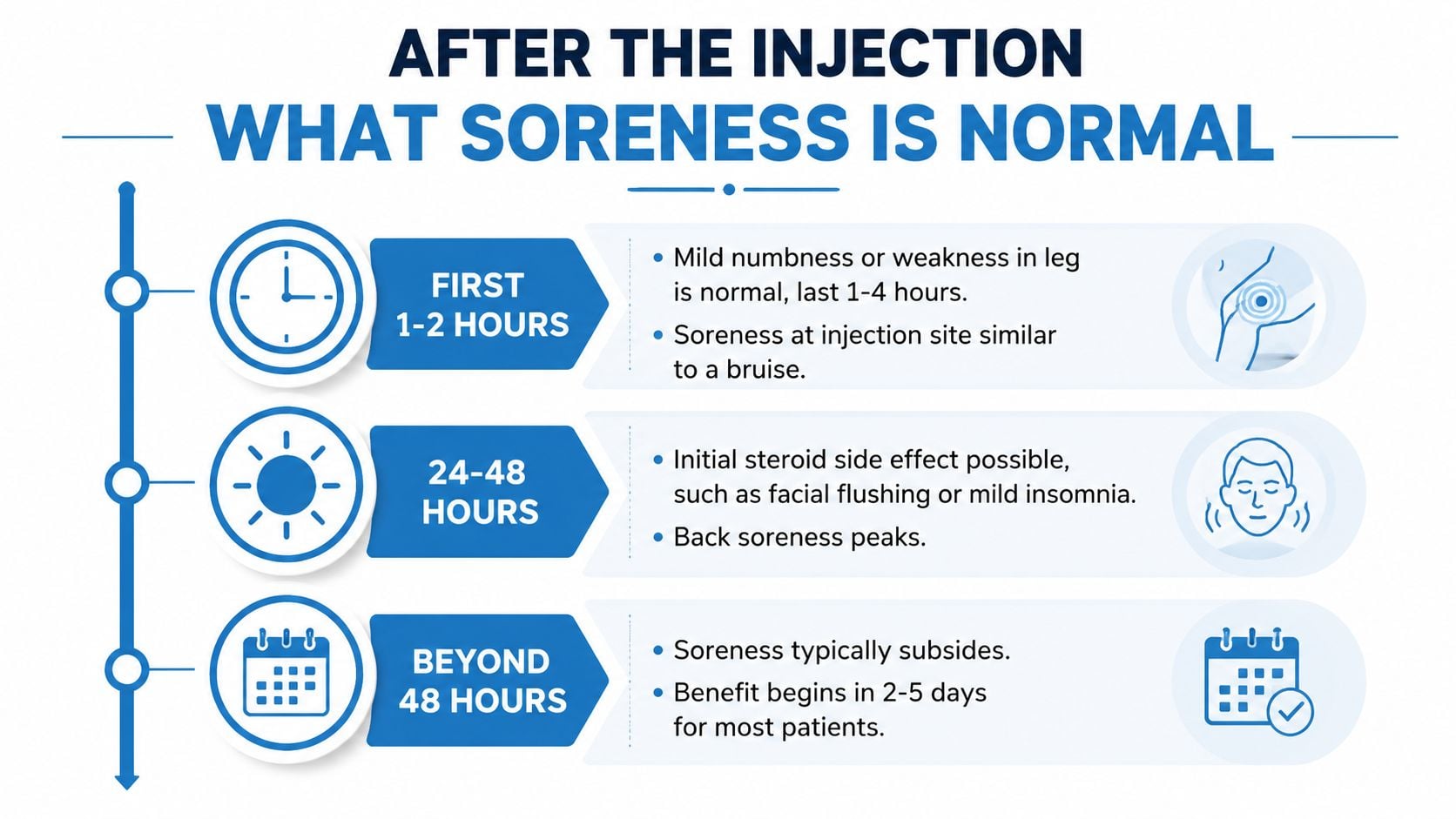
The first few hours often feel different from the injection itself. Local anesthetic can leave temporary numbness, heaviness, or weakness in the treated limb, depending on where the medication travels. The clinical team generally observes the patient before discharge and confirms that movement and sensation are appropriate for the planned treatment.
The injection site may feel tender, similar to a bruise. Mild back aching can occur as the tissues respond to the needle and medication. Some patients also notice a temporary flare of the original pain before the anti-inflammatory effect develops. That early discomfort doesn't prove that the injection failed.
What patients can usually monitor
During the first day or two, patients can pay attention to whether soreness is gradually settling, whether familiar nerve symptoms are changing, and whether new symptoms are appearing. Light activity is often more comfortable than prolonged bed rest, but the treating clinician's instructions take priority because aftercare depends on the injection site and medical history.
The expected pattern is mild, localized soreness that improves rather than steadily intensifies. Relief may appear gradually, and the evidence summary from the American Academy of Neurology describes short-term benefit as the period in which improvement is most consistently observed. Patients shouldn't judge the final result solely by the first few hours.
Symptoms that need prompt attention
Severe headache, fever, worsening weakness, increasing numbness, or loss of bladder or bowel control isn't routine injection-site soreness. Those symptoms require immediate contact with the treating office or urgent medical evaluation, according to the severity and instructions provided at discharge.
Patients managing strong anticipatory anxiety may benefit from learning structured coping skills before the appointment. A resource such as this CBT for pain management guide can help explain how thoughts, muscle tension, breathing, and attention influence the experience of pain.
Call the clinic promptly: New or worsening neurological symptoms deserve professional assessment, not watchful waiting.
Practical Ways to Prepare and Recover
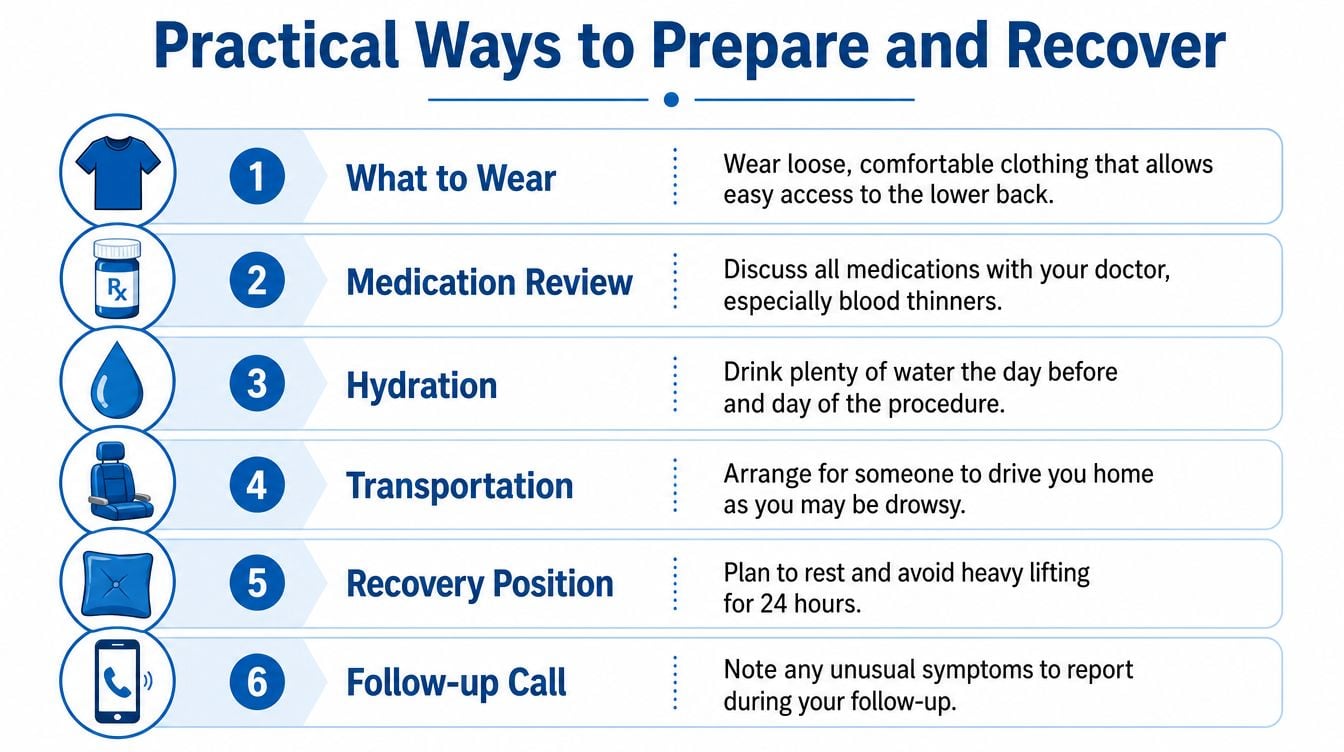
Preparation can remove many sources of discomfort that have nothing to do with the needle. Loose clothing makes it easier to expose the lower back and dress afterward without rubbing the injection site. A current medication list helps the team identify medicines that could affect bleeding, sedation, or the procedure plan.
Blood thinners deserve particular attention. Patients shouldn't stop them independently, because the prescribing clinician and procedural team must balance bleeding risk against the danger of interrupting treatment. Regular medicines may or may not be taken on the morning of the injection, so the patient should follow the specific instructions provided by the clinic rather than rely on general advice.
Before leaving home
A short checklist can keep the appointment focused:
- Choose comfortable clothing: Wear loose layers that allow access to the back and don't press on a tender site afterward.
- Bring medication information: Include prescription medicines, over-the-counter products, supplements, and the names of relevant medical conditions.
- Arrange transportation: A responsible adult should drive the patient home, especially if sedation is used or the legs feel numb or weak.
- Follow food and drink instructions: The clinic may provide different guidance depending on whether sedation is planned.
- Ask about concerns early: Questions about blood thinners, diabetes medicines, allergies, or prior reactions should be answered before the procedure begins.
On the table, the patient should let the abdomen and lower back soften rather than brace against the surface. Slow breathing can help, especially during the anesthetic injection. A prearranged hand signal gives the patient a way to request a pause without turning the head or moving the back.
During the first day afterward
Patients should follow the discharge instructions for activity, wound care, and medication. Gentle walking may be preferable to staying in one position for a long period, while heavy lifting and strenuous activity should wait until the treating team says it's appropriate or the soreness has settled.
A cold pack wrapped in cloth may help local tenderness if the clinic permits it. Hydration, comfortable positioning, and attention to changing symptoms can make recovery easier. Patients should also know how and when to contact the office if soreness becomes unusual or neurological symptoms appear.
Patients seeking an evaluation can discuss injection options, medication planning, and recovery instructions with Interventional Pain Management, which provides image-guided interventional procedures as part of individualized pain care. Information about corticosteroid injections can help patients prepare questions for that discussion.
Why the Fear Usually Outlasts the Experience
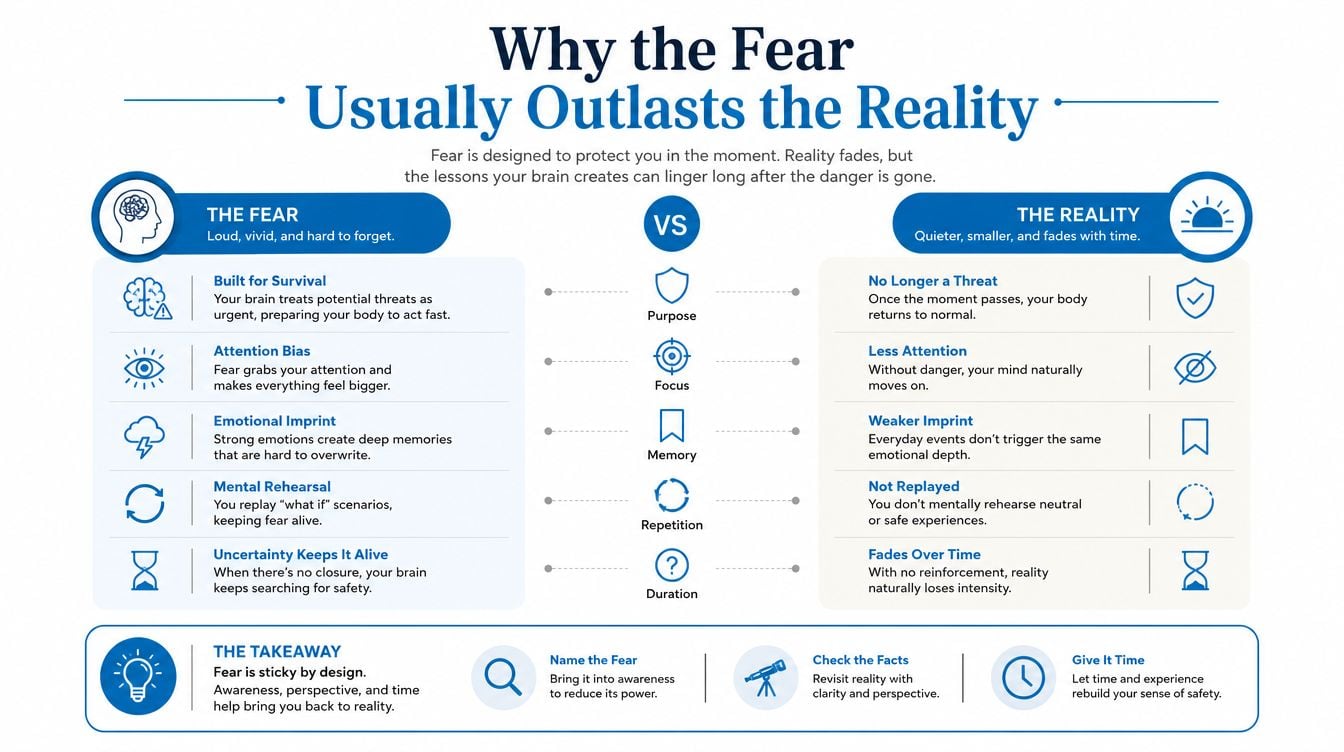
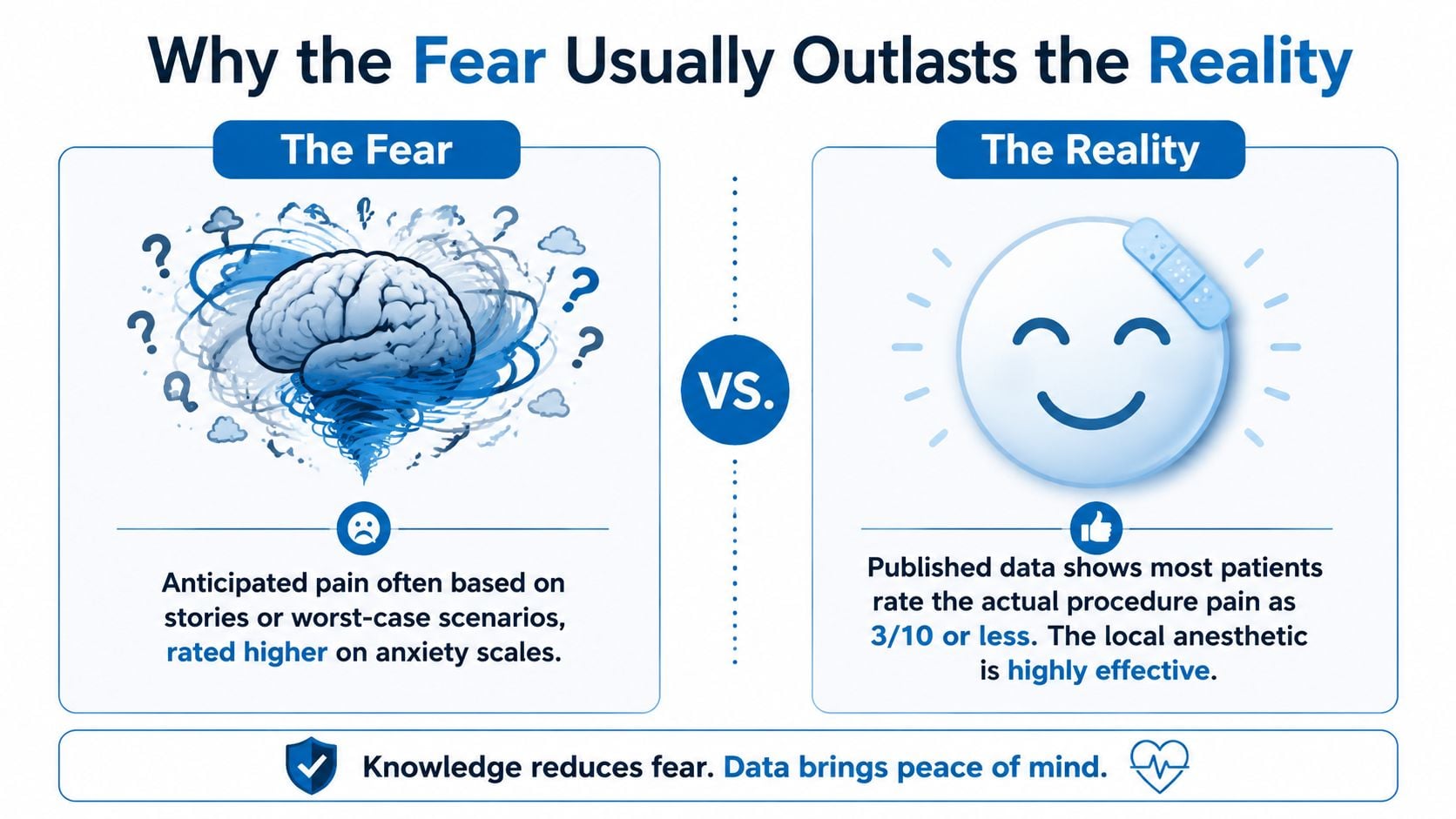
Sitting in the procedure room, an anxious patient may picture the injection reproducing the worst pain from a herniated disc, sciatica, or spinal nerve irritation. That expectation makes every phase seem threatening. The procedure and the underlying condition, however, create different sensations through different mechanisms.
The skin prick is brief. As the needle advances, pressure or a momentary twinge may occur. Medication delivery can create warmth, fullness, or a temporary nerve-like feeling. Recovery may bring local soreness. These are separate phases, not one continuous burst of the severe pain that led to treatment.
Radicular pain can persist for hours or days, with burning, shooting, electric, or aching symptoms. An injection produces a short, controlled tissue sensation. Even when a twinge feels familiar, brief pressure does not equal sustained nerve irritation.
The available complication data does not make severe post-procedure pain sound inevitable. In the 2011 study discussed earlier, the overall complication rate was 2.4% per injection, and increased pain was the most common recorded complication at 1.1%. The original Pain Medicine study documents that discomfort can occur, while showing that serious pain is not the routine outcome.
What anxiety changes
Anticipatory anxiety can tighten muscles and direct intense attention toward every sensation. Guarding the back may make positioning less comfortable. Fear can also make ordinary pressure feel like a warning signal. The sensation remains real, but the nervous system is evaluating it in a heightened state of alert.
A simple plan can make each phase easier to interpret:
- Use a familiar comparison: The anesthetic prick may resemble the brief sting of another routine injection. Deeper needle movement usually feels more like pressure.
- Request narration: Knowing when the skin is cleaned, numbed, and touched reduces surprise.
- Agree on a pause signal: A hand squeeze or spoken cue lets the patient communicate without moving.
- Separate phases: Skin prick, needle pressure, medication sensation, and recovery soreness are different events.
Expectations should also include the treatment's limits. A 2022 review of 12 trials involving 1,367 participants found that epidural steroid injections were only slightly more effective than placebo for short-term disability reduction, with pain improvements that were small and often not clinically meaningful. The American Academy of Family Physicians review supports discussing possible benefit and limitations before treatment.
Common Questions Patients Ask Before Booking
Will the injection hurt more than the pain being treated? Usually, no. The injection may cause a brief sting, pressure, or temporary nerve-like sensation, but it isn't expected to reproduce the ongoing intensity of severe back or leg pain.
Does numbing medicine remove every sensation? No. It usually reduces sharp skin pain, but patients can still feel pressure, movement, warmth, or heaviness. That awareness helps them communicate during needle placement.
Is the soreness on the second day severe? Mild injection-site tenderness or back aching is more typical. A temporary flare can occur, but worsening or unusual symptoms should be reported rather than dismissed.
Can patients drive home? Patients should arrange transportation and follow the clinic's instructions. Numbness, weakness, or sedation can make driving unsafe immediately afterward.
Are multiple injections more painful than one? Treating more than one level can mean additional needle positioning or more pressure, but the experience depends on the approach, anatomy, and medication plan. The physician should explain the expected plan beforehand.
What's usually the worst part? For many patients, it's the anticipation or the initial anesthetic sting, not the brief medication delivery. Individual experiences vary, especially when anxiety or severe nerve sensitivity is present.
Is anxiety a reason to request sedation? Yes, anxiety should be discussed. Light sedation may be appropriate for some patients, but the decision depends on medical history, medications, safety considerations, and the need to communicate during the procedure.
Does the injection guarantee relief? No. A 2022 review found modest average effects, so patients should view the injection as one treatment option within a broader plan rather than a guaranteed solution. The consultation should cover the diagnosis, expected benefit, alternatives, and warning signs.
Patients who are considering an epidural steroid injection can discuss the planned approach, numbing options, medication instructions, and recovery expectations with Interventional Pain Management. The practice evaluates back, neck, and nerve-related pain and can help determine whether an image-guided injection fits the patient's individualized treatment plan.