
A patient may wake after lumbar surgery expecting the old pain to be gone, only to find the incision healing while an ache, burning leg sensation, or electric jolt remains. Six weeks later, the question can feel frighteningly simple: Why does the pain from back surgery continue if the operation was supposed to fix the problem?
That uncertainty often brings frustration, fear of reinjury, and a loss of trust in the medical system. Persistent pain doesn't automatically mean the operation failed, but it does deserve a careful explanation. The useful starting point is to identify the pattern of pain, determine whether recovery is still progressing, and look for a specific pain generator before choosing another treatment.
Table of Contents
- When the Pain Does Not Go Away After Surgery
- Understanding the Different Types of Post-Surgical Back Pain
- What Failed Back Surgery Syndrome Really Means
- A Realistic Recovery Timeline and Warning Signs
- How Doctors Pinpoint the Source of Persistent Pain
- Non-Surgical and Interventional Treatment Options
- Spinal Cord Stimulation for Treatment-Resistant Pain
- Your Next Steps and Where to Get Help in New Jersey
When the Pain Does Not Go Away After Surgery
Consider a person who underwent a lumbar discectomy after months of shooting leg pain. The skin incision looks clean, walking has gradually improved, and the early postoperative soreness has eased. Yet the deep ache in the lower back never fully disappeared, and the familiar leg burning returns after sitting or standing.
That experience can make every movement feel like a test. The patient may wonder whether bending caused damage, whether the disc has returned, or whether the surgeon missed the actual source of pain. Those concerns are understandable, especially when the body doesn't follow the recovery story the patient expected.
Pain after surgery has several possible explanations. Some symptoms come from normal healing, muscle guarding, or a nerve that remains irritable while it recovers. Other patterns suggest recurrent compression, instability, scar-related irritation, a nearby spinal segment becoming painful, or a pain system that has become hypersensitive.
A practical distinction: Pain that gradually changes while function improves usually calls for monitoring and rehabilitation. Pain that steadily worsens, introduces new weakness, or changes bowel or bladder function needs prompt medical attention.
The label failed back surgery syndrome, often shortened to FBSS, can sound like a final verdict. It isn't. The term describes ongoing or new pain after spine surgery, but it doesn't identify the structure or mechanism causing that pain.
A useful evaluation answers several questions:
- Is the pain from healing tissue, a nerve, a joint, a disc, hardware, or more than one source?
- Did the pain ever improve after surgery?
- Does the current pattern match the original problem?
- Are there warning signs that require urgent assessment?
- Would rehabilitation, medication, an injection, neuromodulation, or surgical review fit the suspected cause?
The goal isn't to force every patient into one diagnosis. It's to replace fear with a clearer map and a treatment plan tied to the actual pain pattern.
Understanding the Different Types of Post-Surgical Back Pain
Doctors usually begin by separating pain into overlapping categories. The categories aren't perfect boxes, but they help identify what needs testing and which treatment may be useful.
Structural pain
Structural pain comes from a physical problem involving the spine's bones, discs, joints, or surgical area. A worn hinge offers a useful analogy. Even after someone repairs one part, the hinge may still grind if another surface remains damaged or unstable.
This pattern may feel deep, localized, or related to a specific position. Possible contributors include recurrent narrowing around a nerve, a painful facet joint, incomplete stabilization, adjacent segment degeneration, pseudoarthrosis, or hardware-related irritation. Imaging and examination help determine whether the anatomy matches the symptoms.
Neuropathic pain
Neuropathic pain develops when a nerve root has been compressed, inflamed, or injured. Patients often describe burning, pins and needles, electric shocks, numbness, or pain that travels down the buttock and leg.
A frayed electrical wire provides the analogy. The wire doesn't hurt at one spot. It sends abnormal signals along its length, which is why a problem near the spine can be felt in the calf or foot. Nerve pain may persist even after pressure has been relieved because the nerve needs time to recover, or because ongoing irritation remains.
Mechanical pain
Mechanical pain relates to how the spine handles load during movement. After a fusion or other structural change, forces may shift across joints, muscles, discs, or nearby segments. A bridge that carries traffic differently after a support has been added captures the basic idea.
Many patients have a mixture of mechanical, structural, and neuropathic symptoms. Muscle weakness, protective spasms, hip problems, pelvic pain, and soft-tissue irritation can add another layer. Patients looking for a broader discussion of pelvic symptoms may find this Lake City Physical Therapy pelvic guide useful, while information about the mechanics of spinal fusion can clarify why postoperative load patterns sometimes change.
Persistent symptoms after lumbar surgery are common enough to require a structured evaluation rather than a quick assumption about healing.
What Failed Back Surgery Syndrome Really Means
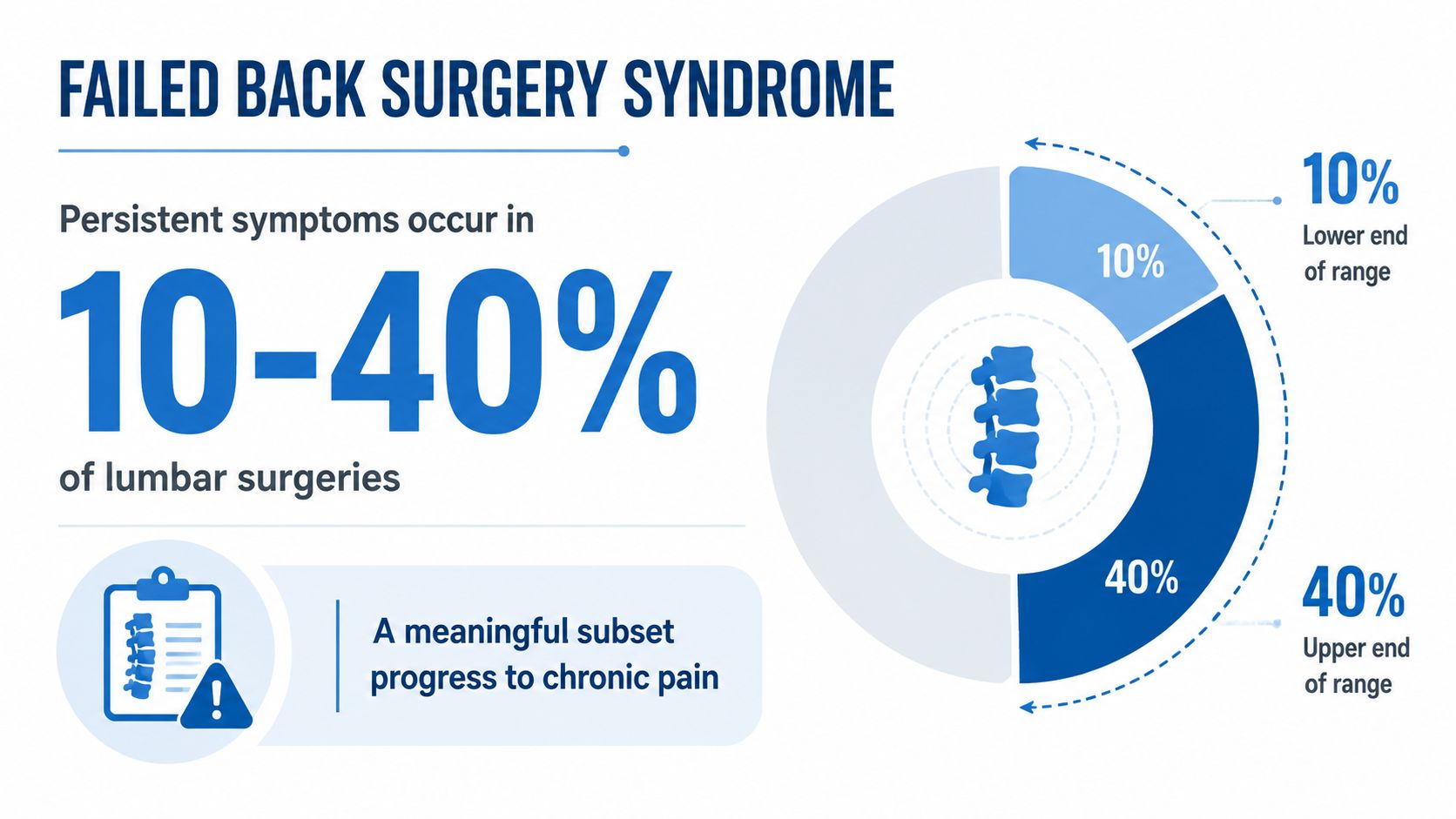
Failed back surgery syndrome describes persistent or newly developed back or leg pain after spinal surgery. The phrase doesn't prove that the surgeon made an error, and it doesn't explain whether the pain comes from recurrent compression, scar tissue, instability, a neighboring segment, or nerve sensitization.
Clinical reviews estimate persistent pain after spine surgery at roughly 10% to 40%, with the range influenced by the procedure and the definition of persistent pain. One reference reports higher failure rates of 30% to 46% after lumbar fusion and 19% to 25% after microdiscectomy, while a survey of 1,842 lumbar surgery patients reported an FBSS prevalence of 20.6%, with a 95% confidence interval of 18.8% to 22.6%. These figures come from the clinical review of failed back surgery syndrome.
A separate systematic review and meta-analysis reported a pooled prevalence of persistent pain of 14.97%, with a 95% confidence interval of 12.38% to 17.76%, as described in the review of chronic pain after spinal surgery. The figures shouldn't be used to predict one person's outcome. They show why ongoing pain deserves attention without treating it as unusual or hopeless.
Why the label can mislead
The term FBSS is gradually giving way to more precise language, including persistent spinal pain syndrome after surgery. That change matters because a broad label can hide several treatable problems:
- Incomplete decompression or recurrent stenosis can continue to irritate a nerve.
- A recurrent disc herniation can recreate radiating symptoms.
- Epidural fibrosis, or scar tissue around a nerve root, may contribute to persistent leg pain.
- Adjacent segment degeneration can place new stress on levels next to a fusion.
- Hardware irritation, pseudoarthrosis, or instability can create mechanical pain.
- Central sensitization can amplify signals even when imaging doesn't show a new major compression.
The diagnostic task is to separate structural failure from neuropathic sensitization, because revision surgery may help a clear mechanical problem but won't necessarily solve pain driven mainly by nerve hypersensitivity.
Recognizing FBSS is therefore a starting point, not a sentence. The next step is a focused assessment of the pain generator.
A Realistic Recovery Timeline and Warning Signs
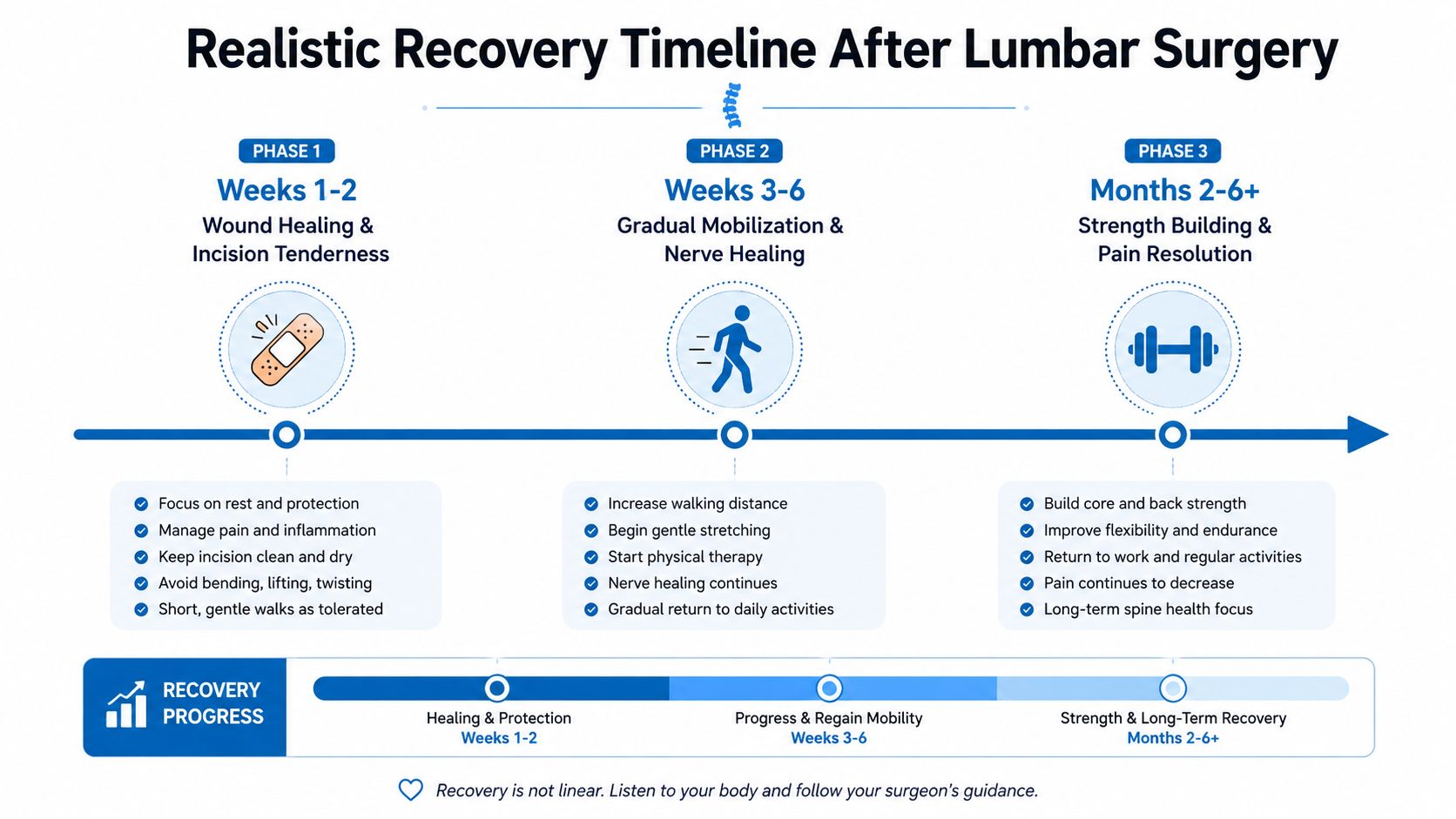
Recovery doesn't move in a perfectly straight line. Incision soreness may improve while nerve symptoms fluctuate, and a patient may have a better walking day followed by increased discomfort after doing more activity.
Typical phases of recovery
- Weeks 1 to 2: Wound healing, incision tenderness, muscle soreness, and guarded movement are common. The overall direction should gradually improve, even if individual days vary.
- Weeks 3 to 6: Mobilization usually increases. A healing nerve may produce tingling or brief electric sensations as it recovers, but symptoms should be discussed if they become more intense or function declines.
- Weeks 6 to 12: Strength, walking tolerance, and confidence with movement should build through appropriately progressed rehabilitation. Persistent pain at this stage doesn't automatically indicate failure, but a stalled recovery deserves review.
- Months 3 to 6: Tissue remodeling, conditioning, and functional gains may continue. Residual symptoms should be assessed in relation to strength, activity, sleep, and the original diagnosis.
The incision and the nerve follow different timelines. Surface tenderness may settle while a nerve remains irritable, so the most useful question isn't whether every sensation has disappeared. It's whether symptoms are becoming less limiting and whether strength and daily activity are improving.
Symptoms that need attention
Urgent medical contact is appropriate for new or worsening leg weakness, new bowel or bladder changes, fever accompanied by worsening back pain, or rapidly escalating symptoms. Sudden calf swelling also needs prompt assessment because it may signal a problem outside the spine.
A scheduled re-evaluation is appropriate when pain remains unchanged beyond the expected recovery window, returns after a clear period of improvement, increasingly limits walking or sleep, or becomes more prominent at rest than with movement. The surgeon or pain physician can decide whether examination, imaging, or another test is needed.
Each week, patients can record:
- Pain location and whether it stays in the back or travels into a limb.
- Pain quality, such as aching, burning, numbness, or electric sensations.
- Walking distance, sitting tolerance, sleep, and work or household ability.
- New weakness, falls, fever, wound changes, or bowel and bladder symptoms.
- Activities or positions that reliably improve or worsen symptoms.
How Doctors Pinpoint the Source of Persistent Pain
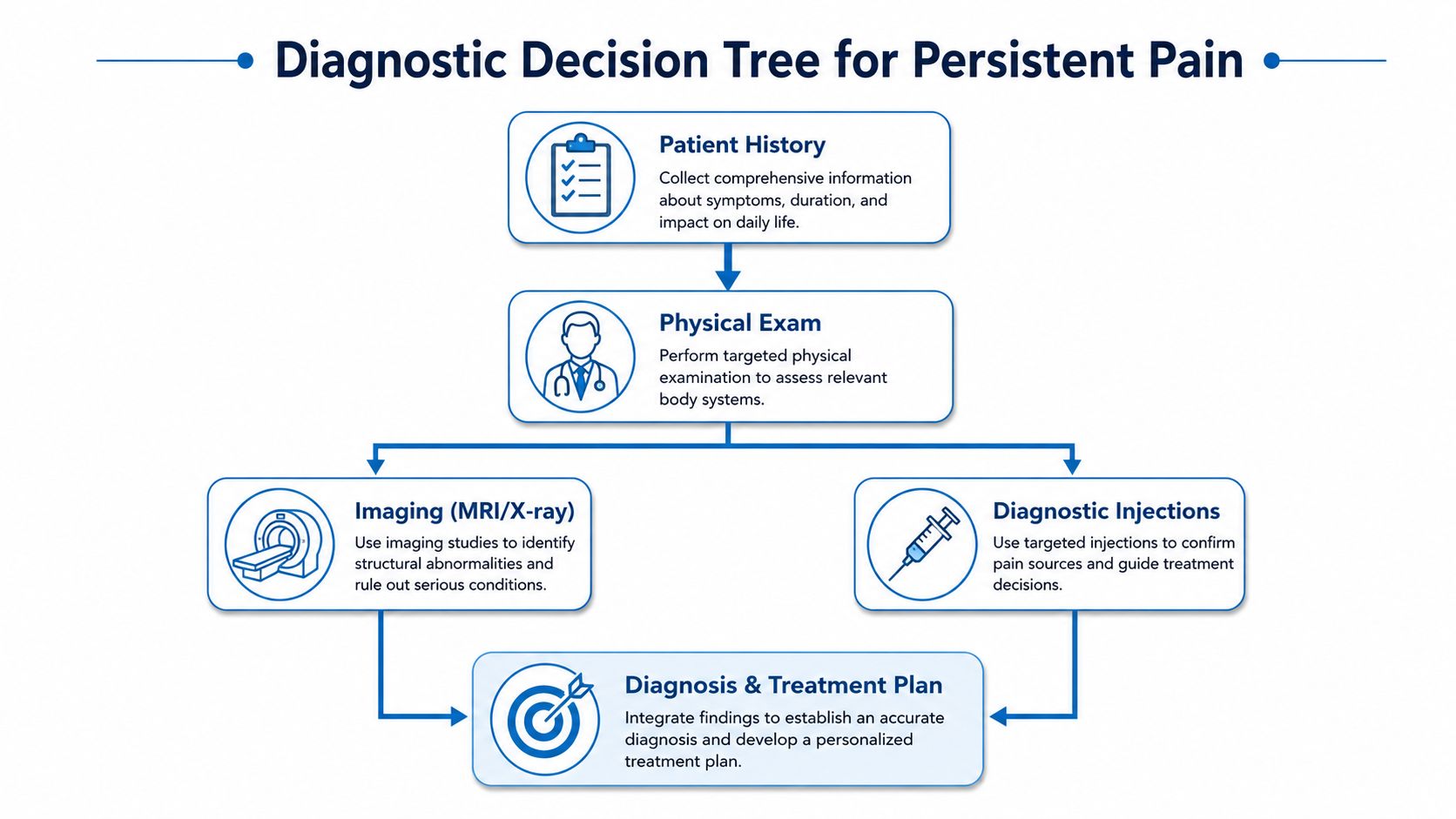
A pain specialist doesn't begin by choosing a procedure. The evaluation starts with a detailed reconstruction of what happened before and after surgery.
History and examination
The clinician maps the pain's location, quality, timing, and triggers. Burning pain below the knee suggests a different pathway than a deep ache limited to the low back. Pain that never improved after surgery raises a different question from pain that improved and later returned.
The physical examination then tests strength, sensation, reflexes, gait, and movement. A straight-leg raise can stress the lumbosacral nerve roots, a femoral stretch maneuver can assess upper lumbar nerve irritation, and facet-loading movements can reproduce pain from posterior spinal joints. These maneuvers don't establish a diagnosis alone. They add evidence to the history.
Imaging with a specific question
Upright X-rays can show alignment, motion, or suspected instability during weight bearing. MRI can assess recurrent disc herniation, stenosis, nerve-root changes, fluid collections, and postoperative tissue, although scar tissue and recurrent disc material may require careful interpretation.
Metal hardware can reduce MRI clarity in the relevant area. In selected situations, a CT myelogram may provide a better view of the spinal canal and nerve-root passageways. The best test depends on the operation, the hardware, the symptoms, and the question the clinician needs answered.
Diagnostic blocks as pain mapping
A diagnostic injection is more than a treatment attempt. It can temporarily numb a suspected source to see whether the patient's familiar pain changes.
- Medial branch blocks assess facet-mediated pain.
- Sacroiliac injections evaluate the sacroiliac joint when the pain pattern fits.
- Transforaminal epidural injections can test and calm inflammation around a particular nerve root.
A response doesn't make the diagnosis infallible, and lack of response doesn't explain every symptom. Still, targeted blocks can help prevent a patient from moving directly to an irreversible procedure without identifying a plausible pain generator.
Useful question for the appointment: “What specific structure or nerve is this test intended to evaluate, and how would the result change treatment?”
Patients can make the visit more productive by bringing operative notes, imaging discs or reports, injection records, medication history, and a short description of functional limitations.
Non-Surgical and Interventional Treatment Options
Treatment works best when it follows the pain pattern rather than the surgical history alone. A person with weakness and recurrent compression needs a different plan from someone with burning leg pain and stable imaging.
A stepped care ladder
1. Rehabilitation. Structured physical therapy can address trunk strength, movement confidence, nerve mobility, balance, and conditioning. Graded exposure helps patients resume useful activity without repeatedly provoking the fear that movement has damaged the spine.
2. Medication matched to mechanism. Anti-inflammatory medicines may help inflammatory or mechanical flares when medically appropriate. Acetaminophen may help some pain patterns. Neuropathic symptoms may lead a clinician to consider nerve-pain medicines, including gabapentinoids or SNRIs, with attention to sedation, interactions, blood pressure, kidney function, and other safety issues.
3. Image-guided injections. Epidural steroid injections may target inflammation around an irritated nerve root. Facet or medial branch blocks can evaluate axial pain from facet joints, while a sacroiliac injection may help when that joint appears to be involved. The duration of relief varies, and an injection that provides only brief relief may still offer useful diagnostic information. Patients can learn more about the role of epidural steroid injections.
4. Radiofrequency ablation. When carefully selected medial branch blocks support facet-mediated pain, radiofrequency treatment can interrupt pain signaling from those small nerves for a longer period than a diagnostic block. It doesn't repair a disc, nerve compression, or instability.
5. Neuromodulation. When pain remains predominantly neuropathic despite appropriate conservative and interventional care, spinal cord stimulation may become more relevant than repeating the same injection. A plain-language explanation of how TENS eases back pain can also help patients understand the broader concept of electrical pain modulation, although implanted stimulation requires specialist evaluation.
| Treatment | Pain Type Targeted | Typical Course | Expected Relief Duration | Best Fit For |
|---|---|---|---|---|
| Physical therapy | Weakness, movement-related pain, deconditioning | Progressive supervised program with home exercises | Benefits depend on continued participation | Patients whose function is limited by weakness or guarded movement |
| Medication | Inflammatory, mechanical, or neuropathic symptoms | Trial adjusted to response and safety | Varies by medicine and individual response | Patients needing symptom control while the cause is evaluated |
| Epidural injection | Nerve-root inflammation and radiating pain | Image-guided, targeted procedure | Variable, sometimes temporary | Radicular pain with a plausible nerve source |
| Facet or sacroiliac block | Localized axial or joint-mediated pain | Diagnostic or therapeutic injection | Variable | Patients with a reproducible joint pattern |
| Radiofrequency ablation | Confirmed facet-mediated pain | Procedure after diagnostic confirmation | Variable and not permanent | Patients with facet pain who respond to targeted blocks |
| Spinal cord stimulation | Treatment-resistant neuropathic pain | Trial followed by implantation if appropriate | Individualized, with ongoing device follow-up | Persistent radiating pain after surgery |
Spinal Cord Stimulation for Treatment-Resistant Pain
Spinal cord stimulation, or SCS, uses a small implanted system to deliver electrical pulses near the spinal cord. The stimulation modifies pain signaling before those signals are fully processed by the brain. It doesn't remove a recurrent disc, correct instability, or heal a surgical complication, so candidacy depends on excluding problems that require another type of treatment.
The strongest comparative evidence applies to selected patients with persistent, predominantly neuropathic pain after lumbar surgery. In the PROCESS randomized trial, SCS combined with conventional medical management achieved the primary outcome in 37% of randomized SCS patients, compared with 2% receiving conventional medical management alone at 24 months, according to the published trial record. The same evidence also reported that 31% required a device-related surgical revision, an important reminder that meaningful benefit comes with hardware management and procedural risk.
| Metric | SCS Group Outcome | Conventional Management |
|---|---|---|
| Primary outcome at 24 months | 37% | 2% |
| Device-related surgical revision | 31% | Not applicable |
| Main clinical role | Selected persistent neuropathic pain after surgery | Medication and other nonsurgical care |
How candidacy is assessed
A specialist reviews the pain distribution, neurological findings, imaging, previous treatments, medication response, and functional goals. A psychological assessment may identify factors that could affect coping, expectations, or safe device use. The team also discusses infection risk, MRI compatibility, charging requirements, and what the system can and can't treat.
Many patients undergo a temporary trial before permanent implantation. The trial commonly lasts 7 to 14 days, and the decision depends on meaningful improvement in pain and function rather than a promise of complete pain elimination.
Modern systems may use tonic, high-frequency, burst, or rechargeable configurations. The appropriate choice depends on the pain pattern, clinician experience, device features, and patient preferences. Evidence also supports SCS over reoperation in selected FBSS patients, while frequency-specific stimulation may be considered when axial low-back pain remains prominent.
Patients considering spinal cord stimulation should ask how success will be measured, what happens if the trial fails, how future imaging will be handled, and how revision or removal would be managed.
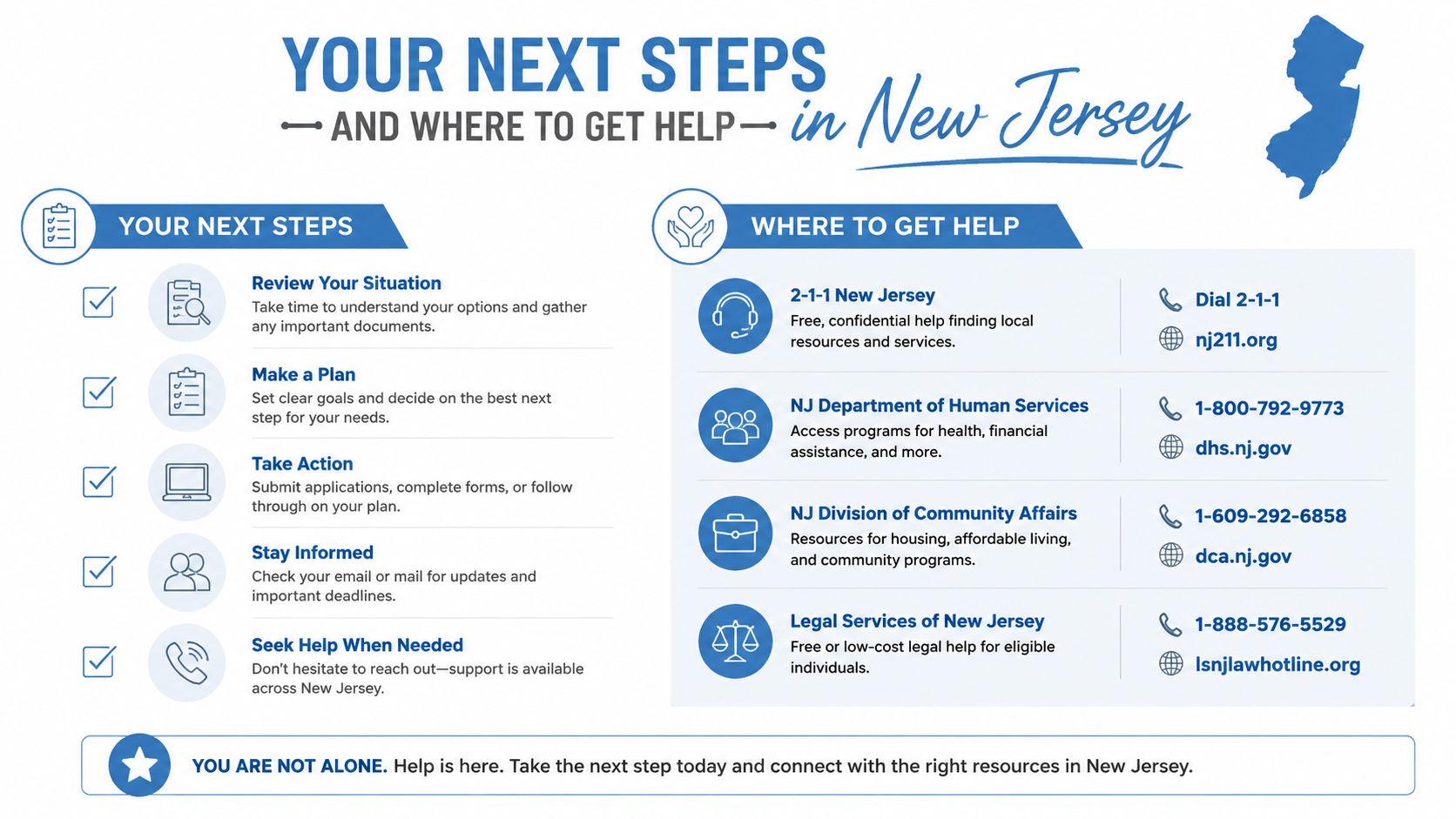
Your Next Steps and Where to Get Help in New Jersey
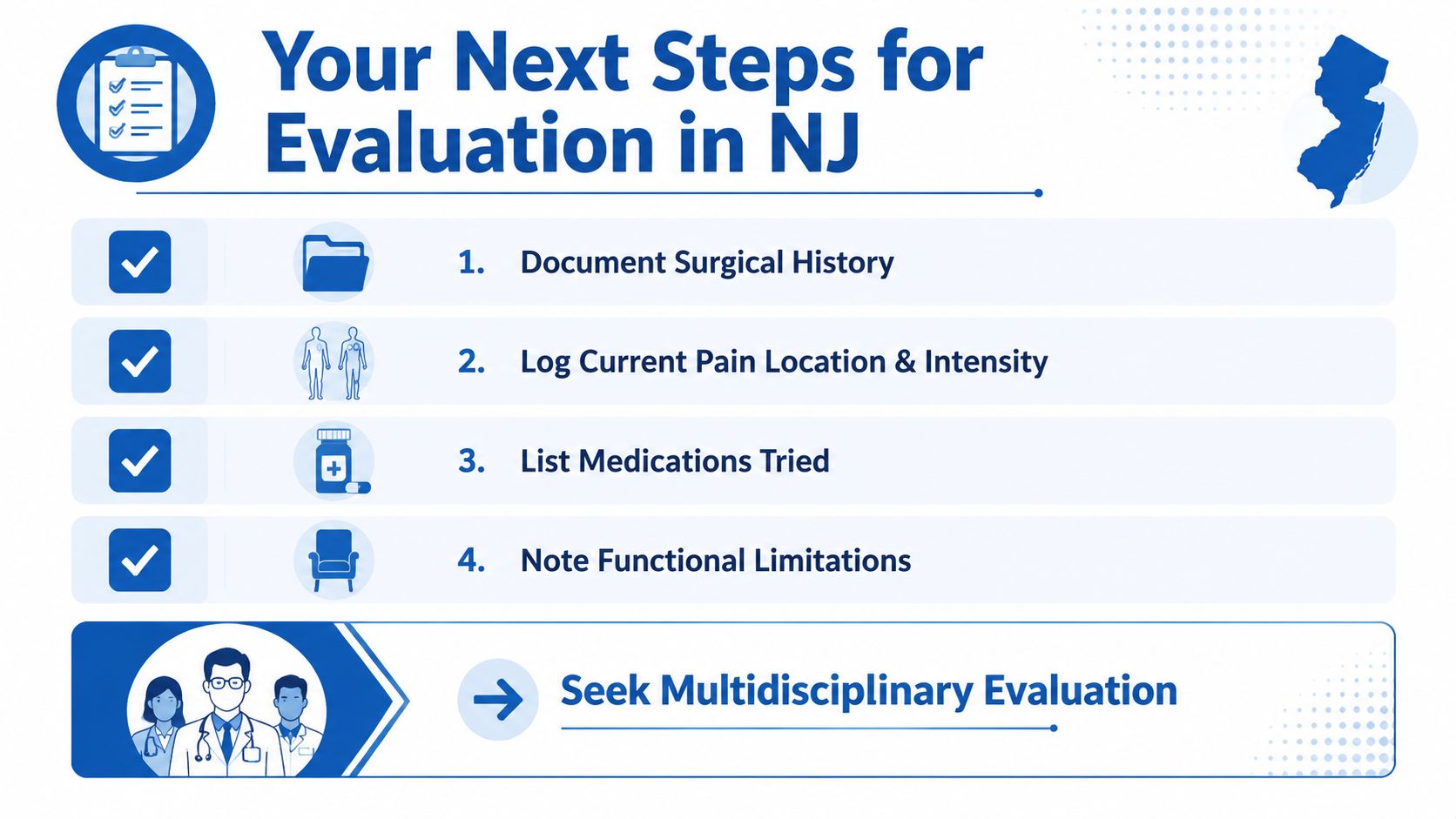
The first appointment becomes more useful when the patient arrives with organized information. A concise record can show whether the current pain resembles the original symptoms, changed after surgery, or developed in a new distribution.
Prepare the clinical record
Patients should bring:
- Surgical history: Procedure name, date, treated spinal level, operative report, and postoperative complications.
- Current pain map: Back, buttock, thigh, calf, or foot location, along with burning, aching, numbness, or electric qualities.
- Treatment history: Medicines tried, physical therapy, injections, nerve blocks, and the degree and duration of any benefit.
- Functional effects: Walking, sitting, standing, sleeping, driving, work, lifting, and household activities.
- Imaging: Recent MRI, X-rays, CT studies, reports, and the actual image files when available.
A multidisciplinary review can bring together pain management, spine surgery, and physical therapy perspectives. That combination helps clinicians compare the anatomy with the examination and decide whether the next step should be rehabilitation, a targeted procedure, neuromodulation, or surgical review.
Questions that clarify the plan
Patients can ask:
- What is the leading pain generator?
- Which finding supports that explanation?
- What diagnosis would change the treatment plan?
- Is the goal pain reduction, improved walking, better sleep, medication reduction, or another measurable function?
- How long should the selected treatment be tried before reassessment?
- What symptoms should trigger urgent contact?
For New Jersey and Staten Island residents, care may be available through academic spine centers, pain practices, and rehabilitation programs. Interventional Pain Management provides coordinated evaluation across pain management, anesthesiology, orthopedics, spine surgery, and rehabilitation services, with treatment ranging from image-guided procedures to spinal cord stimulation and surgical assessment.
The realistic outcome depends on the pain generator. Neuropathic radiating pain may be a stronger fit for neuromodulation, while confirmed mechanical instability may require a surgical opinion. Complete pain elimination isn't always the immediate target. Improved walking, sleep, strength, confidence, and daily activity can provide more meaningful evidence that treatment is working.
Patients with ongoing pain from back surgery can schedule a focused evaluation with Interventional Pain Management to review surgical records, imaging, neurological symptoms, and prior treatments. The team can help determine whether the next step should be rehabilitation, a targeted injection, neuromodulation, or spine-surgery consultation.