
Eight months after an L4-L5 fusion, a warehouse supervisor still wakes with burning pain down one leg and a deep ache across the lower back. The incision is fully healed, follow-up imaging shows a solid fusion, yet pain remains severe enough to prevent a return to work. Each visit brings another opinion, another medication discussion, or another suggestion that time may help. Confidence in the medical system begins to disappear.
This situation is painful physically and psychologically. A technically successful operation on an image doesn't always produce normal movement, sleep, or work capacity. Pain management for failed back surgery syndrome starts by treating persistent pain as a clinical problem that deserves careful investigation, not as proof that a patient is difficult or that the original operation was automatically wrong.
Table of Contents
- When the Surgery Heals but the Pain Stays
- What Failed Back Surgery Syndrome Actually Means
- Why Back Surgery Sometimes Fails to Relieve Pain
- How Pain Specialists Diagnose the Real Source
- Building a Stepwise Treatment Plan Beyond the Operating Room
- Spinal Cord Stimulation and the Waveform Question
- When Revision Surgery Still Deserves a Seat at the Table
- Realistic Outcomes and What a Good Recovery Timeline Looks Like
When the Surgery Heals but the Pain Stays
The term failed back surgery syndrome, or FBSS, describes ongoing or newly developed spine-related pain after surgery. It doesn't explain the cause. A healed incision and a stable fusion answer important surgical questions, but they don't prove that every nerve, joint, muscle, and pain-processing pathway has recovered.
Postoperative pain can follow several courses. Some discomfort gradually settles as inflammation decreases, muscles regain strength, and the nervous system becomes less protective. Other pain persists because a nerve remains irritated, a different structure has become painful, or the nervous system continues to amplify signals after the original problem has been addressed.
Practical rule: A normal-looking postoperative scan is reassuring, but it isn't the same as a normal recovery.
FBSS is common enough to require its own framework. Reviews report that it affects about 10% to 40% of patients after back surgery, with higher reported failure rates after more complex procedures, including 30% to 46% after lumbar fusion and 19% to 25% after microdiscectomy. A separate review reported chronic pain after spinal surgery ranging from 5% to 27.6%, with a pooled prevalence of 14.97%. These figures are summarized in the clinical review of failed back surgery syndrome.
The label can be understood through a house analogy. The foundation may have been repaired, but a leaking roof, an electrical fault, and a drafty window can still make the house uncomfortable. In the spine, the foundation represents the surgical repair, while the remaining problems may involve anatomy, nerve function, movement patterns, sleep, mood, or pain sensitivity.
Patients often ask whether another operation, stronger medication, or an implant is the answer. The safer answer begins with a more precise question: What type of pain is present now, and what finding supports that conclusion? A useful starting resource is guidance on pain after back surgery.
What Failed Back Surgery Syndrome Actually Means
FBSS is best treated as a description, not a diagnosis. It refers to persistent or recurrent back, buttock, neck, or limb pain after spine surgery, often after the expected early healing period has passed. The newer term persistent spinal pain syndrome type 2 is also used for this clinical pattern.
That distinction matters because normal recovery and a postoperative complication aren't the same thing. Early soreness, stiffness, muscle guarding, and changing nerve symptoms can occur during healing. Infection, a fluid collection, hardware failure, non-union, or new neurological loss requires a separate medical evaluation and shouldn't be folded into a broad pain label.
Three layers can overlap
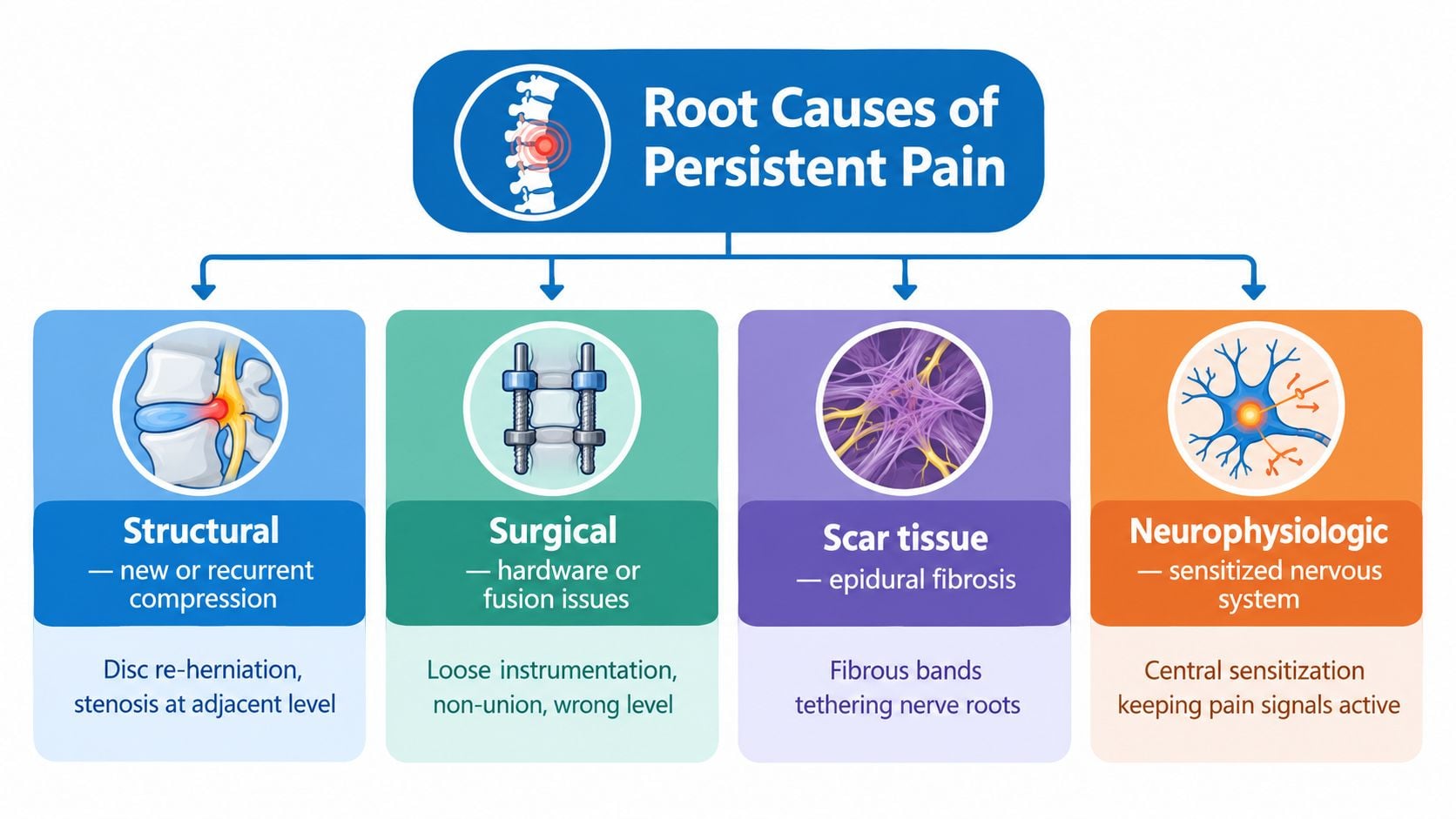
The first layer is surgical or anatomical. The original compression may remain, return, or develop at a nearby level. Hardware may irritate tissue, a fusion may fail to unite, or scar tissue may affect a nerve root.
The second layer is neuropathic. A nerve can remain injured or inflamed even after pressure has been relieved. Patients may describe burning, electric shocks, pins and needles, numbness, or pain that follows a narrow path into the buttock or leg.
The third layer is mechanical and biomechanical. Weak supporting muscles, altered posture, a painful facet joint, sacroiliac irritation, hip disease, or poor movement coordination can keep loading the spine after surgery. Persistent pain can also make the nervous system more protective, so ordinary movement feels threatening or painful.
Why one treatment rarely solves the whole problem
A patient with recurrent leg pain from nerve compression needs a different plan from someone with broad axial back pain and movement-related stiffness. A person with both patterns may need separate treatments for each component.
The term FBSS shouldn't predict the outcome by itself. The meaningful clinical task is to identify the dominant pain generator, rule out urgent problems, and match treatment intensity to the evidence.
Why Back Surgery Sometimes Fails to Relieve Pain
Persistent pain after spine surgery usually has more than one possible explanation. A scan can show an abnormality, but an abnormality doesn't automatically explain the symptoms. The finding must match the pain's location, quality, timing, and neurological pattern.
Surgical causes
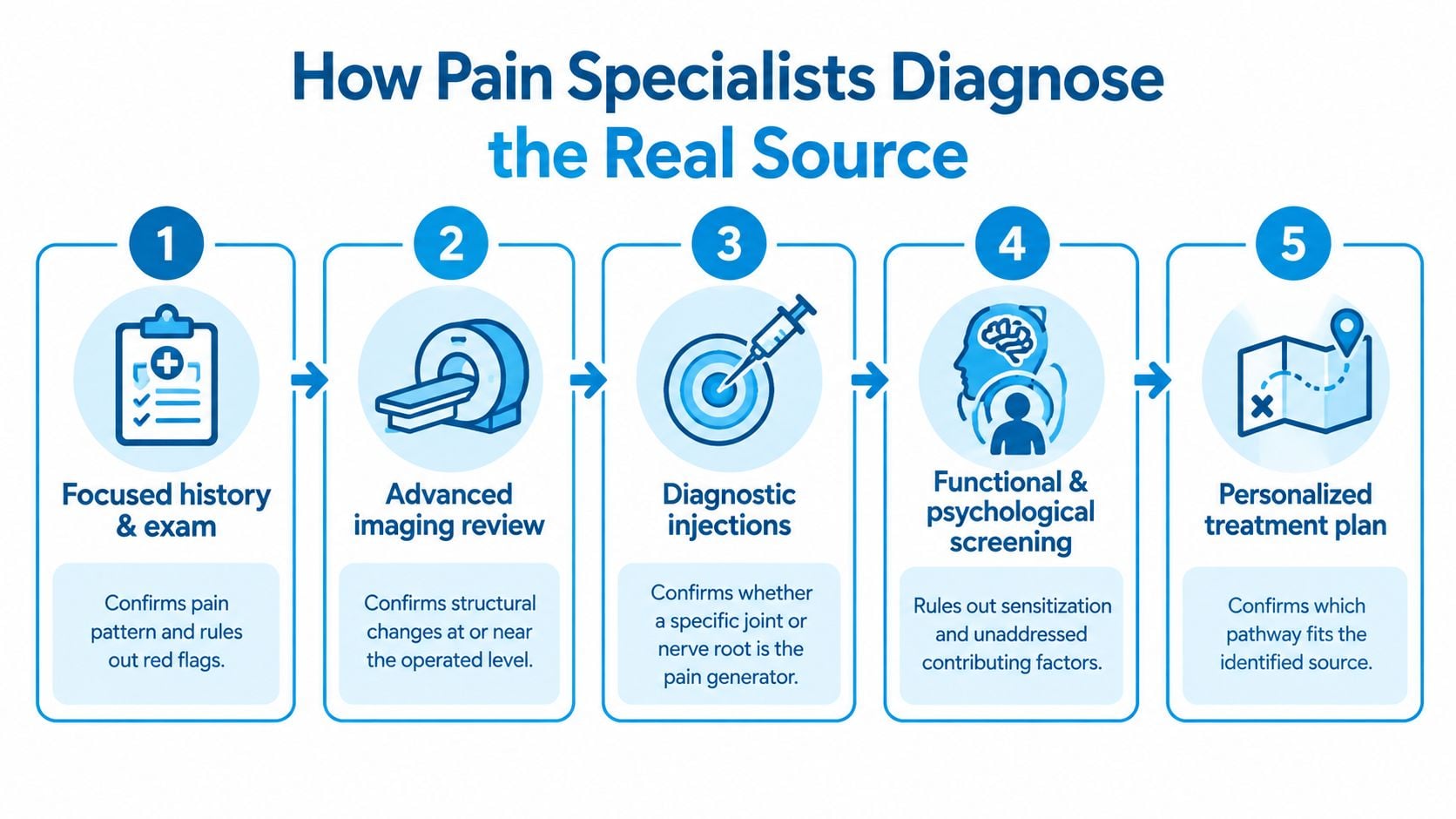
A surgeon may encounter a level that wasn't the primary pain generator, incomplete decompression, recurrent disc herniation, or disease at a neighboring segment. Hardware can loosen, irritate a nerve, or fail to support a fusion. A pseudarthrosis, meaning failure of the intended bony union, can produce mechanical pain and may require a focused surgical review.
Anatomical causes
Scar tissue around a nerve root, known as epidural fibrosis, can contribute to recurrent symptoms. Foraminal narrowing may remain after decompression, particularly when the nerve's exit pathway is still crowded. A fusion can also change how forces move through the spine, placing stress on adjacent structures or creating an unfavorable mechanical alignment.
Neuropathic causes
A nerve may have suffered injury before or during surgery and remain painful after the structural problem is corrected. Ongoing radiculopathy produces symptoms that travel along a nerve distribution. In some patients, central sensitization develops, meaning the nervous system continues to amplify pain signals even when the original tissue injury has improved.
Psychosocial and functional amplifiers
Depression, anxiety, fear of movement, poor sleep, catastrophizing, medication dependence, and prolonged inactivity can increase disability. These factors don't mean the pain is imaginary. They influence how the brain interprets signals, how confidently a patient moves, and whether rehabilitation can succeed.
A useful assessment separates these categories instead of treating them as interchangeable. One patient may need a surgical opinion for hardware loosening. Another may need rehabilitation and pain psychology for sensitized, movement-limited pain. A third may have a clear neuropathic pattern that makes neuromodulation more relevant than repeat decompression.
How Pain Specialists Diagnose the Real Source
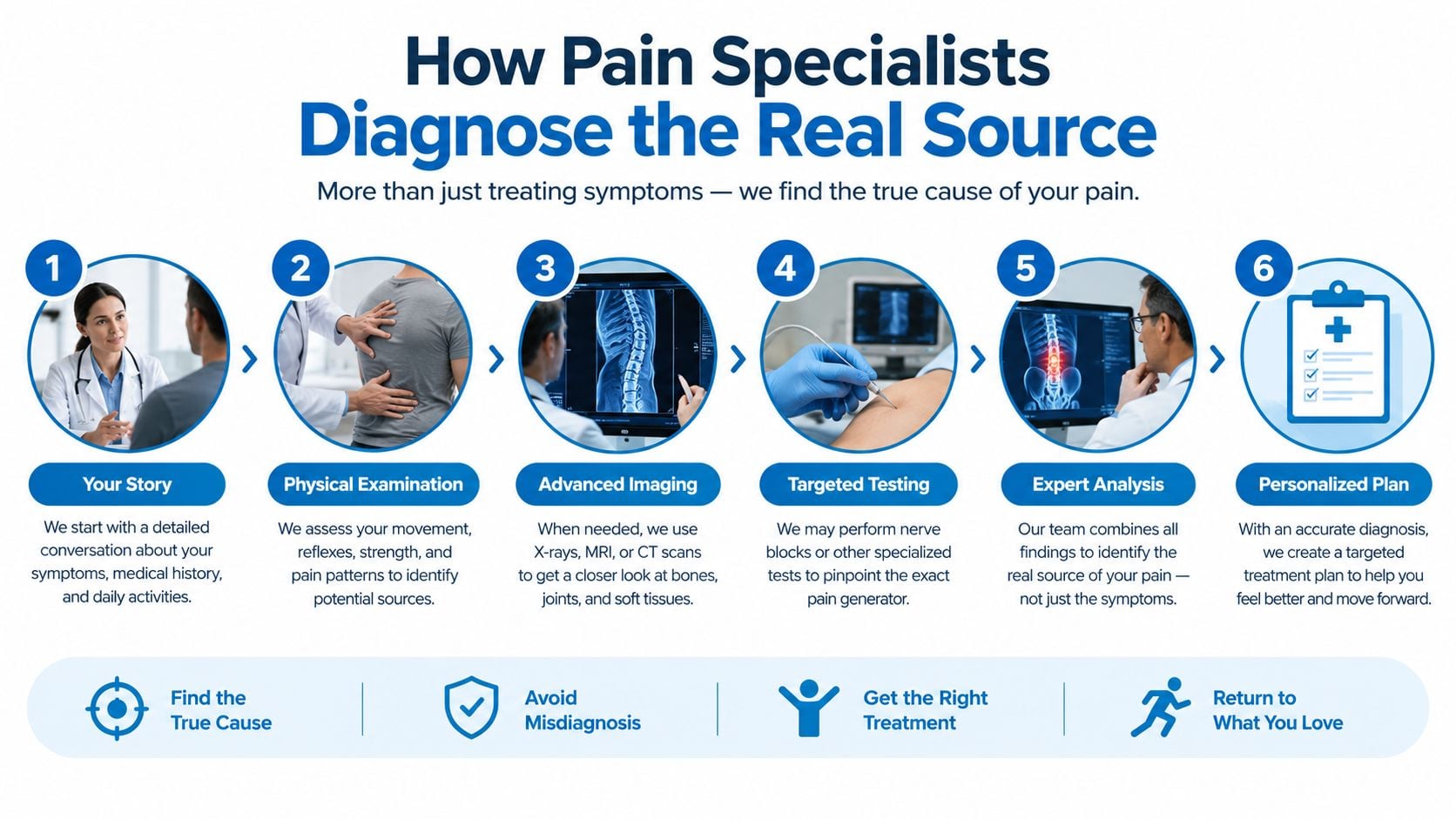
A pain specialist doesn't begin with a procedure. The evaluation begins by asking what the current pain is doing, how it differs from the preoperative pain, and whether the pattern fits the operated level.
History and examination
The history maps four features:
- Location: Back-only pain suggests a different starting point from pain that travels below the buttock.
- Quality: Burning, tingling, or electric pain raises concern for nerve involvement, while localized aching may point toward a joint or mechanical source.
- Timing: Pain that worsens with standing, sitting, walking, coughing, or certain movements can narrow the possibilities.
- Function: Walking tolerance, sitting tolerance, sleep, work demands, and confidence with movement show how pain affects daily life.
The physical examination then tests strength, sensation, reflexes, gait, hip motion, sacroiliac provocation, and movements that stress adjacent spinal segments. The purpose isn't to find one magical maneuver. It's to compare the examination with the symptom map and imaging.
Imaging and operative review
A specialist reviews the original operative report, preoperative images, postoperative studies, and current scans together. Depending on the suspected problem, updated MRI, radiographs, or other imaging may help assess recurrent compression, hardware position, fusion status, scar tissue, or changes above and below the surgical level.
Imaging can identify a possible target, but it can't establish causation on its own. A narrowed foramen on the right doesn't explain left-sided symptoms without other supporting findings.
Diagnostic injections
Targeted injections can function as controlled tests as well as treatments. A transforaminal epidural may help assess an irritated nerve root. Medial branch blocks can test whether facet joints contribute to axial pain. An intra-articular facet injection or sacroiliac injection may help separate joint pain from disc, nerve, or muscular pain.
Medication review also belongs in the diagnostic process. The specialist checks which medicines have been tried, at what doses, with what benefit, and with which adverse effects. The aim is to avoid escalating medications just because the source remains unclear.
Selective blocks aren't perfect, but they can connect an unclear scan to a more confident decision. A response that matches the expected nerve or joint pattern supports a targeted pathway. A poor or mismatched response suggests that the plan needs to be reconsidered before an invasive treatment is chosen.
Building a Stepwise Treatment Plan Beyond the Operating Room
Treatment should follow the pain phenotype rather than a generic FBSS checklist. Conservative care, injections, rehabilitation, psychological support, and neuromodulation can complement one another, but they shouldn't be added randomly.
Medication as support for active recovery
Neuropathic symptoms may respond to medicines such as gabapentinoids, serotonin-norepinephrine reuptake inhibitors, or tricyclic antidepressants. Simple analgesics or anti-inflammatory medicines may have a role when their risks fit the patient's medical history. Medication should create enough control for sleep, movement, and rehabilitation, not become the only treatment.
Opioids require particular caution. Reviews of FBSS management describe limited evidence for medications and reoperation, supporting a broader, stepwise plan rather than indefinite escalation. A prescribing clinician should define the intended benefit, monitor function and adverse effects, and reassess whether continued use remains justified.
Matching interventions to the pain pattern
| Treatment option | Best-fit pain pattern | Best-fit patient profile |
|---|---|---|
| Transforaminal epidural injection | Radicular leg pain with suspected nerve-root inflammation | A patient whose symptoms follow a consistent nerve distribution |
| Facet or sacroiliac block | Localized or axial pain linked to a joint | A patient with examination findings that support a joint source |
| Percutaneous adhesiolysis | Persistent radicular symptoms when epidural scarring is suspected | A patient whose evaluation suggests limited medication delivery around a nerve |
| Structured physical therapy | Deconditioning, guarded movement, weakness, or reduced endurance | A patient able to participate in graded motor-control and pacing work |
| Pain psychology | Fear-avoidance, poor sleep, mood symptoms, or catastrophizing | A patient whose distress and avoidance are limiting functional recovery |
| Spinal cord stimulation | Refractory neuropathic buttock or leg pain | A carefully evaluated patient who hasn't gained enough relief from less invasive care |
Rehabilitation and behavioral care
Exercise-based rehabilitation should be specific, progressive, and tied to function. Motor control, pacing, graded exposure, walking tolerance, sleep improvement, and strength work can address the cycle in which pain reduces activity, inactivity reduces capacity, and reduced capacity makes movement harder.
Psychologically informed care isn't an admission that symptoms are imaginary. It helps patients reduce threat responses, improve sleep, manage flare-ups, and resume valued activities while the medical team continues addressing physical contributors. Reviews emphasize that exercise-based rehabilitation can outperform generic exercise for pain and function, and that multidisciplinary care is particularly important when pain has become persistent. The review of FBSS management supports this conservative-first, stepwise approach.
Spinal Cord Stimulation and the Waveform Question
Spinal cord stimulation, or SCS, belongs later in the pathway for many patients. It becomes more reasonable when a careful workup supports neuropathic or mixed neuropathic-mechanical pain, conservative care and targeted interventions haven't produced enough improvement, and there isn't a correctable surgical lesion that should be addressed first.
SCS uses implanted leads to deliver electrical stimulation near the spinal cord. A temporary trial lets the patient assess pain relief and functional change before a permanent pulse generator is considered. The trial should be judged by practical outcomes, such as walking, sitting, sleeping, working, and participating in rehabilitation, not by a temporary reduction in pain while resting.
The main waveform choices
Traditional low-frequency tonic stimulation has the longest clinical track record and commonly produces paresthesia, a tingling sensation that can overlap the painful region. Some patients find that sensation useful; others find it distracting or uncomfortable.
High-frequency stimulation at 10 kHz is designed to work without noticeable paresthesia. A Level I randomized trial found it superior to traditional low-frequency stimulation for low back and leg pain in the studied population, as described in the review of high-frequency spinal cord stimulation.
Burst and other subperception approaches aim to modulate pain without an obvious sensation. A 2025 systematic review and network meta-analysis ranked subperception stimulation in the 500 to 1200 Hz range highest for global pain relief, at least 50% pain reduction, and health-related quality of life. Those findings come from the 2025 network meta-analysis of SCS waveforms, and they don't mean one waveform suits every patient.
Selection matters more than novelty
Evidence is strongest when pain is neuropathic and radicular rather than purely axial. Conventional SCS has limited evidence for isolated axial back pain, while newer waveforms may expand options for some mixed or predominantly back-pain patterns.
The decision also considers prior anatomy, lead placement, paresthesia tolerance, mood, expectations, medication use, and rehabilitation capacity. SCS reduces a neuropathic pain component. It doesn't repair unstable hardware, reverse severe weakness, or replace exercise and functional retraining. Additional patient information is available through spinal cord stimulation services.
When Revision Surgery Still Deserves a Seat at the Table
Revision surgery should have a defined target. The strongest case exists when imaging shows a structural problem that matches the patient's symptoms and the problem has not responded to appropriate conservative and interventional care.
Examples include symptomatic non-union with hardware loosening, a recurrent disc herniation producing a matching radiculopathy, or adjacent-segment failure above or below a fusion. In each situation, the proposed operation should answer a specific question: What structure will be changed, and why should that change improve this particular pain pattern?
When another operation is a weak fit
Diffuse axial pain, widespread neuropathic symptoms, and pain dominated by sensitization are poor reasons for repeat decompression or fusion alone. Scar tissue is also difficult to treat surgically because another operation can create further tissue change without addressing the nervous system's response.
A repeat operation isn't automatically a failure of the first one. It can be an appropriate tool when a new, correctable lesion has developed. But it shouldn't serve as a substitute for diagnosis, rehabilitation, medication review, or psychological preparation. A spine surgery evaluation can help determine whether a structural target exists.
Before revision, the care team should clarify expectations, medical risks, postoperative pain control, rehabilitation requirements, and the patient's readiness to participate. If the pain pattern and imaging don't agree, a second surgical opinion or additional diagnostic testing may be safer than committing to another procedure.
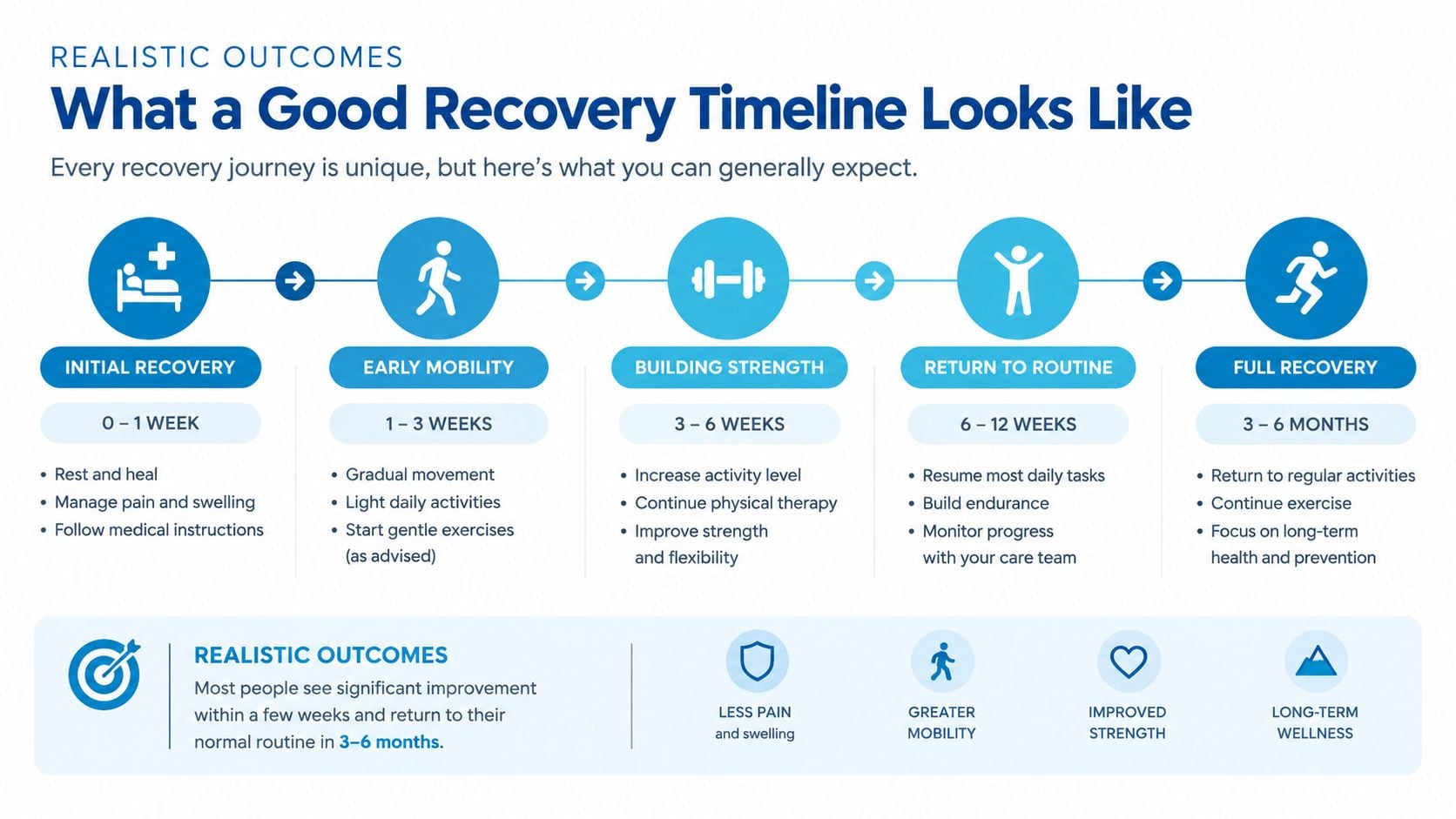
Realistic Outcomes and What a Good Recovery Timeline Looks Like
Recovery from FBSS is better measured by function than by a promise of complete pain elimination. A useful plan gives each phase a purpose and identifies changes that matter in ordinary life.
Phase 1, roughly weeks zero to six
The first phase focuses on diagnostic clarity and stabilization. The team classifies the pain as predominantly axial, radicular, neuropathic, mechanical, or mixed. Sleep, medication burden, walking, sitting, and basic daily activities become early measures of progress.
Urgent review is needed for new or worsening weakness, bowel or bladder changes, fever, severe wound concerns, or rapidly progressing neurological symptoms. Persistent pain without these red flags still deserves evaluation, but it follows a different pathway.
Phase 2, roughly weeks six to sixteen
This is the active treatment window. Depending on the findings, the patient may begin targeted injections, intensify rehabilitation, address sleep and mood, or undergo an SCS trial. Progress may appear as longer walks, greater sitting tolerance, fewer flare-ups, improved sleep, or more consistent participation in therapy.
Meaningful improvement is generally judged by a 30% to 50% reduction in pain alongside functional gain, rather than by the complete disappearance of pain. This standard should be interpreted in context, and the relevant clinical evidence for SCS outcomes is discussed in the SCS review of FBSS treatment.
Phase 3, roughly months four to twelve
Consolidation tests whether improvement holds during work, family responsibilities, recreation, and stressful days. A durable treatment, including an implanted stimulator when appropriate, should support a structured home program rather than replace it.
Signs that the plan is working include reduced reliance on urgent healthcare visits, safer medication tapering when clinically appropriate, improved sleep, and a return to valued activities. Setbacks don't automatically mean treatment has failed. They should prompt a review of the pain pattern, activity load, medication effects, and rehabilitation plan.
Interventional Pain Management offers diagnostic evaluation, image-guided injections, medication coordination, rehabilitation referrals, and spinal cord stimulation for appropriately selected post-surgical pain patients. Adults with persistent pain after spine surgery can visit Interventional Pain Management to request an assessment that matches the pain pattern to the next evidence-based step.