

A nerve block isn't a permanent off-switch for neuropathy. That expectation is understandable, especially when burning, electric pain, numbness, or shooting sensations have resisted medication and rehabilitation. But for the majority with diffuse neuropathy, a single injection can't repair widespread nerve damage or eliminate the condition causing it.
The more accurate view is narrower and more useful. Nerve blocks for neuropathy are targeted procedures that may provide short-term symptom relief, clarify which nerve is contributing to pain, or create a temporary window for rehabilitation and further treatment. Their value depends on the pattern of nerve involvement, the suspected pain generator, the patient's goals, and what happens after the anesthetic wears off.
Table of Contents
- Rethinking Nerve Blocks for Neuropathy Relief
- How Local Anesthetics Interrupt Pain Signals
- Focal Entrapment Versus Systemic Neuropathy
- Clinical Evidence and Insurance Coverage Realities
- The Procedure Experience and Neurologic Risks
- Integrating Blocks into a Comprehensive Pain Strategy
- Evaluating Your Candidacy for Interventional Care
Rethinking Nerve Blocks for Neuropathy Relief
The popular advice often sounds simple: find the painful nerve, block it, and get lasting relief. That approach overlooks the difference between a single irritated nerve and a disorder affecting many nerves throughout the body.
A foundational review published in Current Pain and Headache Reports in 2000 found that local anesthetic peripheral and sympathetic blocks generally offered only temporary therapeutic benefit in peripheral neuropathy. Perineural steroids helped a minority of patients achieve long-term relief, while nerve blocks still had an important diagnostic role in selected mononeuropathies and radiculopathy. The review also showed that nerve blocks occupied a limited, niche position in discussions of peripheral neuropathy at that time. The historical review of nerve blocks for neuropathic pain helps explain why modern pain physicians usually place these procedures within a broader plan rather than present them as a universal cure.
Relief and diagnosis are different outcomes
A block can be clinically useful even when it doesn't produce lasting pain control. If anesthetic placed near a suspected nerve temporarily changes the patient's familiar symptoms, that response can support the idea that the nerve contributes to the pain. If the block produces no meaningful change, the physician may reconsider the target, the diagnosis, or the possibility that the pain is maintained by more central mechanisms.
That distinction protects patients from repeating an ineffective procedure. A block that briefly reduces pain can open a practical window for movement, sleep, physical therapy, or a more focused discussion about decompression. It shouldn't automatically lead to a series of injections.
Practical rule: The right question isn't “How long will the injection cure the neuropathy?” It's “What decision will the result help the care team make?”
Diffuse neuropathy needs a wider plan
Diabetic, metabolic, toxic, and idiopathic neuropathies often involve multiple nerves and may affect both feet or hands. Blocking one peripheral nerve doesn't reverse the systemic process. Treatment may instead require medical optimization, medication review, foot protection, balance training, activity modification, and evaluation for a focal compression that exists alongside the diffuse disease.
For a patient with widespread symptoms, a nerve block may be a bridge, not the destination. Realistic counseling means defining success before the procedure. Success might mean identifying a focal pain source, improving function temporarily, or deciding that another treatment path is more appropriate.
How Local Anesthetics Interrupt Pain Signals
Pain signals travel through nerve fibers as electrical impulses. Local anesthetics interfere with that process by producing a reversible sodium-channel blockade, which prevents the nerve from transmitting certain signals while the medication is active. The effect is temporary, and normal conduction generally returns as the anesthetic wears off.
A useful analogy is a temporary roadblock on a highway. The road itself hasn't been removed, and the city producing the traffic hasn't changed. Traffic can't pass through the selected section for a period of time. In a nerve block, the physician uses that temporary interruption to observe what changes.
What the physician is testing
During a diagnostic block, the clinician first identifies a plausible nerve or branch based on the history, physical examination, imaging, and distribution of symptoms. Image guidance can help place the needle near the intended structure while avoiding unnecessary tissue trauma. The local anesthetic then provides a short observation period.
The patient's response matters in several ways:
- Distribution: Does the familiar pain decrease in the area supplied by the targeted nerve?
- Timing: Does the change occur during the expected active period of the anesthetic?
- Function: Can the patient walk, use the hand, tolerate touch, or perform a previously limited movement more comfortably?
- Specificity: Does the patient describe a meaningful change in the usual pain, rather than a general sense of numbness?
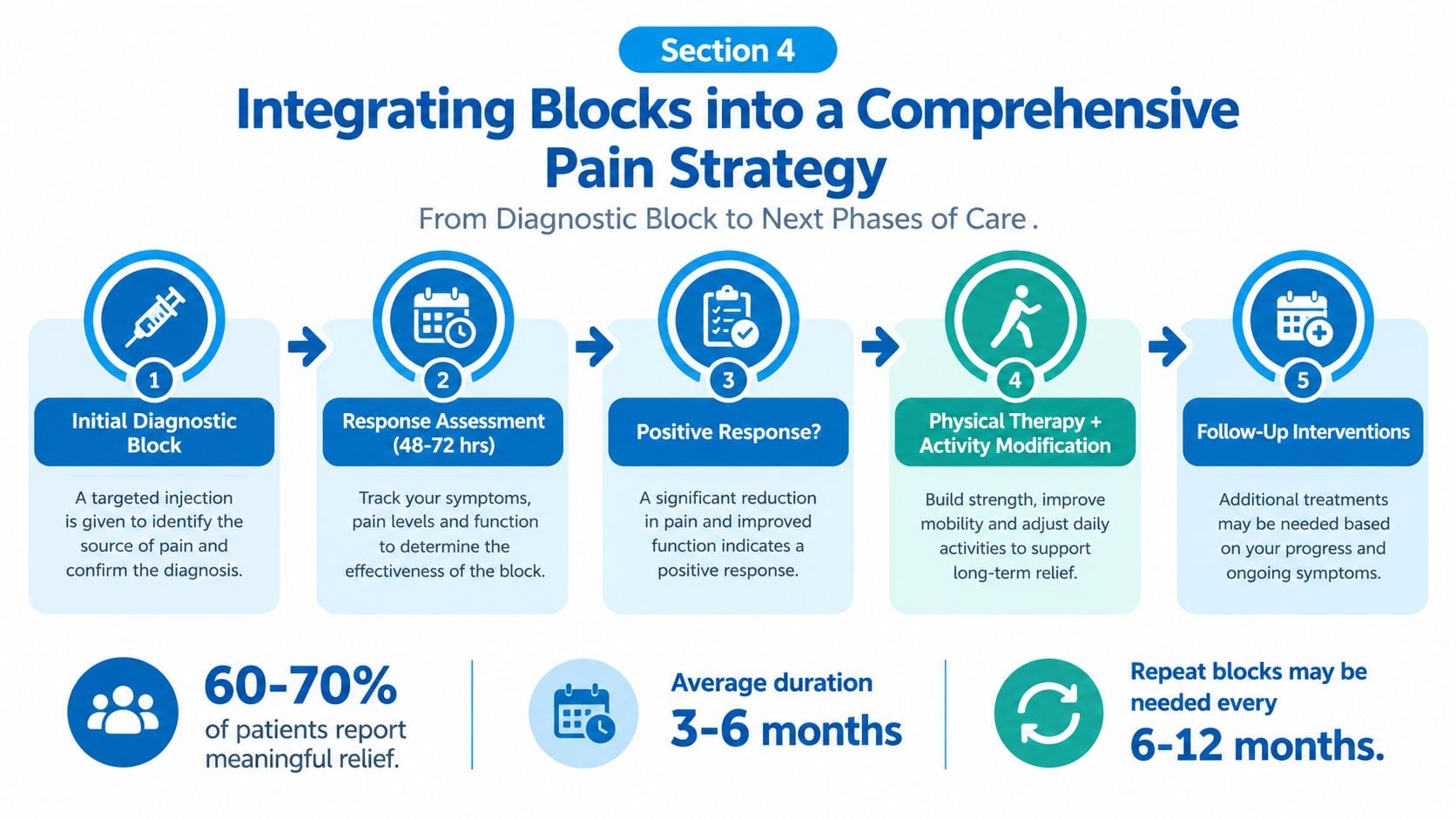
- Durability: What happens after the medication fades, and does any later benefit exceed the immediate anesthetic effect?
A positive response doesn't prove that the nerve is the only source of pain. It provides a piece of clinical information. The physician still has to compare the response with the examination, electrodiagnostic testing when appropriate, and imaging findings.
Why temporary relief can be valuable
A systematic review of local anesthetic blockade for neuralgias and radicular pain found only case reports and case series, so the available literature couldn't establish reliable efficacy or a typical duration of relief after the block wears off. The review of local anesthetic blockade therefore supports a careful interpretation of the procedure. Temporary relief can help map the pain pathway, but it shouldn't be treated as proof of a dependable long-term treatment effect.
Pain can also persist after a peripheral signal has been reduced. The nervous system may become more sensitive, and muscles, joints, spinal nerve roots, or adjacent nerves may contribute to the overall experience. A patient may therefore feel partial relief even when the targeted nerve is relevant, because the block addresses only one part of a more complex pain system.
Focal Entrapment Versus Systemic Neuropathy
The diagnosis often matters more than the injection technique. A focal entrapment involves a recognizable nerve compressed or irritated at a particular location. A systemic neuropathy usually reflects a broader process that affects multiple nerves, often symmetrically.
A patient with hand numbness from suspected carpal tunnel syndrome may have a defined target at the wrist, while a patient with burning in both feet from diabetic peripheral neuropathy may not have one isolated nerve responsible for the symptoms. The first situation can justify a targeted diagnostic discussion. The second requires more caution because blocking one nerve can't address widespread metabolic nerve injury.
Comparing likely roles
| Neuropathy type | Block utility | Primary clinical goal |
|---|---|---|
| Focal entrapment, such as suspected carpal tunnel syndrome | May help localize the symptomatic nerve and guide treatment decisions | Determine whether compression at a defined site contributes to symptoms |
| Localized radiculopathy | May provide targeted information in selected patients | Clarify whether a spinal nerve root is contributing to limb pain |
| Mononeuropathy | Selective blockade may assist diagnosis | Distinguish a single-nerve syndrome from broader pain |
| Diffuse diabetic peripheral neuropathy | Evidence for durable treatment is insufficient | Avoid mistaking temporary relief for correction of systemic nerve damage |
| Metabolic, degenerative, or idiopathic polyneuropathy | Usually a weak fit for repeated therapeutic blocks | Build a broader plan around the underlying condition and function |
The clinical evaluation of carpal tunnel syndrome may include symptom mapping, strength and sensation testing, provocative maneuvers, and additional studies when needed. A focal diagnosis can also lead to non-injection options, such as splinting, activity modification, rehabilitation, or surgical release when persistent compression threatens function.
Why systemic disease changes the calculation
Coverage policies and evidence reviews have repeatedly found insufficient evidence to support peripheral nerve blocks as long-term treatment for diabetic peripheral neuropathy and neuropathies caused by systemic, degenerative, or idiopathic conditions. Those conditions may produce pain across several nerve territories, so a procedure aimed at one peripheral structure may offer incomplete or inconsistent relief.
A block can still have a role when a patient with systemic neuropathy also develops a separate focal problem. For example, diffuse foot symptoms may coexist with a localized entrapment or a spinal nerve-root disorder. The physician must identify that distinction rather than assume every symptom comes from the same disease.
A focal pain generator may be worth targeting. A diffuse neuropathy usually needs a treatment plan that reaches beyond the needle.
The practical decision rests on whether the procedure answers a meaningful question. If the suspected nerve is anatomically plausible, the symptoms are localized, and the result could influence rehabilitation or surgery, diagnostic value may justify the intervention. If symptoms are widespread and the proposed plan consists only of repeated blocks, the rationale is much weaker.
Clinical Evidence and Insurance Coverage Realities
Patients often interpret insurance denial as evidence that a procedure is never useful. That isn't the right conclusion. Coverage policies generally reflect the difference between short-term or diagnostic utility and evidence for durable treatment.
A Medicare local coverage policy states that evidence is insufficient for peripheral nerve blocks in diabetic peripheral neuropathy and in peripheral neuropathies related to systemic, degenerative, or idiopathic conditions. The same policy limits repeated injections, with more than three injections at one anatomic site during a six-month period denied under that policy. CMS coverage guidance for peripheral nerve blocks shows how payers place boundaries around repeated treatment when long-term benefit hasn't been established.
What the evidence actually supports
A 2025 medical policy review reported observational findings in which pain relief from peripheral nerve blocks for chronic neuropathic pain lasted one to fourteen days, and it concluded that evidence was insufficient for longer-term benefit. The policy also stated that peripheral somatic nerve blocks shouldn't be used as long-term treatment for chronic pain. These findings don't mean that every patient receives the same duration. They mean that the evidence doesn't support promising durable relief as the expected outcome.
Evidence syntheses reach a similar conclusion. A NeuPSIG review found inadequate data to draw conclusions about nerve blocks for post-herpetic neuralgia, while a European neuropathic-pain assessment guideline reported that current literature doesn't support nerve blocks as a diagnostic test for neuropathic pain in general. It did acknowledge that selected targeted blocks may have prognostic value for surgical planning in specific syndromes, including cervical radiculopathy and genitofemoral neuralgia. The neuropathic-pain evidence assessment supports selective use, not routine injection treatment for generalized neuropathy.
Why insurers set limits
Repeated procedures become difficult to justify when each injection produces only brief relief and doesn't improve function or alter the treatment plan. Coverage limits can therefore act as guardrails against an endless cycle of temporary symptom suppression, procedural risk, cost, and delayed treatment of the underlying problem.
A physician seeking authorization will usually need to document the diagnosis, the targeted anatomy, previous conservative care, the purpose of the injection, and the functional response. Patients should ask what result would justify repeating the procedure. If the answer is only that pain returned, without a change in activity, examination, or care planning, the long-term rationale deserves closer review.
For selected patients, a block may inform a later discussion about decompression, rehabilitation, or neuromodulation. It doesn't automatically qualify someone for spinal cord stimulation evaluation, and newer consensus guidance doesn't support using nerve blocks as reliable predictors of success for peripheral nerve stimulation. The block must remain one data point in a larger decision.
The Procedure Experience and Neurologic Risks
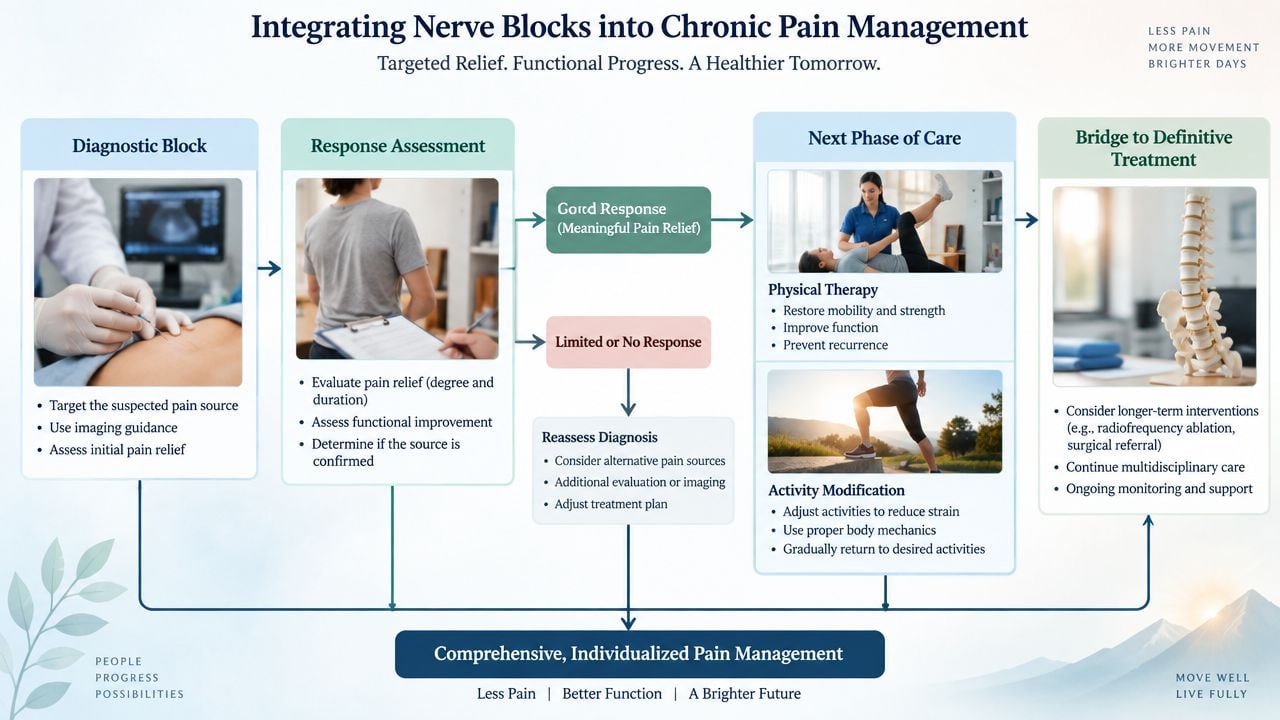
A responsible nerve block begins well before the injection. During consultation, the physician reviews symptom distribution, onset, prior operations, medications, diabetes or other systemic disease, anticoagulant use, skin integrity, weakness, gait changes, and previous responses to treatment. The examination should identify whether the pain follows a single nerve, a spinal root, several peripheral nerves, or no consistent anatomic pattern.
The patient may then undergo imaging review or additional testing. Depending on the target, the procedure can use ultrasound or fluoroscopic guidance. The clinician explains the intended nerve, the medication, expected temporary numbness, alternatives, and warning signs before proceeding.
What happens on the day
The patient is positioned to provide safe access to the target. After the skin is cleaned and numbed, the physician advances the needle under imaging guidance and places medication near, rather than directly into, the nerve in most routine approaches. The care team observes the patient afterward and provides instructions about temporary weakness, altered sensation, driving, activity, and when to seek help.
A symptom diary makes the result more useful. It should record pain intensity qualitatively, the location of symptoms, walking or hand function, sleep, touch sensitivity, and the time at which numbness or relief changes. The physician needs to know whether the patient could perform a meaningful activity, not merely whether a pain score changed while sitting still.
Risks deserve direct discussion
A nerve block can irritate or injure a nerve. A 2025 review states that most peripheral nerve injuries linked to blocks are neuropraxic or mild axonotmetic injuries that improve over weeks to months, but it also reports that neuropathy after certain blocks may be more common than recognized and can persist. The review of postoperative sciatic neuropathy and peripheral nerve blockade is especially relevant for patients who already have nerve damage.
Other concerns include bleeding, infection, medication reactions, temporary motor weakness, falls while numb, and worsening or new neurologic symptoms. The risk profile depends on the nerve, the approach, medical conditions, medication use, and the existing state of the nerve.
Safety question: Anyone with new weakness, spreading numbness, severe pain out of proportion, fever, or progressive neurologic change after a block should contact the treating team promptly or seek urgent assessment.
Pre-existing neuropathy doesn't automatically rule out a block. It does make risk-stratified counseling and careful selection more important. A patient should understand what symptoms existed before the procedure, what temporary effects are expected, and what changes would be considered abnormal.
Integrating Blocks into a Comprehensive Pain Strategy
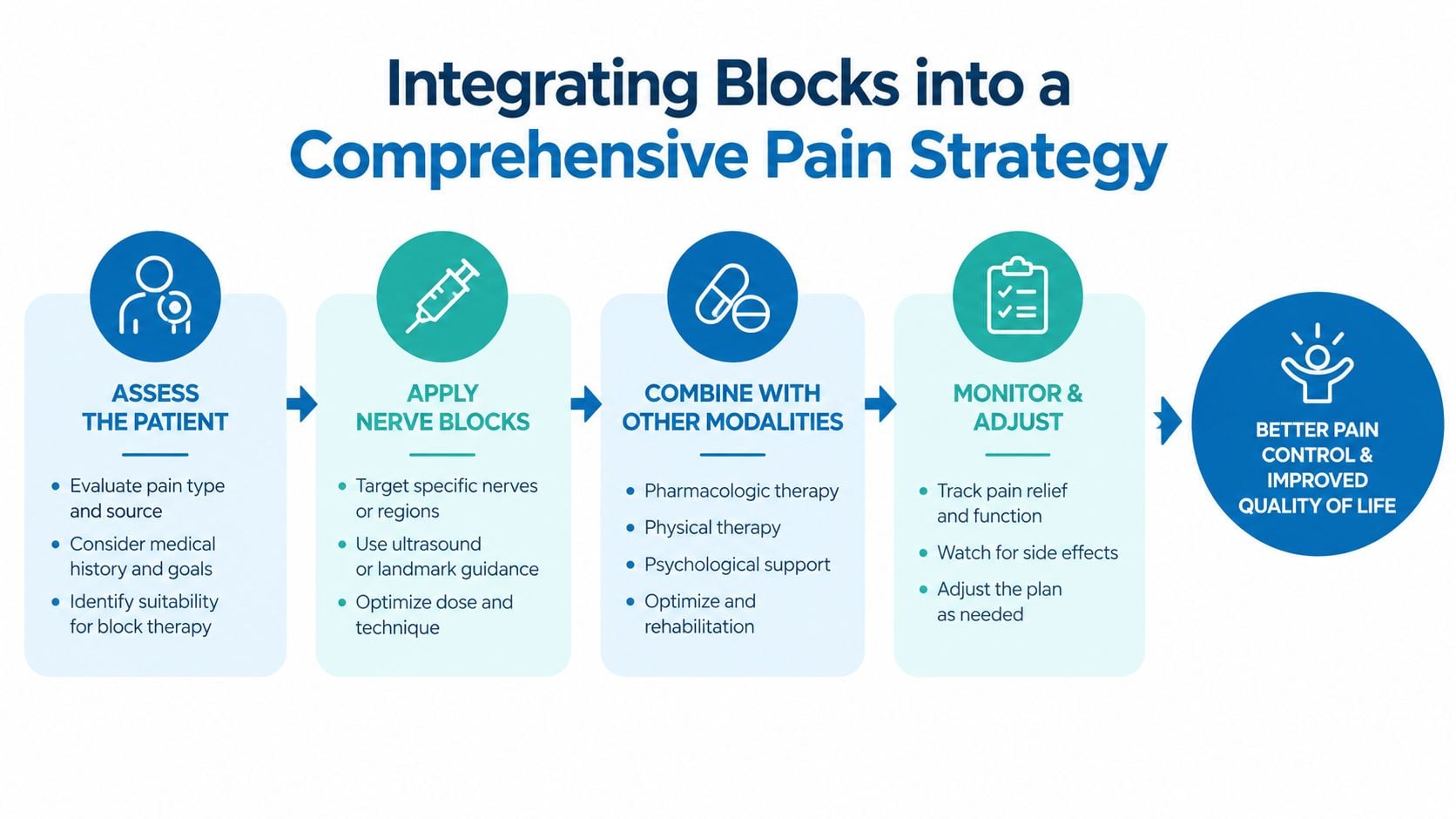
A block has the greatest practical value when it changes what happens next. If a focal nerve responds during the expected anesthetic period, the care team can compare that information with imaging and examination findings. The result may support rehabilitation directed at the affected region, activity modification, orthopedic evaluation, or a discussion about decompression when a correctable compression is present.
If the response is absent or ambiguous, repeating the same procedure without reconsidering the diagnosis is rarely productive. The physician may instead investigate a spinal source, central sensitization, joint pathology, medication effects, vascular disease, or another neurologic condition.
From temporary information to durable function
A complete plan might include:
- Clarifying the pain generator. The physician combines history, examination, imaging, and selective diagnostic procedures rather than relying on the injection alone.
- Protecting function during relief. Physical therapy can address strength, balance, gait, joint mobility, and tolerance for activity while symptoms are more manageable.
- Correcting mechanical contributors. A focal entrapment, spinal compression, or joint disorder may require orthopedic or spine assessment instead of continued injections.
- Treating the broader neuropathy. Medical management, foot protection, medication review, and attention to the underlying systemic disease remain important when several nerves are involved.
- Considering advanced care selectively. Persistent neuropathic pain after appropriate conservative and interventional treatment may prompt evaluation for neuromodulation, but a temporary block isn't a guarantee of success.
Patients with persistent burning pain after shingles may require a different diagnostic framework from patients with symmetrical diabetic foot symptoms. A focused evaluation for pain after shingles can help distinguish post-herpetic neuralgia from a focal entrapment or another condition before an injection is selected.
The central principle is sequencing. A block may provide a short period in which movement and assessment become easier. Rehabilitation then attempts to convert that opportunity into functional gains, while specialists determine whether the underlying problem is compressive, inflammatory, systemic, or centrally maintained.
A multidisciplinary center can coordinate these transitions. Interventional Pain Management offers image-guided nerve block injections, along with non-invasive pain care, orthopedic evaluation, spine services, and spinal cord stimulation assessment when clinically indicated. The purpose isn't to keep a patient in a loop of temporary procedures. It's to use each result to refine the next decision.
Evaluating Your Candidacy for Interventional Care
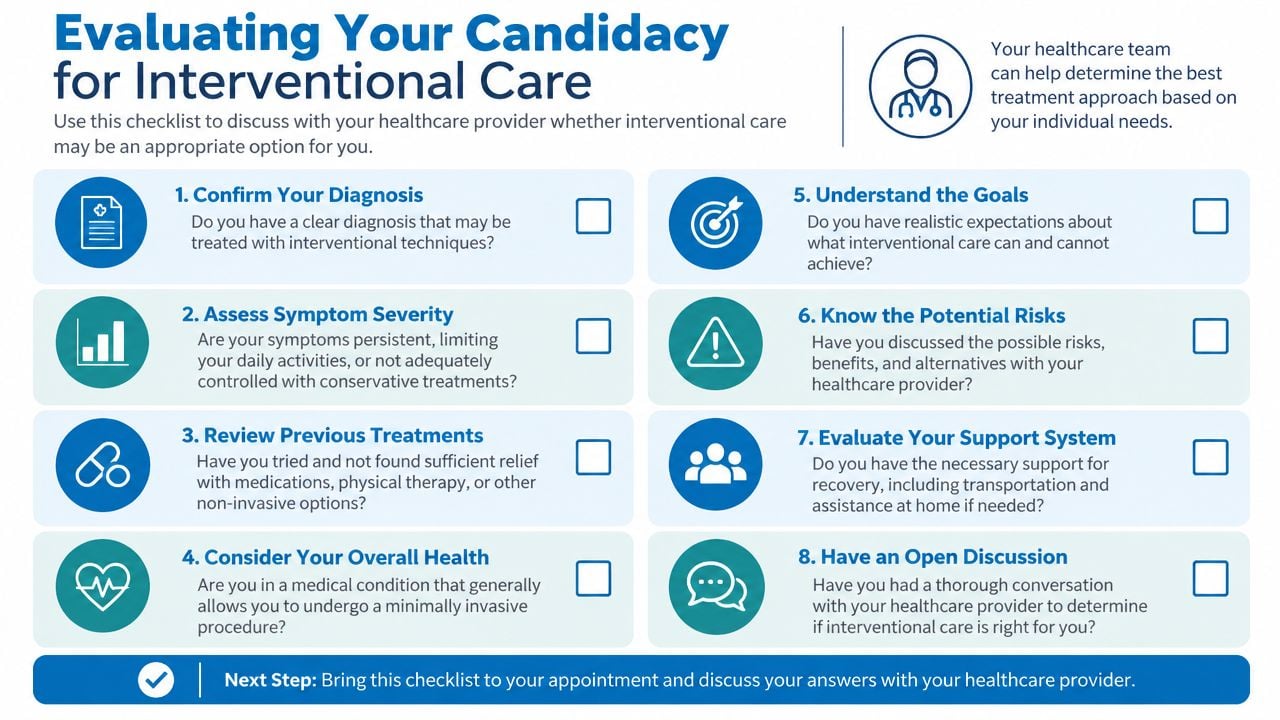
Candidacy depends on the clinical question, not just on how severe the pain feels. A patient with clearly localized symptoms and a plausible nerve target may be a reasonable candidate for a diagnostic block. A patient with progressive weakness, unexplained widespread numbness, an untreated systemic cause, or poorly defined symptoms may need further evaluation first.
Before an appointment, patients should prepare a symptom map and a complete treatment history. The most useful details include where the pain starts, where it travels, what triggers it, whether numbness or weakness is present, which activities are limited, and how previous treatments affected function.
Questions that improve the consultation
- What is the working diagnosis? Ask whether the pattern suggests focal entrapment, radiculopathy, mononeuropathy, systemic polyneuropathy, or another source.
- What nerve is being targeted? The physician should be able to explain the anatomy in plain language.
- Is the block diagnostic, therapeutic, or both? The purpose determines how the response will be judged.
- What counts as a meaningful response? Define a functional goal, such as walking, sleeping, or using the hand more comfortably.
- What happens if the block doesn't help? A clear alternative prevents automatic repetition.
- What risks apply to pre-existing neuropathy? Ask about weakness, nerve irritation, persistent symptoms, bleeding, infection, and medication effects.
- How will the result change care? The answer may involve rehabilitation, orthopedic review, spine assessment, or another treatment.
- What follow-up is required? Patients should know when symptoms should improve, when to report concerns, and how the response will be documented.
A board-certified, multidisciplinary practice can move between conservative care, image-guided procedures, orthopedic treatment, and surgical consultation when the findings support those options. That coordinated approach is more appropriate for complex neuropathy than treating every flare with another injection.
Interventional Pain Management evaluates neuropathic symptoms through medical history, physical examination, imaging, and targeted procedures when a nerve block can answer a useful clinical question. Visit Interventional Pain Management to discuss whether a diagnostic or therapeutic pathway fits the nerve pattern, functional goals, and broader treatment needs.